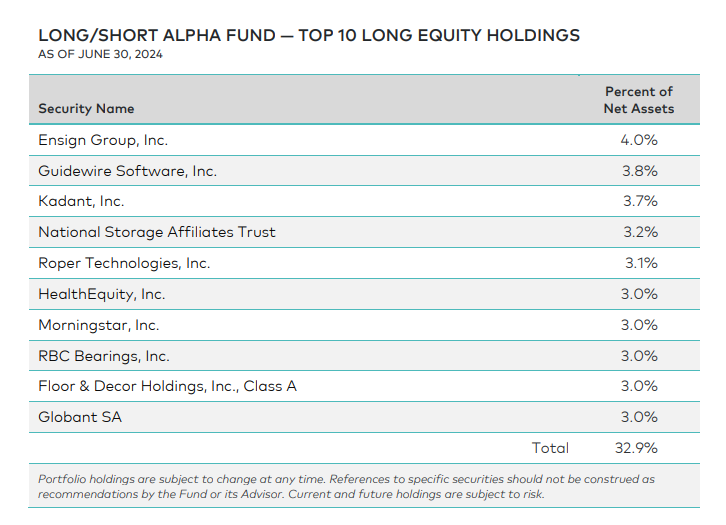
Most investors learn a pleasantly simple rule: find a good company, buy its stock, and wait. A long/short investor receives a second assignmentfind a company whose valuation, expectations, or fundamentals look fragile, then build a short position designed to benefit if reality disappoints. Investing becomes both a search for winners and an investigation of businesses most likely to trip over their own PowerPoint slides.
The December 9, 2024 episode of Animal Spirits: Talk Your Book, hosted by Michael Batnick and Ben Carlson with Wasatch Global Investors portfolio manager Mick Rasmussen, explored this two-sided craft. The conversation covered portfolio construction, attractive long and short characteristics, turnover, small-cap growth stock selection, and market-price dislocations. Its central lesson extends beyond any one fund: matching longs with shorts means giving each side a clear portfolio job.
What “Matching Longs with Shorts” Means
A long position benefits when a stock rises. A short position generally begins with borrowed shares that are sold and later repurchased. If the price falls, the difference can become a profit. If it rises, the short seller loses money. A long can fall only to zero, while a short can theoretically keep losing as the stock climbs. That asymmetry demands smaller sizing, tighter controls, and considerably less swagger.
Matching does not require pairing every long with a direct competitor. It means controlling the exposures around the stock ideas so results depend more on security selection and less on accidental bets involving the market, sectors, company size, momentum, interest rates, or volatility. A software long and software short may reduce industry risk. An index hedge may lower broad market beta, although it cannot neutralize company-specific problems.
Net Exposure Versus Gross Exposure
Net exposure equals long exposure minus short exposure. A portfolio that is 120% long and 40% short has 80% net exposure. Gross exposure adds the two sides, producing 160%. Net exposure indicates directional bias; gross exposure better reflects how much total security-level risk is working inside the portfolio. A net-long strategy may capture some upside in rising markets while shorts seek to reduce market sensitivity and contribute stock-specific returns.
Building the Long Book
A compelling long is not merely a good company. It is a company whose future results may exceed what its stock price already assumes. A brilliant business can disappoint investors when its valuation requires perfection, while a merely decent company can outperform when expectations are low and conditions improve.
Quality, Growth, and Catalysts
Long/short managers may seek durable revenue growth, improving margins, recurring demand, capable management, a sound balance sheet, competitive advantages, and a long reinvestment runway. In small caps, the opportunity may come from underappreciated market-share gains or a business reaching a profitable scale. Thinner analyst coverage can also leave more room for original fundamental research.
The thesis should identify why expectations could move higher. Catalysts may include accelerating adoption, better unit economics, a new product cycle, operating leverage, an improving industry structure, or evidence that a setback is temporary. Valuation still matters because it determines how much success is already embedded in the stock. Growth investors who treat valuation like decorative parsley eventually discover that parsley can be expensive.
Building the Short Book
Finding a flawed company is easy. Finding a profitable short is much harder. Weak businesses can remain expensive for years, and heavily shorted stocks can surge when good news, speculative enthusiasm, or forced covering appears. A useful short thesis must answer two questions: why is the stock mispriced, and what could make that mispricing close?
Warning Signs and Catalysts
Potential warning signs include slowing organic growth, weak cash conversion, aggressive accounting, excessive leverage, customer concentration, deteriorating competitive positioning, recurring “one-time” adjustments, or a valuation that assumes high growth even as leading indicators soften. Strong short cases often involve a widening gap between management’s story and operating evidence.
Still, a bad business is not automatically a bad stock. If disaster is fully priced in, merely less-terrible news can produce a rally. The short seller also faces borrow fees, dividend obligations, share recalls, liquidity constraints, and squeeze risk. A practical thesis therefore needs expected downside, a catalyst, a time horizon, borrow analysis, position limits, and an invalidation point. “This company is ridiculous” is an opinion, not a risk-management system.
How to Match the Two Sides Intelligently
Ten longs and ten shorts can still form an unbalanced portfolio. The longs may be stable health-care companies while the shorts are volatile technology names. Matching requires attention to dollars, beta, volatility, sectors, factors, liquidity, and concentration.
Sector, Factor, and Beta Matching
Suppose Company A is gaining share in specialized software while Company B is losing customers in the same niche. Going long A and short B can reduce the effect of broad software moves, making relative execution more important. Yet industry labels are imperfect: the businesses may have different customers, debt levels, geographies, or economic sensitivity.
Quantitative risk models can reveal hidden factor tilts, such as being long momentum, short value, or overly exposed to high-beta stocks. Dollar-neutral is also not the same as beta-neutral. Equal dollars on each side may leave substantial market sensitivity when the long book has a higher beta than the shorts. Models cannot predict every crisis, but they can act as smoke detectors for risks a stock picker may overlook. Institutional research emphasizes that long/short design involves deliberate choices about signals, single-name shorts, index hedges, diversification, and risk constraints.
A Simple Long/Short Portfolio Example
Imagine two fictional payment-software companies. BrightPay is growing recurring revenue by 24%, retaining customers, expanding margins, and funding growth without heavy debt. FlashLedger trades at a similar valuation, but growth has slowed to 8%, sales expenses are rising, and customer-acquisition payback is worsening.
An investor goes long $100,000 of BrightPay and shorts $70,000 of FlashLedger. The position is $30,000 net long and has $170,000 of gross exposure. Over the next year, the software sector rises 10%. BrightPay gains 28% as earnings estimates rise, while FlashLedger gains only 3% after lowering guidance. The long earns $28,000; the short loses $2,100; together they generate a $25,900 gross gain before borrowing, dividends, trading costs, taxes, and other expenses.
The short did not fall, yet it still helped express the relative thesis because it underperformed the long. Conversely, the pair could lose in a falling market if BrightPay dropped 30% while FlashLedger declined only 10%. Long/short investing is about relative outcomes, not merely guessing whether the market’s next arrow points up or down.
Turnover and Small-Cap Growth
Longs and shorts often have different life cycles. A quality compounder may remain in the long book for years. A short may require faster action because its downside shrinks as the price falls, borrow conditions change, or the catalyst plays out. Losing shorts also grow as a percentage of the portfolio, forcing active rebalancing.
Small-cap growth can suit this approach because outcomes are widely dispersed. Some young companies become durable compounders; others discover that a charming investor deck cannot manufacture cash flow. Less analyst coverage and rapid business change can create mispricing on both sides. The trade-off is lower liquidity, greater volatility, and potentially expensive or scarce borrow. Turnover should therefore come from changing fundamentals, valuation, risk, or opportunitynot boredom.
Risk Management Is Part of the Strategy
A long/short portfolio does not eliminate risk; it rearranges it. Lower market beta may come with greater stock-selection, leverage, model, liquidity, and squeeze risk. Gross exposure can magnify mistakes, margin requirements can force sales, and correlations may converge during stress.
Common controls include position limits, sector bands, gross and net exposure ranges, beta targets, liquidity screens, borrow-cost thresholds, and scenario analysis. Managers may test what happens if growth stocks rerate, rates jump, the market falls, or crowded shorts rally together. Investors evaluating a fund should examine return sources, average exposures, behavior in rallies and selloffs, concentration, shorting costs, and total fees. SEC guidance warns that margin can lead to losses beyond the original investment and forced liquidation, while industry research notes that long/short funds can carry higher expenses and implementation complexity than traditional equity portfolios.
Core Lessons from the Episode
The long and short books should emerge from a coherent research process. Longs express where fundamentals and expectations may improve. Shorts identify where expectations appear generous, quality is deteriorating, or valuation leaves little room for error. Portfolio construction determines whether those insights survive real markets.
Protection is not immunity. A long-biased strategy can lose in a bear market, and a market-neutral portfolio can lose when its longs lag its shorts. The realistic objective is a more favorable balance among return, volatility, beta, and drawdownnot an investment that never declines.
Experience-Based Insights: What Matching Longs with Shorts Feels Like
The first practical lesson is that studying shorts improves the long book. Regularly analyzing companies that disappoint makes an investor more skeptical of polished narratives, adjusted earnings, and management teams that answer every question except the one asked. You learn to compare cash flow with reported profit, retention with headline bookings, and balance-sheet flexibility with executive confidence. Shorts reveal where businesses break; longs show which companies built stronger plumbing.
The second lesson is emotional. A losing long shrinks, but a losing short grows. A stock that rises 40% against a short position can tempt an investor to defend the thesis more aggressively exactly when clear thinking is hardest. Separate three questions: Is the fundamental thesis intact? Has the timing changed? Is the position still appropriate for the portfolio? The thesis may remain plausible while the position size becomes reckless.
Third, start pairing with the risk you want to remove, not with a desire to make the trade look tidy. If a long thesis depends on company-specific market-share gains, an industry competitor may be a useful short. If it mainly depends on falling interest rates, that competitor may not hedge the real driver. Matching by sector while ignoring economic exposure is like pairing an umbrella with sunglasses because both are sold near the checkout counter.
Fourth, implementation can eat theoretical alpha. Hard-to-borrow shares, changing borrow rates, wide spreads, earnings gaps, and recalls are absent from elegant spreadsheets but present in actual accounts. A paper portfolio assumes a clean exit. A real portfolio sometimes discovers the exit door is the size of a cat flap. Liquidity should influence expected return, position size, and holding period before the trade begins.
Fifth, do not demand that every short decline immediately. A short may add value by underperforming a long, reducing factor exposure, or softening a drawdown. Judging every position alone can obscure its portfolio purpose. The relevant unit is the combined book, not the emotional pleasure of watching a disliked stock fall.
Another lesson is that review cadence matters more than prediction theater. A long may deserve patience through ordinary volatility, while a short tied to an earnings catalyst may require daily monitoring of borrow availability, news flow, and position size. Crowding deserves special attention: when many funds own the same longs and short the same vulnerable names, a sudden reversal can hit both sides at once. The portfolio may look diversified by company count yet behave like one giant trade. Regular exposure reviews help identify when independent ideas have quietly become passengers on the same market bus.
Finally, write down the thesis. Record the expected catalyst, valuation range, operating indicators, risks, and facts that would prove the idea wrong. Review that document when price action creates panic or euphoria. Memory is an unreliable investment committee; it rewrites yesterday’s mistake into today’s “long-term opportunity.” Documentation cannot guarantee a profit, but it can make failure informativeand learning cheaply is a genuine form of alpha.
Conclusion
Matching longs with shorts is a disciplined attempt to separate company insight from market direction. The long book owns businesses positioned to exceed expectations; the short book targets companies where expectations, quality, or valuation appear vulnerable. The matching process controls the sector, beta, factor, volatility, and liquidity exposures connecting those ideas.
The strategy is not automatically defensive. Shorts can suffer theoretically unlimited losses, leverage can amplify mistakes, and apparent balance can hide concentrated risks. Its enduring value is a demanding framework: every position needs a purpose, every exposure needs measurement, and every thesis must survive both optimism and skepticism. That is the real benefit of talking your bookprovided the book is allowed to talk back.