Quartz countertops are the kitchen world’s version of a reliable best friend: polished, practical, surprisingly stylish, and unlikely to panic when someone spills coffee at 7:03 a.m. They bring the look of natural stone without the diva-level maintenance of marble, and they work beautifully in kitchens, bathrooms, laundry rooms, bar areas, and even hardworking home offices where snack crumbs mysteriously reproduce.
Still, quartz is often misunderstood. It is durable, but it is not indestructible. It resists stains, but that does not mean red wine should be allowed to host a weekend retreat on the island. It does not need sealing, but it does need basic care. In this quartz countertops guide, you will learn what quartz is, how to clean it, what to avoid, and how to style it with 15 chic decor ideas that make your surface look intentional instead of “we renovated and then forgot the personality.”
What Are Quartz Countertops?
Quartz countertops are engineered stone surfaces made from crushed quartz or mineral particles combined with resins, pigments, and binders. Unlike granite or marble, which are cut directly from natural stone slabs, engineered quartz is manufactured to deliver a more consistent color, pattern, and performance. That manufacturing process is why quartz can mimic marble veining, concrete softness, terrazzo-style speckles, or dramatic dark stone with fewer surprises than natural stone.
The biggest selling point is convenience. Quartz is nonporous, so it does not need sealing like many natural stones. That nonporous quality also helps resist everyday staining from coffee, oil, juice, sauces, and toothpaste. Translation: quartz is ideal for homes where kitchens are used for actual cooking, not just arranging lemons in a bowl like a magazine photoshoot.
Quartz Countertops: Pros and Cons
Why Homeowners Love Quartz
Quartz countertops are popular because they hit a sweet spot between beauty and practicality. They are available in a huge range of colors, from crisp white Calacatta-inspired slabs to warm taupe, charcoal, soft gray, beige, cream, and bold black. They are also easier to maintain than marble and more visually predictable than many natural stones.
Another benefit is durability. Quartz stands up well to normal kitchen use, and its stain resistance makes it a strong choice for families, frequent entertainers, and anyone who has ever opened a pasta sauce jar with too much confidence. Because it does not require sealing, polishing, or waxing, it saves time over the long run.
The Honest Drawbacks
Quartz does have limits. The resin used in engineered quartz can be damaged by direct high heat, so hot pans should never go straight from stove to countertop. Use trivets, hot pads, or a cutting board as a heat barrier. Quartz is also scratch resistant, not scratch proof. You should still use cutting boards instead of slicing directly on the surface.
Another consideration is outdoor use. Many quartz products are designed for indoor applications because prolonged UV exposure can discolor or affect the resin. If you are planning an outdoor kitchen, check the manufacturer’s recommendations carefully and consider materials specifically rated for exterior use.
How to Clean Quartz Countertops Daily
The best quartz countertop cleaner is usually boringand boring is good here. Warm water, mild dish soap, and a soft cloth or nonabrasive sponge are enough for daily cleaning. Wipe the surface, rinse away soap residue, and dry it with a clean microfiber cloth or paper towel. Drying matters because it helps prevent streaks and water spots, especially on dark or polished quartz.
Simple Daily Cleaning Routine
- Remove crumbs, dust, and loose debris with a soft cloth.
- Mix warm water with a few drops of mild dish soap.
- Wipe the countertop using a microfiber cloth or soft sponge.
- Rinse with clean water to remove soap film.
- Dry the surface completely for a fresh, streak-free finish.
If your countertop has a matte, honed, or textured finish, you may notice fingerprints or smudges more easily than on a glossy surface. That does not mean the quartz is dirty forever. It simply means the finish likes to reveal evidence, like a tiny kitchen detective. A quick wipe and dry usually brings it back to looking crisp.
How to Remove Stains from Quartz
Quartz is stain resistant, but some messes need a little extra attention. For greasy spills, use mild dish soap and warm water. For dried food, gently loosen the residue with a plastic scraper or a nonabrasive pad, then clean as usual. Never use metal scrapers, steel wool, or rough scouring pads because they can dull the finish.
For stubborn marks, use a quartz-safe cleaner or a pH-neutral surface cleaner recommended by your countertop manufacturer. Always test any new cleaner in a small hidden area first. This is not dramatic; it is countertop insurance.
Common Spill Guide
- Coffee or tea: Wipe immediately, then clean with mild soap and warm water.
- Cooking oil: Use dish soap to break down grease, then rinse and dry.
- Wine or juice: Blot quickly, clean gently, and avoid letting acidic liquids sit.
- Makeup or toothpaste: Use a soft cloth and mild cleaner, especially on bathroom vanities.
- Dried sauce: Soften with warm water, lift with a plastic scraper, then clean normally.
What Not to Use on Quartz Countertops
The fastest way to make quartz unhappy is to treat it like a garage floor. Avoid abrasive powders, harsh scouring pads, oven cleaners, drain cleaners, paint removers, acetone-heavy products, strong bleach, and highly acidic or highly alkaline cleaners. These can dull the surface, discolor the resin, or leave cloudy patches.
Also skip sealers and waxes. Quartz does not need sealing, and applying a sealer can create a film that makes the surface harder to clean. If the countertop looks dull, the issue is usually residue buildup, not a lack of polish. Clean, rinse, and dry thoroughly before reaching for specialty products.
Quartz Countertop Maintenance Tips That Actually Matter
1. Use Trivets Every Time
Quartz can handle everyday warmth, but direct high heat is risky. A hot skillet, roasting pan, or slow cooker insert can damage the resin and cause discoloration or cracking. Keep trivets near the stove so using one becomes automatic.
2. Use Cutting Boards
Quartz is tough, but knives and countertops are not meant to be best friends. Cutting boards protect both the quartz and your knife blades. They also make cleanup easier, which is the true meaning of luxury.
3. Wipe Spills Promptly
Do not let coffee, wine, citrus juice, vinegar, oil, or tomato sauce sit for long periods. Quartz resists stains, but prompt cleaning prevents discoloration, sticky residue, and water rings.
4. Rinse After Cleaning
Soap residue can leave streaks or a cloudy finish. After cleaning, wipe with clean water and dry the surface. This one extra step makes quartz look more expensive, which is delightful because it already was.
5. Protect High-Use Zones
Place trays under coffee makers, soap dispensers, oil bottles, and utensil crocks. This prevents drips, ring marks, and tiny scratches caused by dragging objects across the counter.
6. Check the Manufacturer’s Care Sheet
Quartz brands vary slightly in approved cleaners, finishes, warranties, and heat recommendations. Keep your care sheet or warranty information in a home file so you are not guessing when a stubborn stain appears.
Quartz vs. Quartzite: Do Not Confuse Them
Quartz and quartzite sound like siblings, but they behave differently. Quartz is engineered stone. Quartzite is natural stone formed under heat and pressure. Quartzite usually needs sealing, while quartz does not. Quartzite may handle heat differently, while quartz requires extra care around hot cookware. When shopping, confirm exactly which material you are buying. A single syllable can change your maintenance routine.
15 Chic Decor Ideas for Quartz Countertops
1. Choose a White Quartz Waterfall Island
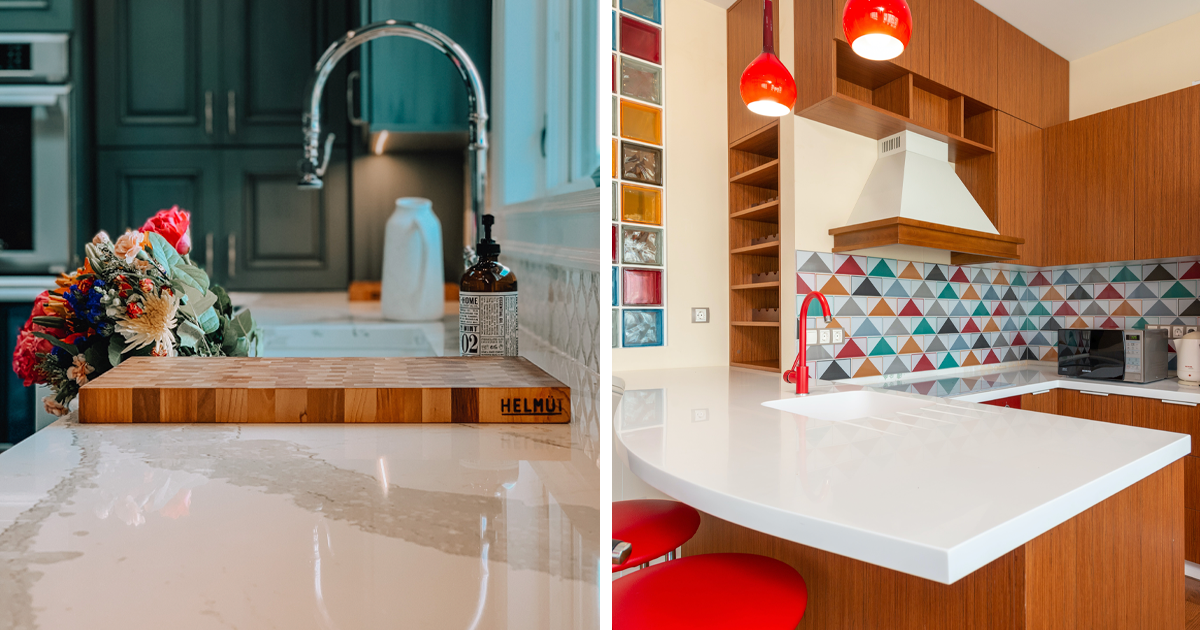
A waterfall edge lets quartz continue down the sides of an island, creating a clean, architectural look. White quartz with soft gray veining gives the room a bright, high-end feel without the maintenance concerns of marble.
2. Pair Cream Quartz with Warm Wood Cabinets
Warm white or beige quartz looks beautiful with oak, walnut, maple, and light-stained wood cabinets. The combination feels organic, calm, and modern without looking sterile.
3. Add Brass Hardware for Soft Glamour
Brass knobs, pulls, faucets, and pendant lights warm up white or gray quartz. The result is polished but not flashy, like your kitchen got dressed up but did not rent a limousine.
4. Use Full-Height Quartz as a Backsplash
Running quartz up the wall behind the range or sink creates a seamless, luxurious look. It is also practical because there are fewer grout lines to scrub. Your future self will applaud.
5. Try Dramatic Black Quartz
Black quartz countertops can make a kitchen feel moody, modern, and sophisticated. Pair them with light cabinets for contrast or dark cabinets for a bold monochrome design.
6. Mix Quartz with Handmade Tile
If your quartz has a quiet pattern, add personality with handmade zellige-style tile, ceramic subway tile, or textured backsplash tile. The countertop stays calm while the wall brings movement.
7. Combine White Quartz with Navy Cabinets
Navy cabinets and white quartz are a classic pairing because the contrast feels crisp and timeless. Add polished nickel hardware for a coastal look or brass for a warmer traditional style.
8. Go Green with Sage or Olive Cabinets
Soft green cabinetry with cream or marble-look quartz creates a fresh, nature-inspired kitchen. It works especially well with wood floors, woven stools, and warm lighting.
9. Choose a Thick Mitered Edge
A mitered edge makes the countertop look thicker and more substantial. It is perfect for islands, bar tops, and modern kitchens where you want the quartz to feel like a design feature, not just a surface.
10. Style with Minimal Countertop Decor
Quartz looks best when it has room to breathe. Use a wood tray, a ceramic fruit bowl, a small vase, or a sculptural utensil holder. Do not turn the counter into a storage unit with better lighting.
11. Use Veined Quartz in the Bathroom
A quartz vanity top with subtle veining can make a bathroom feel spa-like. Pair it with wall-mounted faucets, framed mirrors, soft towels, and warm sconces for a boutique-hotel effect.
12. Create a Coffee Bar Moment
Quartz is ideal for a coffee station because it handles spills well and cleans easily. Add a tray for mugs, a small canister for beans, and under-cabinet lighting to make your morning routine feel less like a negotiation.
13. Try Speckled or Terrazzo-Look Quartz
Speckled quartz brings texture and playfulness to simple cabinetry. It works beautifully in mid-century, Scandinavian, and family-friendly kitchens where a tiny crumb should not become a visual emergency.
14. Match the Island and Perimeter Counters
Using the same quartz on the island and perimeter counters creates a cohesive look. This is especially smart in smaller kitchens because visual continuity can make the space feel larger.
15. Contrast Two Countertop Looks
For a custom designer feel, use one quartz color on the perimeter and another on the island. A soft white perimeter with a darker island can define zones while keeping the room balanced.
Best Quartz Countertop Colors for Timeless Style
If you want a countertop that will age gracefully, start with soft neutrals. White quartz with delicate veining remains popular because it brightens kitchens and works with nearly every cabinet color. Warm cream and beige quartz are excellent for homeowners who want a softer, less clinical look. Light gray quartz pairs well with contemporary spaces, while charcoal and black quartz add drama.
For resale-friendly design, avoid extremely trendy patterns unless you truly love them. A countertop is not a throw pillow; replacing it is not a casual Tuesday activity. Choose a surface that fits your architecture, cabinet color, flooring, and natural light.
Quartz Countertop Cost Considerations
Quartz countertop pricing depends on the brand, slab style, thickness, edge profile, layout complexity, installation region, and number of cutouts for sinks, faucets, and cooktops. Waterfall edges, full-height backsplashes, mitered edges, and dramatic veining can increase the final cost. However, quartz may save money over time because it does not require periodic sealing.
When comparing quotes, make sure each estimate includes the same details: material, fabrication, delivery, installation, sink cutouts, edge style, backsplash, removal of old countertops, and warranty information. The cheapest quote is not always the best if it leaves out important labor or uses an inexperienced fabricator.
Installation and Safety Notes
Quartz countertop fabrication should be handled by trained professionals. Cutting, grinding, or polishing engineered stone can create respirable crystalline silica dust, which is dangerous for workers when proper controls are not used. Homeowners should not dry-cut quartz as a DIY project. Choose reputable fabricators who follow safety standards, use wet cutting and dust controls, and provide professional installation.
Common Quartz Countertop Mistakes
- Putting hot pans directly on the surface: Always use a trivet.
- Using harsh cleaners: Stick with mild soap, water, and approved products.
- Skipping the rinse step: Soap buildup can make quartz look dull.
- Cutting directly on quartz: Use a cutting board to prevent scratches and protect knives.
- Overdecorating: Let the countertop shine with simple, intentional styling.
- Confusing quartz with quartzite: Know which surface you own before cleaning it.
Real-Life Experience: Living with Quartz Countertops
After seeing quartz countertops in busy kitchens, rental properties, family homes, and bathroom remodels, one thing becomes clear: quartz rewards normal people. You do not need to treat it like a museum artifact. You can cook, bake, make school lunches, spill coffee, and set down grocery bags without feeling as if the countertop is quietly judging your life choices.
The easiest homes to maintain are the ones where quartz care is built into the kitchen routine. A microfiber cloth lives near the sink. A trivet sits beside the range. Cutting boards are stored vertically within reach. A tray holds the olive oil, salt cellar, and pepper grinder. These tiny habits make a big difference because they prevent most problems before they happen.
One of the most common experiences with white quartz is surprise: homeowners expect it to be impossible to keep clean, but it is usually manageable. Crumbs show, yes. Coffee drips show, absolutely. But a quick wipe with warm soapy water usually restores the surface. The real trick is drying it afterward. Many people clean quartz correctly, then leave water and soap behind, which causes streaking. Once they start drying the countertop, the “mysterious dullness” often disappears.
Dark quartz has a different personality. It can look stunning, especially with wood cabinets and warm metal finishes, but it may reveal dust, fingerprints, and dried water spots more easily. This does not make dark quartz a bad choice. It simply means you should be honest about your cleaning style. If you prefer a surface that hides everyday evidence, a softly patterned mid-tone quartz may be more forgiving.
In bathrooms, quartz is a quiet hero. Toothpaste, face wash, makeup, shaving cream, and soap splashes are easy to clean when handled promptly. A small tray under daily products keeps the vanity looking styled and prevents bottles from leaving rings. For guest baths, quartz is especially practical because visitors will not know your countertop rules, and frankly, they should not need a 12-minute orientation video before washing their hands.
Design-wise, the best quartz installations usually have restraint. A dramatic slab looks best when the cabinets, backsplash, and hardware support it rather than compete with it. If the quartz has bold veining, keep the backsplash simple or use the same quartz vertically. If the quartz is quiet, bring personality through tile, lighting, stools, art, or cabinet color. Think of quartz as the lead singer or the rhythm sectionbut not both at once.
The biggest lesson from living with quartz is that “low maintenance” still means “some maintenance.” Quartz will not demand sealing appointments or panic over every splash, but it does appreciate common sense. Use trivets. Wipe spills. Avoid harsh chemicals. Do not chop onions directly on the island while pretending you are on a cooking show. With those basics, quartz countertops can stay beautiful for years while making daily life feel a little more polished.
Conclusion
Quartz countertops are popular for good reason: they are stylish, durable, nonporous, and easier to care for than many natural stone surfaces. They fit almost every design style, from bright modern kitchens to warm traditional spaces, dramatic bathrooms, compact apartments, and family-friendly homes where the island is part prep zone, part homework desk, and part snack airport.
The secret is understanding what quartz can and cannot do. It resists stains, but spills should still be wiped promptly. It is strong, but cutting boards are still necessary. It handles daily life beautifully, but hot pans need trivets. Pair smart maintenance with thoughtful design, and quartz becomes more than a countertop. It becomes the hardworking, good-looking foundation of a room you actually enjoy using.