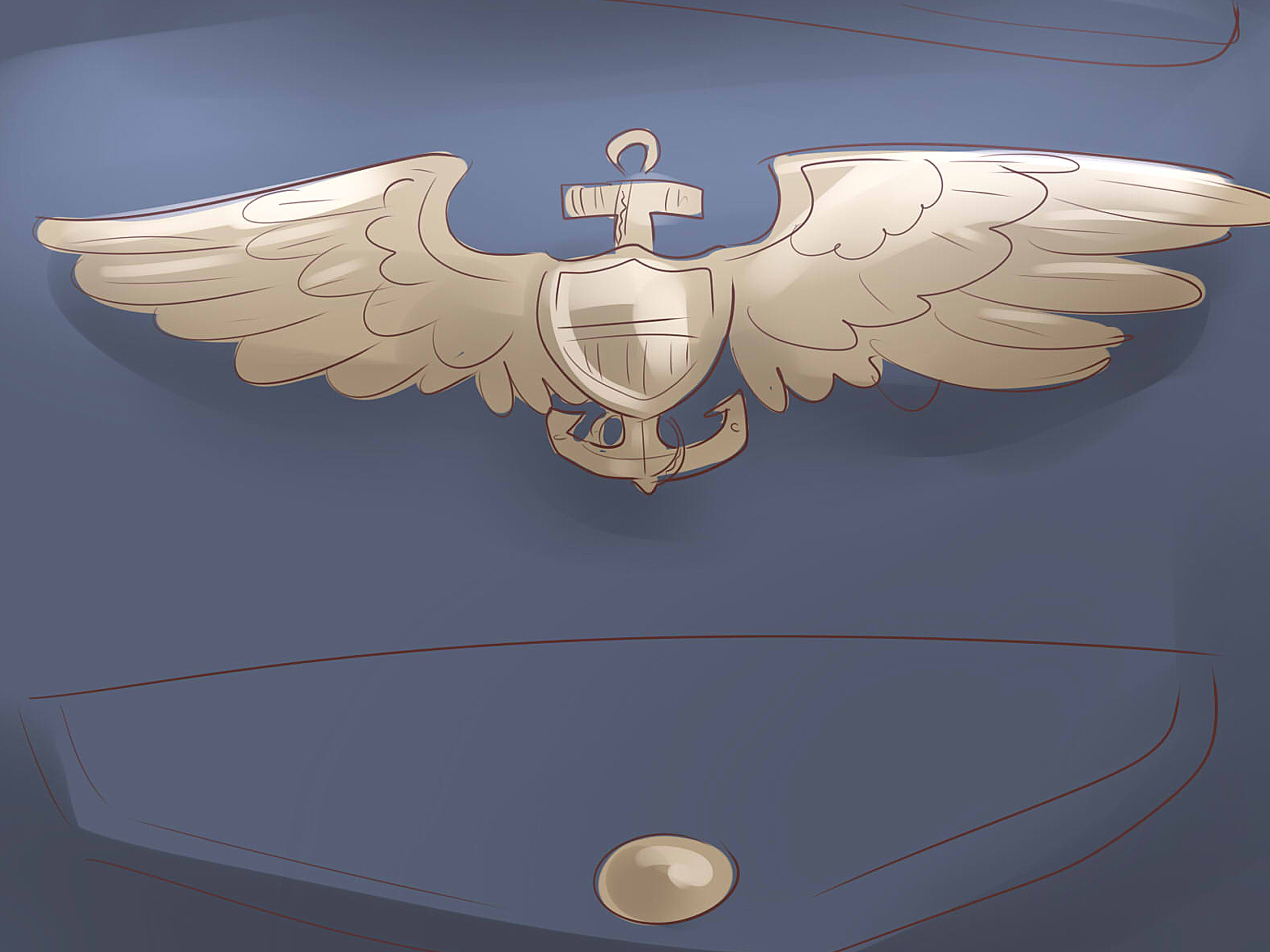
Becoming a Navy pilot involves considerably more than buying mirrored sunglasses and learning how to walk toward an aircraft in slow motion. Naval Aviators are commissioned officers who operate fighters, helicopters, patrol aircraft, airborne command-and-control platforms, transport aircraft, and other sophisticated machines in some of the most demanding environments on Earth.
The route is competitive, physically challenging, academically intense, and long. It requires a college degree, an officer commission, strong Aviation Selection Test Battery scores, aviation medical qualification, and successful completion of several stages of flight training. It also comes with a substantial service commitment.
Still interested? Excellent. Here is how to become a Navy pilot in 10 practical steps, from checking your eligibility to earning the famous Wings of Gold.
What Does a Navy Pilot Actually Do?
A Navy pilot, formally known as a Naval Aviator, flies military aircraft in support of maritime operations. Depending on the assigned community, a pilot may conduct carrier-based strike missions, hunt submarines, transport personnel, perform search-and-rescue operations, gather intelligence, support special operations, or fly long-range patrol missions.
It is important to separate Navy pilots from Naval Flight Officers. Pilots physically control the aircraft. Naval Flight Officers are commissioned aviation professionals who may manage navigation, sensors, communications, weapons, electronic warfare, or mission coordination. Both careers are demanding, but they follow different selection and training pipelines.
Another useful reality check: becoming a Navy pilot does not guarantee that you will fly fighter jets. Naval aviation includes rotary-wing, maritime, strike, airborne command-and-control, tilt-rotor, and specialized aircraft communities. Your eventual pipeline depends on Navy requirements, your performance, available positions, medical compatibility, and your preferencesin roughly that order.
How to Become a Navy Pilot in 10 Steps
Step 1: Understand the Commitment Before Applying
Start by deciding whether you want the complete job, not merely the flying portion. A Navy pilot is a military officer first. You will lead Sailors, manage programs, complete administrative duties, maintain readiness, deploy away from home, and accept assignments based on the needs of the Navy.
Flight school also represents only the opening chapter. After earning your wings, you normally report to a Fleet Replacement Squadron for training in your assigned aircraft. Student Naval Aviators who complete training incur an active-duty obligation that generally lasts eight years from the date they are designated Naval Aviators. Because winging can occur well after commissioning, the total time from entering the Navy to completing that obligation may be considerably longer than eight years.
That commitment is reasonable when you consider the cost and complexity of military flight training. The Navy is not handing you the keys to a multimillion-dollar aircraft because you promised to return it with a full tank.
Step 2: Confirm That You Meet Basic Eligibility Requirements
Navy pilots must qualify to become commissioned officers. Applicants generally need to be United States citizens, possess or complete a bachelor’s degree, satisfy physical fitness standards, pass background screening, and be eligible for the required security clearance. Candidates must also be willing to serve worldwide and qualify for sea duty.
Age requirements deserve special attention because they vary among commissioning sources and aviation programs. Some current aviation guidance uses an upper limit connected to the applicant’s 32nd birthday, while the STA-21 Pilot Option applies a lower commissioning-age limit with narrowly defined adjustments for prior service. Waiver policies can also change.
Contact an officer recruiter early and ask which current program authorization applies to you. Do not build a five-year plan around an age requirement you found in a decade-old discussion forum posted by someone named “JetDude47.” Official eligibility rules win every argument.
Step 3: Earn a Bachelor’s Degree
A four-year degree from an accredited institution is required for the standard Navy pilot path. A technical major may strengthen an application and prepare you for aviation academics, but engineering is not universally mandatory. Successful candidates can come from mathematics, science, business, history, political science, languages, and many other fields.
Your academic performance matters more than selecting a difficult major and barely surviving it. Admissions and selection boards look at the complete record, including grade-point average, course difficulty, leadership, test scores, recommendations, employment, athletics, and evidence of sound judgment.
Students in Navy ROTC should pay careful attention to program-specific coursework. Navy-option midshipmen are generally expected to complete calculus and calculus-based physics requirements in addition to their college curriculum and naval science courses.
Regardless of major, take useful classes in math, physics, meteorology, mechanical systems, communication, and technical writing. A pilot must understand complex systems and explain decisions clearly. “The airplane made a weird noise” is rarely the level of technical detail instructors are hoping to hear.
Step 4: Choose a Commissioning Source
You cannot become a Navy pilot without first becoming a Navy officer. The principal commissioning routes are:
- United States Naval Academy: Midshipmen complete a four-year military and academic program before commissioning.
- Naval Reserve Officers Training Corps: Students combine a civilian college education with naval science, physical training, leadership development, and summer training.
- Officer Candidate School: College graduates selected for an officer program attend OCS in Newport, Rhode Island. The Navy currently describes OCS as a rigorous 13-week course.
- STA-21: Qualified active-duty enlisted Sailors may compete for an opportunity to complete a degree and earn a commission while retaining active-duty status.
NROTC is the Navy’s largest single source of commissioned officers and offers both scholarship and non-scholarship pathways. OCS is often the most direct route for someone who already has a bachelor’s degree and is not enrolled in an officer-development program.
Ask specifically whether you are applying for a guaranteed Student Naval Aviator designator or merely hoping to request aviation later. Those are not the same arrangement, and optimism is not a contractual benefit.
Step 5: Build a Competitive Officer Application
Meeting the minimum requirements makes you eligible; it does not necessarily make you competitive. Aviation selection boards consider the whole person. Strong candidates typically demonstrate academic ability, physical fitness, leadership, discipline, integrity, and the capacity to perform under pressure.
Look for meaningful leadership rather than collecting titles like souvenir magnets. Leading an athletic team, coordinating volunteers, supervising employees, completing demanding projects, or serving successfully as an enlisted Sailor can demonstrate that others trust you with responsibility.
Prior civilian flight experience is not universally required. However, introductory flight lessons can help you determine whether you actually enjoy flying in a structured environment. A discovery flight is cheaper than discovering halfway through an application that turbulence makes you reconsider every decision since middle school.
Keep your legal, financial, academic, medical, and employment records accurate. Background investigators and medical reviewers expect full disclosure. Trying to hide a problem can become more damaging than the original issue.
Step 6: Take the Aviation Selection Test Battery
Aviation applicants take the Aviation Selection Test Battery–E, commonly called the ASTB-E. The test evaluates areas such as mathematics, reading comprehension, mechanical understanding, aviation and nautical knowledge, spatial orientation, multitasking, and aviation-related aptitude. The Officer Aptitude Rating is calculated from several academic subtests, while additional scores are used for pilot and flight-officer selection.
Minimum qualifying scores vary by commissioning route and program authorization. Some Navy aviation guidance identifies minimum scores around 4 for the Academic Qualifications Rating and 5 for pilot flight aptitude, while certain programs, including the STA-21 Pilot Option, publish higher thresholds. A minimum score may keep an application alive, but a stronger score generally makes it more competitive.
Prepare deliberately. Review algebra, geometry, basic physics, mechanical principles, aircraft controls, navigation terminology, and instrument interpretation. Practice working accurately under time pressure. For performance-based portions, applicants must divide attention among multiple tasks, which is an elegant way of discovering how many things the human brain can mishandle simultaneously.
Step 7: Pass Medical, Physical, and Anthropometric Screening
Navy aviation medical standards are more specialized than a routine sports physical. Applicants undergo general military medical processing and must receive aviation-specific approval. Examiners evaluate vision, color perception, depth perception, hearing, cardiovascular health, neurological health, medications, medical history, and other factors affecting safe flight.
Candidates are also measured for anthropometric compatibility. Sitting height, functional reach, leg length, weight, and other dimensions help determine whether an aviator can safely fit and operate within approved aircraft and escape systems. Naval Aviation Schools Command states that candidates must be compatible with enough aviation pipelines to remain qualified.
Do not disqualify yourself based on rumors about glasses, old injuries, allergies, or previous procedures. Some conditions may be waiverable, while others may not be. Only an authorized medical review can determine your status.
Meanwhile, arrive physically prepared. Running, strength work, mobility training, and swimming should already be part of your routine. Aviation students receive water-survival and CPR training, so being comfortable in the water is not merely decorative.
Step 8: Obtain a Pilot Selection and Earn Your Commission
Once your application, ASTB scores, medical documentation, recommendations, and background materials are complete, your package may go before a selection board. Selection depends on your qualifications and the number of pilot positions the Navy needs to fill.
College graduates selected through OCS attend officer training before commissioning as ensigns. Naval Academy and NROTC students complete their respective programs and commission after graduation. Enlisted applicants using STA-21 follow that program’s academic and officer-development requirements.
Commissioning is a major milestone, but it does not mean you are already a Navy pilot. At this stage, you are typically a Student Naval Aviator. The aircraft, carrier landings, and dramatic soundtrack are still farther down the checklist.
Step 9: Complete Preflight and Primary Flight Training
Student Naval Aviators begin aviation preparation in Pensacola, Florida. The Navy’s Naval Introductory Flight Evaluation framework replaced older introductory programs and combines aviation academics, procedural training, screening, and foundational flight preparation. The exact schedule and syllabus can evolve, so students should rely on current orders rather than archived timelines.
Preflight preparation may cover aerodynamics, engines, navigation, weather, aviation physiology, survival, emergency procedures, and military flight discipline. Students must absorb large quantities of information quickly and apply it precisely.
Primary flight training then develops foundational flying skills. CNATRA identifies the T-6B Texan II as the primary trainer for major Student Naval Aviator pipelines. Training includes academics, simulators, instrument procedures, formation fundamentals, navigation, communication, emergency procedures, and graded flights.
Performance in primary training helps influence pipeline selection. Student preferences matter, but Navy staffing requirements and training results carry enormous weight. You may dream of jets and be selected for helicoptersor dream of helicopters and receive another community. Every pipeline supports real missions and requires excellent aviators.
Step 10: Complete Advanced Training, Earn Wings, and Join the Fleet
After primary training, students move into a specialized pipeline such as strike, rotary-wing, maritime, E-2/C-2, tilt-rotor, or E-6 aviation. Intermediate and advanced instruction prepares students for the handling qualities, procedures, mission types, and operating environments of their future communities.
Strike students, for example, receive intensive training in instruments, formation flying, tactical navigation, weapons employment, field carrier landing practice, and carrier qualification. A published Training Air Wing FAQ describes a demanding schedule that may include several weekly flights, simulator events, and increasingly complex tactical instruction.
Students who successfully complete advanced training are designated Naval Aviators and receive their Wings of Gold. They then report to a Fleet Replacement Squadron, where they learn to operate a specific fleet aircraft and master its mission systems, emergency procedures, tactics, and crew responsibilities.
Only after completing aircraft-specific training and joining an operational squadron does the job begin to resemble the career most applicants originally imagined. By then, the new pilot also understands that aviation consists of preparation, briefing, studying, maintenance coordination, debriefing, and paperworkwith occasional interruptions for flying an extraordinary aircraft.
How Long Does It Take to Become a Navy Pilot?
There is no single guaranteed timeline. A college student may spend four years earning a degree and commission before beginning aviation training. A college graduate may first complete the application and selection process, attend OCS, and then enter the flight-training pipeline.
Preflight, primary, intermediate, advanced, and Fleet Replacement Squadron training can collectively take several years. Weather, aircraft maintenance, instructor availability, medical reviews, class schedules, pipeline changes, and temporary training delays can all affect progress.
A realistic plan should therefore focus on completing each stage well rather than racing toward a particular calendar date. Naval aviation rewards consistency. The student who prepares carefully every day usually performs better than the student who spends every day calculating how soon a fighter jet might appear.
What the Navy Pilot Journey Really Feels Like: Practical Experiences
The Waiting Can Be Nearly as Challenging as the Training
Applicants often picture the process as a continuous montage: application, salute, airplane, aircraft carrier. In reality, administrative reviews, medical appointments, selection boards, class dates, transfers, and training holds may create long pauses. During those periods, successful candidates keep training, studying, and maintaining their records rather than treating the delay as an extended vacation.
The emotional challenge is uncertainty. You may complete every requested document and still wait for a decision. You may receive a later class date than expected. You may have a medical issue sent for additional review. Patience is therefore not a pleasant bonus; it is an operational skill learned before the first military flight.
Flight School Is an Academic Marathon
A common surprise is how much of flight training happens outside the airplane. Students study aircraft systems, weather, regulations, emergency procedures, navigation, operating limits, and local course rules. They prepare for briefs, simulator events, flights, written examinations, and oral questioning.
The pace makes group study valuable. Classmates quiz one another, rehearse procedures, discuss mistakes, and share techniques for organizing information. Cooperation matters because naval aviation is built around teams, not lone heroes performing mysterious cockpit wizardry.
At the same time, every student remains individually accountable. An instructor may ask for an immediate response to an emergency scenario, aircraft limitation, or procedural question. “I highlighted that section” is not an answer.
Debriefs Teach Humility at High Speed
Students are evaluated constantly. After a simulator or flight, the instructor and student examine what happened, why it happened, and how performance must improve. A debrief is not designed to protect anyone’s ego. Its purpose is to identify errors before those errors become dangerous habits.
Strong students learn to accept criticism without becoming defensive. They separate personal identity from performance: a poor maneuver does not make someone a poor person, but refusing to correct it can make that person an unsafe aviator.
This culture can feel intense, particularly for students accustomed to being the highest achievers in their previous schools. Nearly everyone in flight training was impressive somewhere else. Suddenly, the room is full of former team captains, top students, experienced Sailors, and highly motivated graduates. Humility becomes surprisingly aerodynamic.
Your Preferred Aircraft Is Never Guaranteed
Pipeline selection can be one of the most exciting and stressful moments in training. Students may rank their desired communities, but selections also reflect performance, medical compatibility, available training slots, and projected fleet needs.
The healthiest approach is to learn about every community. Helicopter pilots may conduct antisubmarine warfare, logistics, search and rescue, and special-operations support. Maritime pilots operate complex multi-crew aircraft on long-range missions. Strike aviators prepare for carrier operations and tactical employment. Other communities support command-and-control or strategic missions.
A student who defines success as “fighter jets or failure” may overlook an exceptional career. The goal is to become a capable Naval Aviator, not to win an argument with the poster that hung above your childhood bed.
Earning Wings Is a Beginning, Not a Graduation From Learning
The Wings of Gold ceremony carries enormous emotional weight because it represents years of competition, study, physical preparation, setbacks, and graded performance. Families often see the wings as the finish line. Professionally, however, they mark the beginning of a new phase.
At the Fleet Replacement Squadron, pilots encounter a more complex aircraft, operational tactics, mission systems, and greater responsibility. In an operational squadron, they must continue qualifying while also serving as officers, division leaders, planners, safety professionals, and members of a deployable team.
The most realistic Navy pilot experience is therefore a cycle: prepare, perform, receive feedback, improve, and prepare again. The scenery becomes more dramatic, but the habit never changes.
Final Thoughts
Learning how to become a Navy pilot begins with a straightforward checklist: earn a degree, qualify for a commission, take the ASTB-E, pass aviation medical screening, compete for a Student Naval Aviator position, complete officer training, and survive a demanding sequence of ground school, simulators, flights, evaluations, and specialized instruction.
The deeper requirement is less tidy. Naval aviation demands discipline when nobody is applauding, honesty when a mistake is uncomfortable to admit, and persistence when the next milestone seems permanently delayed. It requires the confidence to make decisions and the humility to keep learning.
For candidates who want both military leadership and professional aviation, few careers offer a comparable combination of responsibility, technical challenge, teamwork, and adventure. The route is difficult by design. Aircraft carriers do not have room for casual preparation.