A tenant warning letter is one of those documents nobody dreams about writing. It is not exactly a love note, and it will probably never be framed above the fireplace. Still, when a rental issue pops up, a clear, professional warning letter can save a landlord from confusion, arguments, and the dreaded “but you never told me” conversation.
Whether the problem is late rent, excessive noise, unauthorized pets, smoking, property damage, illegal parking, repeated trash violations, or a guest who has practically moved in with three suitcases and a blender, the goal is the same: communicate the issue in writing, give the tenant a fair chance to fix it, and create a clean record of what happened.
This guide explains how to write a warning letter to a tenant in standard American English, what to include, what to avoid, and how to keep the tone firm without sounding like a courtroom villain. It also includes practical examples, a sample structure, and real-world experience tips for landlords and property managers.
What Is a Tenant Warning Letter?
A tenant warning letter is a formal written notice that tells a renter they may have violated a lease term, rental agreement, house rule, or property policy. It identifies the issue, explains what needs to change, gives a deadline when appropriate, and warns the tenant about possible consequences if the problem continues.
In many situations, a warning letter is not the same as an eviction notice. Think of it as the yellow traffic light before the red one. It tells the tenant, “Please fix this now so we do not have to make this more serious.” However, depending on the state, the wording, the lease, and the type of violation, a warning letter may overlap with a formal lease violation notice, notice to cure, or notice to quit. That is why landlords should always check state and local rules before sending any document that could affect a tenant’s housing rights.
Why a Written Warning Letter Matters
Verbal conversations are useful, but they have one big flaw: people remember them differently. You may remember saying, “Please remove the unauthorized dog by Friday.” The tenant may remember, “The landlord admired my dog’s sweater and said everything was fine.” A written warning letter removes much of that fog.
A proper letter helps landlords document the date of the issue, the lease clause involved, the requested correction, and the next step if the tenant does not comply. It also helps tenants understand exactly what the complaint is. In the best cases, the letter prevents escalation because the tenant realizes the issue is serious and corrects it quickly.
A written notice can also become important if the matter later moves toward lease termination, nonrenewal, mediation, or court. Courts, attorneys, housing agencies, and property managers generally prefer organized records over dramatic storytelling. Paperwork is less exciting than gossip, but it wins more arguments.
Before You Write: Check the Lease and Local Law
Before writing a warning letter to a tenant, review the signed lease agreement. Find the exact section related to the issue. If the tenant is playing loud music at midnight, look for the quiet enjoyment, noise, nuisance, or community rules clause. If the tenant has an unauthorized pet, look for the pet policy. If the rent is late, check the rent due date, grace period, late fee clause, and notice requirements.
Next, check state and local landlord-tenant laws. Some cities and states require specific notice language, delivery methods, cure periods, or forms. For example, one state may require a certain number of days for a tenant to correct a lease violation, while another may have different rules for nonpayment of rent, health and safety violations, or repeat offenses.
Also keep fair housing laws in mind. Landlords must avoid discrimination based on protected categories such as race, color, religion, sex, disability, familial status, or national origin. If a tenant’s conduct may be connected to a disability, a request for reasonable accommodation, or another protected issue, slow down and get legal guidance before sending a harsh notice. The letter should focus on behavior and lease terms, not assumptions about the person.
What to Include in a Warning Letter to a Tenant
A strong tenant warning letter is clear, factual, and complete. It should not read like a mystery novel where the tenant has to guess the plot twist. Include the following elements.
1. Date of the Letter
Start with the date you are writing and sending the letter. This matters because deadlines often run from the date of notice, the date of delivery, or another legally defined date. Keep a copy for your records.
2. Tenant’s Full Name
Use the full legal name of every tenant listed on the lease when possible. If two adults signed the lease, address the letter to both of them. This prevents one tenant from later claiming the notice was only meant for the other person.
3. Rental Property Address
Include the full property address, apartment number, unit number, or lot number. Property managers who handle multiple units should be especially careful here. Sending the right warning to the wrong unit is a paperwork faceplant.
4. Description of the Violation
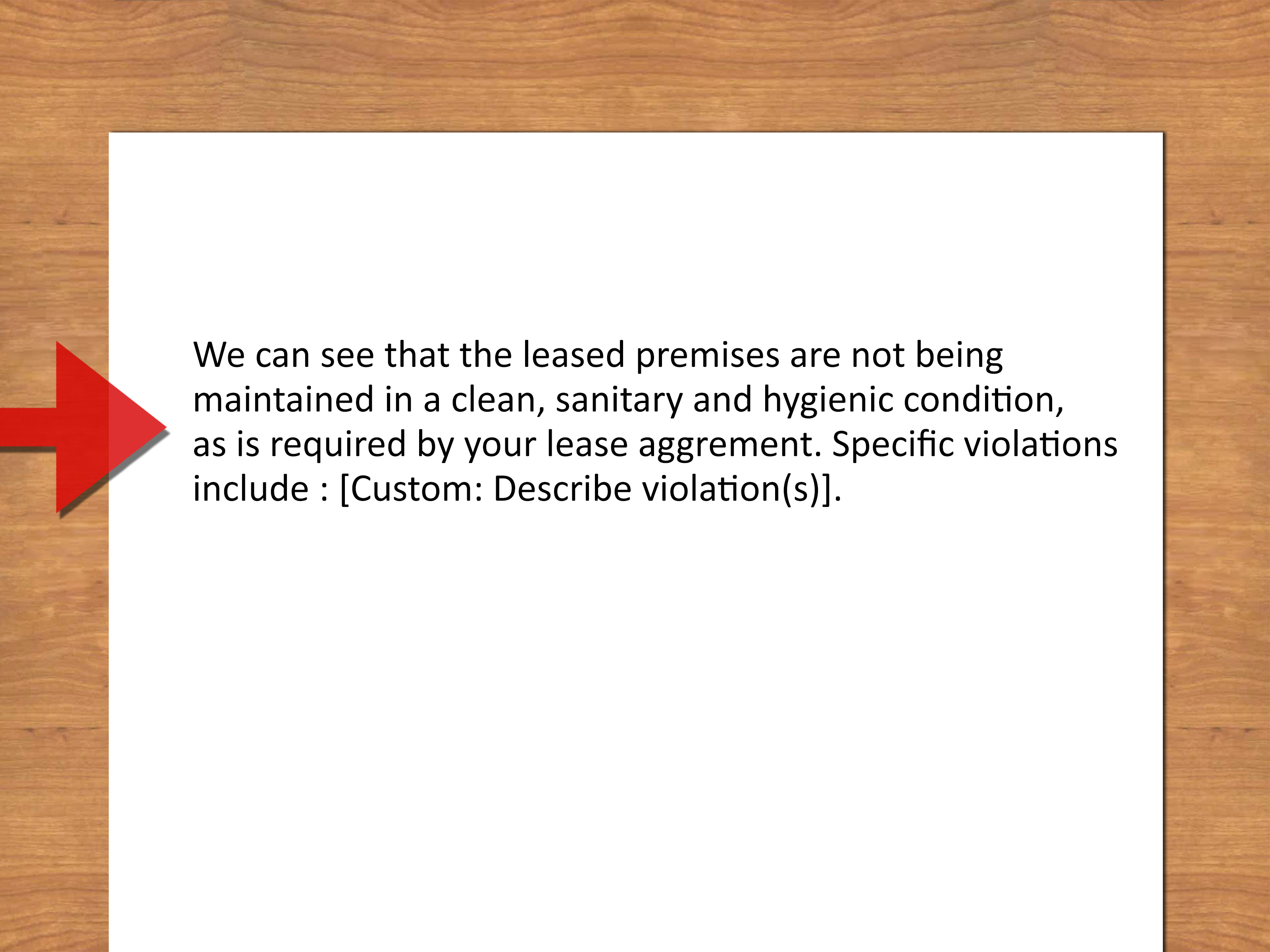
Describe the issue in plain, specific language. Avoid vague statements like “You are being disrespectful” or “Your behavior is unacceptable.” Instead, write something like, “On May 8, 2026, at approximately 11:45 p.m., loud music and shouting were reported from your unit, and the noise continued after a courtesy reminder.”
5. Lease Clause or Rule Violated
Reference the relevant lease section, addendum, community rule, or policy. For example: “This may violate Section 12 of your lease, which prohibits excessive noise that disturbs other residents.” You do not always need to paste the whole lease section, but quoting a short relevant phrase can help.
6. Required Correction
Tell the tenant exactly what they need to do. For noise, the correction may be to stop excessive sound during quiet hours. For an unauthorized pet, it may be to remove the pet or submit a required pet application if permitted by the lease. For trash, it may be to dispose of items properly and keep common areas clear.
7. Deadline to Cure the Problem
If the violation can be corrected, give a clear deadline. Use a specific date rather than a fuzzy phrase like “soon.” For example: “Please correct this issue by May 22, 2026.” The deadline should match the lease and local legal requirements.
8. Consequences of Noncompliance
Explain what may happen if the tenant does not correct the issue. Keep the wording professional. You might write, “Failure to correct this violation may result in further action, including a formal notice to cure or quit, lease termination, or other remedies allowed under the lease and applicable law.” Avoid threats, insults, or anything that sounds like self-help eviction.
9. Contact Information
Give the tenant a way to respond. Include your phone number, email address, mailing address, or property management portal instructions. Many problems are solved faster when the tenant can explain what happened or ask how to comply.
10. Signature
Close with the landlord’s or property manager’s name, title, signature, and date. If the letter is sent electronically, follow the lease and local rules about whether electronic notice is allowed.
How to Write the Letter: Step-by-Step
Step 1: Start With a Professional Tone
Begin politely, even if you are frustrated. A warning letter should sound like a business document, not a text message written after stepping on a Lego. Use calm language such as, “This letter is to notify you of a lease violation that requires your attention.”
Step 2: State the Problem Clearly
Identify the violation with details. Include dates, times, locations, and supporting facts when available. If neighbors complained, you can mention that complaints were received, but avoid naming other residents unless necessary and legally appropriate.
Step 3: Connect the Problem to the Lease
Show the tenant that the letter is not based on personal preference. It is based on the lease agreement or property rule they accepted. This makes the letter stronger and less emotional.
Step 4: Give a Reasonable Path to Fix It
A warning letter should usually focus on correction, not punishment. Tell the tenant what successful compliance looks like. For example, “Please remove all personal items from the hallway and keep the common walkway clear at all times.”
Step 5: Explain the Next Step
If the issue continues, state that further action may follow. Do not overpromise or exaggerate. If you are not sure whether eviction is legally available, do not say, “You will be evicted immediately.” In most residential situations, landlords must follow a legal process before a tenant can be removed.
Step 6: Keep a Copy and Proof of Delivery
Save the letter, photos, inspection notes, emails, complaint logs, payment records, and proof of delivery. Depending on your jurisdiction and lease, delivery may be by mail, hand delivery, posting, certified mail, email, or a property management portal. Follow the method required by law and the lease.
Sample Warning Letter to a Tenant
Below is a general sample. It is not legal advice and should be customized for the lease, property, and state law.
Date: May 15, 2026
To: Jordan Smith
Rental Property: 123 Maple Street, Unit 4B, Denver, CO 80200
Subject: Warning Letter Regarding Lease Violation
Dear Jordan Smith,
This letter is to notify you of a possible violation of your lease agreement. On May 10, 2026, and May 12, 2026, management received reports of loud music and shouting from your unit after 11:00 p.m. These disturbances may violate Section 9 of your lease agreement, which requires residents to avoid excessive noise and conduct that interferes with the quiet enjoyment of other tenants.
Please stop excessive noise during quiet hours and ensure that all guests follow the property’s noise policy. This issue must be corrected immediately and no later than May 18, 2026.
If this violation continues, further action may be taken, including a formal notice to cure or quit, lease termination, or other remedies allowed under your lease and applicable law.
If you believe this notice was sent in error or would like to discuss the matter, please contact me at [email protected] or (555) 123-4567.
Sincerely,
Alex Johnson
Property Manager
Common Reasons to Send a Tenant Warning Letter
Late Rent
Late rent is one of the most common reasons for a landlord letter. A warning letter for late rent should include the amount owed, the due date, any grace period, late fees if allowed, and the deadline to pay. Be careful: many states require a specific “pay or quit” notice before eviction for nonpayment, so do not rely on a casual letter if a formal notice is legally required.
Noise Complaints
Noise letters should include dates, times, and the relevant quiet hours policy. Avoid dramatic descriptions like “thunderous chaos from the ceiling goblins.” Funny? Yes. Professional? Not so much.
Unauthorized Pets
If the lease prohibits pets or requires approval, the letter should state what was observed and what the tenant must do. Be careful with assistance animals. Service animals and emotional support animals may involve fair housing accommodation rules and should not be treated like ordinary pet violations without proper review.
Property Damage
For damage, describe the condition, when it was discovered, and what repair or payment may be required under the lease. Include photos in your file. If the damage creates a health or safety issue, act promptly and document all steps.
Unauthorized Occupants
If a guest appears to be living in the unit beyond the lease’s guest policy, write carefully. State the facts, such as the number of consecutive days observed or access records, and request compliance with the lease. Avoid assumptions about relationships or personal life.
Smoking or Vaping Violations
If the property is smoke-free, reference the smoke-free lease addendum or policy. Include where and when smoke was detected or reported. Ask the tenant to stop immediately and explain consequences for repeated violations.
What Not to Say in a Warning Letter
Do not insult the tenant, threaten illegal action, exaggerate facts, or use discriminatory language. Do not write, “I will change the locks if this happens again,” “I will shut off utilities,” or “You have 24 hours to leave” unless a lawyer has confirmed that the statement is lawful in your specific situation. In most residential rentals, lockouts, utility shutoffs, intimidation, and self-help removal can create serious legal trouble for landlords.
Also avoid emotional language such as “You are the worst tenant I have ever had.” Even if your coffee mug agrees with you, the letter should not. Stick to facts, dates, lease terms, and requested action.
Best Practices for a Strong Tenant Warning Letter
Use simple language. A tenant should not need a law degree and a magnifying glass to understand the letter. Be specific, but do not overload the letter with unrelated complaints. If there are multiple violations, list them clearly in separate paragraphs or bullet points.
Be consistent. If one tenant gets a warning for an unauthorized pet, apply the same policy to other tenants in similar situations. Inconsistent enforcement can look unfair and may create legal risk.
Stay organized. Create a file for each tenant that includes the lease, addenda, inspection records, photos, emails, notices, rent ledger, maintenance requests, and communication logs. Good records are like insurance for your memory.
Be human. Sometimes tenants break a rule because they misunderstood the lease, had a temporary emergency, or did not realize the impact on neighbors. A firm but respectful letter can fix the problem without turning the relationship into a courtroom soap opera.
When to Use a Formal Notice Instead
A simple warning letter may be appropriate for a first-time or minor violation, but some situations require a formal legal notice. Nonpayment of rent, serious property damage, illegal activity, threats to safety, repeat lease violations, or lease termination may require state-specific notice forms and exact wording.
If you are moving toward eviction, do not improvise. Many eviction cases fail because the landlord used the wrong notice, gave the wrong number of days, served it incorrectly, or included inaccurate information. A landlord-tenant attorney, local housing authority, or reputable legal form provider can help confirm the proper process.
of Practical Experience: What Landlords Learn After Sending Warning Letters
Experienced landlords quickly learn that the best warning letters are written before emotions take the steering wheel. When a tenant violates the lease, the first instinct may be to fire off a message that says exactly what you feel. That is usually a mistake. The better approach is to gather facts, review the lease, breathe like a calm adult in a property management commercial, and then write.
One common experience is that tenants often respond better to clarity than pressure. A letter that says, “Stop being noisy” may create defensiveness. A letter that says, “Quiet hours begin at 10:00 p.m., and loud music was reported from your unit at 11:35 p.m. on May 9 and May 11” gives the tenant something concrete to correct. Specific details reduce arguments because the issue becomes behavior-based, not personality-based.
Another lesson is that documentation should happen in real time. Do not wait three months and then try to reconstruct every complaint from memory. Keep a simple log with dates, times, photos, messages, and follow-up actions. If the tenant fixes the issue, document that too. A record showing that you gave notice and the tenant complied can be useful later, especially if the same problem returns.
Landlords also discover that not every violation needs the same level of force. A trash bag left outside the door one time may need a polite reminder. Repeated trash problems that attract pests may require a formal warning. A dangerous situation may require immediate legal action. Matching the response to the seriousness of the violation helps you look reasonable and professional.
Communication style matters more than many landlords expect. A warning letter should not embarrass the tenant or invite a fight. It should give them a route back to compliance. Phrases like “Please correct this issue by…” and “Contact management if you believe this notice was sent in error” sound firm but fair. They also show that you are open to information you may not have.
Property managers often learn that templates are helpful, but lazy templates are risky. A good template gives structure. A bad template sends the wrong notice to the wrong tenant with the wrong date and the wrong lease clause. Always customize the letter. The tenant should feel that the notice reflects their actual situation, not a mail-merge robot having a rough afternoon.
The biggest experience-based tip is simple: treat every warning letter as if a judge, mediator, attorney, or housing investigator may read it later. That does not mean the letter should sound scary. It means it should be accurate, respectful, and legally cautious. The best letters are boring in the right way. They do not rant. They do not threaten. They explain, document, and guide.
Finally, successful landlords understand that a warning letter is not just about enforcing rules. It is about protecting the rental property, the tenant relationship, the neighbors, and the landlord’s legal position at the same time. Done well, it can solve a problem quickly and quietly. Done poorly, it can turn a small lease issue into a large, expensive headache wearing tap shoes.
Conclusion
Knowing how to write a warning letter to a tenant is an essential skill for landlords, property managers, and real estate investors. The best letters are clear, factual, respectful, and tied directly to the lease. They identify the problem, explain how to fix it, give a lawful deadline when needed, and document what happens next.
A tenant warning letter should not be used to scare, shame, or pressure a renter illegally. It should be used to communicate professionally and create a fair opportunity for correction. Before sending one, review the lease, check local laws, consider fair housing issues, and keep copies of everything. A well-written warning letter may not be glamorous, but it can prevent confusion, protect your property, and keep a manageable problem from becoming a legal circus.
Note: This article is for general educational purposes only and is not legal advice. Landlord-tenant laws vary by state, county, and city. Before sending a formal notice, lease termination letter, or eviction-related document, consult local law or a qualified attorney.