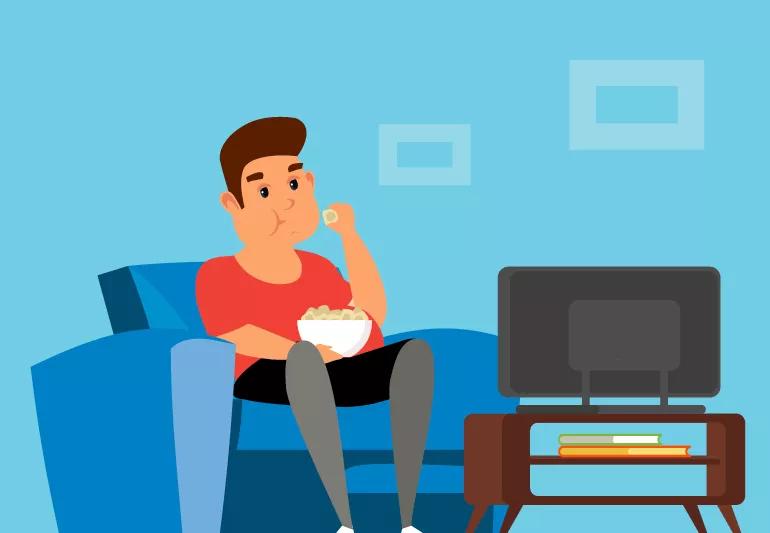
You sit down to watch one episode with a “small snack.” Three plot twists later, the snack bowl is empty, the package is suspiciously light, and you have no clear memory of eating half of it. The television may not have physically stolen your chips, but it makes an excellent accomplice.
Overeating while watching TV is not simply a matter of weak willpower. It is usually the result of distracted eating, environmental cues, learned habits, oversized portions, emotional comfort, and a brain that is busy following the story instead of monitoring the stomach. When entertainment and eating happen at the same time, the signals that normally help us decide when to stop can become surprisingly easy to miss.
Understanding why we overeat while watching TV can make the habit much easier to change. You do not necessarily have to ban snacks, cancel every streaming subscription, or watch dramatic finales while holding a celery stalk. The goal is to bring a little awareness back into the room.
TV Divides the Attention Your Meal Needs
Eating may feel automatic, but the brain normally processes a great deal of information during a meal. It notices taste, smell, texture, portion size, stomach sensations, satisfaction, and the gradual decline of hunger. These details help determine whether another bite still feels necessary.
Television competes for the same limited supply of attention. A suspenseful scene, loud commercial, clever joke, or complicated storyline pulls mental resources away from the food. You continue chewing and reaching into the bowl, but you are no longer paying close attention to the experience.
Fullness signals become background noise
The body does not send one dramatic “STOP EATING” notification. Fullness tends to build gradually through physical and sensory signals. You may notice that the food tastes less exciting, your stomach feels comfortably filled, or your urge to continue has weakened.
During screen-time eating, these quiet messages must compete with explosions, cliffhangers, sports commentary, and someone yelling about a hidden immunity idol. The television usually wins.
This does not mean the body stops producing satiety cues. It means you may be less likely to notice and act on them. By the time the program pauses or ends, you may have moved from comfortably satisfied to “Why did I think the family-size bag was a personal challenge?”
Distraction can reduce memory of the meal
Researchers have found that distracted eating may affect not only how much people consume during a meal but also how well they remember it afterward. Memory matters because the brain uses recent eating experiences when evaluating later hunger.
When you clearly remember a satisfying lunch, that memory can help reduce the appeal of an unnecessary afternoon snack. When lunch was consumed while watching an intense episode, responding to messages, or scrolling through videos, the mental record may be less vivid. You ate the food, but the brain did not file the experience properly.
That helps explain why television viewing can influence food intake later, even when it does not dramatically increase the amount eaten during the original meal. The distracted meal leaves a weaker impression, so another snack may seem more reasonable than it really is.
The Screen Becomes a Powerful Eating Cue
Humans are excellent at forming associations. Perform the same two behaviors together often enough, and one begins to trigger the other. That is useful when a morning alarm reminds you to brush your teeth. It is less useful when the opening music of your favorite show makes you crave popcorn despite having finished dinner 15 minutes ago.
If you regularly snack on the couch, your brain starts linking the television, couch, evening hour, and snack cabinet into one routine. Eventually, turning on the TV can produce an urge to eat even when physical hunger is absent.
Habit can feel exactly like hunger
Physical hunger usually develops gradually and can be satisfied by a range of foods. Habit-based appetite often appears suddenly in response to a place, activity, emotion, or time of day. It may demand something specific, such as chips, cookies, ice cream, or whatever can be eaten without looking away from the screen.
The distinction is not always obvious. A person may genuinely feel an urge to eat, but the urge may be coming from routine rather than an immediate need for energy. That is why asking, “Would I eat a regular meal right now?” can be useful. If the answer is no but caramel popcorn sounds urgent, the craving may be cue-driven.
Autoplay keeps the snack routine running
Television once had natural stopping points. Episodes ended, credits rolled, and viewers had to wait until next week. Streaming platforms politely removed that inconvenience. Now the next episode begins before you have processed the previous endingor the previous handful of pretzels.
Long, uninterrupted viewing creates long, uninterrupted opportunities to eat. The absence of a clear break also makes it harder to check whether you are still hungry. A two-hour movie may become a two-hour grazing session simply because the bowl remains within reach.
Food Advertising and On-Screen Eating Create Cravings
TV does not merely distract us from food. It frequently shows us food. Commercials display bubbling cheese, crisp fried coatings, slow-motion chocolate, cold drinks covered in condensation, and burgers assembled with the architectural precision of a suspension bridge.
Food cues can activate desire even when the body is not physically hungry. Seeing a particular product may remind you of its flavor and encourage you to imagine eating it. The craving can feel spontaneous, although it was carefully invited into the room by lighting, music, close-up photography, and a marketing budget larger than the snack itself.
Food also appears inside programs. Characters meet over pizza, celebrate with cake, recover from heartbreak with ice cream, or casually snack without experiencing visible consequences. These scenes can normalize eating as a default companion to entertainment, relaxation, socializing, and emotional relief.
TV Snacks Are Designed for Easy Overconsumption
The foods commonly eaten in front of a screen tend to require little preparation and almost no attention. Chips, candy, crackers, cookies, popcorn, and ice cream can all be consumed repeatedly while the eyes remain fixed on the television.
Many are also highly rewarding combinations of salt, sugar, refined carbohydrates, or fat. Their flavors encourage another bite before the previous one has created much lasting satisfaction. Add a dramatic police chase, and the snack barely stands a chance of being noticed.
Eating from the package hides the portion
A portion is the amount you choose to eat, while a serving size is the standardized amount listed on a food label. The two are not always the same. A bag may contain several servings even though its design strongly suggests, “Congratulations, this entire object belongs to you.”
When you eat directly from a large package, there is no clear visual boundary. You cannot easily see how much you started with or how much has disappeared. The bottom of the bag becomes the first reliable stopping signal, which is not a particularly sophisticated nutrition strategy.
Repetitive hand-to-mouth movement becomes automatic
Screen snacks often involve a simple loop: reach, grab, eat, repeat. Because the movement requires little thought, it can continue almost independently of hunger. A person may keep reaching during exciting scenes, tense moments, commercial breaks, or any period when the hands have nothing else to do.
This automatic rhythm is one reason pre-portioned food can help. A defined amount creates a physical ending. When the bowl is empty, you must make a new decision instead of continuing without noticing.
Stress, Boredom, and Fatigue Join the Watch Party
People often watch television to decompress. After a demanding day, the couch offers low-effort entertainment, while familiar foods offer quick comfort. Together, they create a powerful reward ritual.
Emotional eating is eating in response to feelings rather than physical hunger. Stress, loneliness, frustration, sadness, and boredom can all increase the desire for highly enjoyable foods. TV may temporarily distract from those feelings, while the snack adds another layer of relief.
Fatigue can make the pattern stronger. When you are tired, planning, portioning, and evaluating choices may feel like unnecessary paperwork. Convenient food wins. Late-night viewing can also stretch beyond the time you planned to sleep, creating more opportunities to snack and potentially making the next day’s appetite harder to manage.
None of this makes evening snacking morally wrong. It simply means the behavior may be meeting several needs at once: entertainment, decompression, stimulation, comfort, and relief from boredom. Changing the food without addressing those needs can leave the routine feeling strangely incomplete.
How to Stop Overeating While Watching TV
The most effective strategy is not necessarily to declare the couch a food-free federal zone overnight. Small environmental changes are often easier to maintain because they reduce automatic eating without demanding heroic self-control.
1. Decide what you are eating before sitting down
Choose the snack and portion it in the kitchen. Place it in a bowl, close the original package, and put the package away. This creates a visible amount and prevents accidental negotiations with the remaining three servings.
2. Eat meals away from the screen
Try making full meals screen-free, even if snacks are still allowed during entertainment. Sitting at a table helps the meal feel like a distinct event rather than background activity. Notice the first few bites, the flavors, your eating speed, and the point at which hunger begins to fade.
3. Pause before getting a refill
When the bowl is empty, wait until the next natural break. Ask whether you are physically hungry, emotionally uncomfortable, thirsty, bored, or simply disappointed that the episode did not resolve the mystery. A brief pause restores choice.
4. Make the snack more satisfying
A snack containing protein, fiber, or both may provide more lasting satisfaction than a food that is mostly refined carbohydrates. Examples include fruit with peanut butter, yogurt with berries, vegetables with hummus, roasted chickpeas, or a modest serving of nuts.
You can still choose popcorn, cookies, or chips. The point is not to make TV night joyless. It is to choose the amount intentionally and actually taste it.
5. Keep tempting foods out of arm’s reach
Convenience influences behavior. A large bowl on your lap is easy to keep eating. A closed package in the kitchen requires standing up, walking away from the program, and making a conscious decision. That small amount of friction can interrupt the automatic loop.
6. Give your hands another job
Knitting, sketching, folding laundry, using a stress ball, or doing a simple puzzle can satisfy the urge to keep the hands occupied. Choose something safe that does not require so much concentration that you must replay every scene.
7. Create an episode boundary
Turn off autoplay or decide in advance how many episodes you will watch. A clear ending creates an opportunity to stand, stretch, drink water, brush your teeth, or move into a bedtime routine instead of beginning another hour of grazing.
8. Track patterns without judging yourself
For several evenings, record what you ate, how hungry you were beforehand, what you watched, and how you felt. You may discover that overeating appears mainly during stressful days, skipped dinners, lonely evenings, or shows with long commercial breaks.
The goal is curiosity, not prosecution. Shame tends to make habits harder to examine honestly. Useful change begins with accurate information.
Real-Life Experiences With TV Overeating
A common experience begins with the innocent phrase, “I’ll just have a few.” Imagine someone settling onto the couch with a newly opened bag of tortilla chips. They are not especially hungry, but the chips seem appropriate for movie night. During the opening scenes, they consciously choose each chip. Twenty minutes later, their attention belongs entirely to the movie. Their hand continues working with the quiet confidence of an experienced machine.
When the credits roll, they discover that most of the bag is gone. The surprising part is not only the amount eaten. It is the lack of satisfaction. They remember the first few chips and perhaps the final salty crumbs, but the middle of the experience is missing. The food provided plenty of energy but very little memorable enjoyment.
Another familiar pattern happens after work. A person arrives home tired and eats a normal dinner. Later, they turn on a favorite comedy to relax. As soon as the theme song begins, they think about ice cream. This occurs every night, so they assume they must still be hungry after dinner.
One evening, the ice cream is unavailable. They notice that the craving peaks during the opening minutes of the show and then fades. That discovery reveals an important clue: the television program itself has become connected to the dessert routine. The craving is real, but it is learned rather than entirely driven by an empty stomach.
A small experiment can change the experience. Instead of bringing the carton to the couch, the viewer places one serving in a bowl and eats the first several bites at the kitchen table. The flavor is more noticeable, and satisfaction arrives sooner. They then take the remaining portion to the living room. Sometimes they finish it; sometimes they do not. Either result is acceptable because the decision is no longer completely automatic.
Families often notice a similar effect during dinner. With the television on, everyone faces the screen, conversation decreases, and plates are cleared quickly. Nobody is quite sure whether the meal was enjoyable. When the television is turned off for a week, the first meals may feel oddly quiet. Soon, however, people begin noticing flavors, talking about their day, and pausing naturally between bites.
The change does not have to be perfect. One household might keep Friday movie-night popcorn while making weekday dinners screen-free. Another person may allow one carefully portioned snack but keep additional food in the kitchen. Someone else may decide that tea is enough when the urge is really about having a comforting evening ritual.
The most revealing experience often comes from eating the same food once with television and once without it. Without the screen, a cookie may taste richer, sweeter, and more filling than expected. With the screen, three cookies may vanish while a character delivers an important monologue. This simple comparison shows that attention influences not only quantity but also enjoyment.
Over time, many people find that mindful portions feel less restrictive than endless, unnoticed eating. A deliberate bowl of popcorn can be more satisfying than half a bag consumed in a mental fog. The goal is not to become a perfectly disciplined eater who analyzes every crumb. It is to be present often enough that the snack becomes an experience rather than a disappearing prop.
Conclusion
Why do we overeat while watching TV? The screen divides attention, weakens awareness of fullness, interferes with memory of the meal, exposes us to food cues, and activates habits built through repetition. Large packages, easy-to-eat snacks, stress, boredom, and fatigue make the pattern even stronger.
The solution is not punishment or a dramatic farewell to entertainment. Portion food before sitting down, create screen-free meals, pause before refills, recognize emotional triggers, and give viewing sessions a clear ending. These changes turn eating back into a conscious choice.
And should a planned bowl of popcorn accompany movie night? Absolutely. Popcorn is not the villain. The real trouble begins when the movie gets all the attention and the popcorn disappears without receiving so much as a thank-you.
Note: Occasional overeating is common and does not automatically indicate an eating disorder. Repeated episodes involving loss of control, secrecy, distress, or eating until painfully full should be discussed with a qualified health care professional.