Note: This is a high-level look at U.S. Army modernization and procurement using publicly available information. It is not technical or operational guidance.
Why the TOW Still Matters (Even With Gray Hair)
Some military systems fade quietly into history. The BGM-71 TOW did the opposite: it showed up, worked, got upgraded,
got upgraded again, and then politely refused to retire for more than half a century. If you’re looking for a “legendary
tank killer” in American service, TOW is a top candidateless a single missile than a long-running family of anti-armor
tools that shaped how U.S. ground forces think about defeating armored threats.
But modern battlefields have a way of making “legendary” feel like “legacy.” Threats evolve, sensors get sharper,
electronic warfare gets nastier, and engagement distances stretch. So while the Army continues buying and improving TOW,
it’s also planning what comes nextoften referred to as a TOW missile replacement effort. The big question isn’t
“Is TOW good?” It’s “What does the Army need that TOW can’t easily become?”
What Is the TOW, Exactly?
A name that explains the original concept
“TOW” is famously descriptive: a tube-launched, optically tracked, guided missile system designed to defeat armored
vehicles (and, in some configurations, hardened positions). Over time, the family has grown with different seeker and
guidance approaches, including variants that use a wireless radio-frequency link rather than a physical wire.
The core idea, though, remains consistent: a heavy, precision anti-armor option that can be integrated on multiple
platforms and employed with a relatively familiar launcher footprint.
Where you’ll find it in the U.S. Army
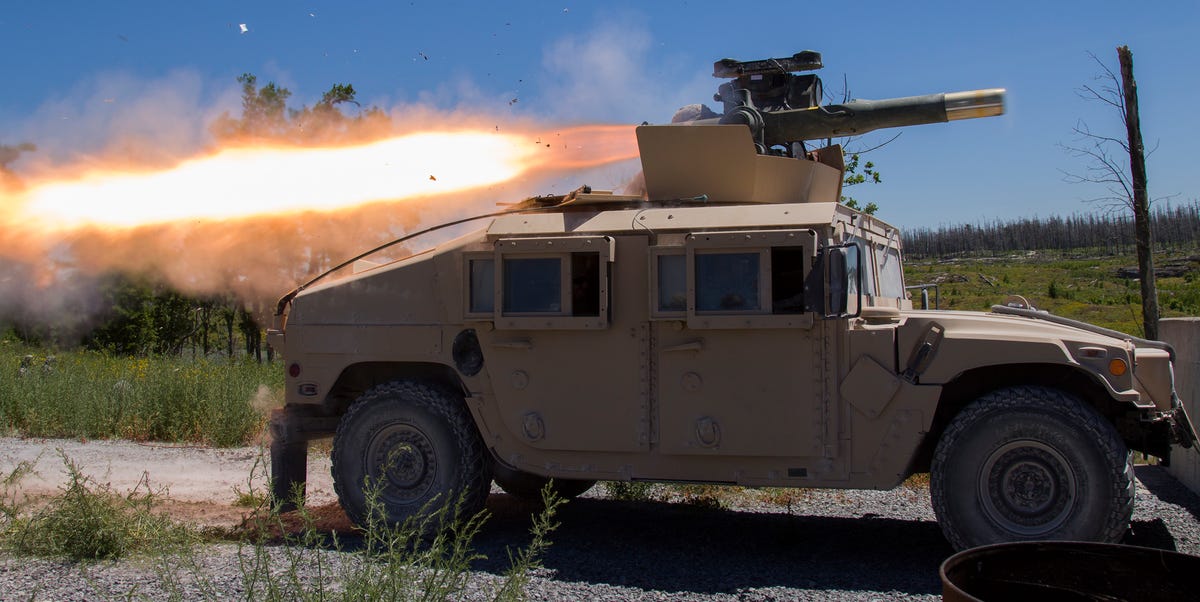
The TOW family has been used across ground forces in vehicle-mounted and dismounted configurations. Industry descriptions
routinely highlight its presence on platforms such as the Bradley and the Stryker anti-tank variants, reflecting how
closely the system is tied to U.S. mechanized formations.
Why it became “legendary”
TOW earned its reputation the old-fashioned way: by being fielded widely, sustained for decades, and repeatedly updated
to remain relevant against changing threats. It also became a kind of “institutional standard” for heavy anti-armor on
certain vehicle fleetsmeaning training pipelines, maintenance habits, and logistics chains grew around it. In defense
procurement, that kind of ecosystem is sticky. Replacing a missile isn’t like swapping a printer cartridge; it can ripple
through vehicles, simulators, spares, manuals, and doctrine.
Why Replace a System That Still Gets Bought?
If the Army is still awarding large contracts for TOW production and sustainment, why talk about replacement at all?
Because two things can be true at once: (1) a system is still effective and needed today, and (2) tomorrow’s requirement
is drifting far enough that “upgrades” start looking like diminishing returns.
Engagement distances and the “stand-off” problem
A recurring theme in modernization is reaching farther, reacting faster, and keeping crews safer while doing it.
Army discussions around a future heavy close-combat missile emphasize performance improvements, including longer reach
and higher speed compared to legacy systems. That’s not just about “more range on a spec sheet”it’s about who can see,
decide, and act first in a sensor-rich environment.
Mobility, survivability, and fighting on the move
Another consistent demand signal: mounted formations want lethality without needing to “park, set up, and wait.”
Future concepts emphasize the ability to engage effectively with less exposure time and greater flexibility. In plain
English, the Army wants a heavy anti-armor punch that fits modern maneuver, not just classic overwatch.
Countermeasures, cluttered battlefields, and multi-role expectations
Modern threats don’t show up as a neat line of tanks on an empty field. They appear with decoys, drones, electronic
warfare, and mixed targetsarmor, fortifications, and vehicles in complex terrain. The replacement conversation reflects
a desire for a missile that is more adaptable in how it finds and prioritizes targets, and how it fits into a broader
networked fight.
The “Official” Replacement Conversation: CCMS-H
The Army’s most commonly cited effort associated with replacing TOW in the heavy close-combat anti-armor role is the
Close Combat Missile System–Heavy (CCMS-H). Public reporting has described CCMS-H as the pathway for a next-generation
heavy missile with significantly improved performance and modern engagement options, with an aspirational fielding window
often discussed in the late 2020s to early 2030s.
What CCMS-H is trying to solve
- More capability where it counts: longer reach, faster timelines, and better effectiveness against modern armored threats.
- More flexibility in employment: reduced dependence on a single style of engagement and better fit with moving formations.
- Better growth potential: software-driven upgrades and adaptability as threats change.
Why Congress cares (and why you should too)
Congressional oversight documents have explicitly referenced CCMS-H as an emerging requirement related to modernizing the
TOW missile system, alongside other missile needs linked to the Army’s next-generation fighting vehicle efforts. This is
important because it signals two realities: the replacement idea is “real enough” to brief to lawmakers, and it’s tangled
up with vehicle modernization decisions that can make or break timelines.
Form factor and the tyranny of installed launchers
One of the least glamorous but most decisive issues in any missile replacement: compatibility. If a new missile can’t
leverage existing launchers or requires major platform changes, costs climb and fielding slows. Oversight discussions
have highlighted concerns about duplication, affordability, and whether new missiles maintain a TOW-like “form, fit, and
factor” that reduces rework across existing fleets.
The Bridge Strategy: Keep TOW Relevant While “Next” Gets Built
Even if CCMS-H becomes the future, it won’t appear overnight. That’s why the Army continues investing in TOW production,
sustainment, and modernizationbecause “gap years” in anti-armor capability are not a fun surprise.
Big contracts signal continuing demand
Recent awards and announcements reflect ongoing manufacturing and support for the TOW weapon system. This isn’t unusual
in modernization cycles: you keep buying the proven system while you test, refine, and scale the successor.
Foreign Military Sales show the system’s global footprint
Public U.S. government notices and releases regarding Foreign Military Sales continue to reference TOW variants and
support packages. These notices matter for two reasons: they show the system’s continued relevance, and they reinforce
the industrial base that also supports U.S. needs. When allies buy into a system, sustainment ecosystems often deepen.
Example: U.S. government notifications have described potential sales of TOW 2B radio-frequency missiles and support to
partners, including quantities, estimated costs, and contractor involvementpublic reminders that the TOW family is still
part of the current era, not just a Cold War museum piece.
So What Could Replace TOW? Think “Traits,” Not Just a Name
When people hear “replacement,” they imagine a single shiny missile marching in to take the throne. In reality, the Army
may land on a combination of capabilities: a heavy close-combat missile for mechanized formations, plus longer-range
precision munitions for standoff engagement, plus lighter systems for dismounted teams.
Trait #1: Modern engagement options
Public discussions of next-generation anti-armor missiles often emphasize more autonomy in how the weapon completes an
engagement, reducing continuous operator input and improving survivability. The point is not “making things automatic
because robots are cool.” It’s about shortening exposure time and increasing flexibility in complex terrain.
Trait #2: Longer-range precision as part of mounted combat
Separate but related: the Army has pursued longer-range precision strike options for aviation and ground vehicles. For
example, public announcements have described progress around Spike NLOS in the Army’s mobile long-range precision strike
context, including phased integration and testing. While that is not “the” TOW replacement by default, it’s evidence of
where Army demand is trending: precision effects at greater distances from mobile platforms.
Trait #3: Easier integration with new vehicles
Vehicle modernization and missile modernization are increasingly linked. The Army’s long-running effort to replace the
Bradleyoften discussed under programs that evolved into today’s XM30 directioncreates opportunities (and requirements)
for future missiles that fit the next vehicle architecture. If the Army fields a new fighting vehicle, it will want a
missile ecosystem that can evolve for decades without being trapped in yesterday’s constraints.
Trait #4: Sustainment that doesn’t require heroics
A replacement must be supportable: storage life, safety, training systems, spare parts, and production capacity. If a new
missile is amazing in testing but a nightmare to sustain at scale, it risks becoming the “supercar” of the motor pool:
impressive, rare, and constantly waiting on parts.
What This Means for Soldiers, Units, and Doctrine
The most important modernization questions aren’t just about hardware. They’re about what units can reliably do under
stress: detect targets, coordinate fires, and survive counter-fire. A TOW replacement that improves engagement options
could shift how anti-armor teams are trained and positioned, especially in mounted formations.
- Training: new engagement logic and new sights/sensors mean new simulators, new qualification tables, and new habits.
- Logistics: new missiles may change storage, handling, spares, and diagnostic workflows.
- Tactics (at a high level): improved standoff and quicker engagements could change how units balance overwatch, maneuver, and concealment.
There’s also a human factor: familiarity. TOW has decades of institutional knowledge behind it. A replacement must earn
trust not only with performance but with reliability, maintainability, and clear training progression.
Risks, Tradeoffs, and the Reality Check
Defense modernization is rarely a straight line. Programs slip. Requirements evolve. Budgets shift. Congress asks hard
questions. Industry capacity matters. All of that applies to any prospective TOW replacement.
Timeline risk
Public reporting has framed CCMS-H as something the Army hopes to field in a late-2020s to early-2030s timeframe.
That’s a meaningful window where “keep TOW viable” remains essentialespecially if new vehicles and missiles must be
integrated and tested together.
Affordability and duplication concerns
Oversight language has raised concerns about potentially duplicative or redundant missile programs across combat vehicle
portfolios. Translation: if multiple programs chase similar effects without a coherent plan, costs can balloon and fielding
can slow. The Army has to balance “best possible missile” with “best sustainable capability at scale.”
Interoperability (and allies)
Because TOW is used across many partners and integrated on numerous platforms, transitions have ripple effects. Even if
the U.S. Army moves on first, allied inventories, shared training, and supply chains can influence decisions around
compatibility and pacing.
Conclusion: The Legend Isn’t EndingIt’s Handing Off the Job
The smartest way to understand “TOW missile replacement” is not as a sudden goodbye, but as a managed transition.
The Army is still investing in TOW because it remains a practical, fielded capability with deep integration across
fleets. At the same time, CCMS-H and related efforts reflect a clear modernization signal: future mounted close-combat
missiles must reach farther, adapt faster, and fit a more complex fight.
If TOW is the dependable classic pickup truckscratched, upgraded, and still haulingthe replacement will be whatever
meets tomorrow’s mission without demanding tomorrow’s budget twice. The handoff will take time. But the direction is
already visible: more flexible engagement options, more standoff precision, and missiles designed to grow with the next
generation of Army combat vehicles.
Experiences & Field Notes
Talk to people who’ve lived around legacy systemstrainers, maintainers, acquisition staff, and armored crewsand you’ll
notice a pattern: nobody describes a long-serving weapon as “old.” They call it “known.” That’s the special kind of trust
a system earns when it’s been used, repaired, upgraded, and used again across decades. With TOW, that “known” factor is
as much about the ecosystem as the missile itself.
In training environments, TOW is often discussed as a discipline: a system that rewards steady fundamentals, clear
communication inside a crew, and strong habits around setup, checks, and sight alignment. Instructors like “boring and
repeatable” because boring is what works when the weather is awful and everyone is tired. In that sense, TOW’s longevity
isn’t mysteriousit’s the product of a weapon that can be taught consistently and supported at scale.
Maintainers tend to describe the other side of the story: the slow grind of obsolescence. “It still works” can be true
while parts become harder to source, electronics age out, and supply chains get more fragile. That’s why modernization
contracts and “obsolescence and safety” updates matter in real life. They aren’t flashy, but they keep training schedules
on track and prevent readiness from turning into a scavenger hunt.
For mounted units, the lived experience is often tied to how TOW fits into vehicle routines. Crews build muscle memory
around where the system lives on the platform, how it integrates with sights, and how long it takes to go from “we see
something” to “we can engage.” Even without getting into tactics, you can understand why the Army emphasizes future
systems that reduce exposure time and increase flexibility. People who operate armored vehicles don’t want to be
stationary longer than necessaryespecially in a world where drones, counter-fire, and rapid sensor-to-shooter loops can
punish hesitation.
Acquisition and test communities add yet another “experience” layer: integration pain. Every promising new missile has a
to-do list: fit checks, interface work, safety certification, training device updates, and validation on real platforms.
When Congress asks whether a new missile maintains a TOW-like form factor, that’s not a theoretical question. It’s a
budget question, a schedule question, and a “will this be fielded in useful numbers?” question.
The most practical experience-based insight may be this: replacements don’t win by being futuristic; they win by being
dependable. The system that follows TOW will have to prove it can be produced, sustained, trained, and trustedat scale,
over time, in the real Army. If it does, the handoff won’t feel like abandoning a legend. It will feel like finishing
the next chapter the same way TOW started: by solving a soldier’s problem reliably.