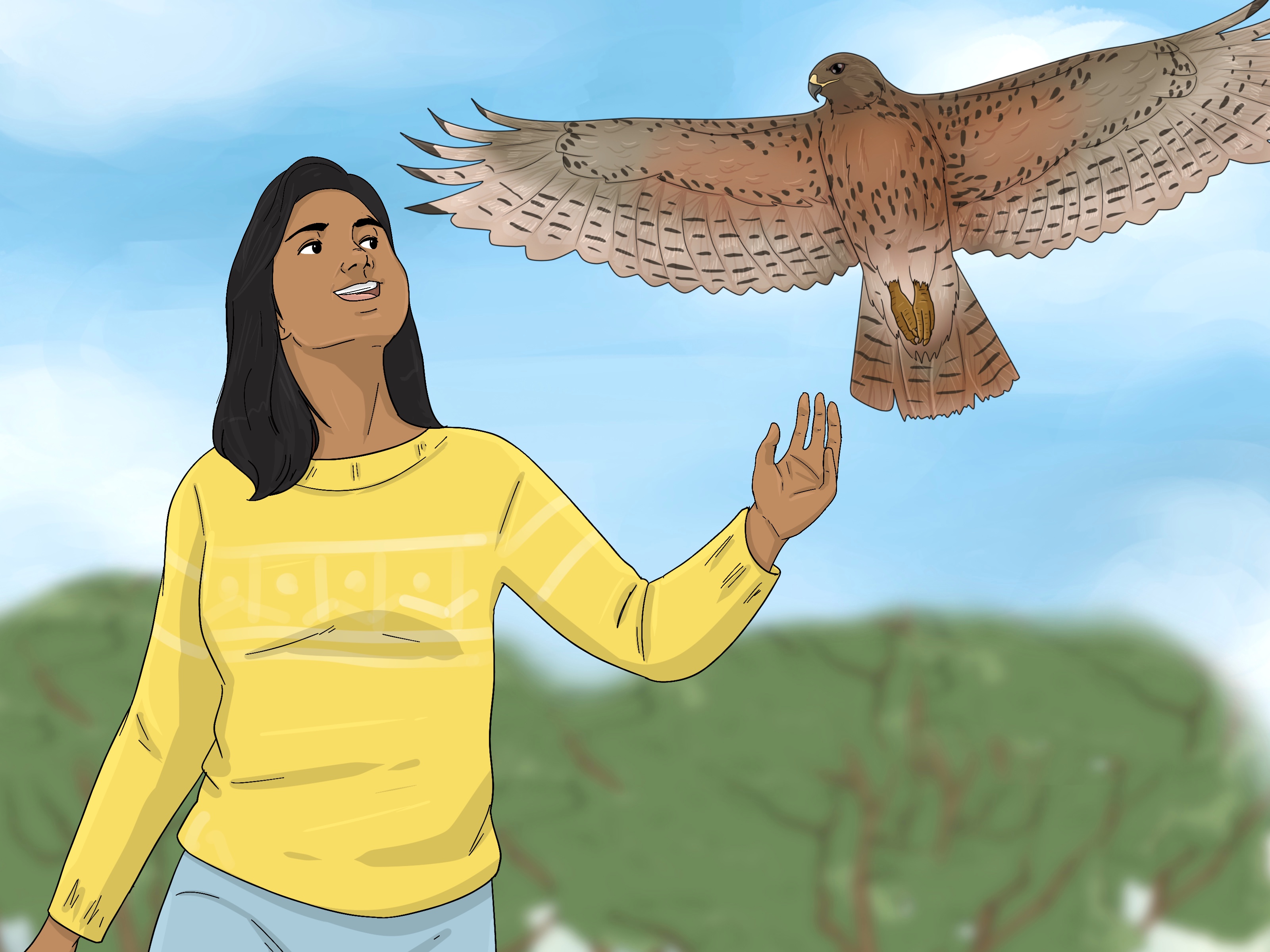
Few sights interrupt an ordinary afternoon quite like a hawk circling overhead. One moment, you are thinking about groceries, unread emails, or whether the mysterious container in the refrigerator is still legally food. The next, a broad-winged predator is floating above you with the confidence of a creature that has never attended a status meeting.
That dramatic presence helps explain why the hawk spiritual meaning is associated with vision, awareness, courage, leadership, timing, and messages from beyond everyday consciousness. Across different cultures, hawks and closely related birds of prey have represented royal authority, divine wisdom, military readiness, spiritual protection, and the ability to see situations from a higher perspective.
However, hawk symbolism is not a universal dictionary in which every sighting translates into the same message. Cultural traditions differ, biological circumstances matter, and sometimes a hawk is perched near your house because your neighborhood has excellent squirrels. Spiritual interpretation becomes most meaningful when symbolism, personal context, and respect for the actual bird are considered together.
What Does a Hawk Symbolize Spiritually?
In contemporary spiritual interpretation, the hawk usually symbolizes heightened awareness, clear vision, purposeful action, freedom, protection, and perspective. Its appearance may encourage a person to rise above emotional confusion, notice an overlooked opportunity, or act decisively after a period of observation.
A hawk does not rush around randomly. It watches, waits, adjusts, and moves when conditions are right. For that reason, seeing a hawk is often interpreted as a reminder that effective action is different from frantic activity. The bird’s symbolic message is rarely “panic immediately.” It is closer to “pay attention, understand the terrain, and then move with confidence.”
Common spiritual meanings associated with hawks
- Vision: Seeing the larger pattern instead of becoming trapped in minor details.
- Awareness: Recognizing signals, opportunities, risks, and changes in the surrounding environment.
- Decisive action: Waiting patiently but moving quickly when the correct moment arrives.
- Leadership: Maintaining direction, responsibility, and confidence under pressure.
- Freedom: Rising beyond limiting beliefs, routines, or social expectations.
- Protection: Guarding personal boundaries, loved ones, values, or spiritual commitments.
- Spiritual communication: Receiving a reminder to listen more carefully to intuition or conscience.
How the Hawk’s Natural Behavior Shapes Its Symbolism
Animal symbolism rarely appears from nowhere. People observe what an animal does and turn those visible qualities into metaphors. Hawks provide unusually rich material because nearly everything about them looks deliberate.
Keen eyesight and spiritual vision
Hawks are visual hunters. A red-tailed hawk may sit quietly on a utility pole, studying a field for the movement of a vole or rabbit. From the ground, it appears almost motionless. From the hawk’s perspective, it is processing a landscape full of information.
This hunting ability gave rise to the hawk’s strongest symbolic association: clear sight. Spiritually, hawk vision is not limited to predicting the future. It can mean recognizing an uncomfortable truth, noticing a repeated pattern, or understanding how today’s choices may shape tomorrow’s consequences.
Soaring and the higher perspective
Broad-winged hawks can use rising columns of warm air, called thermals, to gain altitude while conserving energy. They may circle upward and then glide across long distances. To human observers, this creates a natural image of elevation without unnecessary struggle.
Symbolically, the soaring hawk asks whether a problem would look different from a greater emotional or intellectual distance. Perhaps the argument that feels enormous today is only one small feature of a larger relationship. Perhaps the career setback that resembles a brick wall is actually a badly placed speed bump.
Patience followed by precision
A hunting hawk may wait for a long time before making one committed movement. This combination of stillness and speed represents disciplined timing. The lesson is not simply to wait, nor is it to attack every available opportunity. It is to prepare carefully enough that decisive action becomes possible.
Independence and cooperation
Hawks are often imagined as solitary creatures, and many are frequently observed alone. Yet the family includes a wide range of behaviors. Harris’s hawks, for example, are remarkably social and may hunt cooperatively, surround prey, take turns chasing it, and assist one another around nests.
This adds nuance to the spiritual meaning of a hawk. Strength does not always require isolation. Sometimes the hawk represents personal independence; at other times, it demonstrates that coordinated teamwork can be more effective than one heroic person attempting to do everything while quietly becoming exhausted.
Hawk Symbolism in Native and Indigenous Traditions
Discussions of Native American hawk symbolism require care. There is no single “Native American religion,” and hundreds of distinct nations have their own languages, histories, ceremonies, stories, and relationships with animals. Assigning one fixed hawk meaning to every Indigenous culture erases those differences.
In many Indigenous traditions, animals are understood as relatives, participants in creation stories, clan figures, teachers, or beings connected with family and community histories. Animal imagery may communicate spiritual values, identity, responsibility, or relationships with particular places. Its meaning belongs within a living cultural context rather than a generic online personality quiz.
Therefore, phrases such as hawk spirit animal or hawk totem meaning should not be casually presented as if every tribal nation uses them in the same way. A respectful approach is to consult sources produced by the specific nation or community being discussed and avoid copying sacred imagery, ceremonial designs, or clan symbols.
The Hawaiian hawk and sacred ancestry
A more culturally specific example comes from Hawaiʻi. The Hawaiian hawk, known as the ʻio, has been associated with lofty flight, royalty, and spiritual ancestry. In traditional Hawaiian belief, an ʻio may be understood as an ʻaumakua, an ancestral family deity or guardian appearing in animal form.
The ʻio has also been connected with Kū, a major Hawaiian deity associated with areas including governance, warfare, labor, building, fishing, and farming. Here, the hawk’s symbolism is rooted in a particular place, species, language, and spiritual systemnot a universal formula that can be detached from Hawaiian culture.
Hawks, Falcons, and Ancient Egyptian Symbolism
Articles about hawk symbolism frequently mention ancient Egypt, but an important zoological footnote is needed: Egyptian imagery usually centers on the falcon, especially the god Horus. Hawks and falcons are both daytime birds of prey, so translations and popular descriptions sometimes blur the distinction. They are not scientifically identical birds.
Horus was represented as a falcon or as a human figure with a falcon’s head. His imagery became connected with the sky, kingship, divine authority, protection, and the pharaoh. The famous Eye of Horus developed into a symbol associated with protection, healing, royal power, and restored order.
Although this tradition is more accurately described as falcon symbolism, it influenced the broader cultural image of high-flying raptors as beings positioned between the earthly and divine worlds. Their ability to travel through the sky made them natural emblems of celestial authority. Apparently, flying above everyone was the ancient version of having the executive office on the top floor.
Hawk Meaning in Greek and Roman Traditions
In the ancient Mediterranean world, the behavior of birds could be interpreted as a sign of divine approval, warning, or direction. Roman augurs studied the appearance, movement, calls, numbers, and flight patterns of birds to interpret the will of the gods.
Not every bird carried the same meaning, and interpretations depended on circumstances such as direction and location. This is an important contrast with modern “one bird equals one message” explanations. Ancient divination systems were usually governed by specialized rules, ritual authority, and cultural knowledge.
Hawks also appeared in myths of transformation and pursuit. Because of their predatory nature, they could suggest speed, power, danger, or relentless action. In this context, a hawk was not automatically a friendly spiritual postcard. It might represent a force that demanded attention precisely because it could not be ignored.
Biblical Meaning of a Hawk
In the Book of Job, the hawk’s flight is presented within a larger meditation on divine wisdom and the limits of human understanding. Job 39:26 asks whether it is through human wisdom that the hawk takes flight and spreads its wings southward.
The spiritual significance is less about personal fortune-telling and more about humility. The hawk’s instinct, migration, and mastery of the air belong to an order greater than human control. From a biblical perspective, the bird can therefore symbolize divine wisdom expressed through creation, as well as the reminder that people do not understand or manage everything.
For readers applying this symbolism personally, the hawk may encourage trust, reverence, and humility. It suggests that wisdom sometimes begins when a person stops pretending to have every answer neatly labeled and stored in a color-coded folder.
Hawk Symbolism in Japanese Art and Warrior Culture
Hawks became important subjects in Japanese art, particularly among military patrons. Paintings of tethered hawks could symbolize martial readiness, discipline, valor, and the warrior spirit. Their keen eyes, curved talons, controlled posture, and predatory strength made them suitable metaphors for trained power.
The tether is symbolically significant. A tethered hawk possesses tremendous ability, but it does not release that power carelessly. It waits under discipline until the appropriate moment. In that sense, the image combines strength with restraint.
Hawks depicted with evergreen pine trees could also suggest endurance, longevity, authority, and resilience. During periods of military rule, the hawk was associated with kings, warlords, and members of the warrior class. Its message was not merely “be fierce.” It was “develop skill, remain prepared, and control your strength well enough that it serves a purpose.”
Hawks, Falconry, and the Symbolism of Disciplined Power
For centuries, falconry connected birds of prey with nobility, hunting skill, patience, and prestige. Despite its name, falconry may involve trained hawks and other raptors as well as falcons. In Europe and elsewhere, access to certain birds could reflect rank and social status.
Spiritually, the partnership between bird and handler offers another interpretation of the hawk: power cannot be owned completely. A raptor retains instinct, awareness, and its own nature. Cooperation depends on training, attention, consistency, and trust.
This symbolism can apply to talent, ambition, emotion, or leadership. Raw power is impressive, but unmanaged power tends to break furniture. The deeper hawk lesson is to cultivate strength without destroying the relationship between freedom and responsibility.
What Does Seeing a Hawk Mean?
The spiritual meaning of seeing a hawk depends partly on what the bird was doing and what was happening in your life. The following interpretations are reflective possibilities rather than guaranteed supernatural predictions.
Seeing a hawk flying overhead
A hawk circling above you may symbolize perspective, freedom, or the need to examine the larger pattern. It can be a useful prompt when you feel trapped in details, interpersonal drama, or short-term fear.
Seeing a hawk perched nearby
A perched hawk often represents observation and patience. The symbolic question is simple: what should you understand before you act? The bird’s stillness may suggest that waiting is not the same as doing nothing.
A hawk crossing your path
A hawk crossing your path may be interpreted as a call to become alert. Something may require a clearer decision, firmer boundary, or more focused response. Before assigning mystical significance, however, consider ordinary circumstances. Wildlife uses roadsides, trees, open fields, and utility poles because those places provide useful hunting positions.
Repeated hawk sightings
Repeated sightings can feel personally meaningful. They may encourage you to notice a recurring theme in your life involving leadership, independence, timing, or awareness. They may also occur because a hawk has established a territory near your regular route. These explanations can coexist: the ecological reason tells you why the bird is present, while reflection determines what the encounter inspires in you.
Seeing two hawks together
Two hawks may symbolize partnership, shared direction, family responsibility, or balanced independence. During breeding, migration, or cooperative behavior, hawks may appear near one another for entirely natural reasons. Symbolically, the sight can prompt consideration of how autonomy and cooperation operate in your relationships.
Hawk Dream Meaning
A hawk in a dream often represents awareness, ambition, judgment, freedom, or a challenge that must be viewed from another angle. The emotional atmosphere of the dream matters more than any rigid symbol guide.
A soaring hawk
A peacefully soaring hawk may reflect growing confidence, expanded perspective, or release from an old limitation. It can suggest that you are mentally rising above a problem that once seemed overwhelming.
A hawk attacking
An attacking hawk may symbolize pressure, conflict, fear of criticism, or an ambition that has become aggressive. It may also represent a part of your personality that is demanding action after being ignored.
An injured hawk
An injured hawk can suggest damaged confidence, restricted freedom, exhaustion, or difficulty trusting your own judgment. The dream may invite restoration rather than immediate action.
A hawk watching you
A watching hawk may reflect self-examination. You may feel observed by others, judged by your own conscience, or challenged to notice something you would rather avoid. The dream is essentially your subconscious hiring a very intense auditor.
The Shadow Side of Hawk Symbolism
Spiritual symbols are most useful when their uncomfortable qualities are included. Hawks represent clarity and confidence, but those strengths can become distorted.
Vision may turn into obsessive surveillance. Leadership may become domination. Independence may become isolation. Decisiveness may become aggression. Ambition may narrow into tunnel vision, causing a person to pursue one goal while ignoring relationships, health, or ethical consequences.
If hawk symbolism appears during a tense period, consider whether the message is not “be more powerful” but “use power more wisely.” The mature hawk archetype combines strength with restraint, observation with action, and freedom with responsibility.
How to Interpret a Hawk Encounter Responsibly
- Observe the real bird first. Notice whether it is soaring, hunting, resting, calling, defending a nest, or moving through its habitat.
- Record your circumstances. Write down what you were thinking about and what decision or emotion felt important at that moment.
- Avoid instant conclusions. A hawk sighting is not proof that a particular event will happen.
- Respect cultural boundaries. Do not claim a tribal identity, clan symbol, ceremonial role, or Indigenous teaching without an authentic connection and community-specific knowledge.
- Look for practical meaning. Ask whether the encounter encourages clearer observation, better timing, stronger boundaries, or more responsible leadership.
- Respect wildlife. Watch from a distance, avoid disturbing nests, and allow the hawk to remain a wild animal rather than turning it into a photo prop with feathers.
Experiences Related to Hawk Spiritual Meaning
The following are composite reflective experiences based on common ways people describe meaningful wildlife encounters. They are not presented as supernatural proof or as the author’s personal memories.
The hawk above the traffic jam
Imagine a commuter sitting in motionless traffic before an important job interview. The position offers more money, but the workplace has a reputation for exhausting employees. While the driver rehearses answers and questions every recent decision, a red-tailed hawk begins circling above the highway.
The bird does not magically reveal whether the job should be accepted. Instead, it changes the quality of the commuter’s thinking. From above, the lines of cars probably look small and temporary. The sight becomes a reminder to consider the entire career path rather than the excitement of one offer. During the interview, the candidate asks better questions about workload, leadership, and turnover. The eventual decision is based on evidence, but the hawk encounter helped create the mental distance needed to examine that evidence honestly.
The perched hawk during a family conflict
In another experience, a person leaves home after a difficult argument with a sibling. Every sentence from the conversation is still replaying at maximum emotional volume. A hawk is perched on a bare branch near the edge of a field, apparently doing absolutely nothing.
Yet the bird is watching. Its stillness does not look weak or indecisive. It looks alert. The observer realizes that an immediate text message would probably continue the argument rather than solve it. The symbolic lesson becomes patience: wait until anger settles, understand what caused the conflict, and respond with purpose. The later conversation is not perfect, but it is less destructive because the response was chosen instead of launched.
The migrating hawks and a major transition
A person preparing to move across the country visits a migration watch site during autumn. Overhead, groups of raptors use rising air currents to gain altitude before continuing south. The birds are traveling, but they are not flapping desperately every mile. They use available conditions, conserve energy, and move in stages.
The experience changes how the person thinks about relocation. A major transition does not need to be completed emotionally in one heroic burst. Help can be accepted. Rest can be planned. Familiar routines can be rebuilt gradually. The hawks become a symbol not merely of movement, but of intelligent movementprogress shaped by timing, environment, and energy.
The backyard hawk and uncomfortable awareness
Someone repeatedly sees a Cooper’s hawk near a backyard feeder. At first, the visitor is treated as a spiritual sign of protection. Then the observer notices that the hawk is watching the smaller birds gathering around the feeder. The scene is less like a peaceful greeting card and more like a neighborhood restaurant where half the customers have suddenly become the menu.
This encounter adds complexity to hawk symbolism. Nature is not arranged solely for human comfort. The hawk survives by hunting, and its beauty does not erase its predatory role. For the observer, the lesson becomes honest awareness: maturity includes seeing what is actually present, not only what feels inspiring. Spiritual clarity may be beautiful, but it is not always gentle.
The hawk that appeared after a difficult decision
After ending an unhealthy business partnership, a person notices a hawk perched beside the road. The timing feels significant, and the encounter is remembered as confirmation that the decision was correct.
A responsible interpretation does not claim that the hawk delivered a legally binding message from the universe. Instead, the sight becomes a personal symbol of boundaries and regained perspective. The person had spent months ignoring warning signs, hoping the situation would repair itself. The hawk’s direct, focused presence reflects the decisiveness that had finally been required.
Months later, the encounter remains meaningful because it represents a real internal change. The bird did not make the decision. It gave the mind an image through which courage, clarity, and responsibility could be remembered.
Conclusion: The Enduring Spiritual Significance of the Hawk
The hawk spiritual meaning is built on a striking combination of natural ability and human imagination. Hawks see from great distances, rise on invisible air currents, wait with patience, defend their territory, migrate across enormous landscapes, and act with extraordinary precision. These behaviors have inspired symbols of vision, courage, authority, protection, freedom, and divine wisdom.
Across cultures, however, the meanings are not identical. The Hawaiian ʻio belongs within specific traditions of ancestry and sacred power. Ancient Egyptian falcon imagery expressed kingship and celestial authority. Biblical writing used the hawk to emphasize divine wisdom beyond human understanding. Japanese artists connected hawks with valor, military preparedness, discipline, and endurance.
For a modern observer, seeing a hawk can become an invitation to pause and look again. What are you failing to notice? Where do you need greater perspective? Have you waited long enough, or are you using “patience” as a fashionable disguise for fear? Do you need to act, cooperate, establish a boundary, or release a narrow point of view?
The most valuable hawk symbolism does not predict your future for you. It sharpens your attention so you can participate in that future more consciously. That may be less dramatic than receiving a secret message from the sky, but it is considerably more useful.