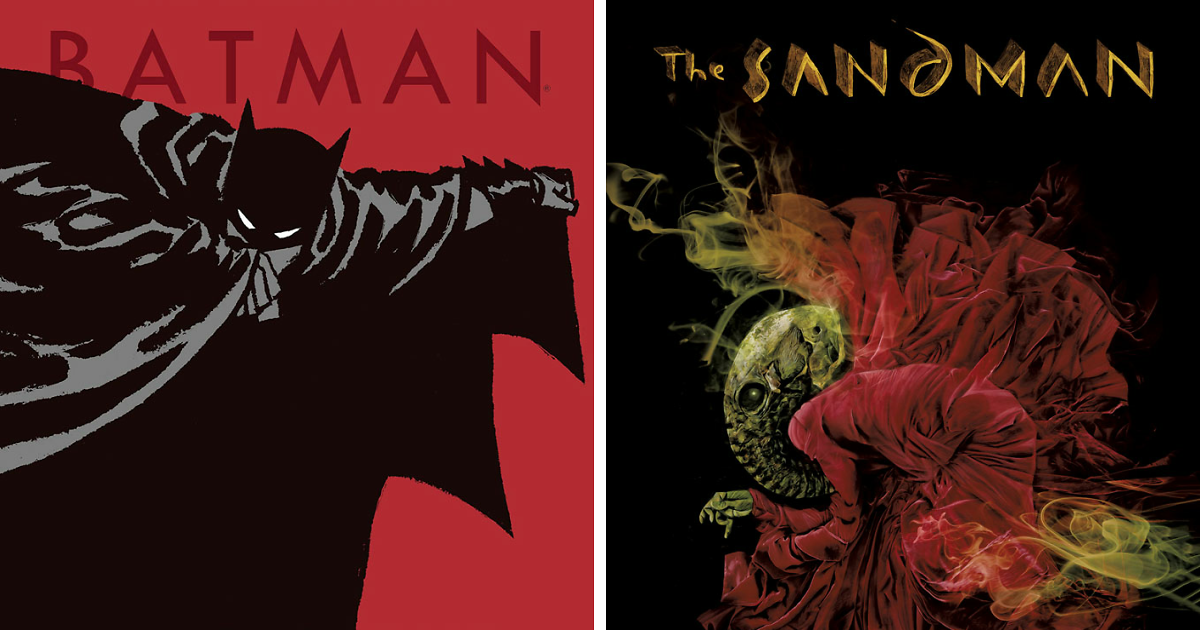
Some books ask you to imagine the scenery. Graphic novels arrive with the scenery, lighting, facial expressions, visual rhythm, anddepending on the titlean alarmingly large intergalactic cat. For visual readers, these illustrated narratives are not shortcuts around “real” reading. They are layered works in which words and pictures share the storytelling load.
The best graphic novels can compress decades into a page, turn silence into suspense, or make one raised eyebrow funnier than a paragraph of dialogue. This list includes literary classics, graphic memoirs, historical nonfiction, fantasy, science fiction, horror, manga, and accessible books for younger readers. Stand-alone stories appear alongside collected series that are best experienced as larger narratives.
Several selections address war, discrimination, sexuality, abuse, grief, or graphic violence. Readers choosing books for children or teens should review age recommendations and content guidance for the specific edition.
Literary Landmarks and Essential Classics
-
1. Maus by Art Spiegelman
Spiegelman transforms his father’s Holocaust testimony and their difficult relationship into a layered graphic memoir. Its animal symbolism looks simple, but the questions about trauma, memory, and survival are anything but.
-
2. Watchmen by Alan Moore and Dave Gibbons
This meticulously structured murder mystery dismantles superhero mythology one compromised character at a time. Recurring symbols, background clues, and Gibbons’s disciplined panel grids make every rereading feel like forensic work.
-
3. The Sandman by Neil Gaiman and Various Artists
Mythology, horror, Shakespeare, history, and family drama collide in the story of Dream, ruler of an ever-changing realm. Begin with Preludes & Nocturnes, then prepare to lose several weekends.
-
4. Persepolis by Marjane Satrapi
Satrapi recounts growing up during the Iranian Revolution with crisp black-and-white artwork, political insight, family warmth, and rebellious humor. It is history viewed through the sharp eyes of an observant child.
-
5. Fun Home by Alison Bechdel
Bechdel examines sexuality, family secrecy, literature, and her complicated relationship with her father. Its carefully composed pages reward patient readers who enjoy memoirs that operate like emotional detective stories.
-
6. A Contract with God by Will Eisner
Eisner’s linked stories about residents of a New York tenement helped shape the modern graphic novel. Rain-soaked streets and dramatically expressive figures give ordinary disappointments the scale of ancient tragedy.
-
7. Ghost World by Daniel Clowes
Two friends drift through the awkward territory after high school, judging everyone while quietly fearing their own futures. Clowes makes alienation funny, uncomfortable, and painfully recognizable without offering tidy answers.
-
8. Jimmy Corrigan: The Smartest Kid on Earth by Chris Ware
Ware’s precise diagrams, muted palette, and tiny panels trace loneliness across generations. The book looks as if it were engineered by a watchmaker, yet sadness leaks through every carefully measured seam.
-
9. Black Hole by Charles Burns
A strange mutation spreading among teenagers becomes a disturbing metaphor for desire, shame, and social exclusion. Burns’s heavy black inks make suburban adolescence resemble the world’s most beautifully printed nightmare.
-
10. Asterios Polyp by David Mazzucchelli
An arrogant architecture professor loses his home and begins rebuilding his life. Color, lettering, perspective, and panel design change with each character, making the artwork an active participant in every argument.
Powerful Graphic Memoirs, History, and Reportage
-
11. March by John Lewis, Andrew Aydin, and Nate Powell
This three-volume graphic memoir follows Lewis from childhood through the American civil rights movement. Powell’s fluid artwork conveys both the physical danger of protest and the discipline required to remain nonviolent.
-
12. The Best We Could Do by Thi Bui
Bui explores her family’s escape from Vietnam, their resettlement in America, and the inherited weight of displacement. Watercolor-like images soften the page without softening the family’s painful history.
-
13. They Called Us Enemy by George Takei, Justin Eisinger, Steven Scott, and Harmony Becker
Takei remembers his childhood incarceration in Japanese American camps during World War II. The book contrasts a child’s partial understanding with an adult’s recognition of the injustice surrounding him.
-
14. Ducks: Two Years in the Oil Sands by Kate Beaton
Beaton recounts working in Alberta’s oil industry while paying off student debt. Her understated drawings capture isolation, environmental damage, workplace danger, and the compromises people make when opportunity is scarce.
-
15. Can’t We Talk About Something More Pleasant? by Roz Chast
Chast approaches her aging parents’ decline with anxiety, affection, frustration, and brutally funny honesty. It is an essential book about caregiving, family responsibility, and paperwork multiplying when nobody is looking.
-
16. Stitches by David Small
Small reconstructs a childhood shaped by illness, silence, and family betrayal. Loose, shadowy drawings create a dreamlike atmosphere in which fear often appears before the young narrator understands its source.
-
17. Palestine by Joe Sacco
Sacco combines comics journalism, interviews, observation, and personal reflection in this account of life in the Palestinian territories. Dense pages require attention, but they also reveal details conventional reporting can overlook.
-
18. The Photographer by Emmanuel Guibert, Didier Lefèvre, and Frédéric Lemercier
Documentary photography and drawn panels combine in an account of a medical mission through Afghanistan. The shifting media make the journey feel immediate while emphasizing how incomplete any single record can be.
-
19. Pyongyang by Guy Delisle
Delisle’s travel memoir observes daily life during a work assignment in North Korea. His restrained cartooning captures bureaucracy, surveillance, absurd restrictions, and the uneasy position of a temporary foreign visitor.
-
20. Gender Queer by Maia Kobabe
This personal memoir explores identity, pronouns, relationships, and the difficulty of finding language for an evolving sense of self. Its direct visual explanations have made it especially meaningful to many questioning readers.
Science Fiction, Fantasy, Superheroes, and Horror
-
21. Saga by Brian K. Vaughan and Fiona Staples
Two soldiers from opposing civilizations flee with their newborn daughter while an interplanetary war follows them. Staples fills the universe with expressive characters, strange creatures, and technology that sensibly refuses to behave.
-
22. Monstress by Marjorie Liu and Sana Takeda
This epic fantasy follows a young woman connected to a terrifying ancient power. Takeda’s elaborate Art Deco-inspired world is packed with political intrigue, magical cats, monstrous appetites, and extremely questionable alliances.
-
23. Descender by Jeff Lemire and Dustin Nguyen
A childlike android becomes the key to a mystery involving gigantic machines and widespread anti-robot fear. Nguyen’s delicate watercolor artwork gives the space opera unusual warmth and vulnerability.
-
24. On a Sunbeam by Tillie Walden
A crew restores ruined structures across space while a young woman searches for someone she lost. Walden favors glowing color, emotional intimacy, and quiet wonder over the usual laser-filled cosmic shouting match.
-
25. Paper Girls by Brian K. Vaughan and Cliff Chiang
Four newspaper delivery girls encounter time travelers, future versions of themselves, and increasingly complicated consequences. Chiang’s energetic artwork turns 1980s suburbia into a neon-colored science-fiction battleground.
-
26. The Incal by Alejandro Jodorowsky and Moebius
A thoroughly unimpressive detective acquires an object of cosmic importance and stumbles into an enormous space adventure. Moebius’s imaginative landscapes remain a feast for readers who value visual invention.
-
27. The Dark Knight Returns by Frank Miller, Klaus Janson, and Lynn Varley
An aging Bruce Wayne returns to a Gotham City that has become more violent and politically unstable. The muscular layouts influenced decades of superhero storytelling, sometimes for better and occasionally for louder.
-
28. V for Vendetta by Alan Moore and David Lloyd
A masked revolutionary challenges a totalitarian British government while drawing a young woman into his campaign. Lloyd’s shadow-heavy artwork gives the political thriller an appropriately theatrical and unsettling mood.
-
29. Locke & Key by Joe Hill and Gabriel Rodríguez
A grieving family moves into an ancestral house filled with magical keys, each offering astonishing abilities and dangerous consequences. Rodríguez turns architectural detail into suspense; every doorway feels suspicious.
-
30. The Nice House on the Lake by James Tynion IV and Álvaro Martínez Bueno
A group of friends accepts an invitation to a luxurious lakeside retreat just as civilization collapses. Elegant pages, fractured memories, and controlled revelations create a deeply uncomfortable mystery.
Outstanding Graphic Novels for Teens and Younger Readers
-
31. American Born Chinese by Gene Luen Yang
Three apparently separate stories converge in a smart exploration of identity, stereotypes, shame, and belonging. Yang shifts between myth, school drama, and exaggerated comedy without losing the emotional thread.
-
32. New Kid by Jerry Craft
Jordan Banks enters a prestigious private school where he is one of few Black students. His sketchbook observations expose microaggressions, social pressure, friendship problems, and the exhausting art of code-switching.
-
33. Smile by Raina Telgemeier
A dental accident launches years of braces, surgeries, school embarrassment, and changing friendships. Telgemeier turns a painfully relatable adolescence into a warm, funny story that reluctant readers often finish rapidly.
-
34. Nimona by ND Stevenson
A chaotic shapeshifter becomes sidekick to a supposed villain and begins exposing the kingdom’s heroic establishment. The book delivers sword fights and science while asking who gets to define a monster.
-
35. Heartstopper, Volume 1 by Alice Oseman
Charlie and Nick’s friendship gradually becomes something more in this gentle school romance. Oseman’s open layouts, handwritten effects, and expressive faces make small moments feel wonderfully significant.
-
36. The Prince and the Dressmaker by Jen Wang
A prince secretly loves wearing glamorous dresses, while a talented seamstress dreams of recognition. Wang wraps identity, friendship, fashion, and family expectations in artwork that practically twirls across the page.
-
37. The Magic Fish by Trung Le Nguyen
A Vietnamese American boy uses fairy tales to communicate with parents whose language he does not fully share. Nguyen distinguishes story worlds through color, clothing, and decorative visual motifs.
-
38. When Stars Are Scattered by Victoria Jamieson and Omar Mohamed
Based on Mohamed’s childhood in a Kenyan refugee camp, this moving book follows two brothers navigating scarcity, disability, education, and uncertain resettlement. The accessible artwork invites empathy without simplifying their circumstances.
-
39. Dragon Hoops by Gene Luen Yang
Yang follows a high school basketball team while examining ambition, faith, community, and his own discomfort with sports. Visual motion makes each game exciting even for readers who consider exercise a rumor.
-
40. This One Summer by Mariko Tamaki and Jillian Tamaki
Two friends spend another summer at the lake while becoming aware of adult conflict and complicated desire. Jillian Tamaki’s indigo-toned artwork captures both childhood freedom and approaching adolescence.
Visually Inventive and International Must-Read Comics
-
41. My Favorite Thing Is Monsters by Emil Ferris
A monster-obsessed girl investigates a neighbor’s death in 1960s Chicago. Ferris presents the story as a ballpoint-pen notebook filled with portraits, clues, movie references, and astonishingly textured crosshatching.
-
42. Here by Richard McGuire
One corner of one room is shown across thousands of years, with different moments layered inside the same image. The concept is simple, but the resulting meditation on time feels enormous.
-
43. Building Stories by Chris Ware
Fourteen printed piecesincluding books, pamphlets, and newspaper-like pagescan be read in multiple orders. It transforms reading into an act of assembly while exploring loneliness, memory, family, and ordinary disappointment.
-
44. The Arrival by Shaun Tan
This wordless immigration story follows a man entering a surreal city filled with unfamiliar customs and creatures. Tan makes confusion universal by denying every reader the comfort of readable signs.
-
45. Blankets by Craig Thompson
Thompson’s autobiographical coming-of-age story examines first love, religious upbringing, sibling bonds, and the painful process of choosing one’s beliefs. Flowing black-and-white artwork makes emotion feel almost physical.
-
46. Daytripper by Fábio Moon and Gabriel Bá
Each chapter imagines a different possible ending in the life of an obituary writer. The Brazilian twins use this repeated structure to celebrate ordinary moments rather than merely arranging increasingly creative funerals.
-
47. Akira by Katsuhiro Otomo
Teenage bikers, psychic experiments, political unrest, and catastrophic power collide in a sprawling cyberpunk epic. Otomo’s detailed cityscapes and explosive action sequences established a formidable standard for science-fiction manga.
-
48. Nausicaä of the Valley of the Wind by Hayao Miyazaki
Miyazaki’s manga expands far beyond the animated film, following a compassionate princess through ecological collapse and war. Intricate environments encourage readers to study every machine, creature, and toxic forest.
-
49. Essex County by Jeff Lemire
These interconnected stories examine isolation, memory, hockey, family, and rural Canadian life. Lemire’s rough black lines may appear spare, but they carry remarkable tenderness and emotional precision.
-
50. The Many Deaths of Laila Starr by Ram V and Filipe Andrade
The goddess of death is sent to Earth after humanity discovers immortality. Andrade’s luminous colors and flowing city scenes turn a philosophical story about mortality into a vivid celebration of living.
The Reader Experience: What Changes When You Read Graphic Novels
Learning to Slow Down
One of the most common experiences for new visual readers is finishing a graphic novel too quickly. Years of reading prose train the eye to chase sentences from left to right, but comics ask readers to pause. A silent panel may establish mood, hide a clue, or reveal that a character’s brave speech is contradicted by trembling hands. The empty space between panels also matters because readers mentally supply the movement, time, or event that connects one image to the next.
Books such as Watchmen, Here, and Building Stories reward this slower approach. Returning to an earlier page often reveals repeated shapes, colors, advertisements, or background figures. A first reading delivers the plot; a second reading exposes the machinery.
Discovering That Art Style Is Part of the Narrator
Readers sometimes approach graphic novels expecting polished realism, only to encounter the rough lines of Essex County, the notebook textures of My Favorite Thing Is Monsters, or the deceptively simple figures in Persepolis. The adjustment can take several pages. Then something clicks: the drawing style is not packaging around the story. It is the voice telling the story.
Detailed artwork can create immersion, but simplicity can create immediacy. A tiny change in posture may communicate embarrassment more effectively than realistic anatomy. A restricted palette can separate timelines, signal emotional distance, or make a sudden color feel explosive.
Finding the Right Gateway Book
Not every acclaimed graphic novel is the ideal first graphic novel. A reader who loves family memoirs might begin with Fun Home or The Best We Could Do. A science-fiction fan may connect faster with Saga, Descender, or Akira. Younger or reluctant readers often respond to Smile, New Kid, or Nimona because the visual pacing creates momentum without sacrificing complexity.
The best entry point is usually a familiar genre rather than the title with the largest pile of awards. Reading is not a dental procedure; nobody receives a medal for beginning with the most intimidating option.
Choosing Between Print and Digital Editions
Digital editions are convenient and can enlarge small lettering, but print remains especially satisfying for books with unusual dimensions, double-page spreads, or experimental construction. Building Stories depends on physical handling, while the detailed cityscapes of Akira benefit from generous page size.
On the other hand, guided-view digital reading can help beginners understand panel order. The strongest format is the one that preserves the artwork while allowing comfortable, unhurried reading.
Sharing the Experience
Graphic novels work remarkably well in book clubs because readers can discuss both narrative and design. Why did the artist remove color? Why is a character placed at the edge of the panel? Why does one scene use no dialogue? Two readers may agree about what happened while interpreting the visual presentation very differently.
That combination of accessibility and depth explains why the best graphic novels stay memorable. They offer an immediate emotional doorway, followed by rooms full of symbolism, structure, history, and artistic choices waiting to be explored.
Final Thoughts on the Best Graphic Novels
Graphic novels are not a single genre any more than movies are a single genre. They can document war, recreate childhood, build entire galaxies, explain cultural identity, or turn a quiet family dinner into unbearable suspense. What unites them is the productive tension between what the words say and what the pictures reveal.
Readers new to visual storytelling should choose one title connected to an existing interest, whether that means memoir, romance, fantasy, history, horror, or manga. Read the first pages slowly, notice how your eye moves, and allow the artwork to carry information that dialogue leaves unsaid. Soon, those panels will stop looking like boxes and start behaving like time, movement, memory, and emotion.