Note: This article synthesizes current public information from major U.S. automotive, safety, consumer, and manufacturer sources, including Cadillac, General Motors, NHTSA, IIHS, Consumer Reports, Car and Driver, Wired, Reuters, AP, The Verge, and other reputable industry coverage. No source links are included per request.
Introduction: When the Metaphor Parks in Its Own Driveway
For decades, Americans have used the phrase “the Cadillac of” to describe the best, plushest, most over-the-top version of almost anything. The Cadillac of refrigerators. The Cadillac of lawn mowers. The Cadillac of office chairs. So it feels almost too perfect that one of the most polished hands-free driving systems in the United States comes from an actual Cadillac.
The title “The Cadillac of Self-Driving Cars Is a Cadillac” sounds like a punchline, but it is also a surprisingly fair way to talk about Cadillac’s place in the modern driver-assistance race. Cadillac’s Super Cruise is not a fully self-driving system. It does not turn your Escalade into a robot chauffeur that can take you to brunch while you finish your nap. But among real-world hands-free driving technologies available in production vehicles, Cadillac helped make the experience feel less like a science fair project and more like a luxury feature.
That distinction matters. The car industry has spent years throwing around dramatic phrases like autonomous driving, self-driving cars, robotaxis, hands-free driving, and artificial intelligence. Meanwhile, actual drivers just want to know one thing: can the vehicle help reduce fatigue on long highway drives without making them feel like unpaid beta testers? Cadillac’s answer, through Super Cruise, is a confident “yes, under the right conditions.”
What Cadillac Super Cruise Actually Is
Cadillac Super Cruise is an advanced driver assistance system designed to allow hands-free driving on compatible roads. It combines adaptive cruise control, lane-centering steering support, high-definition map data, cameras, sensors, GPS positioning, and driver-attention monitoring. In simple English: the car can help steer, accelerate, and brake on approved roads while making sure the driver keeps watching the road.
That last part is not a boring footnote. It is the whole plot. Super Cruise is not a “set it and forget it” system. The driver remains responsible. Cadillac’s own messaging emphasizes “hands off the wheel, eyes on the road.” That phrase may not be as glamorous as “your car is now a robot,” but it is much more honest.
Super Cruise works only when the vehicle is on compatible mapped roads and the system decides conditions are appropriate. When it is ready, visual cues on the display and steering wheel tell the driver the system can be activated. Once engaged, the vehicle can maintain speed, distance, and lane position. In newer versions and properly equipped vehicles, Super Cruise can also support lane changes, including turn-signal-activated lane changes and automatic lane-change assistance.
Why Cadillac Got There Early
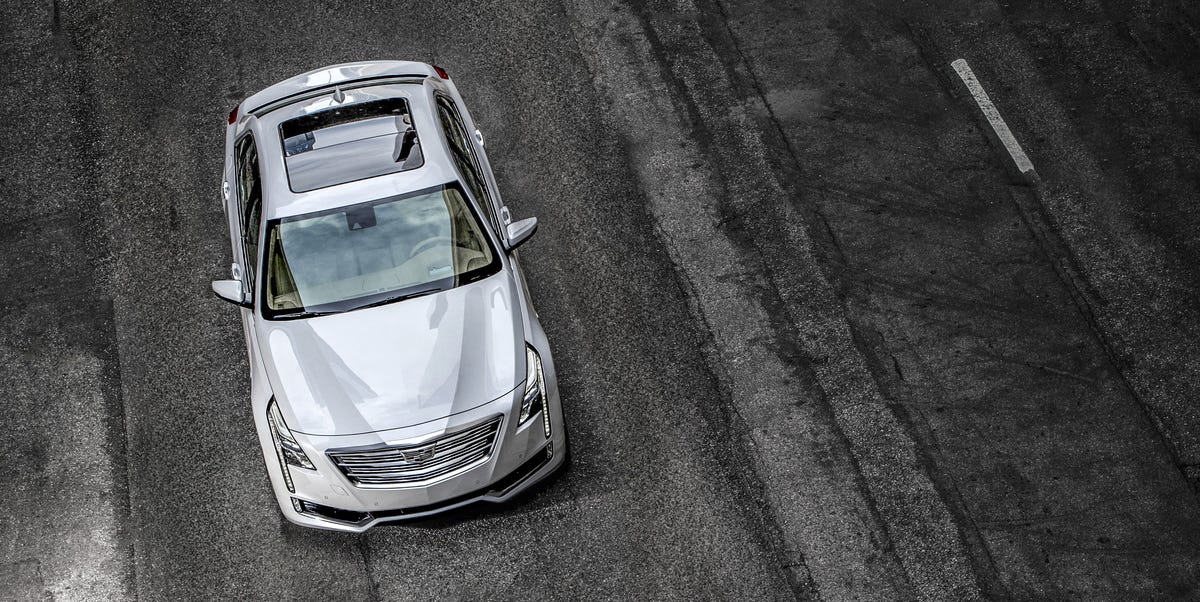
Cadillac introduced Super Cruise on the 2018 Cadillac CT6, giving the brand an early lead in hands-free highway driving. At the time, many competing systems required frequent steering-wheel input to prove the driver was still there. Cadillac took a different approach: instead of asking drivers to keep nudging the wheel like they were checking whether a sleeping cat was alive, Super Cruise used a driver-facing attention camera.
That decision made the system feel more natural. If the car can verify that the driver is watching the road, it does not need constant hand pressure on the steering wheel. The result is a calmer driving experience, especially on long interstate trips. The driver is still supervising, but the physical strain of micro-correcting the wheel for hours is reduced.
Cadillac also leaned into mapped-road restrictions. Rather than promising that the car could handle everything everywhere, Super Cruise began with limited-access highways and expanded from there. That may sound less exciting than a system that claims to work nearly anywhere, but there is an argument that Cadillac’s more cautious strategy is exactly what makes it feel luxurious. Luxury is not just leather, screens, and quiet cabins. Luxury is also not having your expensive vehicle improvise like a nervous substitute teacher.
Self-Driving vs. Hands-Free: The Difference Matters
The phrase “self-driving car” is catchy, but it is often misleading. Most systems available to consumers today are classified as Level 2 driver-assistance systems. At Level 2, the vehicle can control steering and speed at the same time, but the human driver must supervise constantly and be ready to take over.
Super Cruise fits into that Level 2 category. It is hands-free, not responsibility-free. The driver cannot legally or safely ignore the road, climb into the back seat, watch a movie, or treat the commute like a hotel lounge. Cadillac’s system is impressive because it makes supervised driving easier, not because it eliminates the driver.
This is where Cadillac’s more careful branding helps. Super Cruise sounds confident but not magical. It promises a “hands-free driver assistance” experience, which is more accurate than calling the car fully autonomous. In an industry where marketing sometimes sprints ahead of engineering, that honesty is refreshing.
The Tech Behind the Smoothness
High-Definition Mapping
One of Super Cruise’s biggest advantages is its use of detailed map data. Compatible roads are mapped so the vehicle has information about curves, lanes, and road geometry before it reaches them. This gives the system a kind of preview, helping it behave more smoothly than a system that depends only on what sensors can see in the moment.
Driver Attention Monitoring
Super Cruise uses a driver-facing camera to monitor whether the driver is paying attention. If the system detects that the driver is looking away for too long, it escalates warnings. If the driver still does not respond, the system can disengage and prompt the driver to take control. This is not just a convenience feature; it is a safeguard against misuse.
Adaptive Cruise Control and Lane Centering
At its core, Super Cruise works with adaptive cruise control to manage speed and following distance. Lane-centering assistance helps keep the vehicle positioned within its lane. Together, these features reduce the repetitive workload of highway driving. Anyone who has spent three hours following the same white lane markings across a flat interstate can appreciate that.
Lane-Change Support
On newer compatible Cadillac models, Super Cruise can assist with lane changes. Some versions allow the driver to signal a lane change, after which the system checks conditions and moves the vehicle when appropriate. More advanced versions can suggest or perform lane changes to maintain speed around slower traffic. It is not teleportation, but on a long highway trip, it feels like the car is politely helping instead of merely holding the lane.
Why Cadillac Is the Perfect Brand for This Feature
Cadillac has always sold more than transportation. It sells arrival. The brand’s best vehicles are big, quiet, confident, and slightly theatrical. That personality fits hands-free driving unusually well. A Cadillac with Super Cruise does not feel like a gadget wearing wheels. It feels like a luxury car using technology to make the drive more relaxed.
Take the Cadillac Escalade, for example. It is already one of America’s most recognizable luxury SUVs, famous for its size, presence, and cabin comfort. Add Super Cruise, and the Escalade becomes a rolling executive chair with lane discipline. The same idea applies to Cadillac’s electric models, including the Lyriq and Escalade IQ. These vehicles combine quiet electric power, large digital displays, and hands-free driving support in a way that feels very aligned with Cadillac’s modern identity.
The Escalade IQ is especially important because General Motors has announced plans for a more advanced “eyes-off” driving system to debut on the Cadillac Escalade IQ in 2028. If GM delivers on that plan, Cadillac could again become the flagship brand for the next stage of consumer vehicle automation. In other words, the Cadillac of self-driving cars may become even more Cadillac-shaped.
The Escalade IQ and the Road to Eyes-Off Driving
The Cadillac Escalade IQ represents the brand’s electric future: huge screen, luxury cabin, long estimated driving range, dramatic styling, and serious technology. It is also positioned as the launch vehicle for GM’s planned next-generation eyes-off driving capability.
Eyes-off driving is different from today’s Super Cruise. With current Super Cruise, the driver must continue watching the road. An eyes-off system would allow the driver, in specific conditions, to stop actively monitoring the road while the vehicle manages the driving task. That moves closer to Level 3 automation, where the car can perform the driving under defined conditions but may still require the human to resume control when requested.
This is a much harder problem than hands-free driving. It requires greater system redundancy, stronger sensing, more precise decision-making, and clear rules for when the car can and cannot operate. It also raises legal and safety questions. When a driver is allowed to look away, the vehicle has to be much more capable during the moments before any handoff. Nobody wants a car that says, “Your turn!” with the timing of a prankster.
How Cadillac Compares With Other Driver-Assistance Systems
Cadillac is not alone. Ford BlueCruise, Tesla’s driver-assistance software, Mercedes-Benz Drive Pilot, BMW Highway Assistant, Nissan ProPILOT Assist, and other systems all compete for attention. Each has a different philosophy.
Ford BlueCruise is one of Super Cruise’s closest rivals. It also offers hands-free driving on approved roads and uses driver monitoring. Consumer testing has rated BlueCruise very highly in recent years, often placing it near or above Super Cruise in active driving assistance comparisons. Ford has also been aggressive about expanding BlueCruise across popular models, which gives it broad appeal.
Tesla’s system takes a different route. It aims for wider operational flexibility, especially with its “Full Self-Driving (Supervised)” software, but the name has drawn criticism because the driver must still supervise. Tesla’s approach can feel more ambitious, while Cadillac’s can feel more controlled and polished. One is the bold tech startup energy drink; the other is the quiet luxury lounge with a very strict bouncer.
Mercedes-Benz has pursued Level 3 automation in limited situations with Drive Pilot, showing how difficult the business case can be. True eyes-off capability is exciting, but it is also restricted by geography, speed, weather, regulations, cost, and customer demand. That is why Cadillac’s next move matters: if GM can make eyes-off driving feel useful and trustworthy in a luxury SUV, it could shift the conversation.
Safety: The Boring Topic That Should Never Be Boring
Driver-assistance systems are only as good as their safeguards. The Insurance Institute for Highway Safety has warned that many partial automation systems do not do enough to keep drivers engaged. That concern is important because humans are wonderfully creative at misusing convenience features. Give people a system that reduces workload, and some will try to turn it into a nap assistant, a texting assistant, or a “look, no driver” social media stunt. None of that is the system’s purpose.
Cadillac’s use of driver monitoring is one reason Super Cruise earned a strong reputation early on. However, no system is perfect, and safety organizations continue pushing automakers to improve attention reminders, emergency responses, and misuse prevention. The best driver-assistance technology should not merely perform well when used correctly; it should also make incorrect use difficult.
For drivers, the practical rule is simple: treat Super Cruise like a skilled co-pilot, not a replacement pilot. It can reduce fatigue, smooth out highway travel, and make long trips feel less draining. But you are still the captain. The car may be wearing a tuxedo, but you still have to stay awake at the wedding.
What It Feels Like in Real Life
The magic of Super Cruise is not that it turns driving into science fiction. The magic is that it makes ordinary highway driving less annoying. On compatible roads, the steering wheel light turns green, the vehicle settles into the lane, and the driver can relax their hands while keeping their eyes forward. The cabin gets quieter in a psychological sense. You are still driving, but the constant little corrections fade into the background.
In a Cadillac, this effect is amplified by the surrounding environment. A soft ride, supportive seats, premium audio, sound insulation, and a wide digital dashboard all work together. Super Cruise is not just a feature; it becomes part of the vehicle’s luxury personality. It makes the car feel calm, capable, and expensive in a way that is more meaningful than adding another chrome badge.
That is why the phrase “Cadillac of self-driving cars” works. It is not because Cadillac has solved full autonomy. It has not. It works because Cadillac has made hands-free driving feel like a luxury experience instead of a tech demo.
Where Super Cruise Still Has Limits
Super Cruise does not work everywhere. It depends on compatible mapped roads, clear lane markings, sensor visibility, and proper conditions. Construction zones, poor weather, confusing lane layouts, and unapproved roads can limit or disable the feature. That is not a weakness so much as an honest boundary.
Drivers should also understand that subscriptions may be involved. Super Cruise is often tied to an OnStar plan after an included trial period, depending on model and purchase terms. That means buyers should consider not only whether the car has the hardware, but also what service plan is required to keep the feature active.
Another limitation is public understanding. Many people hear “hands-free” and mentally upgrade it to “self-driving.” That gap between perception and reality is where trouble begins. Cadillac, dealers, reviewers, and owners all have a role in explaining the technology clearly.
The Bigger Industry Lesson
The self-driving car race has matured. A few years ago, automakers and tech companies promised that robotaxis would rapidly transform cities. Reality responded with traffic cones, lawsuits, sensor costs, regulatory scrutiny, and business-model headaches. GM itself stepped back from funding Cruise robotaxi development and shifted more attention toward driver-assistance and autonomous features for personal vehicles.
That pivot makes sense. Instead of trying to replace drivers overnight, GM can improve the cars people already buy. Super Cruise is a practical bridge between traditional driving and future automation. It gives customers real benefits today while building technical experience for tomorrow.
In that sense, Cadillac’s strategy may be less flashy than a robotaxi launch, but more relevant to actual car shoppers. Most people do not need a driverless pod. They need a safer, calmer, more comfortable way to handle a 400-mile road trip, a daily highway commute, or a family vacation where everyone has opinions about snack stops.
Extra Experience Section: Living With the Idea of a Hands-Free Cadillac
Imagine planning a long weekend drive in a Cadillac equipped with Super Cruise. You load the luggage, argue briefly about whether three phone chargers are enough, and merge onto the highway. Once the vehicle confirms you are on a compatible road, Super Cruise becomes available. You press the button, the steering wheel indicator turns green, and the car begins assisting with the rhythm of the drive.
The first few minutes feel strange. Drivers are used to treating the steering wheel like a security blanket. Letting go, even legally and correctly, requires trust. Your hands hover nearby at first, ready to jump in like an anxious parent watching a child ride a bike without training wheels. Then the system tracks the lane smoothly, maintains distance, and handles the highway with quiet confidence. Gradually, your shoulders drop.
This is where the Cadillac part matters. In a cheaper, noisier, twitchier vehicle, hands-free driving might feel like a party trick. In a Cadillac, it feels integrated into the mission of the car. The seats are comfortable. The cabin is hushed. The screens are large but not chaotic. The vehicle’s mass and ride tuning give the whole experience a sense of calm authority. You are not being transported by a robot; you are being assisted by a very well-dressed machine.
On a long interstate stretch, the benefits become obvious. Fatigue often comes not from dramatic driving moments but from hundreds of tiny corrections: hold the lane, adjust speed, watch the car ahead, steer through gentle curves, repeat until your coffee loses the will to live. Super Cruise reduces that repetitive workload. You still supervise, but you are not constantly feeding small inputs into the wheel and pedals.
The best experience is not dramatic. In fact, drama would be bad. The ideal Super Cruise drive is uneventful. The car stays centered, traffic flows, lane changes happen predictably when supported, and the driver remains alert without feeling tense. That kind of quiet competence is difficult to market because it does not make for wild video clips. But it makes for excellent ownership.
There are also moments when the system reminds you of its boundaries. Maybe road construction appears. Maybe lane markings fade. Maybe the route leaves the mapped highway. The system asks you to take over, and you do. This handoff is part of the experience. A good driver learns when to use the technology and when to drive manually without frustration. Super Cruise is not there to win an ego contest. It is there to help when conditions fit.
For families, the feature can change the emotional temperature of a trip. The driver arrives less worn out. Passengers sense fewer abrupt corrections. Conversations feel easier. Music sounds better when the person behind the wheel is not silently wrestling with crosswinds and traffic waves. That may not sound revolutionary, but comfort has always been Cadillac’s real superpower.
For commuters, the value is different but just as real. A highway-heavy commute can be mentally draining, especially in stop-and-go traffic or long suburban corridors. Super Cruise does not erase congestion, but it can make the process smoother. It is like having a calm assistant who handles the boring parts while still expecting you to be the responsible adult in the room.
The experience also changes how drivers think about future automation. Once you live with a well-executed hands-free system, fully autonomous driving feels less like a fantasy and more like a gradual evolution. You begin to understand why the industry is moving step by step: first cruise control, then adaptive cruise, then lane centering, then hands-free mapped-road driving, then eventually eyes-off systems under limited conditions. The future is not one giant leap. It is a long on-ramp.
That is why Cadillac’s role is fascinating. The brand is not merely chasing Silicon Valley vocabulary. It is translating advanced automation into the old-fashioned language of luxury: comfort, confidence, quiet, and ease. The result is not a car that replaces the driver. It is a car that makes the driver feel less punished by the highway.
Conclusion: The Punchline Is Also the Point
“The Cadillac of self-driving cars is a Cadillac” works because it captures a real truth about the current market. Cadillac has not built a fully autonomous personal car that can drive anywhere without human attention. Nobody selling mainstream consumer vehicles in America has truly done that yet. But Cadillac has built one of the most recognizable, polished, and luxury-friendly hands-free driving experiences available today.
Super Cruise succeeds because it is useful now. It does not need science-fiction promises to make a difference. On compatible roads, with an attentive driver, it can reduce fatigue and make highway driving feel smoother, calmer, and more premium. That is exactly the kind of practical luxury Cadillac should be selling.
The future may bring eyes-off driving, more capable sensors, smarter software, and vehicles that can handle more roads in more conditions. Cadillac’s Escalade IQ may become an important milestone in that next chapter. For now, the brand’s greatest achievement is making advanced driver assistance feel less like a risky experiment and more like a refined feature you might actually want to use.
In other words, the Cadillac of hands-free driving is not just a metaphor. It is sitting in a Cadillac showroom, waiting for the highway to turn green.