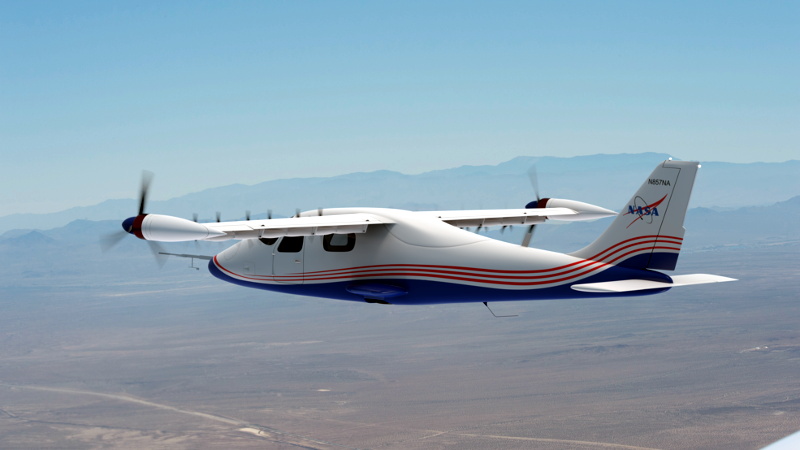
Every few years, aviation gets one of those stories that sounds like it was cooked up by engineers, dreamers, and one person who definitely owns too many rechargeable batteries. NASA’s X-57 Maxwell was exactly that kind of story: an all-electric experimental aircraft designed to help push aviation toward a cleaner, quieter, and more efficient future. It was not just another pretty render with futuristic propellers stuck on for dramatic effect. It was a serious research program, built around real hardware, real flight-test discipline, and very real headaches involving batteries, heat, vibration, and certification.
At the center of the project was a simple but ambitious idea: could electric propulsion do more than just replace a gas engine? Could it actually improve the airplane itself? NASA believed the answer might be yes. By rethinking how motors, propellers, and wings work together, the agency set out to prove that electric aviation could offer meaningful gains in cruise efficiency, lower noise, and zero in-flight carbon emissions. That made the X-57 more than an airplane. It made it a flying lab for the future of regional and general aviation.
The title “NASA Readies New Electric X-Plane For First Flight” captures the excitement around the X-57 at its most dramatic moment. The aircraft did move steadily toward that milestone, and the road there revealed some of the most important lessons in modern electric aviation. In the end, the project became valuable not because it delivered a flashy one-day triumph, but because it exposed the engineering truth hiding behind the marketing buzz. Electric aircraft are possible. They are promising. And they are also gloriously, maddeningly difficult.
What Exactly Was the X-57 Maxwell?
The X-57 Maxwell was NASA’s first all-electric experimental aircraft and its first crewed X-plane in two decades. Instead of building a plane from scratch, NASA chose to modify an existing twin-engine Tecnam P2006T, a light aircraft that provided a useful baseline for comparison. That choice was practical and smart. Engineers could directly compare data from the original gas-powered airplane with data from an electrified version, which is far more useful than guessing from a clean-sheet concept drawing that has never smelled aviation fuel or solder.
NASA organized the project in stages called modifications, or “Mods.” In the earlier Mod II configuration, the aircraft would fly with two electric cruise motors replacing the original piston engines. Later versions were intended to become much more radical. The final concept envisioned a skinny, high-aspect-ratio wing with 14 electric motors total: 12 smaller high-lift motors along the leading edge for takeoff and landing, plus two larger wingtip cruise motors for efficient flight at altitude. This was distributed electric propulsion in its most intriguing form, turning the wing and propulsion system into a team instead of two departments that only speak during quarterly meetings.
That wing-and-motor combination was the real star of the show. The high-lift motors were designed to blow air over the wing during low-speed operations, helping the aircraft generate more lift when it needed it most. In cruise, those smaller propellers would stop and fold away, reducing drag while the wingtip motors handled forward thrust. The concept allowed NASA to shrink the wing dramatically for better cruise performance without giving up low-speed handling. In plain English: the plane could aim to be efficient in the air without becoming a runway diva on the ground.
Why NASA Thought Electric Flight Was Worth the Trouble
NASA’s goals for the X-57 were not modest. The agency described a design driver that included a 500 percent increase in high-speed cruise efficiency, zero in-flight carbon emissions, and much quieter flight for communities below. Earlier NASA statements also said the technology could reduce operating costs for small aircraft by as much as 40 percent. Those are not tiny tweaks. Those are the kind of numbers that make aerospace people sit straighter in their chairs and open another spreadsheet.
The project also fit into NASA’s broader New Aviation Horizons initiative, which aimed to develop experimental aircraft capable of proving new ideas in a way that would matter to industry and regulators. That point is easy to miss if you only focus on the airplane itself. The X-57 was not intended to become a product sold at your local airport next to coffee mugs and overpriced headsets. Its deeper mission was to generate the technical knowledge, testing practices, and certification lessons that future electric aircraft developers would need.
That is one reason the X-57 mattered so much. Aviation does not move forward on vibes alone. A plane can look brilliant in a render, but if engineers cannot certify the systems, validate safety, and understand how the aircraft behaves in the real world, it stays stuck in brochure form forever. NASA wanted the X-57 to help regulators and designers understand how distributed electric propulsion could be made airworthy. In other words, the agency was not just building a plane. It was helping write the homework assignment for the entire electric-aviation industry.
The Technology That Made the X-57 So Fascinating
Distributed Electric Propulsion
The X-57’s defining feature was distributed electric propulsion, often shortened to DEP. Instead of relying on just one or two engines in the traditional sense, DEP spreads smaller propulsive units across the aircraft to create aerodynamic benefits. With the X-57, the small leading-edge propellers would increase airflow over the wing at low speed, dramatically improving lift. NASA’s technical work showed how this lift augmentation allowed the wing area to be reduced for better cruise efficiency.
In fact, NASA technical papers estimated that the X-57 wing area could be reduced to 42 percent of the wing area of the baseline Tecnam P2006T, while still meeting its low-speed lift goals. Those same analyses estimated that the aircraft could cruise on less than one-third the total energy of the baseline airplane. That is the sort of engineering result that makes people stop saying “cute electric plane” and start saying “wait, this might actually change something.”
Battery Power With No Room for Mistakes
Of course, the airplane needed an energy source, and that brought NASA straight into the unforgiving world of aviation batteries. The X-57 used lithium-ion batteries, with two 400-pound battery packs installed in the cabin. NASA had to prove not only that the batteries could provide enough power for a complete flight profile, but also that they could be managed safely under aircraft conditions. That meant dealing with heat, containment, failure isolation, and the nightmare phrase that haunts battery engineers everywhere: thermal runaway.
NASA spent years redesigning and validating the battery system to prevent one cell failure from spreading into a larger fire event. This was not optional polishing. It was foundational work. In an airplane, “we’ll keep an eye on it” is not a safety strategy. It is how you end up as a case study in a lecture nobody wants to give.
Ground Testing Before Glory
Long before the X-57 ever approached flight readiness, NASA validated key ideas through the LEAPTech project, which tested a distributed electric wing on a truck driven across Rogers Dry Lakebed in California. That testbed used 18 electric motors and showed that the blown-wing concept could generate more than double the lift of an unblown wing. It was weird, brilliant, and deeply NASA: if a wind tunnel is not enough, put the wing on a moving truck and go science at the desert.
Later milestones brought the actual airplane closer to flight. NASA took delivery of the first all-electric Mod II aircraft in 2019. In 2022, the project reached a key milestone with successful installation of the two large battery packs. In early 2023, NASA reported successful thermal testing of the cruise motor controllers, another important step toward first flight. On paper and in the hangar, the aircraft was getting closer.
Why First Flight Took So Long
This is where the X-57 story gets even more interesting, because electric flight is not hard in just one cinematic way. It is hard in dozens of nerdy, expensive, schedule-crushing ways. NASA and outside reporting described a range of technical problems that had to be solved before the aircraft could safely fly. Some of the biggest trouble came from components inside the propulsion and power-control system, including transistor modules in the inverters that reportedly failed during environmental testing. Yes, some of them basically blew up. Which is exciting in action movies and less exciting when attached to an airplane.
NASA’s technical material also documented issues involving heat-sink performance, vibration tolerance, electromagnetic interference, phase-current measurement noise, connector design, and controller architecture. The cruise motor controller design needed significant rework. Battery packaging had to be redesigned. System integration kept exposing fresh problems, because that is what happens when you put automotive-adjacent electric technologies into an aerospace environment where weight, redundancy, heat, vibration, and safety margins become painfully serious.
Then there was certification reality. The Federal Aviation Administration’s aircraft certification process is rigorous and multi-phase, and for good reason. Safety is the entire deal. NASA’s role was not to certify the X-57 for commercial use, but the project was deeply tied to understanding what an acceptable certification path for electric aircraft might look like. Every subsystem problem was not just a project delay; it was a reminder that the future of electric aviation depends on proving safety, not simply promising it in a conference keynote.
The Twist in the Story: No First Flight After All
For a while, NASA still hoped to fly the X-57 in its Mod II form. But in June 2023, the agency announced that finalizing aircraft operations would not include a first flight. NASA cited several challenges to safe flight, including mechanical issues discovered late in the aircraft’s life cycle and a lack of critical components needed to complete the experimental hardware. The timeline and available resources were no longer enough to get the aircraft into an acceptable flight condition.
By March 2024, NASA officially closed the X-57 subproject before first flight. That might sound, at first glance, like a dramatic failure. But that reading misses the point. NASA repeatedly emphasized that the goal was not to create a polished prototype for production. It was to develop a test platform, gather knowledge, and share lessons about electric propulsion, airworthiness, and system integration with regulators and industry. By that measure, the X-57 delivered something substantial: a clearer map of what electric aircraft developers must solve before battery-powered flight becomes ordinary instead of headline-worthy.
And honestly, there is a certain integrity in that outcome. Aerospace is full of bold claims. The X-57 story is more useful because it shows where ambition met engineering reality. It tells future designers where the traps are hidden: thermal margins, high-voltage architecture, motor controller reliability, vibration, electromagnetic interference, and the brutal difference between “works in theory” and “works safely enough to put a pilot in the cockpit.”
Why the X-57 Still Matters
Even without a first flight, the X-57 remains one of the most important electric-aircraft research efforts of its era. It helped define what distributed electric propulsion might actually demand in practice. It advanced understanding of battery-system design, thermal management, high-lift propellers, aerodynamic modeling, and the interaction between novel propulsion systems and certification needs. NASA has said the lessons learned from battery and electrical testing, wind-tunnel work, and computational modeling remain valuable in shaping the future of aviation.
That matters because electric aviation is still very much alive. Startups and established aerospace players are pursuing everything from small training aircraft to regional transport concepts and urban air mobility vehicles. But none of them get a free pass around the laws of physics, and none of them get to skip certification. The X-57 showed that progress in this field may look slower than public hype suggests, but the technical knowledge being built is real and cumulative.
So when people remember the X-57, they should not remember only the absent first flight. They should remember the larger mission: NASA tried to turn electric aviation from an appealing idea into a disciplined engineering problem. That is less cinematic than a triumphant takeoff, sure. But for the future of flight, it may be even more important.
Experiences Related to “NASA Readies New Electric X-Plane For First Flight”
There is also a human side to the X-57 story that makes it especially compelling. For aviation fans, the idea of an electric X-plane readying for first flight carries the same emotional pull as watching a new rocket roll to the pad. You are not just waiting for wheels to leave the ground. You are waiting to see whether a new chapter in transportation is about to begin. That anticipation is part engineering curiosity, part optimism, and part childlike belief that maybe the future really can show up with a different sound.
Imagine standing near a traditional small-aircraft ramp and knowing what to expect: the bark of piston engines, the smell of fuel, the familiar vibration of mechanical systems doing their noisy best. Then imagine an experimental electric aircraft entering that same world with a different personality. The appeal of the X-57 was never only about emissions charts and efficiency graphs. It was about the possibility that aviation itself might feel different. Quieter. Cleaner. Smarter. Less like the past with better paint, and more like a genuine technological step forward.
For engineers, the experience tied to a program like this is even richer. A project such as the X-57 forces teams to live in the space between hope and hardware. One day the mission looks like a breakthrough in sustainable aviation. The next day a component fails a vibration test, a thermal model refuses to behave, or a controller design reveals an ugly weakness that cannot be hand-waved away. That cycle can be exhausting, but it is also where aerospace progress really happens. The glamour comes later, if it comes at all. The growth happens in the troubleshooting.
Pilots and flight-test crews would experience the project differently too. Experimental aircraft are never casual machines, but an electric X-plane raises the stakes in unique ways. Energy management, redundancy, system awareness, and failure response all take on a slightly different texture when batteries and power electronics replace conventional engines. Even the cockpit workload and crew interfaces become part of the research. In that sense, the X-57 was not merely about making a plane fly on electricity. It was about helping humans understand how to safely operate that new kind of airplane.
Then there is the public experience. Electric aviation often arrives in headlines as a clean, elegant solution, as if the future has already filed its paperwork and booked a runway slot. The X-57 offered a more mature experience for anyone paying attention. It showed that progress can be real even when it is messy. It reminded people that a canceled first flight does not erase years of meaningful work. Sometimes a program’s greatest gift is not a perfect ending, but a pile of hard-won knowledge that saves the next program from making the same mistakes.
That may be the most valuable experience of all. The X-57 taught observers to appreciate the middle of innovation, not just the triumphant beginning or the polished end. It invited people to see engineering as a process of discovery rather than a straight line to glory. There is something refreshingly honest about that. In a world addicted to instant success stories, the X-57 stood as a reminder that the future of aviation will be built through persistence, redesigns, delays, and relentless testing. Not glamorous, perhaps. But absolutely real.
And maybe that is why the aircraft still captures attention. “NASA readies new electric X-plane for first flight” is a headline full of hope. The full story behind it is better. It is the story of what happens when big ideas collide with certification rules, battery chemistry, thermal limits, and the stubborn physics of flight. It is the story of a program that aimed high, ran into reality, and still helped move aviation forward. In aerospace, that counts for a lot.