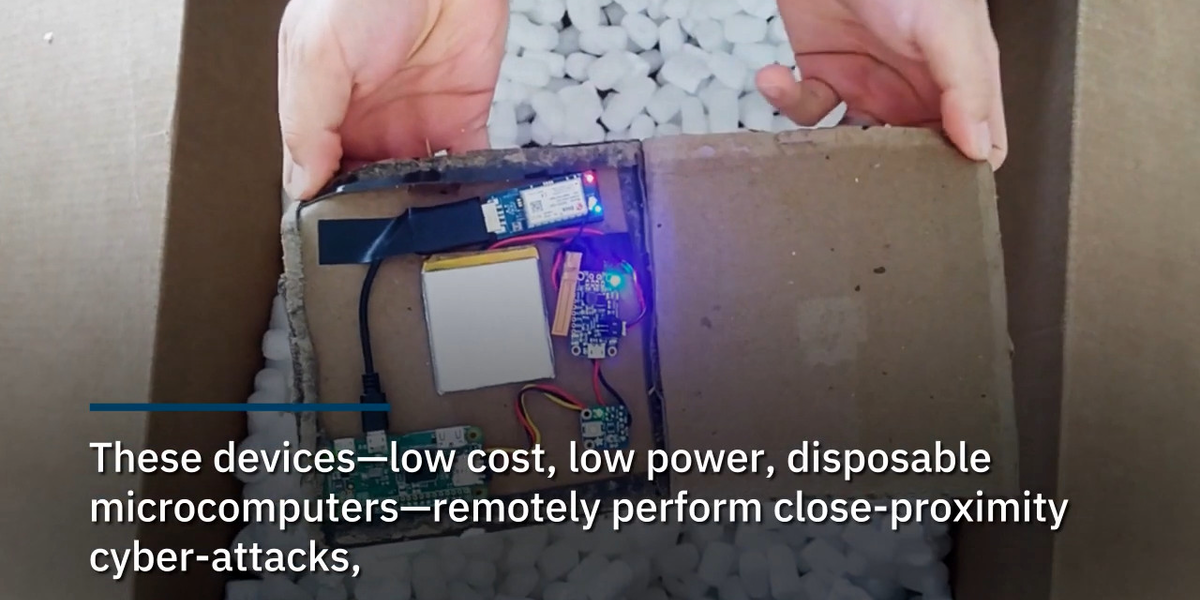
Everyone loves getting packages. A surprise delivery can mean new shoes, replacement headphones, or that one kitchen gadget you definitely needed and absolutely did not buy at 1:13 a.m. But in cybersecurity, not every unexpected box is a happy little consumer moment. Sometimes it is a Trojan horse with postage.
That is the basic idea behind warshipping, a cyber-physical attack in which a small internet-enabled device is mailed to a target location so it can operate from inside or near the environment it is meant to compromise. The hardware can be tiny, cheap, easy to hide, and easy to dismiss as harmless junk. And yes, the humble Raspberry Pi often gets cast as the star of the show because it is compact, flexible, low-power, and beloved by both hobbyists and security researchers.
The phrase sounds almost funny, like something invented by a hacker with too much coffee and a talent for naming things. The threat is not funny. Warshipping blends old-school physical delivery with modern wireless intrusion, which means it exploits a security gap many organizations still underestimate: the place where the mailroom, the front desk, the reception counter, and the Wi-Fi network all awkwardly shake hands.
If phishing taught us not to trust every email, warshipping is the reminder that not every package deserves a warm welcome either.
What Is Warshipping, Exactly?
At a high level, warshipping is the use of mailed hardware to place a network-capable device inside range of a target’s systems. The goal is not necessarily dramatic movie-style sabotage. More often, it is quiet access: reconnaissance, credential capture, rogue access, interception opportunities, or a foothold for later activity.
Think of it as wardriving that skipped the parking lot and paid for shipping. Instead of hovering near a building hoping to reach a corporate wireless network from outside, an attacker tries to get the device delivered inside the security perimeter or at least close enough to matter. The package might be addressed to an employee, sent to a front office, dropped at a home office, or disguised as a harmless return, gift, or replacement item.
That is what makes the technique so sneaky. Security teams often spend a lot of time hardening firewalls, patching servers, and training users not to click shady links. Meanwhile, a cardboard box can stroll in wearing the digital equivalent of fake glasses and a mustache.
Why the Raspberry Pi Angle Gets So Much Attention
The Raspberry Pi shows up in conversations about warshipping because it is the perfect “don’t underestimate the tiny thing” device. It is inexpensive, small, low-power, widely available, and capable enough to support a broad range of computing and wireless tasks. None of that makes the Raspberry Pi bad; it makes it versatile. A screwdriver is useful in a toolbox and problematic in the wrong hands. Same idea.
That is why the title phrase, a free Raspberry Pi in the mail, lands so well. It captures the problem in one sentence: hardware that looks like a gift, sample, return accessory, or innocent gadget may actually be a risk. In security, “free” can become very expensive once incident response, forensics, downtime, legal review, and reputational damage show up to the party.
And that is before you account for the emotional cost of explaining to leadership that the suspicious device entered the environment the same way toner cartridges and birthday cupcakes do.
How Warshipping Works Without Getting Too Cute About It
Here is the safe, non-operational version. A malicious or unauthorized device is placed in mailed packaging and delivered near the target. Once it is in position, it may attempt to discover nearby networks, communicate externally, impersonate something trusted, or otherwise create a path for unauthorized access. The specifics vary, but the principle is consistent: the attacker uses physical delivery to solve the “close enough to the target” problem.
This matters because many wireless and device-based threats depend on proximity. If an attacker can get hardware inside a building, onto a desk, into a mailroom, or near a home office router, that changes the risk equation. Suddenly, the network is not just defending against remote internet traffic. It is also defending against an uninvited guest that may be physically closer than the intern’s lunch.
Some incidents tied to mailed hardware have involved fake or altered devices, suspicious package contents, QR-code scams, or tampered technology meant to trick the recipient into connecting, scanning, or trusting something they should not. Warshipping belongs to that broader family of attacks where the physical object is the lure, the delivery method, and part of the attack surface all at once.
Why This Threat Makes Security Teams Uneasy
1. It bypasses assumptions, not just controls
Most organizations have at least some mental model for email threats and web threats. Physical package threats often live in a different bucket entirely, if they live in a bucket at all. That silo is a problem. Mailrooms and reception desks are often viewed as logistics functions, not cybersecurity functions, even though they can influence cyber risk directly.
2. It takes advantage of unattended time
A package does not need to be opened immediately to become risky. One of the more unsettling aspects of warshipping is that the device may do its work while the box sits unopened in a mailroom, on a reception shelf, or under someone’s desk. Hybrid work made that worse. Offices with lower occupancy created more opportunities for packages to linger without scrutiny.
3. It exploits the “looks normal enough” bias
Humans are busy. A cardboard box is boring. That is exactly why it works as camouflage. Most people do not look at ordinary deliveries and think, “Could this contain an unauthorized network-capable device?” They think, “Whose package is this?” If security depends on everyone magically becoming a parcel detective, that is not a strategy. That is wishful thinking with tape on it.
4. It blends physical and digital risk
Warshipping is part of the larger “phygital” problem: threats that move across physical and digital boundaries. That means defending against it requires cooperation between facilities teams, mail handling staff, IT, security operations, and leadership. Translation: multiple groups must coordinate, which is exactly where many organizations start making the long, tired sighing noise of bureaucracy.
Who Should Worry Most?
Large enterprises are obvious targets, but they are not the only ones. Financial firms, healthcare providers, schools, law offices, manufacturers, retailers, public agencies, executives with home offices, and any business with valuable data or weak mail controls should take the concept seriously.
Remote executives are especially interesting from a risk standpoint. A device delivered to a home office can put an attacker within range of consumer-grade networking gear, less mature monitoring, and a user who may assume the package is work-related. In other words, the corporate perimeter is no longer just a building. Sometimes it is a porch.
How Organizations Can Reduce the Risk
Strengthen mailroom and package handling procedures
Start with the basics. Process inbound mail quickly. Do not let unknown or misaddressed packages sit around for days. Establish a documented chain for suspicious deliveries. Train front desk and mailroom personnel on what to flag, who to contact, and what not to do. If your policy for suspicious packages is currently “ask around and hope Kevin knows,” that policy needs a promotion.
Organizations with higher risk profiles should also consider formal package screening practices and clear rules for personal shipments sent to the office. Even a simple review protocol is better than treating every unexpected delivery like it arrived with the blessing of fate.
Harden wireless security
Warshipping only becomes dangerous if the surrounding environment is soft enough to exploit. Secure wireless configuration still matters. Strong encryption, modern authentication, regular patching, segmented networks, and limited access between zones reduce the value of any rogue device that gets close enough to try something.
Old assumptions like “the signal probably does not reach that far” or “nobody would bother targeting this office” should be retired with full honors and no chance of rehire.
Detect rogue devices early
Inventory known devices. Monitor for new or unauthorized endpoints. Use wireless intrusion detection or prevention where appropriate. Watch for strange traffic, unexpected access points, odd scanning behavior, and anything that looks like a device appearing out of nowhere with too much curiosity and not enough business justification.
If your team cannot quickly answer the question, “What new device connected this week?” you have a visibility problem, and warshipping loves visibility problems.
Train employees beyond email security
Security awareness should not stop at suspicious links and fake logins. Employees need to understand that unfamiliar packages, altered hardware, random QR codes, and unsolicited tech accessories are all potential entry points. The modern security awareness poster basically writes itself: “Do not trust weird boxes. Also weird links. Honestly, just keep a healthy skepticism.”
Plan incident response for physical-device scenarios
Many incident response playbooks are still too digital-only. Add scenarios involving unknown hardware, suspicious packages, mailed electronics, altered accessories, and rogue wireless behavior. Decide in advance who handles the package, who preserves evidence, who isolates impacted systems, and who communicates internally. The worst time to invent a process is while someone is holding a suspicious gadget and asking whether they should plug it in “just to see.”
What This Means for Leaders
Executives do not need to become hardware forensics specialists. They do need to understand that physical logistics can create cyber exposure. That means mail handling belongs in security conversations. Procurement belongs in security conversations. Facilities belongs in security conversations. Home-office practices belong in security conversations.
The big lesson is simple: cybersecurity is no longer only about what enters through a browser, inbox, or VPN tunnel. It is also about what arrives through the loading dock, reception desk, or apartment mailbox. If a company’s security model assumes every threat starts online, it is preparing for only half the exam.
Experiences From the Real World of Warshipping Risk
One of the strangest things about warshipping is how ordinary it feels right up until it does not. The experience rarely begins with alarms, flashing dashboards, or someone shouting “breach” across the office. It usually starts with a boring package. A receptionist signs for it. A mail clerk stacks it with the others. An employee glances at the label and assumes it belongs to someone who is working remotely that day. The threat hides inside routine, which is exactly why it is effective.
Security professionals who deal with physical-device risk often describe the same uncomfortable pattern: at first, nobody thinks the box matters. Then someone notices a mismatch. Maybe the sender makes no sense. Maybe the package is oddly heavy, oddly warm, or oddly addressed. Maybe it was sent to a former employee, or to a title instead of a person, or to an executive who never ordered anything. Suddenly the harmless parcel gets promoted from “office clutter” to “evidence.” That emotional swing is part of what makes these incidents memorable. People feel embarrassed that they ignored it, then annoyed that they have to deal with it, and finally alarmed when they realize what it could have been doing while it sat there next to the coffee machine.
In hybrid workplaces, the experience can be even messier. Packages pile up. Desks sit empty. Deliveries wait for employees who only come in twice a week. That creates a weird window where a suspicious device does not have to be clever; it just has to be patient. A box can sit quietly in the environment while everyone assumes someone else is handling it. It is the cybersecurity equivalent of dirty dishes in a shared apartment: the longer they sit there, the more everyone silently agrees not to ask questions.
Home offices add another layer. An unexpected delivery at home often feels less suspicious than one at headquarters because the setting is casual. People receive so many personal and work-related items that the line blurs. A device delivered to a house may end up within range of a family router, a work laptop, a personal phone, and a smart TV all at once. That is a lot of digital surface area hiding behind one front door and one very distracted Thursday afternoon.
What teams remember most after these incidents is not just the technical risk. It is the realization that everyday logistics can quietly become security events. The package was not dramatic. The scenario was. And that is the lesson that sticks: the scariest security problems do not always announce themselves like villains. Sometimes they show up looking like free electronics and good customer service.
Conclusion
Warshipping is a clever reminder that attackers do not always knock through the obvious digital front door. Sometimes they mail themselves closer to the target and let ordinary business routines do the rest. A small device hidden in an ordinary package can exploit gaps between physical security, employee awareness, wireless hygiene, and device visibility.
The good news is that organizations are not powerless here. Better mail handling, stronger wireless security, rogue-device monitoring, updated employee training, and cross-functional planning can dramatically reduce the odds that an unexpected package becomes an expensive lesson.
So yes, a free Raspberry Pi in the mail might sound like a delightful nerd jackpot. In reality, the correct security response is less “cool, free gadget” and more “nobody plug that in, and please call the right people.” In 2026, that is not paranoia. That is just good housekeeping for the modern threat landscape.