A furnace may look like a large metal cabinet that occasionally rumbles in the basement, but inside it is a carefully coordinated heating system. One of its most important components is the furnace heat exchangerthe part responsible for transferring combustion heat to your household air while keeping that air separated from combustion gases.
In other words, the heat exchanger helps your furnace warm the house without also treating your family to an unwanted sample of furnace exhaust. It works quietly during every heating cycle, yet its condition can affect comfort, energy efficiency, equipment life, and, most importantly, safety.
This guide explains what a furnace heat exchanger is, how it operates, why it can fail, which warning signs deserve attention, and how homeowners can protect this essential HVAC component.
What Is a Furnace Heat Exchanger?
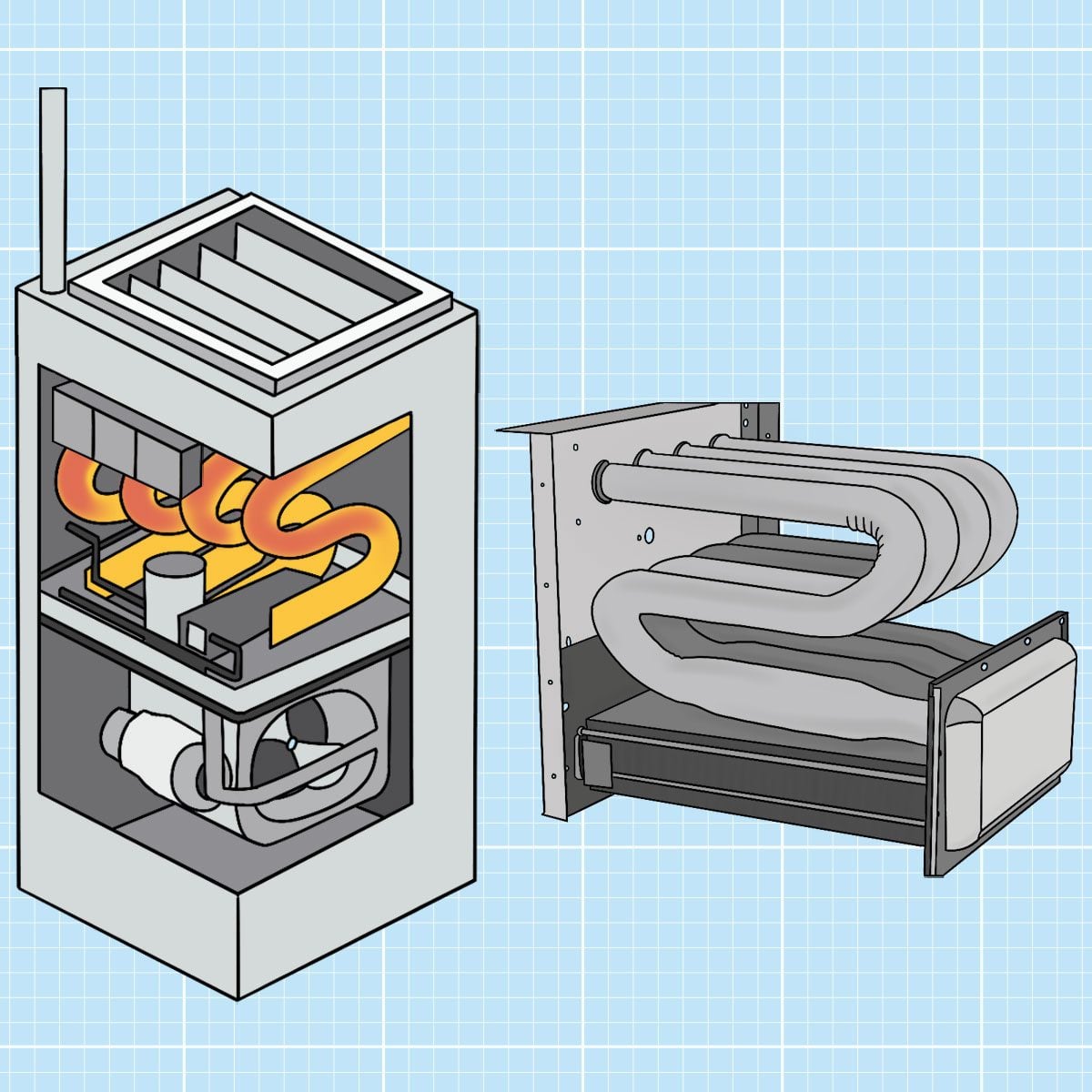
A furnace heat exchanger is a metal chamber or series of metal tubes located between the burner assembly and the furnace blower. Its job is to absorb heat created by burning natural gas, propane, or oil and transfer that heat to the air circulating through the home.
The combustion gases remain inside the heat exchanger and are directed toward the furnace vent or flue. Household air travels around the outside of the exchanger, absorbs its heat, and then moves through the ductwork. Under normal operating conditions, the two air streams remain separated.
That separation is the entire point. The heat exchanger allows energy to pass through its metal walls without intentionally allowing combustion gases to enter the supply air. Think of it as a heavily armored middleman: heat crosses the boundary, but exhaust is supposed to stay on its own side.
How Does a Furnace Heat Exchanger Work?
The heating process happens in a predictable sequence whenever the thermostat calls for warmth.
1. The Thermostat Requests Heat
When the indoor temperature falls below the thermostat setting, the thermostat sends a signal to the furnace control board. The furnace begins its ignition sequence and performs the necessary safety checks.
2. The Burners Ignite
Natural gas, propane, or oil is delivered to the burner assembly. An igniter starts a controlled flame, and the resulting hot combustion gases enter the heat exchanger.
3. The Heat Exchanger Warms Up
As hot gases move through the exchanger, the metal absorbs thermal energy. The exchanger becomes hot but should not overheat. A furnace limit switch monitors temperature and can shut down the burners when operating temperatures become unsafe.
4. The Blower Circulates Household Air
After the heat exchanger reaches the appropriate temperature, the blower motor pulls cooler return air through the filter and pushes it across the outside of the exchanger. The air absorbs heat without directly contacting the flame or combustion gases.
5. Warm Air Enters the Ductwork
The heated air moves into the supply ducts and out through registers in different rooms. Meanwhile, combustion gases travel through the flue and are vented outdoors.
6. The Furnace Completes the Cycle
Once the thermostat is satisfied, the burners turn off. The blower usually continues running briefly to recover remaining heat from the exchanger instead of leaving it trapped inside the furnace cabinet.
Primary and Secondary Heat Exchangers
The number of heat exchangers in a furnace generally depends on its design and efficiency rating.
Primary Heat Exchanger
Every fuel-burning forced-air furnace has a primary heat exchanger. This component receives the hottest combustion gases directly from the burners and transfers much of their heat to the circulating air.
Many conventional, non-condensing furnaces use only this primary exchanger. These units commonly have Annual Fuel Utilization Efficiency ratings of around 80 percent, meaning approximately 80 percent of the fuel’s annual heating value becomes useful household heat under standardized testing conditions.
Secondary Heat Exchanger
High-efficiency condensing furnaces add a secondary heat exchanger. After leaving the primary exchanger, combustion gases still contain usable heat. The secondary exchanger captures more of that energy before the exhaust leaves the furnace.
During this process, water vapor in the exhaust cools enough to condense into liquid. That is why high-efficiency furnaces have condensate drains and often use plastic vent pipes. The additional heat recovery allows many condensing furnaces to achieve AFUE ratings of 90 percent or higher.
This extra efficiency is useful, but it creates another maintenance consideration: condensate must drain properly. A clogged drain, damaged trap, or persistent moisture problem can contribute to shutdowns, leakage, or corrosion.
Why Is the Furnace Heat Exchanger So Important?
It Helps Protect Indoor Air
A sound heat exchanger maintains a barrier between household air and combustion gases. If the exchanger becomes seriously cracked, perforated, separated, or corroded, that barrier may be compromised.
Carbon monoxide is one potential concern associated with malfunctioning fuel-burning equipment. It is colorless, odorless, and nonirritating, so people cannot reliably detect it without an appropriate alarm. However, a crack alone does not automatically prove that carbon monoxide is entering the home. Combustion quality, furnace pressure, venting, crack location, and system operation all affect the actual risk. A professional evaluation is therefore essential.
It Determines How Effectively Heat Reaches Your Home
The exchanger provides the physical surface through which combustion heat moves into the circulating air. Its shape, size, materials, cleanliness, and airflow conditions all influence heat transfer.
When airflow is restricted, the heat exchanger may become hotter than intended. The limit switch may respond by shutting down the burners, leading to short cycles, uneven heating, unnecessary component wear, and a furnace that behaves as though it has developed a dramatic personality.
It Influences Furnace Efficiency
Efficient heat transfer allows more fuel energy to become usable warmth. Condensing furnaces improve this process by using a secondary exchanger to recover heat that a conventional furnace would send outdoors through the flue.
The heat exchanger does not determine efficiency by itself, however. Furnace sizing, duct design, blower performance, combustion adjustment, installation quality, filtration, and maintenance all contribute to real-world energy use.
It Is a Major Structural Component
Replacing a heat exchanger is not comparable to changing a filter or swapping out a thermostat. The exchanger is buried inside the furnace and connected to the burner, blower, venting, controls, and other components. Reaching and replacing it may require substantial disassembly and labor.
What Causes a Furnace Heat Exchanger to Fail?
Repeated Heating and Cooling
The metal expands when the furnace fires and contracts when it cools. A well-designed exchanger is built to tolerate thousands of these cycles, but repeated thermal stress eventually contributes to fatigue, especially as the furnace ages.
Restricted Airflow
Insufficient airflow is a major source of furnace overheating. Common causes include a heavily loaded filter, blocked return grille, closed supply registers, dirty blower wheel, undersized ductwork, incorrect blower settings, or an overly restrictive filter.
A premium filter is not automatically the right filter. If its resistance exceeds what the system can handle, the furnace may struggle to move enough air. Filtration should be selected according to the equipment and duct systemnot according to which package uses the most impressive adjectives.
Corrosion and Moisture
Rust can weaken metal and create openings over time. Possible moisture sources include furnace-room humidity, venting problems, condensate leaks, nearby plumbing leaks, and improper drainage in a condensing furnace.
Secondary heat exchangers operate in a moist environment by design, making correct materials, drainage, installation, and maintenance especially important.
Improper Combustion
Incorrect gas pressure, contaminated burners, insufficient combustion air, or venting problems can alter flame characteristics and increase soot, heat stress, or corrosive byproducts. Combustion adjustments should be performed by a qualified technician using appropriate instruments.
Incorrect Furnace Sizing
An oversized furnace may heat the house rapidly and shut down before completing longer, steadier cycles. Frequent cycling increases the number of expansion-and-contraction events experienced by the heat exchanger. Oversizing can also create uncomfortable temperature swings and noisy airflow.
Poor Installation
Incorrect vent sizing, inadequate return air, improper furnace setup, poorly configured gas pressure, or unsuitable drainage can shorten equipment life. Even excellent equipment can perform badly when installed as though the instruction manual were merely a polite suggestion.
Age and Normal Wear
No heat exchanger lasts forever. Furnace life varies according to equipment quality, climate, operating hours, installation, maintenance, and airflow. Age alone does not prove failure, but an older furnace deserves closer evaluation when repeated repairs, corrosion, or combustion problems appear.
Warning Signs of a Possible Heat Exchanger Problem
Many symptoms associated with heat exchanger damage can also come from other furnace problems. Homeowners should treat the following signs as reasons to arrange professional service, not as a do-it-yourself diagnosis.
A Carbon Monoxide Alarm Activates
Take every carbon monoxide alarm seriously. Move everyone, including pets, into fresh air and contact emergency services or the fire department from outside. Do not silence the alarm and continue running the furnace to “see whether it happens again.”
Unexplained Physical Symptoms
Headache, dizziness, weakness, nausea, vomiting, chest pain, and confusion can occur with carbon monoxide exposure. Symptoms may resemble the flu but can affect several occupants simultaneously and may improve after leaving the building.
Anyone who suspects carbon monoxide exposure should get into fresh air and seek emergency medical guidance. Do not attempt to locate the source before leaving.
Soot or Unusual Deposits
Black soot near burners, vent connections, or furnace panels may indicate incomplete combustion or venting trouble. Soot does not automatically identify a cracked exchanger, but it is not a decorative furnace accessory and should be investigated.
Rust, Corrosion, or Water Around the Furnace
Visible corrosion may indicate prolonged moisture exposure. A small amount of water near a high-efficiency furnace could come from a blocked condensate line rather than the exchanger, but persistent leakage still requires attention.
Frequent Limit-Switch Shutdowns
A furnace that repeatedly ignites, shuts down, and restarts may be overheating. Restricted airflow, a dirty filter, blower trouble, incorrect settings, or heat exchanger damage are among the possible causes.
Unusual Burner Behavior
Flames that flutter, roll outward, or change significantly when the blower starts can indicate a combustion or pressure problem. Homeowners should not remove safety panels or reach into an operating furnace to observe the burners. Leave that particular adventure to a trained professional.
New Odors or Noises
A sharp exhaust-like smell, persistent burning odor, rattling, popping, or booming noise may indicate a furnace problem. Carbon monoxide itself has no smell, so odor should never be treated as a reliable CO warning system.
Can You Inspect a Heat Exchanger Yourself?
A homeowner can replace the correct filter, keep return grilles clear, check carbon monoxide alarm operation, and look for obvious external moisture or corrosion. A complete heat exchanger inspection, however, is professional work.
Much of the exchanger may be hidden behind furnace components. Small openings can be difficult to distinguish from manufacturing seams, bends, reflections, or surface marks. Staring through a furnace opening with a flashlight for three minutes is not the HVAC equivalent of a medical degree.
Depending on the equipment and circumstances, a qualified technician may use:
- Visual inspection with mirrors, cameras, or borescopes
- Combustion and flue-gas analysis
- Carbon monoxide measurements
- Temperature-rise testing
- Total external static-pressure measurements
- Airflow and blower-performance checks
- Burner and flame inspection
- Vent, drain, limit-control, and safety-switch testing
No single quick test is appropriate for every furnace. The technician should document the location and nature of suspected damage and explain how the conclusion was reached.
Should a Damaged Heat Exchanger Be Repaired or Replaced?
A confirmed unsafe heat exchanger should not be patched with sealant, furnace cement, tape, or improvised metalwork. The appropriate solution is usually replacement of the approved heat exchanger assembly or replacement of the entire furnace.
Heat Exchanger Replacement May Make Sense When:
- The furnace is relatively new.
- The component is covered by a strong manufacturer warranty.
- Other major furnace parts are in good condition.
- The correct replacement assembly is readily available.
- Labor costs are reasonable compared with total furnace replacement.
Furnace Replacement May Make More Sense When:
- The furnace is approaching the end of its expected service life.
- Multiple expensive components are deteriorating.
- The system has recurring airflow, venting, or reliability problems.
- The old furnace is substantially less efficient than current options.
- Replacement labor for the exchanger approaches the cost of new equipment.
- The existing furnace is incorrectly sized for the home.
Heat exchanger warranties vary widely. Some manufacturers provide long or limited-lifetime coverage for the part, but labor, shipping, diagnostic charges, registration requirements, and ownership conditions may not be covered. Homeowners should read the actual warranty rather than assuming “lifetime” means every expense disappears in a puff of warm air.
How to Help Protect Your Furnace Heat Exchanger
Schedule Annual Professional Maintenance
Arrange a heating-system check before the cold season. A proper visit should include more than vacuuming dust and placing a sticker on the cabinet. The technician should evaluate combustion, controls, airflow, venting, condensate management, burners, safety devices, and the heat exchanger where accessible.
Replace the Filter Appropriately
Check the filter regularly and replace it according to its condition, manufacturer guidance, household dust levels, pets, renovation activity, and system usage. Confirm that the filter size and resistance are suitable for the furnace and ductwork.
Keep Registers and Returns Open
Avoid blocking return grilles with furniture, boxes, rugs, or curtains. Closing numerous supply registers in unused rooms can also disrupt airflow and raise duct pressure.
Maintain Condensate Drains
Owners of condensing furnaces should have the drain, trap, tubing, and condensate pump inspected. Water should leave the furnace through the intended plumbing routenot form a tiny indoor lake around the cabinet.
Install and Maintain Carbon Monoxide Alarms
Install listed carbon monoxide alarms in accordance with the manufacturer’s instructions and applicable local requirements, including placement near sleeping areas and on appropriate levels of the home. Test them regularly and replace the alarms at the end of their stated service life.
Address Repeated Overheating
Do not repeatedly reset a furnace that trips its high-limit control. A shutdown is a warning that the system has detected an unsafe operating condition. Find and correct the underlying airflow, blower, control, or combustion problem.
Practical Experiences and Lessons From Common Furnace Problems
The following are composite homeowner scenarios based on common HVAC service patterns. They illustrate practical lessons without representing a diagnosis for any particular furnace.
Experience 1: The Filter That Looked “Good Enough”
A homeowner notices that the furnace starts normally but shuts off after several minutes. The blower continues running, and the burners eventually restart. Because warm air still reaches the rooms, the homeowner assumes the furnace is simply taking breaks.
During service, the technician finds a heavily loaded filter and unusually high static pressure. The furnace has been overheating and opening its limit switch. Fortunately, the heat exchanger shows no confirmed damage, but years of operating under similar conditions could have increased thermal stress.
The lesson is not merely “change the filter.” The replacement must also be compatible with the airflow capacity of the system. Installing the densest filter available can create its own restriction when the filter rack or return duct is too small. Better filtration is valuable only when the blower can move the required air through it.
Experience 2: Water Beside a High-Efficiency Furnace
Another homeowner finds water near a 96 percent AFUE furnace and immediately fears that the heat exchanger has cracked. The furnace still heats, but the puddle returns every few days.
The technician discovers a partially blocked condensate trap and a loose drain connection. Because the furnace uses a secondary heat exchanger, condensation is a normal result of extracting additional heat from the exhaust. The problem is not that water exists; the problem is that it is no longer traveling through the correct drain path.
After the drain is cleaned and secured, the technician checks the furnace for corrosion, verifies pressure-switch operation, and confirms that the venting system is clear. The experience demonstrates why visible water deserves inspection without automatically proving catastrophic failure. Early attention also prevents a minor drainage problem from damaging the cabinet, controls, floor, or nearby materials.
Experience 3: A Carbon Monoxide Alarm at 2 A.M.
A family wakes when a carbon monoxide alarm sounds near the bedrooms. No one smells gas, sees smoke, or hears anything unusual from the furnace. They leave the home, call emergency services from outside, and do not re-enter until the building is evaluated.
Testing identifies a combustion-venting problem that requires furnace service. The heat exchanger is inspected as part of the investigation, but the technician does not rely on appearance alone. Combustion readings, vent performance, burner operation, and carbon monoxide measurements help identify the actual cause.
The most important lesson is that an alarmnot a smellis the warning. Carbon monoxide has no dependable odor. Leaving first was far safer than opening furnace panels or walking from room to room with a household gadget while continuing to breathe potentially contaminated air.
Experience 4: The Expensive Diagnosis That Deserved Documentation
An owner of an older furnace is told that the heat exchanger is cracked and the entire system must be replaced immediately. Because the recommendation involves a major expense, the owner requests photographs, the location of the damage, combustion-test results, the furnace model, warranty status, and a written explanation.
A second qualified contractor confirms significant exchanger deterioration and also finds that the furnace is oversized and the return duct is restrictive. Rather than simply installing an identical replacement, the contractor performs a heating-load assessment and proposes equipment that better matches the home.
This experience shows why a second opinion can be reasonable when conditions are safe enough to obtain one and the furnace remains turned off. Documentation does not make a real defect disappear, but it helps homeowners distinguish a complete technical diagnosis from a sales pitch wearing a tool belt.
Conclusion
The furnace heat exchanger is where comfort, energy use, and combustion safety meet. It captures heat from the burners, transfers that heat to household air, and helps keep furnace exhaust separated from the air moving through your rooms.
Because it experiences intense heat, repeated expansion, airflow pressure, moisture, and years of cycling, the exchanger depends on correct installation and regular maintenance. Clean filters, adequate airflow, clear venting, functional condensate drainage, annual professional inspections, and working carbon monoxide alarms all contribute to safer, more reliable operation.
If a carbon monoxide alarm activates or occupants develop possible exposure symptoms, leave the building and contact emergency services from outside. For less urgent warning signssuch as corrosion, soot, repeated limit trips, water leakage, or unusual burner behaviorturn to a qualified HVAC professional. The heat exchanger may be hidden inside the furnace, but its importance should never be out of sight or out of mind.