Note: This is an original, source-informed celebration of a tiny Scrabble-table victory. Rules, playable words, and approved dictionaries can vary by edition, country, and group, so settle the word reference before the first tile hits the board.
There are grander things in life than reaching into a tile bag and pulling out a Q and a U together. A promotion, perhaps. A marriage proposal. Discovering your leftovers are still good on day four. But for roughly six seconds at a Scrabble table, that two-tile grab can make you feel as though the universe has finally noticed your unpaid emotional invoices.
The Q is there: sharp, expensive, and normally about as cooperative as a cat being asked to take a bath. The U is beside it: suddenly promoted from ordinary vowel to heroic sidekick. Together they turn a potential rack crisis into possibility. You do not merely have two letters. You have a plot twist.
That is why picking up a Q and a U at the same time belongs in the catalog of small, ridiculous, completely real delights. It is a tiny alignment of luck, language, timing, and the smug little click of tiles landing on your rack. The board has not changed. Your opponent has not become less annoying. Yet your mood improves because the alphabet briefly did you a favor.
Why the Q-and-U Draw Feels Like a Tiny Jackpot
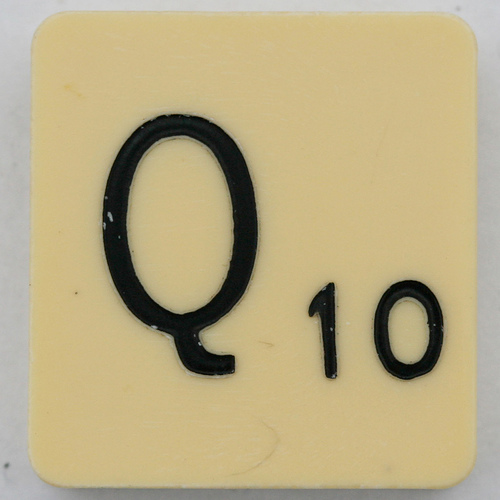
In standard North American Scrabble, the tile bag contains 100 tiles. There is only one Q, worth 10 points, and four U tiles, each worth 1 point. That makes the Q valuable enough to tempt you and awkward enough to haunt you. The U is common enough to seem boringuntil it appears beside the Q and reveals that it was carrying a tiny cape the entire time.
English has trained most of us to see Q and U as a package deal. Familiar words such as quit, quilt, quick, quest, and quiz all begin with the pair. When you draw them together, your brain starts firing off word shapes before you have sorted the rest of the rack. It is like finding the matching sock before dumping the whole laundry basket onto the bed.
The Q can survive without the U. Depending on the dictionary your game uses, words such as qi, qat, qoph, and qadi may be playable. Those are real words, not a prank invented by your uncle who claims every suspicious play is “in the big dictionary.” Still, the U opens a more familiar family of options and makes the rack feel less like a hostage situation.
Scrabble Is Built for These Little Reversals
Scrabble began during the Great Depression as a word game devised by Alfred Mosher Butts, an unemployed architect who experimented with letter frequencies, crossword-style play, and scoring. The game became a grid where vocabulary matters, but so do geometry, nerve, and the willingness to accept that your cousin has apparently memorized every two-letter word in existence.
A Q and a U do not guarantee a big score. You still need a place to put them, supporting letters, and an opponent who has not sealed the board tighter than a jar of pickles. But the pair changes the texture of your turn. Yesterday, you were carrying a 10-point burden. Today, you may be one well-placed QUIP away from feeling like a tactical genius.
Scrabble rewards seeing more than the letters on your rack. Tile values, new words created, and premium squares all affect a play; using all seven tiles in one turn also earns a 50-point bingo bonus in the traditional rules. A difficult letter becomes useful in the right context, which is a remarkably generous life lesson for a board game that occasionally causes arguments over ZA.
How to Turn Q and U Into a Smart Scrabble Play
A lucky draw earns a grin. A good move earns a grin plus the right to lean back in your chair as though you personally designed the English language. Here is how to use the pair without treating every home game like a televised championship.
1. Start With Short, Flexible Q-and-U Words
Look for building blocks rather than a 12-letter masterpiece involving a medieval bird. Common choices may include QUA, QUAD, QUIP, QUIT, QUIZ, QUILT, QUICK, and QUEST, subject to your agreed dictionary. Short words fit around existing tiles, create parallel plays, and leave a healthier rack afterward.
2. Let the Board Supply a Letter or Two
You do not always need to make a whole Q-and-U word from your rack. The board may already hold the E, I, or T you need. A single Q play can extend a word and create several scoring words at once. This is where Scrabble stops being a vocabulary quiz and becomes a small urban-planning project with vowels.
3. Aim the Q at Premium Squares, but Calculate
The Q is worth 10 points before bonuses. On a double-letter square it contributes 20; on a triple-letter square, 30. That is thrilling, but do not become hypnotized by a bright premium square and ignore a stronger total elsewhere. A modest move that creates two words can beat a flashy one-word play.
For example, QUIP has a base value of 15 points: Q is 10, U and I are 1 each, and P is 3. If the Q lands on a double-letter square and the word reaches a double-word square, the arithmetic becomes much friendlier. A 10-second bonus scan is usually worth it.
4. Keep Your Rack Balancedand Know When to Bail
Do not celebrate the Q-U reunion so wildly that you turn it into a long-term roommate arrangement. A move is best when it unloads the Q while leaving a sensible mix of vowels and consonants. If the board is closed or the U does not help, exchanging or playing the Q separately may be smarter than forcing a word and opening a triple-word lane for your opponent.
In competitive North American play, accepted words are governed by a specific lexicon; the NASPA Word List, currently NWL2023, is the official word reference for competition in the United States and Canada. At a kitchen table, use the word list everyone agreed on before the snacks appeared.
The Psychology of a Small, Useful Coincidence
The Q-and-U draw is satisfying because it turns uncertainty into immediate progress. A moment ago, your hand was in a bag. Now you have an answer to a problem you had not fully realized was bothering you. It is the same miniature lift as finding your keys in the first pocket you check or peeling a price tag off in one clean, majestic sheet.
Writing on motivation often emphasizes the power of small wins: visible progress can support energy, engagement, and the desire to continue. This little draw is not a cure for a bad week, a difficult job, or your neighbor’s leaf blower at 7:03 a.m. It is simply a harmless example of forward movement: you had a problem, you got a useful resource, and you can make a move.
There is also an element of savoring. Pause, notice the coincidence, and share it with the table before play resumes. Research on savoring suggests that consciously noticing or sharing positive moments can help people get more from them. So take two seconds to say, “Well, look who decided to travel together.”
Why the Best Scrabble Moments Are Usually Social
Scrabble is technically a word game, but its durable memories are rarely about the board alone. They are about the friend who plays ZA with unreasonable confidence, the parent who keeps a paper score sheet from 1997, the kid who learns that “real word” and “word I have personally heard” are not identical categories, and the room-wide gasp when someone uses all seven tiles.
Board games give people a reason to sit together, focus on a shared activity, and trade jokes that would make no sense outside that room. Research suggests tabletop games can support social participation and cognitive engagement, particularly among older adults, but Scrabble should be enjoyed as recreation rather than prescribed like medicine. The simplest benefit is that a game gives people something to do together besides scroll in parallel.
That is why the Q-U draw can cause an outsized reaction. Someone notices. Someone groans, “Of course you got both.” Someone else says, “Don’t waste them.” A random draw becomes a shared story, and by the next game the score will be at least 40 points higher. This is normal. This is family history.
Make the Moment Better Without Becoming a Tile Tyrant
You do not need a tournament clock, a laminated word list, or the posture of a person about to defend a doctoral thesis on plural endings. A few habits keep the game enjoyable:
- Choose the dictionary first. Avoid changing standards halfway through because someone has just played a suspiciously convenient word.
- Celebrate luck out loud. A great draw deserves a tiny applause, dramatic gasp, or one exaggerated sports-announcer voice.
- Teach, do not ambush. When a new player learns that qi may be allowed, make it a fun discovery rather than a defeat.
- Protect the table mood. Winning is not worth becoming a story people tell with the phrase “and then things got weird.”
The Q and U are a reminder that the best games contain both skill and mercy. You study words, watch the board, and make choicesbut occasionally the bag reaches back and hands you a tiny gift. Accept it with grace. Or with a victory dance so small that it can be denied later.
Extra: 500 More Words From the Scrabble Table
Every regular Scrabble player eventually develops a private relationship with the tile bag. You shake it, reach in, and pretend you are not making wishes. You tell yourself you are merely randomizing. Meanwhile, somewhere in the back of your mind, you are asking for an E, an R, a blank, or perhaps one single vowel that will stop your rack from looking like a license plate issued by a hostile government.
The Q is the tile that gives this relationship drama. Draw it too early and it can feel like your evening has taken on administrative paperwork. You turn it over in your palm. You move it to the left side of the rack. You move it back. You arrange letters around it in increasingly desperate combinations. Suddenly Q is not a letter; it is a houseguest who has stayed three nights too long and refuses to help with dishes.
Then the U arrives, and everything changes. Maybe you pull both from the bag in the same handful. Maybe one flips over against the other as you set them on your rack. Maybe you look down and laugh because the tiny wooden universe has handed you the obvious answer before you had time to panic. It is not a lottery win. No one is calling a press conference. But you feel a small internal trumpet section begin warming up.
In one kind of game, you immediately spot QUIT and lay it across a double-word square. In another, the board is a snarled hedge of letters, and the best you can do is tuck QUA into a corner for an unglamorous score. Both outcomes can be satisfying. The first feels like a movie montage. The second feels like finding the right screwdriver in a junk drawer: not glamorous, deeply effective, and somehow proof that you have your life together for at least seven minutes.
There is also the comedy of other people’s reactions. One player will insist that the pair is “too lucky.” Another will claim they could have made a better word with it, which is easy to say while holding six vowels and a G. Somebody will ask whether QUID counts, somebody else will say “challenge” with the solemnity of a courtroom attorney, and the person who was quietly winning will suddenly look concerned. These are the sounds of a good game.
The lasting appeal of the Q-U draw is not that it makes Scrabble easy. It does not. You can still miscalculate, open a triple-word lane for your opponent, or discover that the word you confidently remembered belongs to a completely different game. The appeal is that it transforms a small problem into a small opportunity in plain sight. It gives you a reason to pay attention to a moment that might otherwise pass unnoticed.
Life contains plenty of large problems that do not resolve because two nice letters happen to land together. Scrabble does not pretend otherwise. It offers something gentler: a board, a bag, a few people, and a chance for the alphabet to cooperate now and then. When the Q and U arrive as a team, pause. Enjoy the little miracle. Then play your word before someone across the table blocks the only open lane and ruins your extremely temporary sense of destiny.
Conclusion: A Small Win Worth Noticing
Picking up a Q and a U at the same time in Scrabble is a perfect miniature victory: useful, unlikely-feeling, and just silly enough to make everyone at the table smile. It turns a difficult 10-point tile into a possibility, encourages sharper board play, and gives a word game one more shared memory. The next time it happens, do not rush past it. Let the Q have its moment. The U earned it too.