Note: This article is a fresh editorial-style rewrite based on real, reputable U.S. health and professional guidance. It is written for web publication, optimized for readability, and intentionally free of source-link clutter.
Some people inherit a watch. Some inherit a jawline. Some inherit a suspiciously strong opinion about lawn care. But the best inheritance is usually less shiny and a lot more useful: habits. In the case of one physician reflecting on his father’s influence, the real hand-me-downs were not things but valueswork ethic, rest, courage, financial caution, encouragement, and steady support. Those lessons may sound old-fashioned, but in modern medicine they land with the force of a stethoscope dropped in a silent exam room.
That is because today’s physicians work inside a system that moves fast, documents everything, and leaves very little room for autopilot humanity. Patient-centered care asks clinicians to listen closely, respect preferences, and build trust. Professionalism asks them to do excellent work even when nobody is applauding. Wellness experts keep repeating a truth doctors know but often ignore: exhaustion is not a personality trait, and burnout is not a badge. At the same time, life outside the clinic still matters. Parents are role models whether they want the job or not. Children build confidence when adults offer both encouragement and a safety net. And money, that unglamorous cousin at the family reunion, can quietly shape freedom, stress, and long-term choices.
Seen through that lens, these six lessons are bigger than one father and one son. They form a practical blueprint for being a better physician, a better parent, and frankly a better human being. Here is what those lessons mean todayand why they still deserve a place in the exam room, the kitchen table, and anywhere else people are trying to build a good life without losing their minds.
Lesson 1: Do the Job Right, Even When Nobody Is Watching
Excellence begins in the details
The first lesson is simple: if you say you will do something, do it well. Not performatively. Not dramatically. Not with a heroic LinkedIn post afterward. Just well. The father in the original reflection took pride in details, finishing work carefully and correctly. That sounds like a small domestic virtue until you place it next to medicine, where details are the difference between trust and confusion, comfort and fear, safety and error.
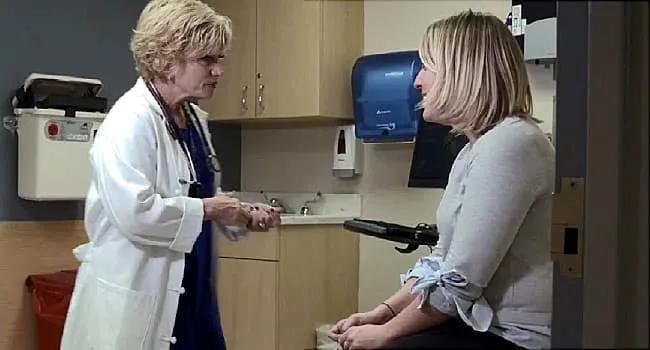
In health care, “doing the job right” is not only about technical competence. It is also about presence. It means listening to the patient’s concerns instead of interrupting with a preloaded diagnosis. It means explaining a plan in plain English instead of fluent medical gobbledygook. It means noticing the worried spouse in the corner of the room, the hesitation in a patient’s voice, or the way someone says, “I’m fine,” in the universal accent of “I am absolutely not fine.”
Modern patient-centered care keeps coming back to the same idea: quality is not just what the clinician knows; it is also how the clinician relates. A rushed doctor may still be smart, but a patient rarely experiences smart as caring unless it is paired with attention. Fathers teach this lesson long before medical schools try to formalize it. A child watches whether an adult keeps promises, finishes tasks, and respects other people enough to be thorough. Years later, that child may become the kind of physician who double-checks the medication list, follows up on an abnormal result, and treats listening as part of the procedurenot a decorative extra.
Competence builds credibility. Credibility builds trust. And trust, inconveniently for the cynics, still matters.
Lesson 2: Rest Is Not Laziness; It Is Maintenance
Vacations are for recharging, not for playing catch-up with life
The father’s second lesson was refreshingly blunt: time off should actually be time off. Not “vacation” that turns into unpaid roofing work, inbox triage, or an ambitious attempt to reorganize the garage like a man possessed by storage bins. Recharging is not optional. It is repair.
This lesson hits hard in medicine because physicians are famously talented at turning rest into logistics. They postpone breaks, postpone joy, and postpone recovery as if the nervous system were some premium appliance with an unlimited warranty. It is not. Burnout experts have been warning for years that poor work-life boundaries and chronic overextension harm both clinicians and patient care. Yet many professionals still talk about unused vacation days the way medieval warriors talked about battle scars.
But rest is not indulgence. It is part of the job. A physician who never steps away may still show up physically, but eventually the emotional bandwidth narrows. Curiosity shrinks. Compassion gets brittle. Home life starts receiving the leftovers. Even good people can become impatient, detached, and weirdly dramatic about printer errors.
The better model is healthier and more sustainable: work when you work, rest when you rest, and do not treat constant availability as moral superiority. A father who protects family time teaches something medicine badly needs to relearnthat recovery improves performance. The rested doctor is more likely to think clearly, connect humanly, and remember that the patient in front of them is not Task 7 of 23. They are a person.
And yes, the laundry will still be there when you come back. Laundry is extremely committed to the mission.
Lesson 3: If Another Person Can Learn It, You Can Learn It Too
Confidence is often built from effort, not magic
One of the strongest lessons from the story is a growth-minded one: if someone else has figured it out, there is a good chance you can learn it too. The father stepped into coaching despite having no prior experience and made up for his lack of background with effort, study, and commitment. That is a terrific life lesson and an especially useful medical lesson.
Medicine has a strange relationship with confidence. On one hand, physicians must project calm. On the other, they are constantly reminded of everything they do not yet know. The healthiest version of confidence is not swagger. It is willingness. Willingness to learn, ask, improve, adapt, and try again. In other words, humility with momentum.
That matters with patients, too. Better communication is learnable. Empathy is learnable. Shared decision-making is learnable. Active listening is learnable, even for people whose natural instinct is to interrupt at the seven-second mark with “So basically what you mean is…” The best clinicians are not necessarily born with magical bedside charm. Many become skilled because they repeatedly practice paying attention.
Children absorb this from their parents long before they have vocabulary for it. When adults model courage around new responsibilities, kids learn that unfamiliar does not have to mean impossible. Later in medicine, that becomes a powerful internal script. Hard conversation? Learn it. New leadership role? Learn it. Better work boundaries? Learn it. The physician shaped by this lesson does not assume mastery arrives preinstalled. They expect to grow into it.
And that expectation changes everything, because people attempt more when they stop worshiping perfection at the front door.
Lesson 4: Debt Quietly Steals Freedom
Financial habits shape emotional health more than people admit
The fourth lesson may seem like the odd one out in a story about medicine and fatherhood: pay cash when you can, avoid unnecessary debt, and do not hand your future to interest payments just because modern life keeps whispering, “You deserve this.” That whisper, historically speaking, has emptied many wallets.
To be clear, not all debt is reckless and not every financed purchase is a moral collapse. But the deeper point is about margin. Debt limits options. It can turn career decisions into hostage negotiations. It can force people to stay in draining roles because the monthly obligations are too loud to ignore. It also creates a steady background stress that seeps into family life and professional life alike.
For physicians, this lesson can be especially relevant. Doctors often carry large educational debt and then enter a culture that tempts them to “finally live a little” with expensive upgrades. The problem is that lifestyle inflation rarely arrives alone; it brings anxiety, pressure, and a sneaky reduction in freedom. A doctor who owes less has more room to choose wisely, rest honestly, pivot professionally, and say no when needed.
The father’s financial caution was not stinginess. It was stewardship. He understood that money is not just about buying things; it is about buying time, flexibility, and peace of mind. That principle holds up beautifully today. Emergency savings, lower-interest living, and thoughtful spending are not boring topics. They are quality-of-life topics. They are mental bandwidth topics.
And nothing says “romance” quite like not having a panic attack every time the car makes a weird noise.
Lesson 5: Support Your Children’s Dreams Before the World Decides They Are Impractical
Encouragement is a form of leadership
One of the most moving lessons in the story is the father’s willingness to back his child’s ambitions with real support. Not vague applause. Not the classic parental line, “You can be anything you want,” delivered while clearly hoping for “accountant.” Real support. Equipment. Time. Trust. Participation.
That kind of encouragement matters because confidence often begins as a loan from someone who believes in you before you fully believe in yourself. Children who are supported learn that their interests are worth effort. They learn that skill can be developed. They learn that adults are not merely critics with car keys; they can also be allies.
For physicians, this lesson expands beyond parenting. Good clinicians do something similar for patients, trainees, and teammates. They do not just diagnose problems; they create conditions for progress. They encourage patients to take part in their care. They help learners grow into responsibility instead of humiliating them for not already knowing everything. They make room for other people’s goals, preferences, and values.
In family life, support does not mean eliminating standards. It means pairing standards with belief. It says, “Take this seriously, and I will take you seriously too.” That combination is powerful. A supportive father may not know exactly where the child’s path will lead, but he helps build the runway.
And sometimes, years later, that runway leads to a career, a craft, or simply an adult who is less afraid to begin.
Lesson 6: Be the Safety Net, Not the Spotlight
Security creates courage
The final lesson may be the most profound: children grow bolder when they know someone will catch them if they fall. The father in the story gave his child a powerful sense of emotional and practical backup. That security reduced the fear of failure and increased the freedom to take meaningful risks.
This is one of those truths that stretches far beyond childhood. Human beings do better when they feel supported. Resilience is not usually the product of isolation and clenched teeth. It grows in the presence of connection, guidance, and reliable care. People become braver when they are not bracing for abandonment.
In medicine, this lesson shows up everywhere. Patients do better when they feel heard and partnered with. Students improve when supervising physicians are demanding but dependable. Colleagues thrive when teams create cultures where asking for help does not feel like career vandalism. At home, children can take healthy riskstrying out for teams, changing paths, starting over, recovering from mistakeswhen they know love is not revoked the minute life gets messy.
The best safety nets are sturdy without being smothering. They do not steal the jump; they make the jump possible. That is a subtle art. Too little support produces fear. Too much control produces dependence. But support with trust? That produces capable adults.
Which is another way of saying that sometimes the strongest thing a father can do is stand close enough to help and far enough to let the child move.
What These Six Lessons Really Add Up To
Put together, these six lessons describe a coherent philosophy of life: do excellent work, protect your humanity, keep learning, live with financial intention, encourage growth, and give people the security they need to become themselves. That is good parenting. It is also good medicine.
What makes these lessons especially compelling is that they resist modern extremes. They do not glorify hustle at the expense of family. They do not confuse love with permissiveness. They do not mistake professionalism for emotional distance. They do not treat money as status theater. Instead, they emphasize steadiness, responsibility, humility, and support.
For physicians, that matters more than ever. The medical profession does not merely need sharper diagnostics or faster software. It also needs clinicians who can remain human under pressure. Doctors who listen well. Doctors who rest enough to care well. Doctors who remember that patients are not puzzles to solve but people to serve. Doctors who know that role modeling is not confined to residency programs; it begins at home, often with a parent who never set foot in a hospital but still taught the deepest part of the job.
In that sense, the title is almost too small for the idea. These are not just lessons one physician learned from his father. They are lessons many of us need to relearn from the people who quietly lived them before we were old enough to notice.
Additional Experiences Related to These Lessons
These lessons become even more convincing when you picture how they play out in ordinary life. Imagine a young doctor finishing a long clinic day. The charting is stacked, the inbox is feral, and a patient visit ran emotionally heavy because the diagnosis was not good. In that moment, Lesson 1 and Lesson 2 start tugging in opposite directions: do the job right, but do not destroy yourself trying to prove devotion. The wiser move is not sloppiness or martyrdom. It is thoughtful completionfinish the critical work carefully, hand off what can wait, and go home with enough of yourself left to be a decent spouse, parent, sibling, or friend.
Now picture a teenager who wants to try something ambitiousmusic, baseball, engineering, painting, maybe even medicine. The easy adult response is skepticism dressed up as realism. “That’s hard.” “That’s expensive.” “What’s the backup plan?” Those questions are not always wrong, but they can arrive too early and crush momentum before effort has a chance. A supportive parent asks better questions: “How serious are you about this?” “What do you need to improve?” “How can I help without doing it for you?” That kind of support teaches ownership, not entitlement.
There is also the financial side, which often shows up in less dramatic but very real ways. A family with modest habits and an emergency cushion handles surprises differently than a family stretched thin by unnecessary payments. When the water heater quits, it is still annoyingbecause of course it dies on a weekend like it is starring in a comedybut it is a problem, not a catastrophe. That difference affects stress, sleep, patience, and the emotional weather of the whole home.
In clinical settings, the safety-net lesson can be just as powerful. A resident is more likely to admit uncertainty when the attending is known for guidance instead of humiliation. A patient is more likely to share the truth when the physician listens without immediate judgment. A child is more likely to recover from failure when home feels like a place to regroup rather than a tribunal. In all of these moments, support does not weaken responsibility. It strengthens it by making honesty possible.
What ties these experiences together is not sentimentality. It is structure. People flourish when life has enough integrity, enough rest, enough encouragement, enough margin, and enough dependable love to make growth feel possible. That is what this father gave. That is what this physician recognized. And that is why these six lessons still resonate: they work in the clinic, in the family, in the budget, and in the private places where character is formed long before anybody gives it a title.
Conclusion
In the end, the father in this story did not merely teach advice; he modeled a way of being. He showed that excellence can be quiet, rest can be wise, learning can be brave, money can be managed with dignity, support can change a life, and security can make people fearless enough to try. For a physician, those are not side lessons. They are core lessons. For the rest of us, they may be the kind that arrive late, stick permanently, and keep getting truer with age.