Hot tools are fun until your hair starts acting like it has filed a formal complaint. Curling irons, wands, and blow dryers can create gorgeous shape, but regular high heat may leave strands dry, frizzy, and more prone to breakage. The good news? You can get soft curls, beachy waves, and bouncy bends while you sleepno sizzling barrel, no morning arm workout, and no frantic “why is one side doing that?” panic.
Learning how to curl your hair without heat overnight is mostly about three things: starting with the right level of dampness, choosing the right wrapping method for your hair type, and letting the curls set long enough. Think of your hair as a very polite but stubborn guest. It will cooperate, but only if you give it a comfortable place to sleep and a little styling support.
Below are five reliable heatless overnight curl methods that work for different lengths, textures, and curl goals. You will also find prep tips, troubleshooting advice, and real-life experience notes at the end so your first attempt does not turn into a pillow-shaped science project.
Before You Start: The Overnight Curl Prep That Actually Matters
The secret to heatless curls is not magic. It is moisture control. Hair that is soaking wet may still be damp in the morning, especially if it is thick, long, low-porosity, or wrapped too tightly. Hair that is bone-dry may not hold much shape unless it naturally curls or waves. The sweet spot is usually slightly damp to about 80–90% dry.
Use the right products lightly
For most hair types, a leave-in conditioner, curl cream, light mousse, or flexible styling spray is enough. The key word is light. If you apply too much product, your curls may feel sticky, crunchy, or weighed down. Fine hair often does best with mousse or a light texture spray. Thick or coarse hair may prefer a small amount of leave-in conditioner or smoothing cream. Curly and coily hair often benefits from a hydrating curl cream before twisting or braiding.
Detangle gently
Use a wide-tooth comb or your fingers to remove knots before wrapping. Start near the ends and work upward. This helps prevent tugging and keeps your curl pattern smoother. If your hair is very fragile, color-treated, or prone to breakage, be extra gentle and avoid creating tight tension near the scalp.
Sleep smarter
A satin or silk pillowcase, scarf, or bonnet can help reduce friction while you sleep. This is especially helpful if your hair gets frizzy easily or if you move around a lot at night. Also, avoid securing hair with tight elastics. Soft scrunchies, satin ties, or metal-free hair bands are kinder to your strands.
1. Robe Belt Curls for Soft, Bouncy Waves
Robe belt curls became popular for a reason: they are simple, affordable, and surprisingly effective. This method works best on medium to long hair and creates soft, polished waves that look like you spent time with a curling wandeven though you mostly spent time sleeping.
What you need
You need a clean robe belt, a long scarf, or a satin heatless curling rod. You will also need two soft scrunchies or hair ties and a clip to hold the belt in place.
How to do robe belt curls overnight
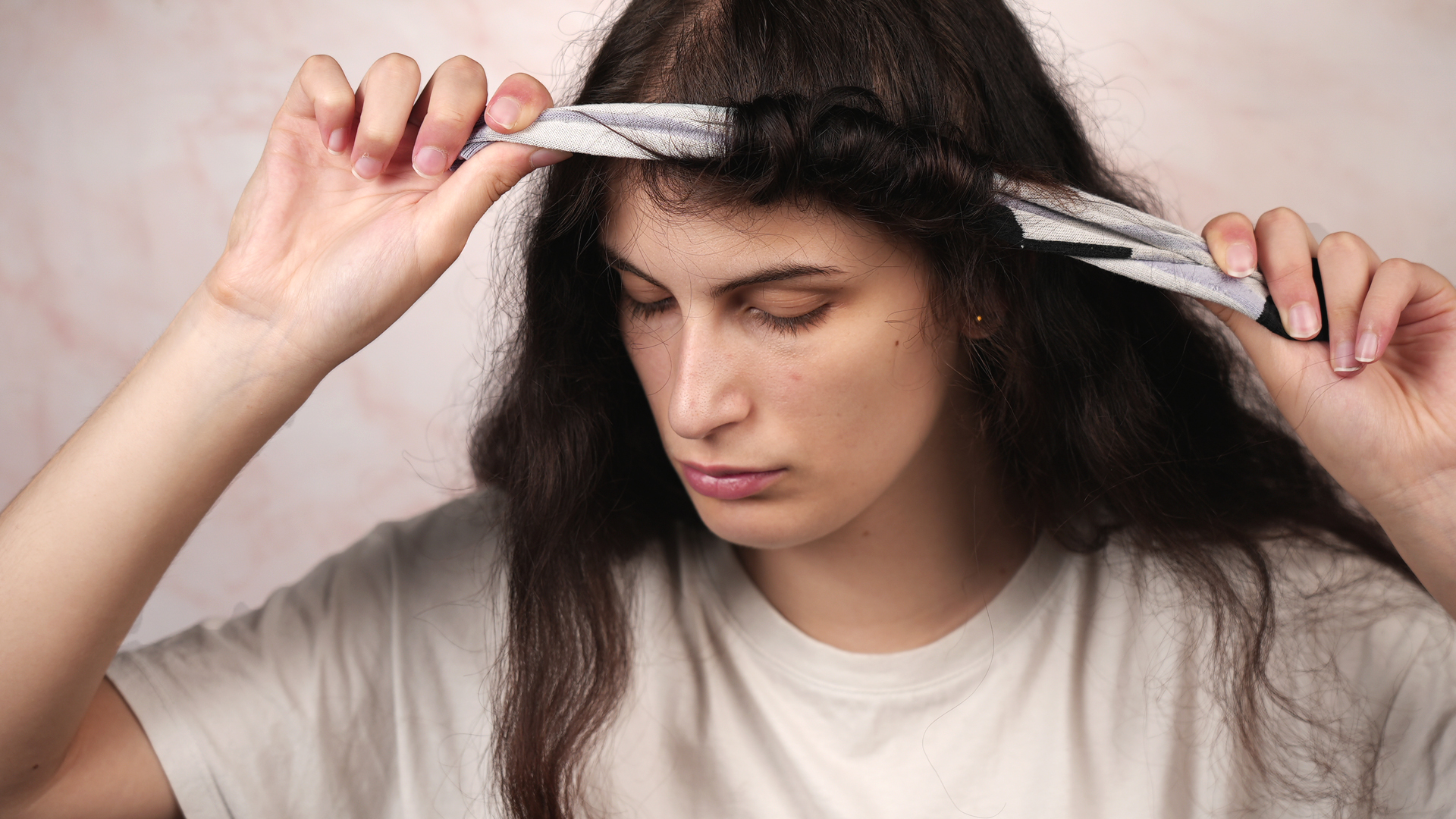
Start with hair that is slightly damp or mostly dry with a light mist of water. Part your hair down the middle. Place the robe belt over the top of your head like a headband, making sure both sides are even. Clip it at the crown so it does not slide around while you work.
Take a small front section of hair from one side and wrap it away from your face around the belt. Add another section of hair each time you wrap, similar to a French braid technique, until all the hair on that side is wrapped. Secure the end with a soft scrunchie. Repeat on the other side. In the morning, gently unwrapdo not yank unless you enjoy instant frizz with a side of regret.
Best for
This method is ideal for loose curls, soft waves, and a smooth “done but not overdone” look. It is especially helpful for long hair because the belt gives the hair a large shape to mold around.
Pro tip
For more volume, wrap smaller sections and keep the belt higher on your head. For looser waves, use larger sections and avoid twisting too tightly. If your curls come out too defined, let them settle for 10 minutes before separating them with your fingers.
2. Sock Curls for Defined Heatless Curls
Sock curls may sound like something invented during a laundry emergency, but they can create beautiful curls overnight. The sock acts like a soft roller, giving your hair a rounded shape without heat. This method is budget-friendly, beginner-friendly, and surprisingly comfortable if you use soft socks.
What you need
You need two to six clean socks, depending on your hair thickness and desired curl size. Longer socks are easier to use on long hair. You will also need clips and soft hair ties.
How to do sock curls overnight
Start with hair that is about 80–90% dry. Divide your hair into sections. Use fewer sections for big, loose curls and more sections for tighter curls. Clip one sock near the top of a section. Split that hair section into two pieces, then wrap both pieces around the sock in a crisscross pattern, moving downward as you go.
When you reach the end, secure the hair and sock with a soft elastic. Repeat with the remaining sections. In the morning, remove the socks slowly, starting from the ends. Let the curls fall naturally before you separate them.
Best for
Sock curls are great for medium to long hair, straight hair that needs extra help holding shape, and anyone who wants more defined curls than robe belt waves. They can also work on thick hair because you can create more sections and control the curl size.
Pro tip
If your hair is very straight or slippery, use a light mousse before wrapping. If your hair frizzes easily, smooth a tiny amount of leave-in conditioner through the mid-lengths and ends first. Avoid brushing the curls in the morning unless you want fluffy waves instead of defined curls.
3. Overnight Braids for Easy Beach Waves
Braids are the classic heatless curl method. They are easy, fast, and perfect for people who want soft texture rather than round curls. If robe belt curls are the fancy brunch friend, braid waves are the casual beach friend who somehow always looks cool.
What you need
You only need soft hair ties. For smoother waves, use a leave-in conditioner or anti-frizz cream. For extra hold, use a light mousse or wave spray.
How to do overnight braid waves
Begin with hair that is damp but not wet. For loose waves, create one or two braids. For more defined waves, create four to six braids. A regular three-strand braid gives a soft crimped wave, while a French braid or Dutch braid starts the wave closer to the roots.
Braid gently and secure the ends with metal-free elastics. Try not to braid too tightly near the scalp, especially if you are sleeping in the style. In the morning, undo the braids and shake out the waves with your fingers. Add a small amount of styling cream or light oil to the ends if needed.
Best for
Braids work well for long hair, medium hair, naturally wavy hair, and anyone who wants beachy texture. They are also one of the easiest methods for beginners because there is no complicated wrapping pattern.
Pro tip
The tighter the braid, the tighter the wave. The smaller the braid, the more textured the result. If you want modern beach waves instead of “slept through summer camp,” make the braids loose and start with hair that is mostly dry.
4. Pin Curls for Vintage-Inspired Bounce
Pin curls are old-school in the best way. Before curling irons became bathroom royalty, pin curls helped create polished curls and waves with nothing but patience and a few clips. This method takes more time than braids, but it gives excellent control over curl placement and shape.
What you need
You need duckbill clips, bobby pins, or flat curl clips. A setting lotion, mousse, or light styling spray can help the curls last longer. A silk scarf can keep everything in place overnight.
How to do pin curls overnight
Start with slightly damp hair. Take a small section, comb it smooth, and wrap it around two fingers to form a flat loop. Slide the loop off your fingers and pin it flat against your head. Continue until all your hair is pinned.
For curls that turn away from your face, roll the front pieces backward. For a softer, vintage wave, keep the curls flat and even. Cover your hair with a silk or satin scarf before sleeping. In the morning, remove the pins carefully and use your fingers to shape the curls.
Best for
Pin curls are excellent for short hair, medium hair, layered hair, and anyone who wants more structured curls. They also work well if you want volume near the roots or a classic curled-under look at the ends.
Pro tip
Use smaller sections for tighter curls and larger sections for softer waves. Make sure the curls are completely dry before removing the pins. If they are still damp, the curl may collapse faster than your motivation on laundry day.
5. Foam Rollers or Flexi Rods for Comfortable Overnight Curls
Foam rollers and flexi rods are great if you want predictable curl size. Unlike socks or robe belts, rollers are designed to shape hair, so they can be easier to control. Foam rollers create soft, round curls. Flexi rods can create spirals, ringlets, or stretched curls depending on how you wrap the hair.
What you need
You need foam rollers, satin rollers, or flexi rods in the size you prefer. Larger rollers create loose volume and big waves. Smaller rollers create tighter curls. You may also want a setting spray, mousse, or curl cream.
How to use rollers overnight
Start with hair that is slightly damp or mostly dry. Divide your hair into sections. Wrap each section smoothly around a roller, starting at the ends and rolling upward toward the scalp. Secure the roller without pulling too tightly. If using flexi rods, wrap the hair in a spiral around the rod, then bend the ends of the rod to hold it in place.
Sleep with a satin scarf or bonnet to reduce friction. In the morning, remove each roller slowly. Let the curls coolyes, even without heat, they need a moment to relax into placethen separate with your fingers.
Best for
Foam rollers are best for classic curls, volume, and smoother shapes. Flexi rods are great for tighter curls, textured hair, natural hair, and long-lasting definition. This method is especially helpful if you want repeatable results because the roller size determines the curl size.
Pro tip
Do not overload each roller with too much hair. Thick sections may not dry or set properly overnight. If your roots look flat in the morning, flip your head upside down and gently shake at the roots instead of brushing through the curls.
How to Choose the Best Heatless Curl Method for Your Hair Type
Fine hair
Fine hair can lose curls quickly, so start with mousse and use smaller sections. Sock curls, pin curls, and smaller foam rollers usually work better than very large robe belt curls. Avoid heavy creams or oils before styling because they can flatten the curl.
Thick hair
Thick hair may need more sections and more drying time. Start when your hair is mostly dry, not wet. Sock curls, flexi rods, and multiple braids are great options because they divide the hair into manageable sections.
Curly or coily hair
Twists, braids, flexi rods, and satin rollers can help define curls while reducing heat exposure. Use a hydrating leave-in or curl cream, and avoid wrapping too tightly. A satin bonnet or scarf is especially helpful for protecting the style overnight.
Short hair
Pin curls, small foam rollers, and mini flexi rods usually work best for short hair. Robe belt curls may be harder if your hair is above shoulder length because the hair may not wrap securely around the belt.
Long hair
Robe belt curls, sock curls, and large flexi rods are excellent for long hair. Use long socks or a long satin rod so the ends can wrap comfortably. Make sure the ends are tucked smoothly to prevent odd bends.
Common Mistakes That Ruin Overnight Heatless Curls
Starting with hair that is too wet
This is the most common mistake. Wet hair wrapped overnight can stay damp, and damp curls often fall out quickly. Slightly damp or mostly dry hair usually gives better results.
Using too much product
More product does not always mean more hold. Too much cream, gel, or oil can make curls heavy. Use a small amount, then adjust next time based on your results.
Wrapping sections unevenly
If one side has tiny sections and the other side has large sections, your curls may look uneven. Try to keep sections similar in size for a balanced result.
Taking curls down too aggressively
Heatless curls need gentle handling. Remove socks, rollers, or braids slowly. Use your fingers to separate curls instead of a brush if you want definition.
Skipping nighttime protection
If your hair frizzes easily, a satin scarf, bonnet, or pillowcase can make a big difference. Cotton pillowcases can create friction, which may rough up the curl pattern while you sleep.
Morning Routine: How to Make Heatless Curls Look Intentional
When you wake up, resist the urge to immediately comb through your hair. First, remove your curlers, socks, braids, or pins carefully. Let the curls sit for a few minutes. This short pause helps the shape settle.
Next, separate curls with your fingers. If you want more volume, flip your hair over and gently shake at the roots. If you want smoother curls, apply a tiny amount of lightweight serum or hair oil to your palms and smooth it over the ends. For hold, mist with flexible hairspray or texture spray.
If a piece looks strange, do not panic. A weird curl is not a personal failure; it is just hair being dramatic. Lightly mist the section with water, twist it around your finger, clip it while you get ready, and release it after a few minutes.
of Real-Life Experience: What Actually Happens When You Try Overnight Heatless Curls
The first thing to know about overnight heatless curls is that the first attempt is rarely perfect. That is not because the method does not work. It is because your hair has opinions, and it will share them loudly. Some people wake up with soft, magazine-worthy waves on the first try. Others wake up looking like they fought a decorative throw pillow and barely survived. Both experiences are normal.
In real life, the robe belt method is often the easiest for beginners with long hair. It feels awkward for the first five minutes, especially when you are trying to wrap the back pieces without creating a mystery lump. But once you understand the motionwrap, add hair, wrap againit becomes much easier. The curls usually look soft and loose, which makes this method forgiving. If one piece does not curl perfectly, it blends into the rest of the waves.
Sock curls tend to create more dramatic results. They are fantastic when you want defined curls, but section size matters a lot. Big sections create loose bends; small sections create springier curls. The most common sock curl mistake is wrapping hair too tightly or starting with hair that is too damp. Thick hair wrapped around socks while wet can still feel damp in the morning, which means the curl may drop by lunchtime. Starting with almost-dry hair and adding a little mousse usually works better.
Braids are the most dependable when you want casual waves. Two loose braids can give a relaxed beachy texture, while several smaller braids create a more crimped effect. The challenge is the ends. If you secure the braid with a tiny elastic too tightly, the ends may look straight or bent at an odd angle. One trick is to leave only a small tail at the end and curl that tail around your finger with a tiny bit of styling cream before tying it.
Pin curls require more patience, but they are worth trying if you like vintage bounce or have shorter layers. The biggest learning curve is pinning each loop flat without crushing it. Sleeping in pin curls can feel strange at first, so flat clips and a scarf help. The payoff is control: you can decide exactly where you want volume and curl direction.
Foam rollers and flexi rods are the most customizable. They are especially helpful if you have textured, thick, or stubborn hair. However, comfort depends on roller placement. If you put a roller right where your head rests on the pillow, you will know. Oh, you will know. Try placing rollers higher or lower depending on how you sleep.
The best overall lesson is to treat heatless curls like a routine, not a one-night miracle. Take notes mentally: Was your hair too damp? Did the curls fall out? Were the sections too big? Did you need more hold or less product? After two or three tries, you will usually find the method your hair likes best. Once you do, overnight curls become one of those small beauty wins that feels almost suspiciously easy.
Conclusion
Curling your hair without heat overnight is one of the easiest ways to wake up with style while giving your hot tools a break. Whether you choose robe belt curls, sock curls, braids, pin curls, or foam rollers, the best method depends on your hair length, texture, and the type of curl you want. Start with slightly damp hair, use lightweight products, secure everything gently, and protect your style while you sleep.
The real beauty of heatless curls is flexibility. You can create soft waves for school, work, brunch, photos, or any day when you want your hair to look like you triedbut not like you wrestled a curling iron at 6:30 a.m. With a little practice, your overnight routine can do most of the styling while you dream about more important things, like breakfast.
Note: This article is written as original web-ready content based on real hair-care practices, common salon guidance, dermatologist-backed heat-damage principles, and widely used heatless styling techniques. It does not include external source links or citation placeholders.