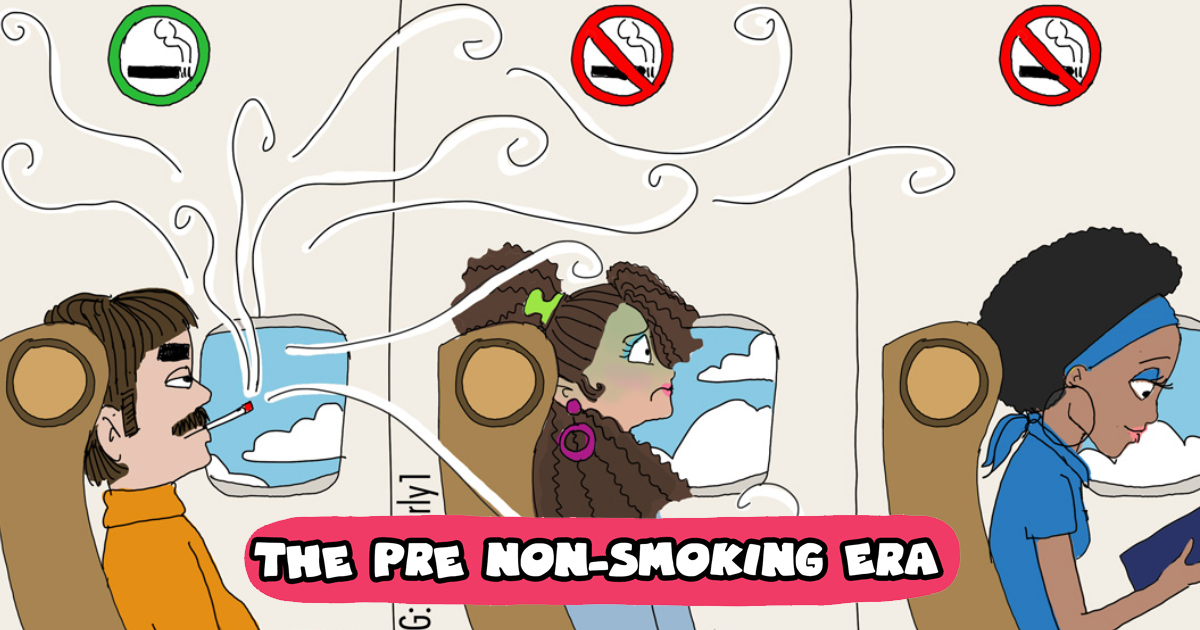
People born before the ’90s did not grow up in a world without technology. They grew up in a world where technology had buttons, cords, mysterious noises, and a genuine possibility of eating your homework. A cassette player could chew a favorite album. A VCR could blink “12:00” for six consecutive years. A home computer could take several minutes to display something that now loads before your thumb leaves the screen.
Pre-1990 nostalgia is not simply about old gadgets, however. It is about a different rhythm of daily life. Entertainment followed a schedule. Photos had to be developed. Friends could disappear for an afternoon without triggering a neighborhood search party. Getting lost was an actual navigational event rather than a brief disagreement with an app.
Whether you grew up in the 1960s, 1970s, or 1980s, these analog childhood memories probably feel surprisingly familiar. Here are 22 things only people who were born before the ’90s will truly understand.
Communication Required Patience, Planning, and a Very Long Cord
1. Stretching the Telephone Cord Into Another Room
Privacy once depended on the physical length of a telephone cord. If the family phone was attached to the kitchen wall, private conversations involved stretching the coiled cord around a doorway and whispering from a hallway. Meanwhile, everyone else could hear half the conversation and immediately became an unpaid detective.
2. Memorizing Everyone’s Phone Number
People once carried an impressive contact list entirely inside their heads. You knew your best friend’s number, your grandparents’ number, your parents’ work numbers, and possibly the pizza place. Today, many people would struggle to call their spouse from memory during an emergency. Before smartphones, forgetting a number meant consulting a handwritten address book or the enormous local phone directory.
3. Carrying Coins for a Payphone
Leaving home without a phone did not feel reckless because nobody had one in a pocket. Payphones stood outside stores, inside malls, and near gas stations. You carried change, called for a ride, and tried to explain your location while traffic roared behind you. If you had no coins, the collect-call strategy became a form of competitive speed-talking.
4. Hearing a Busy Signal and Simply Trying Again Later
When someone was already using the phone, you heard a repetitive busy tone. There was no text message, presence indicator, or polite notification explaining that the person was unavailable. You hung up and tried again later. Sometimes you repeated this ritual every five minutes, which was the analog version of refreshing a page.
5. Leaving a Message on an Answering Machine
Answering machines introduced a new social challenge: speaking naturally after a beep. People planned casual messages, panicked when recording began, and produced statements such as, “Hi, it’s me. You know who. Well, probably. Anyway, call me.” Families could also hear messages playing aloud, making the machine both a communications device and a household gossip distributor.
6. Sending Handwritten Letters and Passing Folded Notes
Before instant messaging, long-distance friendships survived through stationery, stamps, and patience. School friendships relied on carefully folded notes passed between desks. A handwritten message had weight, personality, and evidence. If it contained something embarrassing, deleting it required interception, negotiation, or a dramatic paper-shredding ceremony.
Entertainment Happened When the Schedule Said It Happened
7. Planning the Evening Around a Television Show
Favorite programs aired at a specific time, and missing an episode could mean never seeing it again. Families checked newspaper listings or a printed television guide and arranged dinner around the schedule. There was no pause button during a live broadcast, so commercial breaks became high-speed opportunities to visit the bathroom, grab snacks, and settle arguments.
8. Adjusting the Television Antenna
Improving picture quality could require the entire family. One person twisted the antenna while another shouted instructions from across the room: “Better! No, worse! Go back! Stop!” The final position often looked physically impossible, but touching anything could make the picture dissolve into snow. Aluminum foil occasionally joined the operation as an unofficial engineering material.
9. Treating Saturday-Morning Cartoons Like an Appointment
Saturday morning was not merely a time of day. It was an event. Children woke early without alarms, carried cereal to the television, and watched a concentrated block of cartoons before adults reclaimed the room. There was no endless on-demand library. When the programming ended, the magic was over and the outdoors began making unreasonable demands.
10. Rewinding a VHS Tape Before Returning It
Watching a movie on VHS involved bulky plastic tapes, tracking controls, and the possibility that the previous viewer had failed to rewind. Video stores often reminded customers to “be kind, rewind.” Dedicated rewinders existed because repeatedly rewinding tapes in the VCR was apparently too much responsibility for one machine.
11. Browsing a Video Rental Store for an Hour
Choosing a movie required leaving the house and studying rows of cardboard cases. The newest release was frequently unavailable, so families negotiated backup choices in public. A promising cover could hide a terrible movie, and employees became valuable human recommendation engines. Late fees added suspense long after the actual thriller had ended.
12. Recording a Song From the Radio
Music fans waited beside the radio with a blank cassette and one finger hovering over the record button. The goal was to capture a favorite song without the announcer speaking over the introduction. Success required patience, timing, and luck. Inevitably, someone entered the room and asked a question during the quietest part.
13. Making a Mixtape One Song at a Time
A mixtape was not a playlist assembled in 40 seconds. Songs had to be selected, recorded, timed, and arranged so they fit on both sides of the cassette. The sequence mattered. The handwritten track list mattered. Giving someone a mixtape was part musical recommendation, part emotional confession, and part unpaid audio-production internship.
14. Repairing a Cassette With a Pencil
When loose tape escaped from a cassette, the standard rescue tool was an ordinary pencil. Insert it into the reel, rotate carefully, and hope the ribbon had not twisted into a plastic noodle. Children who struggled to understand fractions somehow became skilled technicians when a favorite album was in danger.
15. Blowing Into a Video Game Cartridge
When an old game cartridge would not load, players removed it, blew into it, reinserted it, and repeated the procedure with increasing spiritual commitment. Nintendo has advised users not to blow on cartridge connectors because moisture can cause damage, but the ritual remains part of retro gaming folklore. Logic was optional; determination was mandatory.
16. Feeding Quarters Into an Arcade Machine
Arcades turned pocket change into entertainment at alarming speed. Players lined up quarters on a cabinet to claim the next turn, watched skilled strangers perform impossible moves, and tried to stretch one credit as long as possible. High scores mattered because they were public, temporary, and often identified only by three mysterious initials.
Everyday Life Came With More Paper and Fewer Undo Buttons
17. Taking Only 24 or 36 Photos
A roll of film placed a strict limit on photographic enthusiasm. Every picture cost money to take and develop, so people did not photograph lunch from seven angles. Someone counted to three, everyone tried to keep their eyes open, and the photographer hoped a finger was not covering the lens. There was no instant preview and no second chance once the roll was full.
18. Waiting to See Whether the Photos Turned Out
Finished film was dropped off at a photo counter and collected days later. Opening the envelope was a family event filled with suspense. Some pictures were excellent. Others featured red eyes, darkness, accidental ceilings, or a blurry thumb enjoying its first portrait session. Even the failures often ended up in an album because development had already been paid for.
19. Navigating With a Paper Map
Road trips required unfolding a map large enough to cover the dashboard, locating the correct highway, and folding the map back incorrectly forever. Drivers followed handwritten directions involving landmarks such as “turn after the red barn.” Missing an exit could add 40 minutes because the map did not calmly announce that it was recalculating.
20. Researching With Card Catalogs and Encyclopedias
Before online search engines, school research began at the library. Students searched card catalogs, copied call numbers, walked through shelves, and hoped the needed book was available. Home encyclopedia sets could answer many questions, provided the topic existed when the edition was printed. Research involved more walking, but fewer pop-ups asking permission to store cookies.
21. Correcting a Typing Mistake With Liquid or Tape
A typo on a typewriter did not disappear with Backspace. It demanded correction fluid, correction tape, careful realignment, or complete surrender. Producing a clean final page required concentration. People learned to think before striking a key because every error created a small craft project.
22. Saving Important Work on a Floppy Disk and Going Online Through Dial-Up
Early home computing combined fragile storage with dramatic sound effects. A 3.5-inch floppy disk commonly held 1.44 megabytes, yet it carried school assignments, documents, and occasionally an entire small program. Connecting to the internet meant listening to a modem squeal through the telephone line. If someone picked up the phone, the connection could collapse immediately. The internet was not always available; it was something the household temporarily summoned.
Why Pre-1990 Nostalgia Still Feels So Powerful
These memories are funny because old technology was awkward, but the nostalgia runs deeper than tangled cords and damaged tapes. People born before the ’90s experienced the transition from analog life to digital convenience. They remember when communication had friction, entertainment had scarcity, and information required deliberate effort.
That friction could be frustrating. Getting lost was not charming when the gas tank was nearly empty. Missing a television finale was not an exercise in mindfulness. A corrupted floppy disk could destroy hours of work without offering a recovery folder. The past was not automatically better simply because it came with wood-paneled electronics.
Still, limits created rituals. Families watched programs together because there was one screen and one broadcast time. Friends listened to an entire album because skipping songs was inconvenient. Photos captured selected moments rather than every moment. Being temporarily unreachable gave children and adults room to explore, make decisions, and return with stories.
What Growing Up Before the ’90s Actually Felt Like: A 500-Word Experience
A typical afternoon began with uncertainty. You left school without sending anyone a live location. Plans had been made earlier, perhaps during lunch or through a telephone call the night before. “Meet near the park at four” was considered sufficient logistical detail. If a friend did not appear, you waited, wandered around, or went home. There was no stream of messages documenting a delayed bus, a missing shoe, and the emotional journey of leaving the house.
Once friends gathered, the neighborhood became the entertainment system. Bikes were transportation, status symbols, and occasionally emergency medical equipment. Someone’s parent might call everyone home by shouting from a porch. Children learned the distinctive sound of their own names traveling across several yards. A watch was useful, but the position of the sun and the arrival of streetlights also provided unofficial scheduling services.
Indoor entertainment required cooperation. In a one-television household, watching a program meant negotiating with parents and siblings. The remote control, when one existed, was a position of authority. Before remotes became common, the youngest child often served as the channel-changing department. This job included walking to the set, turning a dial, adjusting the volume, and standing beside the television while everyone reconsidered the decision.
Music felt unusually personal because collecting it took effort. You saved money for an album, borrowed tapes from friends, and studied liner notes while listening. A scratch, tangle, or accidental recording could be devastating. Sharing music meant physically handing someone a record, cassette, or compact disc and trusting that it would return in approximately the same condition. A mixtape could take an entire evening to make, which gave every song choice a sense of intention.
Schoolwork also demanded patience. Research meant traveling to a library, locating several books, taking notes by hand, and building a bibliography without automatic formatting. Typing a report required careful planning because moving a paragraph was not a simple drag-and-drop operation. Teachers could recognize last-minute work by the correction-fluid blizzard covering the final page.
Even boredom had a different texture. There was no pocket-sized stream of videos ready to fill every silent minute. Waiting in a car, standing in line, or sitting through a long visit meant looking around, reading whatever was nearby, inventing a game, or listening to adults discuss topics nobody understood. Boredom occasionally produced complaints, but it also produced drawings, jokes, daydreams, and elaborate plans involving cardboard boxes.
The strongest memory may be the separation between public life and private life. An embarrassing moment usually remained with the people who witnessed it. A bad haircut did not become permanent searchable content. Childhood mistakes faded instead of receiving comments from strangers. People were harder to contact, but they were also harder to monitor.
Growing up before the ’90s was not a golden age. It was slower, less convenient, and sometimes unnecessarily difficult. Yet those experiences taught improvisation, patience, memory, and the ability to tolerate unanswered questions. People fixed tapes, unfolded maps, waited for photographs, and made plans without constant confirmation. That is why pre-internet life remains so memorable: ordinary tasks required participation, and participation turned them into stories.
Conclusion
People born before the ’90s have watched everyday life transform at extraordinary speed. Phones escaped the wall, maps learned to speak, cameras stopped using film, and the internet went from a noisy household event to an invisible utility. Many old routines deserved to disappear, but remembering them offers more than a quick laugh.
These 22 retro experiences reveal how people communicated, learned, traveled, played, and waited before everything became immediate. The technology may look primitive now, yet the habits surrounding it created resourcefulness and memorable social rituals. Anyone who has rewound a cassette with a pencil or raced through the house during a commercial break belongs to a very specific cluband membership does not require a password.
Note: Historical context for this article was synthesized from material published by the Smithsonian Institution, Library of Congress, Computer History Museum, Federal Communications Commission, United States Postal Service, National Archives, U.S. Geological Survey, American Library Association, Federal Reserve, Federal Reserve Bank of St. Louis, Nintendo, and Kodak. These sources document the development and use of analog recordings, broadcast schedules, telephones, paper maps, card catalogs, photography, payment methods, game cartridges, floppy disks, and dial-up communications.