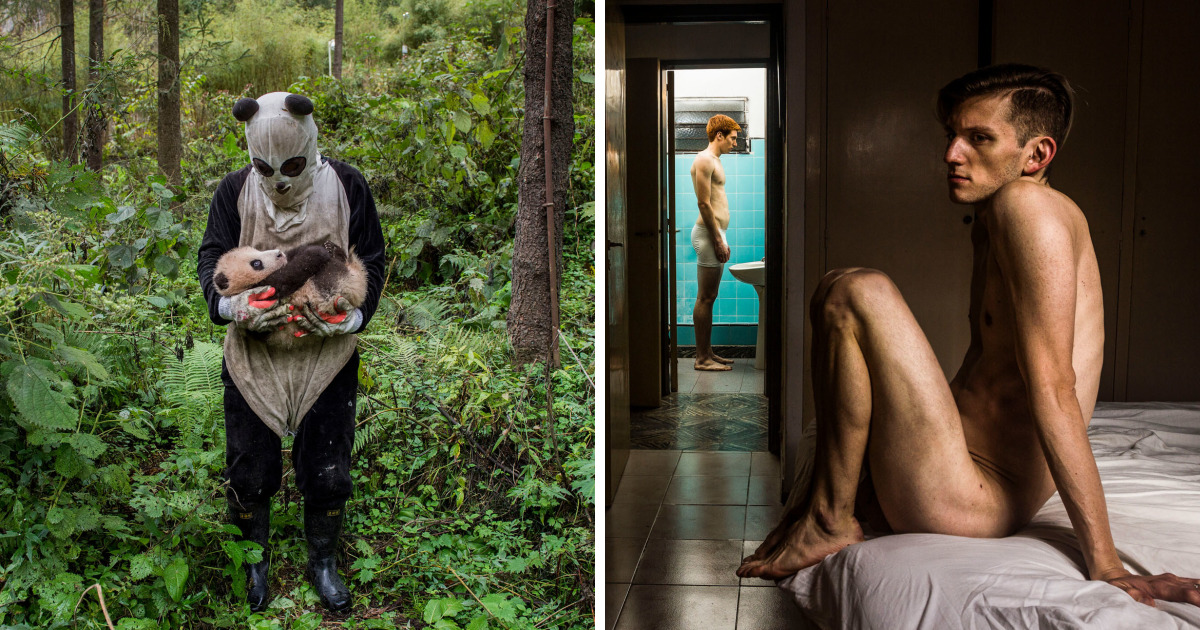
The 2017 Sony World Photography Awards did not politely knock on the door of the photography world. It kicked it open, walked in wearing snow boots, and casually dropped some of the most memorable images of the year on the table. From frozen landscapes that looked like Earth had hit the pause button to portraits so intense they seemed to stare back, the 2017 winners proved one thing: a great photo does not need to shout. Sometimes it simply whispers, and everyone in the room goes quiet.
Celebrating its 10th anniversary, the Sony World Photography Awards 2017 attracted a massive global response, with 227,596 entries from 183 countries. That number alone is enough to make any photo editor reach for coffee, backup coffee, and possibly a third emergency coffee. But behind the statistics was something more meaningful: thousands of photographers trying to freeze a piece of truth, beauty, humor, conflict, wonder, or everyday life into a single frame.
The best photos from the 2017 Sony World Photography Awards were not just technically impressive. They were emotionally sticky. They stayed with viewers because they offered more than visual polish. They delivered atmosphere, timing, restraint, curiosity, and in some cases, the wonderful reminder that the world is much stranger and more beautiful than our camera rolls usually admit.
Why the 2017 Sony World Photography Awards Still Matter
Photography contests come and go, but the Sony World Photography Awards have remained influential because they welcome a wide range of visual voices. The competition includes professional series, open single-image categories, youth photography, student work, and national awards. In plain English, it is not just a beauty pageant for expensive cameras. It is a global stage where amateurs, students, emerging artists, and established professionals can all show what they see.
The 2017 edition stood out because of its range. The winning images moved from remote winter landscapes to intimate portraiture, from natural-world storytelling to documentary projects about identity, work, hardship, and resilience. Some photos felt cinematic. Others felt quiet and observational, as if the photographer had waited for the world to reveal a secret and then pressed the shutter at exactly the right moment.
That is the real magic of award-winning photography. It is not only about sharpness, lighting, or composition, although those things definitely help. It is about making the viewer feel as if they arrived just in time. The 2017 Sony World Photography best photos achieved that repeatedly.
Frederik Buyckx and “Whiteout”: The Beauty of Silence
The top honor, Photographer of the Year, went to Belgian photographer Frederik Buyckx for his professional landscape series Whiteout. The series captured winter scenes across regions including the Balkans, Scandinavia, and Central Asia. These were not postcard landscapes with cheerful skies and suspiciously perfect picnic weather. They were vast, cold, and often nearly swallowed by snow.
What made Whiteout so powerful was its restraint. Buyckx did not treat winter as decoration. He treated it as a force. In the images, people, animals, roads, mountains, and villages appear to exist inside a world that has been simplified by weather. Snow removes clutter. It softens detail. It turns the landscape into a stage where small signs of life suddenly feel heroic.
The judges praised the beauty, scale, and effort involved in the work. That makes sense. Landscape photography can look effortless when viewed on a screen, but anyone who has ever tried to photograph snow knows the truth: your fingers freeze, your camera complains, and your exposure meter starts acting like it has personal problems. Buyckx’s series made that difficulty invisible. The result was elegant, patient, and quietly breathtaking.
Alexander Vinogradov’s “Mathilda”: A Portrait That Holds the Room
The Open Photographer of the Year title went to Russian photographer Alexander Vinogradov for Mathilda, a portrait inspired by the film Léon: The Professional. The image was selected as the best single photograph in the Open competition, earning Vinogradov a $5,000 prize and worldwide attention.
Portrait photography is tricky because the human face is familiar territory. We see faces all day: friends, strangers, classmates, coworkers, delivery drivers, people in line at the grocery store who somehow still do not understand self-checkout. For a portrait to stand out, it needs more than a face. It needs presence.
Mathilda had that presence. The strength of the image came from its directness. It did not rely on complicated props or visual chaos. Instead, it used expression, mood, and framing to create a character in a single image. That is why the photo worked so well in the Open competition, where photographers had only one frame to impress the judges. No series. No second act. No “wait, the next one explains it.” Just one image carrying the entire story.
Katelyn Wang and “On Top of the World”: Youth Photography With Real Altitude
The Youth Photographer of the Year award went to 16-year-old Katelyn Wang from Los Angeles for On Top of the World. The photograph was taken above Lake Pehoé in Torres del Paine National Park in Chile. It responded to the youth competition theme of “Beauty,” and it did so without overcomplicating the assignment.
The image captured the wonder of being small in a huge landscape. That feeling is universal. Stand in front of mountains, glaciers, or a sky that looks too large for the planet, and suddenly your inbox feels less important. Wang’s photograph translated that sensation into a clean, memorable frame.
Her win also highlighted one of the best parts of the Sony World Photography Awards: younger photographers are not treated as cute side notes. They are taken seriously. The Youth competition gives photographers aged 12 to 19 a meaningful platform, and Wang’s winning image showed that strong visual instinct does not wait politely until adulthood to arrive.
Michelle Daiana Gentile’s “Only Hope”: Student Photography With Emotional Weight
Student Photographer of the Year went to Michelle Daiana Gentile from Argentina for her series Only Hope. The work responded to the brief “Emotions” and was photographed over ten days with workers in an old factory in Argentina.
Unlike single-image categories, student and professional series ask photographers to sustain a visual idea across multiple frames. That is a different kind of challenge. One strong photo can be a lightning strike. A strong series is weather. It has rhythm, development, and emotional consistency.
Only Hope stood out because it connected people, labor, and feeling. Instead of treating workers as background elements, the series focused on human experience. It reminded viewers that documentary photography is not simply about showing where people are. It is about showing what a situation feels like from the inside.
The Professional Categories: A Global Tour Without Airport Delays
The professional winners in 2017 covered a remarkable range of subjects. Dongni from China won in Architecture. Sabine Cattaneo from Switzerland won in Conceptual. Tasneem Alsultan from Saudi Arabia won Contemporary Issues. Alessio Romenzi from Italy won Current Affairs & News. Sandra Hoyn from Germany won Daily Life. Frederik Buyckx won Landscape. Will Burrard-Lucas from the United Kingdom won Natural World. George Mayer from Russia won Portraiture. Henry Agudelo from Colombia won Still Life. Yuan Peng from China won Sport.
That list reads like a visual passport with better lighting. It also reveals why the 2017 Sony World Photography Awards felt so expansive. The winning work did not push one narrow definition of “good photography.” Instead, it showed that excellence can come from a snowy mountain pass, a carefully staged conceptual image, a social documentary project, a sports moment, or a still life that makes ordinary objects feel strangely important.
Natural World Photography That Gets Close to the Wild
Will Burrard-Lucas won the Natural World category with work that demonstrated how patience, invention, and respect for wildlife can create unforgettable images. Wildlife photography often depends on distance, timing, and technology, but the best images never feel like technical demonstrations. They feel like invitations into another creature’s world.
This is where natural-world photography becomes more than “animal photo, but fancy.” A strong wildlife image shows behavior, environment, and tension. It gives viewers a sense of being present without disturbing the scene. In 2017, this category reminded audiences that the natural world is not a backdrop. It is a living theater, and humans are not always the main characters. Shocking, I know.
Contemporary Issues and the Power of Context
Tasneem Alsultan’s recognition in Contemporary Issues reflected another important strength of the awards: photography can be beautiful and socially meaningful at the same time. Images dealing with identity, gender, culture, or social change often carry layers that unfold slowly. The first glance may catch composition. The second notices the subject. The third begins to ask questions.
That layered experience is one reason documentary and issue-based photography remains essential. It does not merely decorate the news cycle. It humanizes it. A well-made image can help viewers understand a topic not as an abstract debate, but as something lived by real people with names, homes, routines, and complicated emotions.
Open Competition: One Shot, No Safety Net
The Open competition is especially exciting because it rewards single images. In 2017, the Open category winners were selected from more than 105,000 entries. Imagine sorting through that many photos. By entry number 47,000, most people would start seeing rectangles in their sleep.
But the single-image format is thrilling because it demands immediate impact. A winning Open photograph has to do everything at once: attract attention, hold attention, and leave a trace in the viewer’s memory. The categories included areas such as architecture, culture, enhanced, motion, nature, portraits, still life, street photography, travel, and wildlife.
This variety gave the 2017 Sony World Photography Awards a democratic energy. A photographer did not need a long-term project to compete in the Open section. One exceptional frame could be enough. That is encouraging for anyone carrying a camera, whether it is a professional mirrorless setup or a phone that has survived three drops and one suspicious splash of coffee.
Martin Parr and the Joy of Looking Sideways
The 2017 awards also honored British photographer Martin Parr with an Outstanding Contribution to Photography recognition. Parr is known for his sharp, humorous, and often wonderfully awkward observations of modern life. His presence in the 2017 exhibition mattered because it added a reminder: photography does not always need to be grand, tragic, or dramatic to be important.
Sometimes the most revealing images come from ordinary moments: beachgoers, tourists, food, fashion, social rituals, and public spaces where humans behave exactly like humans, which is to say, strangely. Parr’s influence fits beautifully beside the award-winning images because he represents a key photographic truth. The world is already full of visual comedy, contradiction, and poetry. The photographer’s job is to notice before everyone else does.
Why These Photos Take Your Breath Away
The phrase “take your breath away” is often overused online. It is attached to sunsets, living rooms, celebrity outfits, and occasionally sandwiches that are mostly cheese. But for the 2017 Sony World Photography best photos, the phrase earns its keep.
These images are breathtaking because they slow the viewer down. In an internet culture built for fast scrolling, that is no small achievement. A strong photograph interrupts the thumb. It says, “Hold on. Look again.” The winning images from 2017 did exactly that through several techniques.
They Used Scale Wisely
In Whiteout, scale made people and animals look small against winter’s vastness. That contrast created emotion without melodrama. The viewer senses the cold, the distance, and the effort required to exist in that environment.
They Trusted Simplicity
Mathilda worked because it did not overload the frame. Many unforgettable portraits are simple on the surface but complex underneath. The face becomes the landscape. The eyes become the headline.
They Balanced Beauty With Meaning
The strongest 2017 winners were not pretty for prettiness’ sake. They had purpose. Whether showing landscape, labor, culture, wildlife, or conflict, the images invited viewers to feel something and think about why they felt it.
What Photographers Can Learn From the 2017 Winners
The 2017 Sony World Photography Awards offer practical lessons for photographers at any level. First, great photography begins with attention. You cannot photograph what you have not truly noticed. Buyckx noticed how winter changes the emotional shape of a landscape. Vinogradov noticed how a portrait can carry cinematic tension. Wang noticed the drama of standing above a breathtaking natural scene.
Second, strong images often come from commitment. The best photographers return, wait, experiment, fail, and try again. They do not simply point the camera at something interesting and hope the photography gods are in a generous mood. They work the scene. They refine the idea. They understand when to include detail and when to leave space.
Third, emotion matters. Technical perfection without feeling is like a beautifully wrapped empty box. Nice ribbon, disappointing birthday. The 2017 winners had craft, but they also had mood. They made viewers curious. They created atmosphere. They suggested stories beyond the edge of the frame.
The Viewing Experience: Living With These Images for a While
Spending time with the 2017 Sony World Photography best photos is a different experience from quickly browsing a social media feed. These images ask for a slower kind of looking. At first, you notice the obvious: the snow, the face, the mountain, the animal, the gesture, the color, the geometry. Then, if you stay a little longer, the photograph begins to rearrange itself. Small details move forward. Empty space becomes important. A shadow that seemed decorative begins to feel like part of the story.
That slow-viewing experience is one of the great pleasures of photography. A good image gives you an instant impression. A great image gives you a second impression that is better than the first. With Buyckx’s winter landscapes, the first impression is beauty. The second is endurance. You start to imagine the cold air, the difficult travel, the quiet of snow-covered places, and the stubborn life continuing inside them. The photographs become less about winter as scenery and more about winter as a condition people and animals must negotiate.
With Mathilda, the experience is more intimate. A portrait does not offer the escape of a wide landscape. It gives you a face and asks you to meet it. The longer you look, the more the image seems to shift between character study, cinematic reference, and emotional mystery. That is the special power of portraiture. It can make a stranger feel specific without explaining everything. In fact, the lack of explanation is part of the attraction. The viewer fills the silence with questions.
The youth-winning image On Top of the World offers another kind of experience: recognition. Most people know the feeling of being overwhelmed by a place. Maybe it happened on a mountain trail, at the edge of the ocean, in a desert, or even on a city rooftop at sunset. Wang’s photograph taps into that emotional memory. It reminds viewers that beauty is not always delicate. Sometimes it is enormous. Sometimes it makes you feel tiny in the best possible way.
Looking through the 2017 winners also creates a useful creative itch. You may start noticing light differently after seeing them. A foggy morning becomes less annoying and more cinematic. A quiet street corner starts looking like a possible frame. Even a messy kitchen can briefly seem like a still-life opportunity, though sadly the dishes will not wash themselves in the name of art. That is what powerful photography does: it changes how you see after you stop looking.
For aspiring photographers, the experience is both inspiring and humbling. The images show what is possible when patience meets timing, when technical skill serves emotion, and when a photographer knows what to leave out. They also prove that memorable photography is not limited to one genre. Landscape, portraiture, documentary, sport, wildlife, still life, and street photography can all be breathtaking when the photographer brings intention to the frame.
For general viewers, the 2017 Sony World Photography Awards are simply a reminder that the world is visually generous. There is drama in snow, dignity in work, humor in public life, grace in wildlife, and wonder in the face of a young person standing before a vast landscape. These photographs do not just show what happened in front of the lens. They show what careful looking can reveal.
Conclusion
The 2017 Sony World Photography Awards delivered a remarkable collection of winning images that still feels fresh, thoughtful, and visually powerful. Frederik Buyckx’s Whiteout proved that landscape photography can be quiet and monumental at the same time. Alexander Vinogradov’s Mathilda showed how a single portrait can command global attention. Katelyn Wang’s On Top of the World captured youthful wonder with impressive clarity, while Michelle Daiana Gentile’s Only Hope demonstrated the emotional strength of student documentary work.
Together, the winners formed a portrait of photography itself in 2017: global, curious, technically skilled, emotionally intelligent, and impossible to fit into one neat box. The best photos did more than please the eye. They invited viewers to pause, feel, question, and look again. That is why the 2017 Sony World Photography best photos truly can take your breath awayand politely refuse to give it back until you have spent a little more time with them.