Some TV shows arrive fully formed. Others arrive wearing a questionable first-season haircut, carrying a vague premise, and hoping nobody notices they are still figuring themselves out. Then there are the rare series that change so dramatically over time that watching their pilot and finale back-to-back feels like meeting two cousins who happen to share a last name.
These TV shows transformed through smarter character writing, bold genre changes, new creative directions, shifting emotional stakes, and, in a few cases, a supporting character who became too popular to keep in the background. From sitcoms that found their warmth to dramas that swapped procedural cases for sprawling mythology, these series prove that evolution can be television’s secret superpower.
What Makes a TV Show Transformation So Memorable?
A television series does not need to become unrecognizable to evolve. Sometimes the biggest change is subtle: a lead character becomes more sympathetic, an ensemble gets stronger, or the writers stop treating every episode like it was assembled by a committee of nervous accountants.
Other shows take the scenic route. A light mystery becomes a crime thriller. A goofy animated comedy becomes a painful meditation on trauma. A post-apocalyptic survival drama becomes a political argument about rebuilding civilization while zombies politely wait outside the gate.
The best transformations feel earned. They do not erase what came before; they use early mistakes, oddball characters, and unfinished ideas as building blocks for something more confident.
20 TV Shows That Changed More Than Anyone Expected
-
1. Parks and Recreation
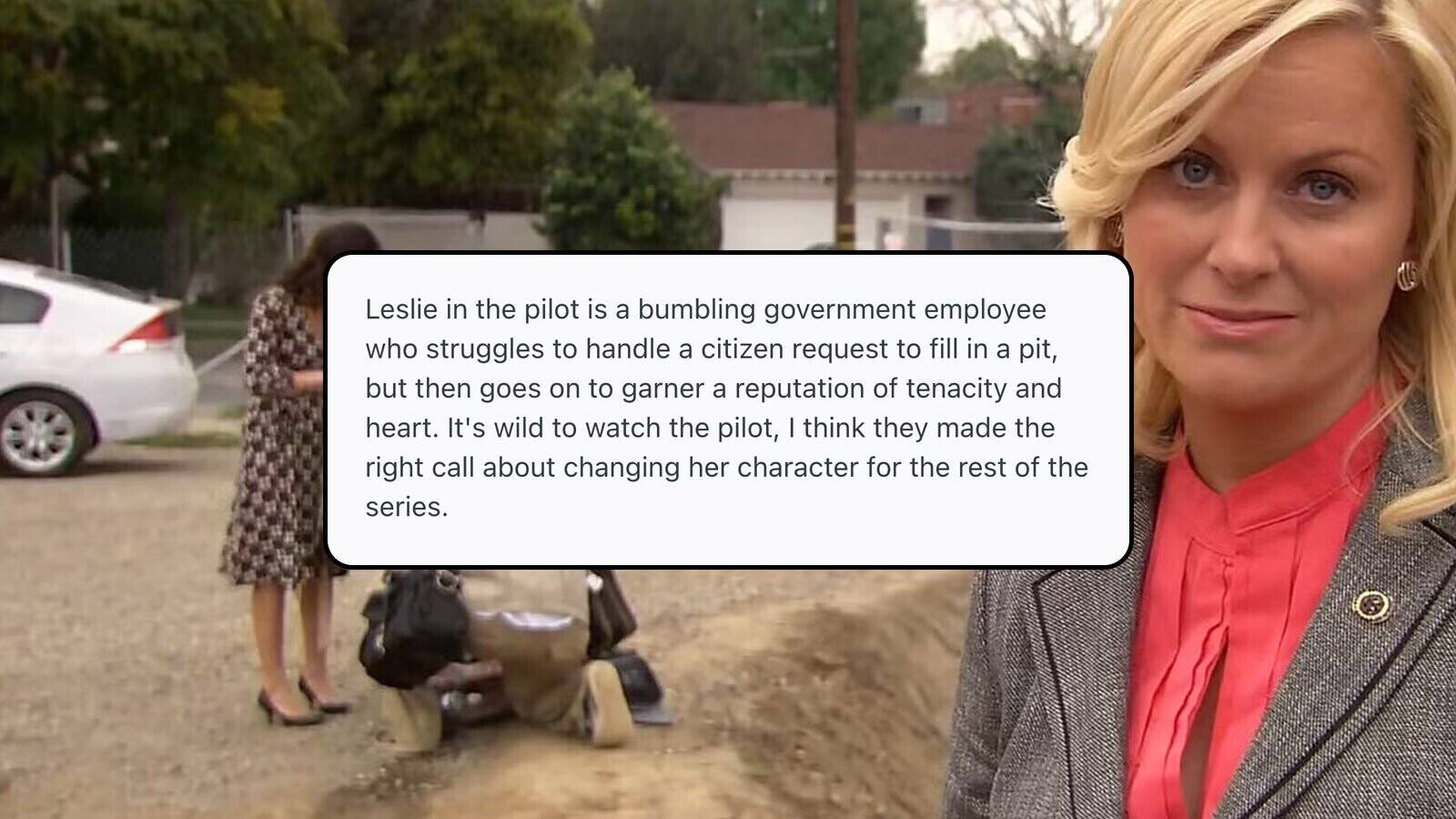
Parks and Recreation began as a somewhat awkward mockumentary about Leslie Knope, a government employee who seemed modeled too closely after a certain regional paper-company manager. By its second season, the show adjusted Leslie into an optimistic, capable public servant and built a richer world around Pawnee. Ron Swanson, April Ludgate, Andy Dwyer, Donna Meagle, and Ben Wyatt turned the series into a warm workplace comedy about friendship, civic pride, and the strange bravery required to attend a town-hall meeting.
-
2. The Office
The American version of The Office started as a close adaptation of the British original, complete with uncomfortable silences and a Michael Scott who was almost impossible to root for. The series soon softened Michael without making him boring, gave Jim and Pam a slow-burn emotional center, and allowed the supporting cast to become gloriously weird. What began as a cringe-heavy workplace satire grew into one of television’s most rewatchable ensemble comedies.
-
3. Star Trek: The Next Generation
Early episodes of Star Trek: The Next Generation sometimes felt like the Enterprise had accidentally wandered into a convention panel about stiff uniforms and moral lectures. By its third season, however, the show found its voice. The characters gained depth, the stories became more ambitious, and episodes such as “Yesterday’s Enterprise” and “The Best of Both Worlds” proved that the series could stand proudly beside the original Star Trek rather than nervously borrowing its lunch money.
-
4. Buffy the Vampire Slayer
Buffy the Vampire Slayer began as a clever high-school horror comedy about a teenage girl battling monsters between homework assignments. It quickly matured into a powerful genre drama about grief, identity, addiction, friendship, first love, and growing up. The monsters were still there, naturally, but they became metaphors with teeth. By later seasons, the show could switch from slapstick to tragedy in a heartbeat without dropping the emotional ball.
-
5. The Leftovers
Season one of The Leftovers was bleak, mysterious, and emotionally bruising enough to make viewers consider sending the showrunner a care package and a therapist’s business card. Then the series reinvented itself. Later seasons became stranger, funnier, more spiritual, and more adventurous while remaining deeply human. The show shifted from asking, “Why did this terrible thing happen?” to exploring how people create meaning when no satisfying answer arrives.
-
6. BoJack Horseman
At first glance, BoJack Horseman looked like a colorful animated Hollywood satire starring a washed-up horse actor. It still had absurd animal jokes, celebrity mockery, and background gags involving dogs in business suits. But it gradually became one of television’s sharpest explorations of depression, addiction, self-destruction, trauma, and the painful gap between wanting to change and actually doing the work. Few shows have made viewers laugh at a pun and then stare silently at a wall five minutes later.
-
7. Person of Interest
Person of Interest initially presented itself as a slick crime procedural: a mysterious billionaire and a former CIA operative use a surveillance system to stop violent crimes before they happen. Then the show expanded into a surprisingly ambitious science-fiction story about artificial intelligence, privacy, government power, and whether a machine can develop something resembling a conscience. Its weekly cases became the doorway into a much larger conversation about who gets watched and who gets protected.
-
8. Halt and Catch Fire
Halt and Catch Fire started as a testosterone-heavy drama about the early computer industry, complete with brilliant men glaring at circuitry as if a motherboard had insulted their families. Over time, it transformed into a richer ensemble story, especially through the creative partnership and rivalry of Cameron Howe and Donna Clark. The series became less interested in who would win the tech race and more interested in ambition, friendship, reinvention, and the lonely cost of building the future.
-
9. Cougar Town
The title Cougar Town promised a sitcom about a recently divorced woman dating younger men. Fortunately, the show quickly realized that premise had the shelf life of an avocado in direct sunlight. It became an ensemble comedy about friendships, neighborhood chaos, wine-fueled conversations, and a group of adults who treated a cul-de-sac like a tiny, highly caffeinated nation-state. The title remained, mostly as a reminder that marketing departments also enjoy practical jokes.
-
10. Family Matters
Family Matters began as a family sitcom centered on the Winslow household. Then Steve Urkel arrived, said “Did I do that?” and essentially rearranged the furniture of the entire series. Urkel’s popularity shifted the show toward broader comedy, fantasy plots, inventions, alter egos, and science-fiction silliness. The transformation was so complete that viewers could easily forget the show once belonged primarily to the Winslow family rather than their suspenders-wearing neighbor.
-
11. Happy Days
Happy Days started as a nostalgic look at teenage life in the 1950s through the eyes of Richie Cunningham and his friends. As ratings changed, the show leaned more heavily into broad comedy and made Arthur “Fonzie” Fonzarelli a major focus. Fonzie became a cultural icon, and the series shifted from gentle coming-of-age stories to a bigger, brighter sitcom universe. It also gave television the phrase “jumping the shark,” which is an impressively durable legacy for one water-skiing stunt.
-
12. M*A*S*H
M*A*S*H began as a fast, irreverent comedy about doctors stationed during the Korean War. Over eleven seasons, it evolved into something more complicated and emotionally resonant. The jokes remained, but the series increasingly confronted the exhaustion, absurdity, grief, and moral damage of war. Its ability to balance comedy and tragedy made it feel less like a conventional sitcom and more like a long-running story about people trying to stay decent in an indecent situation.
-
13. Friday Night Lights
Despite its football-centered title, Friday Night Lights became much more than a series about touchdowns, pep rallies, and adults taking high school sports a little too personally. It grew into an intimate portrait of small-town life, marriage, class, race, family pressure, and the dreams people chase when the stadium lights go out. Football was the engine, but the characters were the destination.
-
14. Schitt’s Creek
Schitt’s Creek began with the Rose family losing their fortune and landing in a small town they considered beneath them. Early episodes leaned heavily on fish-out-of-water comedy, but the show gradually found a sweeter, more emotionally generous rhythm. The family did not become perfect, thank goodness, but they became more connected. Its later seasons turned the series into a beloved story about chosen family, acceptance, personal growth, and learning that kindness is not a sign of weakness.
-
15. Crazy Ex-Girlfriend
Crazy Ex-Girlfriend started with a deliberately outrageous setup: Rebecca Bunch leaves a successful New York career and moves across the country to chase an old summer-camp boyfriend. What could have stayed a wacky romantic musical became an unusually thoughtful story about mental health, unhealthy relationships, identity, and recovery. The show used catchy songs to explore difficult emotions, proving that a tap-dancing number can sometimes carry more honesty than a thousand serious speeches.
-
16. The Good Place
The Good Place appeared to be a cheerful afterlife sitcom about Eleanor Shellstrop accidentally landing in heaven. Then it pulled off a major twist and transformed into a philosophical comedy about ethics, forgiveness, moral growth, and whether humans can ever become better. The show kept reinventing its world without losing its warmth. Somehow, a sitcom about eternal damnation became one of the gentlest, most hopeful shows of its era.
-
17. Search Party
Search Party began as a darkly comic mystery about a group of self-absorbed Brooklyn friends looking for a missing acquaintance. From there, it turned into a crime thriller, courtroom drama, psychological horror, cult satire, and eventually something that could generously be described as “the apocalypse, but make it awkward.” Each season changed genre while preserving the show’s fascination with ambition, dishonesty, millennial anxiety, and the spectacular consequences of bad decisions.
-
18. Fringe
Early Fringe episodes played like a science-fiction procedural, with strange weekly cases involving bizarre experiments and unsettling body horror. As the series developed, it expanded into alternate universes, parallel versions of its characters, time travel, and a deeply emotional father-son relationship. The show’s mythology became dense, but its heart remained simple: people matter, even across dimensions where everyone has a suspiciously stylish alternate haircut.
-
19. Supernatural
Supernatural started as a monster-of-the-week road show about two brothers hunting ghosts, demons, and urban legends. Over time, it became a sprawling mythology involving angels, Heaven, Hell, apocalypses, alternate realities, cosmic beings, and enough family trauma to power a small city. The core relationship between Sam and Dean Winchester kept the series grounded, even when the plot was busy asking viewers to accept that God himself might need a timeout.
-
20. The Walking Dead
The Walking Dead began as a tense survival-horror drama in which the living were mostly trying not to become lunch. As the series expanded, it became increasingly interested in communities, leadership, violence, power, and what civilization might look like after social collapse. The walkers remained a threat, but the show’s biggest conflicts often came from people deciding whether to build trust, seize control, or deliver a villain speech so long that the zombies had time to file paperwork.
Why These TV Show Reinventions Worked
The most successful television transformations usually happen because creators listen to what is working. That does not mean blindly following every fan complaint, because the internet would eventually demand a talking raccoon in every drama. It means recognizing which characters have chemistry, which themes have emotional weight, and which parts of a premise are holding the story back.
A great long-running series learns how to surprise viewers without betraying itself. It gives audiences a reason to stay while making them feel that the show is still alive, curious, and willing to take risks. The series on this list changed their formats, themes, tones, or central relationships, but they retained an identity strong enough to keep viewers invested.
The Experience of Watching a TV Show Transform Over Time
There is a special kind of joy in watching a television series become better than its original pitch. You begin with low expectations, maybe because a friend says, “Just get through the first season,” which is not always a ringing endorsement. It sounds less like a viewing recommendation and more like advice from someone describing a difficult hiking trail.
Then something clicks. A character who once seemed annoying becomes fascinating. A background joke becomes a running gag. A storyline that felt disposable suddenly opens a door into the show’s real purpose. Before long, you are defending season three of a comedy that you nearly abandoned after episode two. Television has a way of rewarding patience when writers, actors, and producers are willing to learn from their early swings and occasional spectacular misses.
Watching a show evolve can also feel personal because viewers evolve alongside it. A series you watched casually in college may hit differently years later, when you understand its themes of career anxiety, friendship drift, parenthood, grief, or the terrifying realization that you now identify with the exhausted adult rather than the rebellious teenager. One day you are laughing at the office prank. Ten years later, you are nodding solemnly at a character discussing health insurance and the emotional cost of a group chat that never stops buzzing.
This is especially true with long-running shows. Their transformations often mirror the changing lives of the people watching them. Sitcoms become more reflective. Genre series become more emotionally ambitious. Characters who once existed for punch lines are allowed to fail, change, and occasionally become the person everyone trusts during a crisis. Even the ridiculous shows can grow up a little, although they may still insist on bringing a demon, robot, or time machine to dinner.
There is also something satisfying about seeing creators avoid the easy route. A weaker series repeats the same plot until viewers can predict every beat from the couch. A stronger series recognizes when the original formula has run out of oxygen. It introduces new pressure, raises the emotional stakes, shifts the point of view, or changes the genre altogether. The goal is not change for the sake of change. The goal is to reveal new layers of the story.
Of course, not every transformation is universally loved. Some fans prefer the early version of a show, while others believe the later seasons are where the real magic begins. That disagreement is part of the fun. Television becomes memorable when it gives people something to debate beyond whether they should skip the opening credits.
The best transformed TV shows leave viewers with a strange but wonderful feeling: the sense that they have watched a creative team discover what the series was truly capable of becoming. It is messy, surprising, occasionally overstuffed, and sometimes one bad episode away from chaos. In other words, it is a lot like life, except life rarely gives us a season finale and a conveniently timed emotional soundtrack.
Conclusion
Television history is full of shows that started as one thing and became something far more interesting. Whether they shifted from broad comedy to emotional storytelling, from case-of-the-week episodes to complex mythology, or from a simple premise to a genre-hopping adventure, these series prove that creative evolution can turn a good idea into a lasting favorite.
The next time a show feels slightly rough around the edges, it may be worth giving it a few more episodes. You might be watching a future classic before it finds its rhythm, its emotional center, or its own version of Steve Urkel walking through the door.