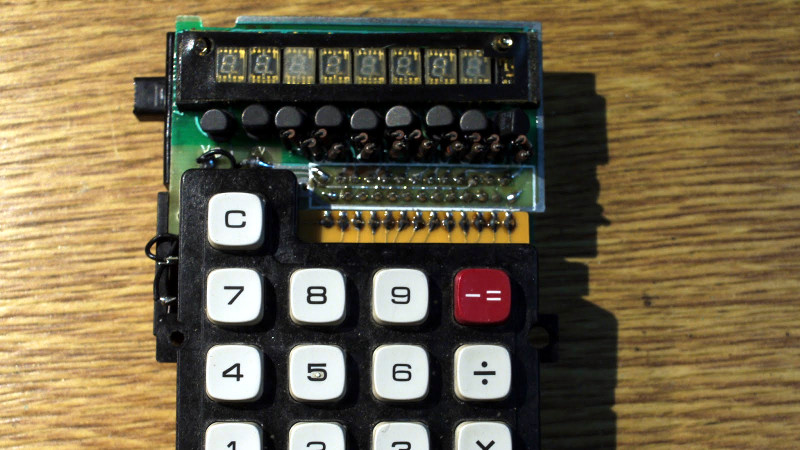
In 1973, a calculator was not always the tiny plastic rectangle we toss into a desk drawer and forget until tax season. Some calculators were serious machines with glowing red displays, magnetic storage, ROM-based instructions, programmable logic, and keyboards that looked suspiciously like they wanted to become personal computers when they grew up. And in many cases, they did.
The year 1973 sits at a fascinating crossroads in the history of calculators and computers. Mainframes were still expensive, minicomputers were still mostly for laboratories and businesses, and the personal computer had not yet marched into the living room wearing beige plastic armor. Yet calculators were already sneaking computer-like power onto desks, into engineering labs, and eventually into shirt pockets. They were smaller than computers, cheaper than computers, and often marketed as calculatorsbut under the hood, they carried many of the same ideas that would define modern computing.
This is the story of early electronic calculators, programmable desktop calculators, scientific pocket calculators, and the technological magic trick of the 1970s: making computation personal before “personal computer” became a household phrase.
The Calculator Was Not Just a Calculator Anymore
Before the electronic calculator boom, engineers, students, navigators, and scientists relied heavily on slide rules, printed tables, and mechanical calculating devices. Those tools worked, but they required skill, patience, and a certain tolerance for approximation. A slide rule could be elegant, but it could not store a program, blink with LEDs, or make a room full of engineering students suddenly feel that the future had arrived.
By the early 1970s, calculators were evolving at an astonishing pace. The earliest consumer handheld models handled basic arithmetic. Soon, machines appeared that could calculate square roots, logarithms, trigonometric functions, statistics, unit conversions, and financial formulas. At the high end, desktop calculators could be programmed, connected to peripherals, and used almost like small computers.
That is why the phrase “calculator” can be misleading when we talk about 1973. A simple four-function pocket calculator and an HP 9830A desktop programmable calculator technically belonged to the same broad family, but comparing them is like comparing a bicycle bell to a church organ. Both make noise; only one requires serious architecture.
Why 1973 Was a Turning Point
The early 1970s were a perfect storm of electronic progress. Integrated circuits became more practical. LED displays made handheld output bright and futuristic. CMOS technology helped reduce power consumption. LCD displays began entering the market. Semiconductor companies were learning how to place more logic into fewer chips. Meanwhile, calculator makers were locked in a race to make devices smaller, smarter, cheaper, and more useful.
In 1973, the marketplace included basic handheld calculators, advanced scientific calculators, desktop programmable machines, and early experiments in display technology. A buyer could choose a pocket device for arithmetic, a scientific model for engineering work, or a programmable desktop system that behaved very much like a compact computer. The calculator aisle was turning into a miniature computer revolution wearing a very serious tie.
The HP-35: The Pocket Calculator That Attacked the Slide Rule
Although introduced in 1972, the HP-35 shaped the entire calculator world of 1973. Hewlett-Packard’s HP-35 was the first handheld scientific calculator, and it changed what people expected from a pocket-sized device. It could perform trigonometric, logarithmic, and exponential functionstasks that had previously required slide rules or tables for many practical users.
The HP-35 was not cheap. At a launch price of $395, it was a serious investment, not an impulse purchase near the checkout counter. But for engineers and scientists, the value was obvious. Instead of carrying a slide rule and accepting limited precision, users could press keys and receive fast numerical answers on a red LED display. It was not just convenient; it felt like cheating in the best possible way.
The HP-35 also used Reverse Polish Notation, or RPN, a stack-based entry system beloved by many engineers and confusing to anyone who expected math to behave like a sentence. RPN made calculations efficient, especially for complex formulas, and it gave HP calculators a loyal following that sometimes resembled a secret society. The password was probably “ENTER.”
The HP-45: More Functions, More Memory, More Personality
In 1973, Hewlett-Packard followed with the HP-45, an advanced scientific pocket calculator that expanded on the HP-35. It added more memory, more functions, conversion constants, selectable trigonometric modes, and a shift key that allowed one key to perform multiple jobs. That shift key seems ordinary today, but at the time it was a clever way to increase capability without making the keyboard look like the cockpit of a small aircraft.
The HP-45 also became famous among enthusiasts for a hidden stopwatch function. It was not advertised as a primary feature because it was not accurate enough for HP’s standards, but it remained accessible through a special sequence. In modern language, we might call it an Easter egg. In 1973 language, it was probably “something the engineers left in because engineers are delightfully dangerous when unsupervised.”
The HP-45 shows how quickly calculators were becoming software-driven objects. Their identities were no longer defined only by buttons and batteries. They were defined by internal logic, firmware, memory registers, and clever interface design. That sounds less like a simple calculator and more like the early shape of personal computing.
The HP 9830A: A Calculator Wearing a Computer’s Hat
If the HP-35 and HP-45 represented pocket-sized scientific power, the HP 9830A represented the opposite end of the calculator universe: the desktop programmable machine that blurred the line between calculator and computer almost beyond recognition.
The HP 9830A was launched as part of HP’s 9800 series and became available around the early 1970s. It included a QWERTY keyboard, a built-in BASIC language interpreter, an alphanumeric LED display, cassette storage, memory, I/O capability, and options that could expand its usefulness. It was called a programmable calculator, but by many modern definitions it was also a desktop computer.
This machine was not built for balancing a grocery receipt. It was designed for engineers, scientists, laboratories, and technical professionals who needed repeatable calculations and programmable workflows. You could type commands, store programs, retrieve data, and interact with it in a way that felt far closer to computing than button-by-button arithmetic.
The HP 9830A is a perfect example of why 1973 matters. The personal computer market had not yet fully formed, but the ingredients were already sitting on desks: keyboard input, stored programs, internal memory, display output, programming language support, and external expansion. The label said “calculator,” but the behavior said, “Give me a few years and I will ask you to buy a floppy disk drive.”
Wang 700 and the Desktop Programmable Tradition
Hewlett-Packard was not alone in building calculator-computer hybrids. Wang Laboratories had already developed powerful desktop programmable calculators such as the Wang 700 series. These machines used features that sound remarkably computer-like: memory, arithmetic circuitry, read-only storage, displays, and cassette-based program storage.
The Wang 700 series competed in a world where businesses and technical users wanted computing capability without committing to a large computer system. It gave users the ability to perform specialized calculations repeatedly, store procedures, and automate work that would otherwise be tedious or error-prone.
Today, it is easy to underestimate these machines because they do not look like modern computers. No mouse. No colorful interface. No browser tabs quietly draining your will to live. But functionally, they addressed the same need that personal computers would later dominate: putting programmable power closer to the individual user.
Texas Instruments and the Rise of the Affordable Handheld
Texas Instruments helped push calculators toward mass adoption. The TI-2500 Datamath and later models brought electronic calculation into a more accessible handheld form. In 1973, TI models such as the SR-10 represented the growing “electronic slide rule” category, offering functions like square root, squares, and reciprocals in a compact LED-display device.
The SR-10 did not have the full scientific power of HP’s premium models, but it mattered because it brought useful technical functions to a broader market. For students and professionals who could not justify the cost of a high-end HP scientific calculator, TI offered a more approachable path into electronic calculation.
This competition mattered. Calculator prices fell rapidly during the 1970s as companies improved chip integration and manufacturing scale. What began as expensive professional equipment quickly moved toward consumer electronics. The calculator went from “major purchase” to “school supply,” and entire generations stopped learning the slide rule as a daily necessity.
Sharp EL-805: The LCD Future Arrives
Another important 1973 milestone came from Sharp with the EL-805, widely recognized as the first pocket calculator to use a liquid crystal display in a commercial product. Earlier calculators often used LED displays, which looked futuristic but consumed more power. LCD technology made possible longer battery life and thinner, more efficient devices.
The EL-805 used Sharp’s Crystal-on-Substrate approach and helped prove that LCDs were not just laboratory curiosities. They could be placed into real consumer products. That mattered far beyond calculators. LCDs would eventually spread into watches, clocks, instruments, laptops, phones, televisions, and nearly every screen-based device that now competes for our attention like a caffeinated billboard.
In 1973, however, an LCD calculator was already a big deal. It showed that the future of portable electronics depended not only on faster logic, but also on better displays and lower power consumption. A portable device is only useful if it does not demand a fresh battery every time you look at it sternly.
The Intel 4004: A Calculator Chip That Helped Launch the Microprocessor Age
No discussion of calculator-computer history is complete without the Intel 4004. Introduced in 1971, the 4004 was developed from a project for Busicom, a Japanese calculator company. That origin story is important because it shows how calculators helped create the microprocessor revolution.
The calculator industry needed compact, flexible, affordable logic. Instead of building every model from many fixed-function circuits, manufacturers wanted programmable components that could handle different tasks through stored instructions. The Intel 4004 was a 4-bit microprocessor, modest by modern standards but revolutionary in concept. It helped establish the idea that a general-purpose processor could live on a chip and be programmed for different applications.
By 1973, the impact of this idea was becoming clearer. Calculators were not just benefiting from semiconductor innovation; they were driving it. The demand for smaller, cheaper, smarter calculators helped fund and accelerate the very technologies that later powered personal computers, game consoles, embedded systems, and eventually smartphones.
What Made These Calculators Computer-Like?
A 1973 calculator could be computer-like in several ways. First, it could contain stored instructions in ROM. That meant the device performed functions through internal routines rather than purely through fixed mechanical action. Second, it could use memory registers to store intermediate values. Third, advanced models could accept programs from the user. Fourth, desktop programmables could store those programs on media such as magnetic cards or cassette tapes.
Input and output also became more computer-like. Keyboards became more sophisticated. Displays moved from simple numeric output to alphanumeric readouts in machines such as the HP 9830A. Expansion ports allowed printers, storage devices, and instruments to connect. Some calculators could sit at the center of a small technical workstation.
In short, the calculator became an interactive computing appliance. It did not need to look like a modern PC to behave like one. The essential pattern was there: input, processing, memory, software, output, storage, and repeatable automation.
Why Engineers Loved Them
For engineers, calculators offered something priceless: speed with precision. A slide rule was fast but approximate. A mainframe was powerful but not personal. A programmable calculator sat within arm’s reach and performed repeated calculations without requiring a trip to the computer room or a conversation with an operator.
Imagine designing circuits, surveying land, calculating structural loads, analyzing lab data, or performing navigation work in the early 1970s. A calculator that could store constants, repeat formulas, or run a short program could save hours. It also reduced mistakes. The machine did not get bored halfway through a column of numbers, although it might run out of battery at a dramatic moment because early portable electronics enjoyed suspense.
Scientific and programmable calculators changed the rhythm of technical work. They moved computation from a centralized resource to a personal tool. That shift was one of the major cultural steps toward personal computing.
The Calculator Price War and the Road to Everyday Electronics
Early electronic calculators were expensive, but competition quickly pushed prices down. Dozens of companies entered the market. Some built original designs, while others sold rebadged models from larger manufacturers. Retailers realized calculators were becoming desirable consumer products, not just professional tools.
This rapid commercialization produced winners, losers, and plenty of odd machines that collectors now adore. Some models had beautiful keyboards. Some had strange layouts. Some looked like props from a low-budget science fiction film where the spaceship accountant was very busy.
But the broader trend was serious: calculator manufacturing helped normalize integrated circuits in everyday products. It taught consumers to trust solid-state electronics. It trained manufacturers to build compact digital devices at scale. It helped create the market expectations that later made home computers and pocket electronics commercially possible.
Calculators as the Missing Link Between Mainframes and Personal Computers
When people tell the story of personal computing, they often jump from mainframes and minicomputers to hobbyist kits and early home computers. Calculators deserve a bigger role in that story. They were among the first digital devices that ordinary professionals personally owned, carried, and depended on.
A programmable calculator was not merely a cheaper computer. It was a different vision of computing: immediate, tactile, task-focused, and personal. You pressed a key and the machine answered. You stored a formula and reused it. You built small workflows around it. That is exactly how people later used personal computers, spreadsheets, handheld organizers, and smartphones.
In 1973, the calculator was a bridge. On one side was the age of centralized computing. On the other side was the age of personal digital tools. The calculator carried users across that bridge one glowing digit at a time.
Experience Section: What It Feels Like to Use a 1973 Calculator Today
Using a 1973 calculator today is a surprisingly physical experience. Modern devices hide their complexity behind glass. A vintage calculator announces itself with weight, switches, screws, texture, and sound. The keys have travel. The display has character. The case feels like it was designed by people who expected technology to survive being placed on a workbench next to a soldering iron and a cup of questionable coffee.
The first thing you notice is patience. Not slowness exactly, but a different tempo. A red LED display wakes up with theatrical seriousness. Numbers appear like tiny electronic campfires. On some models, you become aware of power in a way modern users rarely do. LEDs consume energy. Rechargeable battery packs age. Power adapters matter. The device reminds you that portable computing was once an engineering negotiation between ambition and battery chemistry.
The second thing you notice is intent. A 1973 scientific calculator does not invite you to check messages, watch videos, or lose forty minutes to an argument in a comment section. It exists to calculate. Every key has a job. Every label is practical. Even the odditiesRPN, shift functions, memory registersserve a purpose. The machine feels focused, almost calm. It is a small temple of numerical seriousness.
Programmable desktop calculators create an even stronger impression. Sit in front of an HP 9830A-style machine and the word “calculator” suddenly feels too small. The QWERTY keyboard, display, cassette storage, and programming language make it obvious that this was a working environment, not just a device. You can imagine an engineer in 1973 typing a BASIC routine, saving it, printing results, and feeling like the future had finally agreed to sit on the desk.
There is also charm in the limitations. Memory is tiny. Displays are narrow. Storage is slow. Programs must be concise. Those limits force clarity. You cannot throw endless resources at a problem. You have to understand what you are doing. In that sense, early calculators teach a lesson that modern computing often hides: efficiency is not old-fashioned. It is elegant.
Collectors and retrocomputing fans often describe vintage calculators with affection because these machines sit at the perfect intersection of usefulness and nostalgia. They are not decorative antiques. Many still work. Press the right keys and they perform real calculations just as they did decades ago. A working HP, TI, Sharp, or Wang calculator is not simply an artifact; it is a conversation with the early digital age.
The experience also reveals why people were willing to pay serious money for these devices. In 1973, owning a powerful calculator could change how you studied, designed, estimated, or solved problems. It put authority in your hand. It shortened the distance between question and answer. Today that sounds normal because every phone contains more computing power than a room full of vintage machines. But the emotional impact of that first personal calculating power must have been enormous.
That is the real magic of 1973 calculators. They were practical tools, but they also changed expectations. Once people experienced fast, personal electronic calculation, there was no going back. The slide rule did not disappear because it became useless overnight; it disappeared because calculators made a new kind of workflow feel inevitable.
Conclusion: The Computer Revolution Had a Calculator Keyboard
The story of 1973 calculators is not just a story about arithmetic. It is a story about how computing became personal before personal computers became mainstream. Scientific handhelds like the HP-35 and HP-45 challenged the slide rule. TI helped bring electronic calculation to a broader audience. Sharp’s EL-805 pointed toward the low-power display future. Desktop programmables like the HP 9830A and Wang machines blurred the boundary between calculator and computer. The Intel 4004 showed that even the microprocessor revolution had calculator DNA.
These machines may look quaint now, but they carried the essential ideas of modern digital life: stored programs, integrated circuits, memory, firmware, displays, portability, and user-controlled computation. They were not merely tools for math. They were previews of a world where everyone would expect a computer to be nearby, responsive, and personal.
So the next time you open a calculator app and use it for something heroic like splitting a pizza bill, remember 1973. Back then, calculators were not disposable icons on a screen. They were expensive, ambitious, beautifully engineered machines that helped teach the world how to live with computers.
Note: This HTML body is written as publish-ready web content, with SEO metadata included in JSON format at the end.