If your lawn has started acting like it’s starring in its own detective series, welcome to the club. One day it’s green and smug. The next day it’s got orange dust, mystery circles, weird mushrooms, and a patch that looks like a raccoon hosted a midnight excavation party. Lawns are dramatic like that.
The good news is that most lawn problems are not random. Grass usually leaves clues. The trick is learning how to read them before you waste money on the wrong fertilizer, the wrong fungicide, or a very angry afternoon with a hose.
This guide breaks down 17 common lawn mysteries, what usually causes them, and how to fix them without turning your yard into a chemistry experiment. Whether you’re dealing with brown spots, moss, bugs, or grass that suddenly looks offended by life itself, here’s how to solve the case.
How to Think Like a Lawn Detective
Before you start treating anything, look at pattern, timing, and location. Is the damage circular or random? Does it show up after heavy rain, hot weather, or mowing? Is it worse in shade, near sidewalks, or where the dog prefers to make official announcements? A lawn problem usually makes more sense once you connect the clues.
Also, remember the golden rule of turf care: healthy, dense grass prevents a lot of trouble before it starts. Proper mowing, sensible watering, soil testing, and occasional aeration do more for long-term lawn health than panic-buying five products with “turbo” in the name.
17 Lawn Mysteries Explained
1. “Why are there tiny straw-colored circles all over my lawn?”
Likely culprit: Dollar spot disease.
If you see small, bleached, tan spots that look like somebody flicked silver dollars across the yard, dollar spot is a prime suspect. It tends to show up when turf is under stress from low nitrogen, drought stress, low mowing height, or frequent moisture on the leaves.
How to fix it: Improve basic lawn care first. Feed the lawn appropriately based on a soil test, avoid mowing too short, water deeply rather than constantly misting, and improve air movement if possible. In many home lawns, better cultural practices are the real solution.
2. “What’s with the pink or red threads on my grass?”
Likely culprit: Red thread.
This fungal disease often appears in cool, damp weather, especially on slow-growing or nitrogen-deficient turf. The grass can look tan or blighted, but the giveaway is the pinkish-red thread-like growth on the blades. It sounds poetic. It is not.
How to fix it: Lightly correct fertility if the lawn is underfed, avoid excess leaf wetness, and mow with a sharp blade. The disease is often mostly cosmetic, and healthy turf usually grows out of it once conditions improve.
3. “Why do my shoes turn orange when I walk across the lawn?”
Likely culprit: Rust disease.
If your shoes come back looking like they moonlighted in a paprika factory, lawn rust may be the reason. Rust produces powdery orange spores and often appears when turf growth slows during stress.
How to fix it: Mow regularly, sharpen the blade, and help the grass grow through the problem with proper watering and nutrition. Rust is usually more ugly than deadly, but it is a sign your lawn could use better growing conditions.
4. “Why is there a dead spot with a dark green ring around it?”
Likely culprit: Dog urine.
This is classic dog-spot behavior: a brown center surrounded by a greener ring. The high concentration of nitrogen and salts in urine burns the center, while the diluted edge acts like a tiny fertilizer application.
How to fix it: Water the spot immediately after the dog goes, train pets to use a designated area, and reseed damaged patches if needed. Do not start trying to “change” your dog’s urine chemistry with random supplements. Your veterinarian and your lawn both deserve better.
5. “Why does my grass peel back like a loose rug?”
Likely culprit: Grubs.
If turf lifts easily and you find white, C-shaped larvae in the soil, grubs may be feeding on the roots. You may also notice birds, raccoons, or skunks digging for a late-night snack bar.
How to fix it: Confirm the problem before treating. A few grubs are normal. Significant infestations are worth addressing, especially if the turf is weak or animals are tearing it up. Repair the lawn afterward with reseeding or resodding as needed.
6. “Why do I have irregular yellow-brown patches that don’t improve with watering?”
Likely culprit: Chinch bugs.
Chinch bug damage often shows up in hot, sunny spots near pavement, sidewalks, or walls. The grass yellows, then browns, and the patches expand even when you keep watering. That’s a major clue that drought is not the only villain in the scene.
How to fix it: Inspect the edge of the damaged area closely. Improve overall lawn vigor, reduce stress, and use the appropriate insect-management approach if you confirm the pest. Treating “dry spots” with more water alone won’t solve an active chinch bug problem.
7. “Why is a ring or arc showing up in my lawn?”
Likely culprit: Fairy ring.
Fairy ring can cause dark green arcs, circles of mushrooms, or dead rings where the soil becomes water-repellent. It sounds magical. It behaves more like a turf prankster with a graduate degree.
How to fix it: Break up the hydrophobic soil by aerating, wet the area deeply and repeatedly, and reduce excessive thatch if present. In some cases, the ring is mostly cosmetic. In tougher cases, soil moisture management is the key.
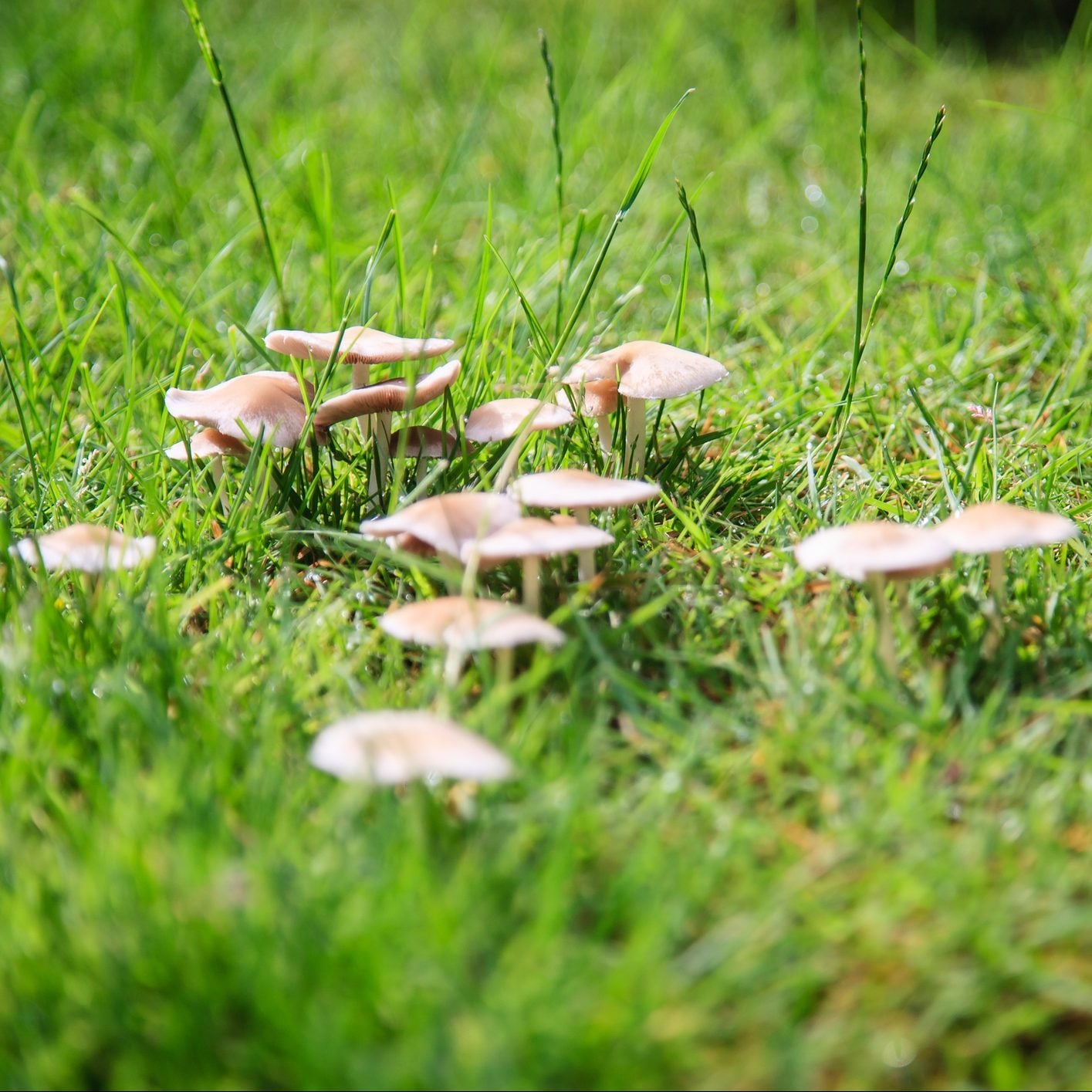
8. “Why are mushrooms suddenly popping up everywhere?”
Likely culprit: Fungi feeding on buried organic matter.
Mushrooms in a lawn usually mean there is moisture plus something decaying below the surface, such as old roots, buried wood, thatch, or organic debris. They are often more nuisance than threat.
How to fix it: Rake or pick them if you dislike the look, reduce overwatering, and remove buried wood or debris if you know it’s there. Mushrooms often fade when the weather dries out. Keep children and pets from eating them, because lawn mushrooms are not a snack menu.
9. “Why does my lawn feel spongy underfoot?”
Likely culprit: Excess thatch.
A little thatch is normal. Too much thatch can block water movement, harbor pests, and make turf more vulnerable to drought and disease. If the layer gets too thick, your lawn starts feeling like a suspicious mattress.
How to fix it: Check the thatch layer. If it’s excessive, core aeration and dethatching can help. Prevent future buildup by avoiding overwatering and heavy fertilizer use. And yes, leaving grass clippings on the lawn does not cause thatch. Grasscycling is innocent.
10. “Why is the soil hard as concrete?”
Likely culprit: Soil compaction.
Compacted soil keeps roots shallow and weak. Water runs off instead of soaking in, and grass struggles because it cannot breathe or expand easily underground. This is common in heavy clay soil and high-traffic areas.
How to fix it: Core-aerate the lawn. For many cool-season lawns, early fall is an excellent time; warm-season lawns recover best when aerated during active growth. Reduce repeated traffic in the same areas and topdress lightly with compost if appropriate.
11. “Why do puddles sit there long after rain?”
Likely culprit: Poor drainage or low spots.
Standing water stresses roots and encourages disease. If certain areas always stay soggy, the issue may be grading, compacted soil, or low spots that collect water.
How to fix it: Build up shallow depressions gradually with quality topsoil or compost mixes, improve drainage, and address compaction. If the problem is severe, you may need more significant drainage work instead of pretending the grass will somehow learn to swim.
12. “Why are some parts still dry when I’m watering the whole lawn?”
Likely culprit: Uneven irrigation coverage or water-repellent soil.
Patchy dry areas often come from misaligned sprinkler heads, blocked spray patterns, slopes, or hydrophobic soil. In other words, the water is leaving, but not necessarily arriving where you think it is.
How to fix it: Run the irrigation system and actually watch it. Adjust heads, overlap coverage properly, and use a cycle-and-soak approach on compacted or sloped ground. For stubborn dry spots, wet the soil gradually so water can start soaking in again.
13. “Why does the lawn look bluish-gray, and why do footprints stay visible?”
Likely culprit: Drought stress.
Grass often tells you it’s thirsty before it turns completely brown. Folded blades, a blue-gray cast, and footprints that linger are classic signs that the lawn is short on water.
How to fix it: Water deeply and early in the morning. Many lawns do well with about an inch of water per week from rain, irrigation, or both, though soil type and grass species matter. Skip the daily sprinkle routine. That encourages shallow roots and needy behavior.
14. “Why do the tips turn brown right after mowing?”
Likely culprit: A dull mower blade or mowing too low.
If the lawn looks ragged and the blade tips are shredded, your mower blade is tearing the grass instead of cutting it cleanly. Scalping can also expose stems and soil, leaving stripes or brown patches.
How to fix it: Sharpen the blade regularly, follow the one-third rule, and keep the mowing height appropriate for your turf type. In many lawns, mowing a little higher improves stress tolerance and helps crowd out weeds.
15. “Why is moss moving in like it pays rent?”
Likely culprit: Shade, compaction, poor drainage, low fertility, acidic soil, or a combination.
Moss is less a cause than a message. It usually means turf conditions are poor and the moss is simply taking advantage of the vacancy.
How to fix it: Improve light if possible by pruning branches, aerate compacted soil, correct drainage issues, and run a soil test before making pH or fertilizer changes. Scraping out moss without fixing the site conditions is basically just booking the sequel.
16. “Why is grass always thin under trees?”
Likely culprit: Too much shade and root competition.
Turf under trees has to compete for light, moisture, and nutrients. That is a rough assignment, especially for sun-loving grasses.
How to fix it: Use shade-tolerant seed mixes where appropriate, especially fine fescues in cool-season regions. Raise mowing height slightly in shade, reduce traffic, and be realistic. Some areas are better suited to mulch, groundcovers, or landscape beds than a full lawn.
17. “Why are weeds taking over even though I keep mowing?”
Likely culprit: Thin, stressed turf.
Weeds are usually symptoms of a lawn that has openings for them to exploit. Improper mowing, poor fertility, drought stress, insects, disease, compaction, or shade can all weaken turf and invite weeds in like uninvited party guests who somehow know where the snacks are.
How to fix it: Correct the root cause first. Mow at the right height, water wisely, aerate compacted areas, overseed thin spots at the right time, and base fertility on a soil test. Herbicides can help in some situations, but they are not a substitute for a healthy stand of grass.
The Simple Lawn Fix Strategy That Actually Works
If your lawn has multiple problems, resist the urge to treat everything at once. Start with the fundamentals:
First, mow correctly. Never remove more than one-third of the blade at a time, and keep the mower blade sharp.
Second, water deeply and at the right time. Early morning is best. Shallow, frequent watering creates weak roots and more disease pressure.
Third, test the soil. A soil test is one of the cheapest and smartest ways to solve pH and nutrient mysteries.
Fourth, aerate when needed. Especially if the soil is compacted or the lawn gets a lot of traffic.
Fifth, match the grass to the site. Full sun, deep shade, soggy soil, and dog traffic are not all the same situation, and the lawn should not be treated like they are.
Real Yard Experiences: What These Lawn Mysteries Look Like in Real Life
One homeowner notices brown circles in July and assumes the lawn needs more water. So the sprinklers run longer. The circles get worse. A week later, the lawn still looks bad, except now the water bill looks truly inspirational. The real issue turns out to be dollar spot plus low mowing height. Once the mowing height is raised and watering is shifted to deeper, less frequent cycles, recovery starts.
Another person sees mushrooms all over the backyard after a rainy stretch and is convinced the lawn is doomed. It isn’t. There was an old tree removed years earlier, and the buried roots are still decomposing. The mushrooms are annoying, yes, but they are mostly just announcing that nature is doing cleanup work below ground. Raking them away and letting the area dry out solves the panic, if not the mushrooms immediately.
Then there’s the classic “my dog ruined the grass” story. In many yards, the dead center with the green ring tells the whole tale. The solution is less dramatic than many people think: water the area quickly, reseed if needed, and give the dog a dedicated spot. The lawn does not require a wellness retreat. It requires timing.
Compaction is another sneaky one. A lawn can look tired for months, and the owner keeps adding fertilizer, expecting a miracle. But if the soil is packed hard from foot traffic, the roots never get what they need. After a proper core aeration, followed by overseeding and better watering habits, the lawn often responds like it just got a second chance.
Shade problems are where expectations usually collide with reality. Many people want a thick, bright lawn under a large mature tree, but that space is competing with roots, light limitations, and dry soil. Sometimes the best lawn decision is admitting that a lawn is the wrong plant for that exact spot. Switching to fine fescue, mulch, or a shade garden is not giving up. It’s graduating from wishful thinking.
Weeds tell stories too. A yard full of weeds is often not a weed problem first. It is a thin-turf problem, a mowing-too-short problem, a compacted-soil problem, or a watering-at-random problem. Once homeowners start seeing weeds as clues instead of insults, lawn care gets much easier.
The most successful lawns are rarely the ones treated with the most products. They are usually the ones managed with the most consistency. A sharp mower blade, proper mowing height, sensible irrigation, occasional aeration, and realistic expectations can solve more “mysteries” than a garage shelf full of miracle bottles ever will.
Conclusion
Most lawn problems look mysterious only until you learn the patterns. Brown circles, orange dust, mushrooms, moss, thin spots, and soggy patches all point to specific issues you can diagnose and fix with a little observation and a lot less guesswork. In the end, the healthiest lawn is not the one that gets the most attention. It’s the one that gets the right attention.