Beauty trends today can get a little wild. One week it’s laminated brows, the next it’s “glass skin,” and somewhere in the middle everybody is trying to figure out whether blush belongs on the cheeks, the nose, or basically the zip code around both eyes. But if you think modern beauty culture is dramatic, history would like a word.
For centuries, people across different cultures chased beauty with powders, plasters, dyes, drops, tweezers, padding, and ingredients that sound less like skin care and more like a chemistry set with bad intentions. Some of these practices were tied to class. Some were linked to marriage prospects. Some were meant to signal maturity, wealth, or refinement. And a few were just history’s way of saying, “What if beauty, but dangerous?”
This list rounds up 14 obscure beauty trends throughout history that feel strange now, but made perfect sense in their own time. Some were cosmetic, some were fashion-adjacent, and some were full-body commitment projects. All of them reveal one big truth: beauty standards have always been social, symbolic, and occasionally a terrible idea.
Why Historical Beauty Trends Got So Extreme
Before we jump into the strange stuff, it helps to understand the logic behind it. Historical beauty standards were rarely just about looking pretty. They often communicated status, purity, health, wealth, youth, fertility, obedience, fashion literacy, or access to leisure. Pale skin suggested you did not labor outdoors. Tiny feet signaled refinement. A high forehead suggested elegance. Blackened teeth could symbolize maturity and desirability. The trend itself mattered, but so did the social message attached to it.
In other words, beauty was never just beauty. It was branding, class performance, and social strategy in a very expensive wig.
14 Obscure Beauty Trends Throughout History
1. Lead-Based Kohl in Ancient Egypt
Ancient Egyptian eye makeup was iconic long before social media discovered winged liner. Men and women lined their eyes with black and green pigments, especially kohl, to create dramatic definition. The look was beautiful, but it was also tied to religion, status, and health beliefs. In some cases, the mixtures included lead salts. That sounds horrifying now, but the makeup was thought to help protect the eyes and even ward off illness. It was glam with a side of spiritual and medicinal ambition.
The lesson here is simple: Cleopatra did not invent the smoky eye, but she definitely helped it become immortal.
2. Roman White Face Makeup
In ancient Rome, pale skin carried serious social cachet. A lighter complexion suggested privilege, delicacy, and a life spent away from manual labor. To get that porcelain look, some Roman women used lead-based whiteners on the face. They also added rouge to the cheeks and lips for contrast, creating the ancient version of “I woke up like this,” except with significantly more metal exposure.
This wasn’t a quirky side trend either. It was part of a larger beauty culture that prized controlled, visible femininity. The face was not just a face. It was a class statement.
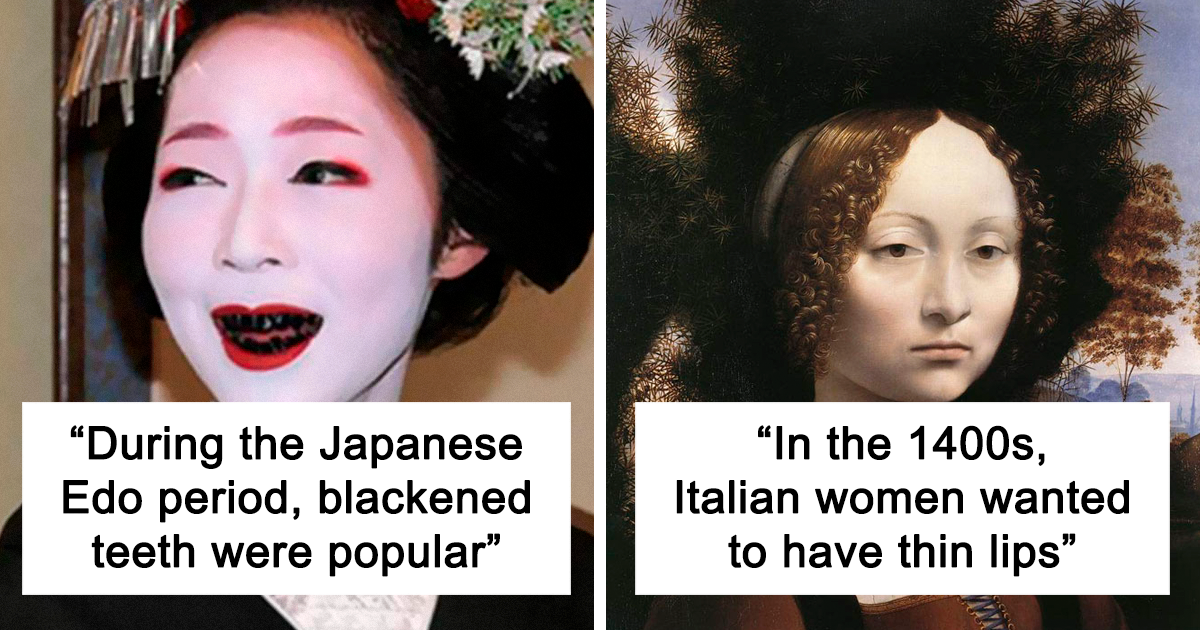
3. Renaissance Hairline Plucking
The Renaissance did many wonderful things for art, literature, and architecture. It also convinced fashionable women that a higher forehead was peak elegance. To achieve the look, some women plucked hairs from the hairline and thinned or removed parts of the eyebrows. Portraits from the era show this ideal clearly: pale skin, long neck, smooth features, and a forehead that looked like it had negotiated a major real-estate expansion.
The goal was not randomness. It was refinement. The face was shaped to fit an ideal that blended beauty, virtue, and aristocratic polish.
4. Venetian Ceruse in Elizabethan England
If Roman face whitener was risky, Elizabethan beauty culture said, “Let’s circle back and make it worse.” Venetian ceruse, a mixture made from lead and vinegar, became a favored complexion product among English elites, including Queen Elizabeth I. It created a smooth, pale finish that signaled rank and helped cover scars and uneven texture.
The problem, unfortunately, was that it also damaged the skin over time. Users often layered more of it on top of the very problems it helped create. It was basically a historical feedback loop of “fixing” damage with the product causing the damage. Modern beauty consumers would recognize the chaos immediately.
5. Velvet Beauty Patches, Also Known as Mouches
In the 17th and 18th centuries, faux beauty marks became fashionable in Europe. These tiny patches, often made of black velvet or silk, were placed strategically on the face to imitate moles, hide blemishes, or cover scars, especially those left by smallpox. They were playful, theatrical, and surprisingly expressive.
Depending on where a patch was placed, it could even carry social meaning. Beauty marks were not just decoration. They were conversation starters, damage control, and personal style rolled into one tiny dot. It turns out the face sticker had a wildly elegant ancestor.
6. Powdered Wigs and Flour-Dusted Hair
Powdered hair was once a full-blown status symbol. In the 18th century, wigs and natural hair were dusted with powder to create a pale, refined look associated with fashion and authority. Hair could be tied, curled, puffed, bagged, or styled into elaborate shapes, and powder helped complete the effect.
This was not subtle grooming. It was a performance. Hair broadcast rank, seriousness, taste, and social ambition. The whole thing sounds slightly absurd now, but at the time it was a polished visual language. Also, imagine doing all that before air-conditioning. History’s commitment to beauty was honestly exhausting.
7. Belladonna Eye Drops for Bigger Pupils
There was a time when large, dilated pupils were considered especially alluring. In parts of Europe, women reportedly used belladonna, a toxic plant, in eye drops to widen the pupils and create a dreamy gaze. The very name “belladonna” means “beautiful woman,” which tells you exactly how thoroughly aesthetics had entered the chat.
The catch was that belladonna was dangerous. It could blur vision and become toxic in larger amounts. So yes, the effect might have looked romantic for a minute, but at a significant cost. This trend sits firmly in the “pretty, but at what price?” category.
8. Foot Binding and the Cult of the Lotus Foot
For centuries in China, bound feet were associated with beauty, status, and refinement. The ideal was the tiny “golden lotus,” a small, tightly bound foot that required specialized shoes and permanently altered the way a person walked. The practice is often linked to courtly imitation and eventually became deeply tied to marriage prospects and social mobility.
Foot binding was not a passing fad. It was a long-lasting beauty standard with powerful cultural roots and painful consequences. Tiny embroidered shoes survive in museum collections today, and they are striking partly because they remind us how beauty ideals can become physically built into daily life.
9. Ohaguro: Blackened Teeth in Japan
Not every historical beauty trend aimed for white teeth. In Japan, ohaguro, the practice of dyeing teeth black, was at various points associated with beauty, maturity, and social identity. The blackening mixture often involved vegetable tannins and iron-based compounds, and the look could signal adulthood or marital status.
To modern eyes, black teeth may seem startling, but that reaction says more about us than about the past. Beauty standards are deeply cultural, and ohaguro is a perfect example of how “attractive” can mean completely different things depending on the time and place.
10. Corsets and the Tiny-Waist Obsession
Corsets are not obscure in the broad sense, but the intensity of waist-shaping history still deserves a spot here. Long before modern shapewear, structured stays and corsets helped create the silhouette many societies valued: disciplined posture, narrow waist, lifted bust, and controlled femininity. Over time, tight-lacing became the dramatic extreme of an already demanding beauty ideal.
The corset was never just underwear. It was architecture. It reshaped the body to fit the fashion, and the fashion reflected a bigger social expectation: beauty was supposed to look composed, contained, and costly.
11. Bum Rolls and Engineered Hips
Beauty history was not solely obsessed with smaller. Sometimes it wanted bigger, just in very specific places. In the late 16th and early 17th centuries, bum rolls, padded rolls tied around the hips, helped shape skirts and exaggerate the lower body. The silhouette created width and drama, emphasizing contrast between waist and hips.
So no, contouring did not begin with the internet. History had been sculpting the body for effect long before ring lights and tutorial culture. It just used padding instead of product.
12. Arsenic Complexion Wafers
By the late 19th and early 20th centuries, beauty marketing had entered one of its most chaotic eras. Advertisements promoted arsenic complexion wafers as a way to remove freckles, pimples, and facial marks while producing a delicate, pale appearance. The poison was not hidden. It was part of the pitch.
That alone should win some kind of terrible award for sales confidence. These products preyed on insecurity while packaging danger as refinement. If the beauty industry has always known how to exploit aspiration, arsenic wafers are a particularly chilling historical example.
13. Radium Beauty Hype
Once radium became associated with modern science and glowing vitality, it did what suspicious ingredients always do: it wandered into beauty culture. Early 20th-century advertising sometimes linked radioactive products to youth, energy, and attractiveness. Radium was marketed as futuristic, luxurious, and somehow life-enhancing, which is the kind of sentence history writes right before things go very badly.
The broader radium craze helped expose the limits of early consumer protection. It also reminds us that “science-backed” has always been a phrase worth interrogating, especially when the science is wearing a sales hat.
14. Eighteenth-Century DIY Skin Fixes
If you think your current skin-care routine is elaborate, meet the 18th century. Recipe books and beauty manuals offered homemade treatments for freckles, warts, wrinkles, and dry skin. Suggested fixes included onion juice, lemon-based astringents, acrid wart remedies, smoke from melted myrrh for wrinkles, and even slices of veal placed on the face overnight.
That last one is the kind of tip that makes modern sheet masks feel emotionally stable. But the deeper point matters: people have always tried to manage visible signs of age, texture, and pigment. The products change. The anxiety does not.
What These Beauty Trends Really Reveal
These obscure beauty trends throughout history may look bizarre now, but they were never random. They grew out of systems of class, gender expectations, marriage economics, fashion technology, medicine, and social symbolism. Beauty was a language people learned because it could affect how they were seen and treated.
That is why these trends matter. They are not just weird footnotes about lead paint and black teeth. They show how power works through appearance. They show how markets capitalize on insecurity. They show how the “ideal” body or face keeps changing, while the pressure to pursue it remains strangely familiar.
And maybe that is the funniest, bleakest, most human part of all: every era thinks its own beauty logic is reasonable.
Experiences and Reflections: What It Feels Like to Walk Through Beauty History
Reading about historical beauty trends is one thing. Seeing them up close, in portraits, museum objects, and old advertisements, is another experience entirely. A tiny bound-foot shoe does not look abstract when it is right in front of you. It looks intimate. It looks handmade. It looks like something that belonged to a real person with a real daily routine, real discomfort, real hopes, and real social pressure. That is when beauty history stops feeling quirky and starts feeling personal.
The same thing happens with portraits. A Renaissance woman with a plucked hairline and barely-there brows can look elegant at first glance. Then you remember that her face was shaped to match an ideal, not unlike how people now overanalyze jawlines, pore size, lip symmetry, and “facial harmony” on social media. Suddenly the centuries collapse. The tools changed, but the urge to edit the self did not.
There is also something oddly humbling about old beauty products. A jar, a wafer tin, a powder puff, a recipe for fixing freckles with onion juice; each one carries the same quiet promise modern products still make. Buy this. Apply this. Endure this. And maybe, just maybe, you will become the version of yourself the world rewards. That emotional logic is ancient. History does not make modern beauty culture look new. It makes it look familiar.
What surprises many people is how creative these trends were, even when they were harmful. Beauty patches were stylish and witty. Powdered wigs turned hair into sculpture. Ohaguro challenged modern assumptions about what “clean” or “pretty” teeth should look like. Even the trends that seem most alien now were often rooted in artistry, symbolism, and community norms. They were not foolish to the people living them. They were meaningful.
That is probably the biggest takeaway from exploring obscure beauty trends throughout history. It is easy to laugh at the weirdness, and honestly, some of it is laugh-worthy. Veal slices as skin care is not beating the allegations. But behind the odd ingredients and dramatic silhouettes were ordinary human desires: to belong, to be admired, to signal status, to feel beautiful, to control what could be controlled. Those motivations are not obsolete. They are still with us, just dressed in cleaner packaging and better lighting.
So the real experience of studying beauty history is a mix of fascination, discomfort, amusement, and recognition. You start by thinking, “Wow, people used to do that?” Then, about ten minutes later, you find yourself staring at your own skin-care shelf, your own grooming habits, your own beauty shortcuts, and thinking, “I really hope future historians are kind.”
Conclusion
The history of beauty is full of obscure trends, strange ingredients, and extreme standards, but it is also full of insight. These practices reveal how deeply beauty has always been tied to identity, power, and social belonging. From velvet face patches to radium hype, from plucked hairlines to blackened teeth, the details are different, but the pattern is familiar: every age invents a new way to define what is desirable.
That is why the best way to read beauty history is with curiosity and a little healthy skepticism. Trends come and go. The pressure behind them is the part that tends to stick around. If nothing else, these 14 obscure beauty trends throughout history are a helpful reminder that today’s “must-have” beauty obsession may someday look just as strange as arsenic wafers and powdered wigs.