Editor’s note: “Best-selling” sounds wonderfully precise until you try to count books printed across centuries, countries, languages, reissues, school programs, religious organizations, and that one aunt who buys six copies for every holiday. Exact global totals are not always verifiable. This guide therefore presents 100 books widely recognized in publishing history, library culture, publisher records, and bestseller discussions as extraordinary long-term sellers.
Some books sell because they arrive at exactly the right cultural moment. Others become classics because they never really leave. A few are passed from parent to child so often that they practically develop their own family tree. From ancient religious texts and Victorian adventures to magical schools, self-help heavyweights, and picture books capable of surviving sticky fingers, these are the books that have reached readers on a truly massive scale.
This list is grouped rather than ranked from first to one-hundredth. A strict worldwide ranking would suggest a level of accounting certainty that simply does not exist for every title. Instead, think of this as a bookshelf of publishing giants: books that have sold in remarkable quantities, stayed in print for decades, crossed borders, inspired adaptations, or become cultural shorthand.
Why All-Time Bestseller Lists Are Harder Than They Look
Modern book sales can be tracked through retailers, publishers, and industry reporting services. Older books lived in a much messier neighborhood. A nineteenth-century novel may have appeared in serialized form before becoming a book. A religious text may be distributed rather than sold. A children’s classic may have been repackaged into dozens of editions, board books, boxed sets, and school-library copies.
That is why a title can be both enormously famous and difficult to place exactly beside another title. Sales estimates often mix copies printed, copies sold, translations, special editions, and bundled series. The Bible, for example, is commonly treated as the most widely distributed book in history, while classic novels such as A Tale of Two Cities, The Little Prince, and The Lord of the Rings appear regularly in discussions of the world’s largest-selling literary works.
The good news is that exact decimal-point precision is not necessary to appreciate the real story: these books have traveled farther, lasted longer, and found more readers than most writers could imagine while staring at a blinking cursor and a cup of coffee that has gone cold.
100 Of The Best-Selling Books Of All Time
Foundational Texts, Classics, and Literary Legends
- The Bible
- The Quran
- Quotations from Chairman Mao Tse-tung
- Xinhua Zidian
- A Tale of Two Cities by Charles Dickens
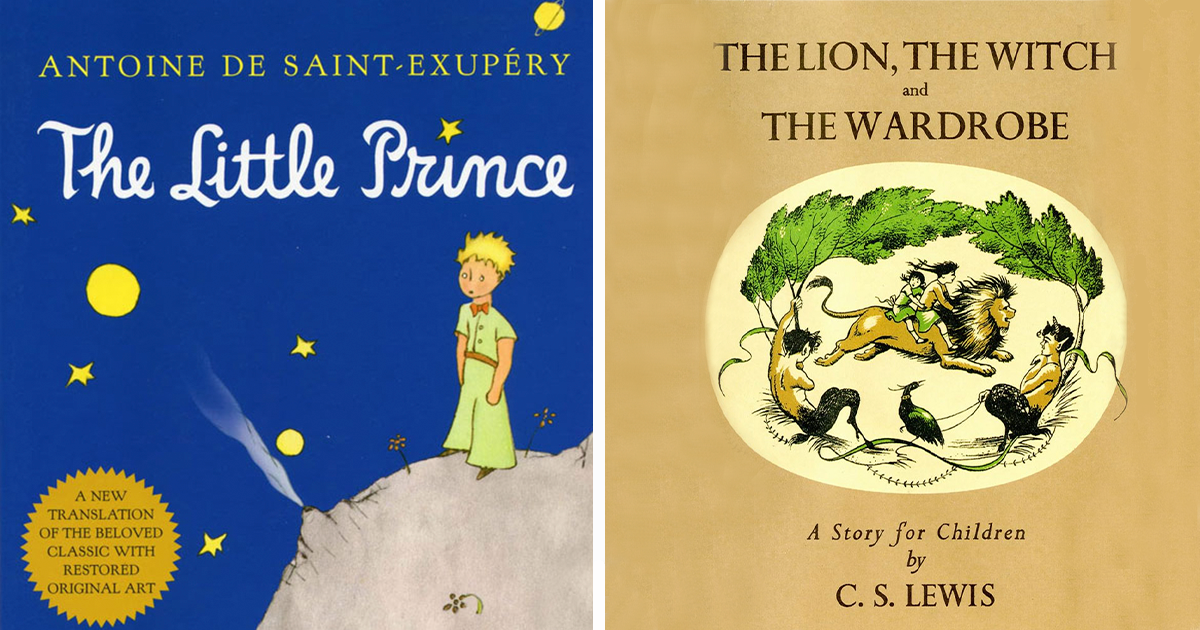
- The Little Prince by Antoine de Saint-Exupéry
- The Book of Mormon
- The Lord of the Rings by J.R.R. Tolkien
- Harry Potter and the Philosopher’s Stone by J.K. Rowling
- And Then There Were None by Agatha Christie
- Dream of the Red Chamber by Cao Xueqin
- The Hobbit by J.R.R. Tolkien
- She: A History of Adventure by H. Rider Haggard
- The Lion, the Witch and the Wardrobe by C.S. Lewis
- The Da Vinci Code by Dan Brown
- Think and Grow Rich by Napoleon Hill
- The Catcher in the Rye by J.D. Salinger
- The Alchemist by Paulo Coelho
- The Diary of a Young Girl by Anne Frank
- The Bridges of Madison County by Robert James Waller
Books That Refused to Leave the Conversation
- Ben-Hur: A Tale of the Christ by Lew Wallace
- You Can Heal Your Life by Louise Hay
- One Hundred Years of Solitude by Gabriel García Márquez
- Lolita by Vladimir Nabokov
- Heidi by Johanna Spyri
- Baby and Child Care by Benjamin Spock
- Anne of Green Gables by L.M. Montgomery
- Black Beauty by Anna Sewell
- The Name of the Rose by Umberto Eco
- The Eagle Has Landed by Jack Higgins
- Watership Down by Richard Adams
- The Hite Report by Shere Hite
- The Purpose Driven Life by Rick Warren
- The Thorn Birds by Colleen McCullough
- The Very Hungry Caterpillar by Eric Carle
- A Message to Garcia by Elbert Hubbard
- To Kill a Mockingbird by Harper Lee
- Flowers in the Attic by V.C. Andrews
- Cosmos by Carl Sagan
- Sophie’s World by Jostein Gaarder
Thrillers, Adventures, and Stories With Serious Page-Turning Power
- Angels & Demons by Dan Brown
- How the Steel Was Tempered by Nikolai Ostrovsky
- War and Peace by Leo Tolstoy
- The Adventures of Pinocchio by Carlo Collodi
- Kane and Abel by Jeffrey Archer
- The Godfather by Mario Puzo
- Love Story by Erich Segal
- Jaws by Peter Benchley
- Love You Forever by Robert Munsch
- The Women’s Room by Marilyn French
- What to Expect When You’re Expecting by Heidi Murkoff
- The Adventures of Huckleberry Finn by Mark Twain
- The Secret Diary of Adrian Mole, Aged 13¾ by Sue Townsend
- Kon-Tiki by Thor Heyerdahl
- The 7 Habits of Highly Effective People by Stephen R. Covey
- How to Win Friends and Influence People by Dale Carnegie
- Where the Wild Things Are by Maurice Sendak
- The Power of Positive Thinking by Norman Vincent Peale
- The Shack by William P. Young
- The Hunger Games by Suzanne Collins
Modern Blockbusters That Took Over Bookshelves
- Twilight by Stephenie Meyer
- Gone with the Wind by Margaret Mitchell
- The Girl with the Dragon Tattoo by Stieg Larsson
- The Lost Symbol by Dan Brown
- The Fault in Our Stars by John Green
- The Kite Runner by Khaled Hosseini
- The Help by Kathryn Stockett
- The Girl on the Train by Paula Hawkins
- The Notebook by Nicholas Sparks
- Charlotte’s Web by E.B. White
- The Cat in the Hat by Dr. Seuss
- The Giver by Lois Lowry
- The Outsiders by S.E. Hinton
- The Color Purple by Alice Walker
- Joy of Cooking by Irma S. Rombauer
- The 5 Love Languages by Gary Chapman
- The Secret by Rhonda Byrne
- Rich Dad Poor Dad by Robert T. Kiyosaki
- The 4-Hour Workweek by Timothy Ferriss
- Atomic Habits by James Clear
Children’s Favorites and Enduring Comfort Reads
- The Power of Now by Eckhart Tolle
- The Road Less Traveled by M. Scott Peck
- The Celestine Prophecy by James Redfield
- Girl with a Pearl Earring by Tracy Chevalier
- The Martian by Andy Weir
- Jurassic Park by Michael Crichton
- The Little Engine That Could by Watty Piper
- The Wind in the Willows by Kenneth Grahame
- Goodnight Moon by Margaret Wise Brown
- Green Eggs and Ham by Dr. Seuss
- The Wonderful Wizard of Oz by L. Frank Baum
- The Tale of Peter Rabbit by Beatrix Potter
- Guess How Much I Love You by Sam McBratney
- The Giving Tree by Shel Silverstein
- The Gruffalo by Julia Donaldson
- The Poky Little Puppy by Janette Sebring Lowrey
- The Snowy Day by Ezra Jack Keats
- The Adventures of Sherlock Holmes by Arthur Conan Doyle
- The Call of the Wild by Jack London
- The Five People You Meet in Heaven by Mitch Albom
What Makes a Book Sell for Generations?
The most successful books are not all written in the same style, genre, or century. What they share is a powerful ability to become useful, memorable, comforting, discussable, or downright impossible to ignore.
Some titles succeed because they answer a recurring human question. Self-help books promise better habits, stronger relationships, more confidence, greater wealth, or at least a more organized drawer of kitchen utensils. Books such as How to Win Friends and Influence People, The 7 Habits of Highly Effective People, and Atomic Habits keep selling because people remain enthusiastically interested in improving themselves without having to become a different species.
Other books become cultural landmarks. To Kill a Mockingbird, The Diary of a Young Girl, The Color Purple, and One Hundred Years of Solitude are not merely assigned in classrooms or praised by critics. They give readers language for moral questions, historical trauma, social change, family loyalty, injustice, and hope.
Then there are books powered by pure narrative momentum. Agatha Christie’s mysteries, Dan Brown’s conspiracies, Suzanne Collins’s dystopian contests, and Stieg Larsson’s thrillers understand a key publishing truth: readers will forgive many things, but they will not forgive boredom. A story that makes someone miss a bus stop or ignore a ringing phone has a very good chance of being recommended to someone else.
Children’s books have a special advantage: they do not just find readers; they find households. A beloved picture book can be read aloud hundreds of times, survive several bedtime negotiations, and then be handed down to another child. That is how Goodnight Moon, The Cat in the Hat, The Very Hungry Caterpillar, and Where the Wild Things Are become more than books. They become furniture in a family’s memory.
How to Use This Bestseller List Without Turning Reading Into Homework
Do not approach this list like a tournament bracket unless spreadsheets genuinely bring you joy. Instead, use it as a map. Choose one classic you have always meant to read, one genre you usually avoid, one children’s favorite you somehow missed, and one modern blockbuster that everyone talked about while you were pretending not to care.
A practical starting point is to build a “four-book stack.” Pair a familiar comfort read with a challenging classic. Follow a thriller with a reflective memoir or philosophy-minded novel. Read a short children’s book after a thousand-page epic. Your brain will thank you, and your bookshelf will stop looking like it was curated by a Victorian headmaster.
It also helps to separate popularity from personal taste. A book can sell millions of copies and still not be your cup of tea, coffee, sparkling water, or suspiciously expensive bookstore latte. Bestseller lists are invitations, not orders. The best book for you is the one that makes you turn another page.
The Experience of Reading Through 100 Best-Selling Books
Reading across a list like this feels less like visiting one library and more like wandering through a crowded literary city. Every street has a different soundtrack. In one neighborhood, you meet detectives, wizards, rabbits in tiny jackets, political leaders, dreamers, dragons, and people trying very hard to become more productive before breakfast.
The first surprising experience is realizing how quickly your assumptions about “popular books” collapse. It is easy to picture bestsellers as recent thrillers with glossy covers and airport displays. Then you meet a nineteenth-century novel that once caused the reading public to lose its collective mind, or a slim picture book that has quietly outlasted fashion, technology, and several generations of parental exhaustion.
Another memorable part of the journey is noticing the difference between a book’s reputation and its actual reading experience. Some classics arrive with a cloud of intimidation. You expect them to be difficult, dusty, and maybe guarded by a librarian in a velvet cape. Yet many are lively, funny, strange, and surprisingly modern once you begin. The biggest obstacle is often not the book itself; it is the idea of the book that has been living rent-free in your head.
Reading bestsellers also highlights how stories travel between generations. A grandparent may remember Gone with the Wind, a parent may have devoured The Thorn Birds, and a teenager may be racing through The Hunger Games. The settings differ, but the emotional engines are familiar: love, danger, ambition, belonging, injustice, fear, family, and the universal urge to know what happens next.
Children’s classics create a particularly warm kind of literary time travel. Returning to Goodnight Moon or Where the Wild Things Are as an adult can feel strangely powerful. The plots are brief, but the emotional architecture is not. Safety, imagination, independence, reassurance, and a warm room waiting at the end of the adventure are ideas that never really age out.
A 100-book challenge can also reshape your reading habits. You might discover that you enjoy historical fiction more than expected, that a mystery is the perfect antidote to a stressful week, or that a self-help book only works when you actually try the advice instead of underlining it dramatically. You may start keeping notes, joining a book club, borrowing more from the library, or recommending books with the confidence of someone who has accidentally become the designated reader in the group chat.
Most importantly, this kind of reading experience teaches humility. Massive sales do not prove that every book is perfect. They prove that a book connected with real people in real moments. Sometimes that connection came from brilliant writing. Sometimes it came from timing, controversy, adaptation, classroom adoption, marketing, or a cultural wave too large to resist. Usually, it came from a combination of all of the above.
The real reward is not reaching the end of the list and earning imaginary points from a committee of ghosts. It is discovering which books stay with you after the final page. A bestseller may open the door, but your own reading life decides whether you walk through it.
Final Thoughts
The best-selling books of all time reveal more than what people bought. They reveal what readers return to when they want wonder, wisdom, escape, comfort, suspense, advice, or a story sturdy enough to survive decades. Whether you begin with The Little Prince, The Hobbit, To Kill a Mockingbird, Atomic Habits, or a picture book you loved before you could pronounce “bestseller,” the point is simple: choose a title, open it, and see where it takes you.