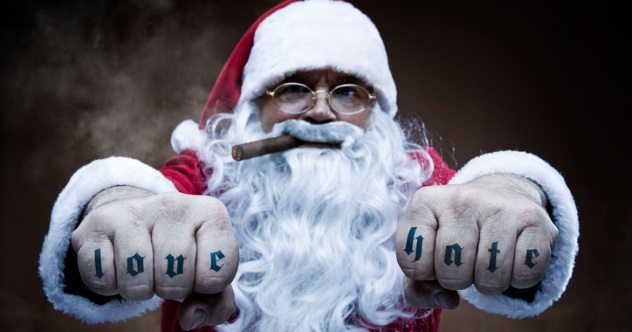
Santa Claus is supposed to be the jolly fellow who brings toys, cookies, and a suspiciously strong understanding of home security. But every so often, someone puts on the red suit and decides that “making spirits bright” should include robbery, chaos, counterfeit cash, or a getaway vehicle that definitely was not powered by reindeer.
These real-life “Bad Santas” turned the most cheerful costume in America into a headline machine. Some cases were tragic, some were strange, and some sound like rejected scenes from a holiday crime comedy. Still, beneath the absurdity is a serious reminder: a costume can create instant trust, and criminals know how powerful that can be.
Note: This article summarizes publicly reported incidents. Where cases involved arrests or accusations rather than final convictions, the wording reflects that distinction.
Why Santa Crimes Fascinate Readers
Holiday crime stories grab attention because they clash with everything Christmas is supposed to represent. Santa equals innocence, warmth, generosity, and mall-photo nostalgia. Crime equals fear, greed, deception, and paperwork. Put the two together, and you get the kind of contradiction people cannot help clicking on.
From an SEO perspective, topics like “Bad Santas,” “Santa Claus crimes,” “Christmas crime stories,” and “real holiday crimes” work because they blend true crime curiosity with seasonal search intent. Readers want something spooky enough to be interesting, but weird enough to discuss at a holiday party after someone burns the rolls.
10 Real Bad Santa Crimes That Made the Naughty List
1. The Cisco Santa Claus Bank Robbery
One of the most infamous Santa-themed crimes in American history happened in Cisco, Texas, in 1927. Marshall Ratliff dressed as Santa Claus and walked into the First National Bank with accomplices planning a robbery. The costume was supposed to hide his identity. Unfortunately for the gang, it also attracted children, witnesses, and enough public attention to turn a bank robbery into a statewide spectacle.
The heist spiraled into gunfire, deaths, a massive manhunt, and eventually mob violence. It remains one of the clearest examples of how a “clever disguise” can become the loudest siren in the room. Santa may be good at squeezing down chimneys, but subtle bank robbery? Not his lane.
2. The Covina Christmas Eve Massacre
The darkest case on this list occurred on Christmas Eve 2008 in Covina, California. Bruce Pardo arrived at a holiday gathering dressed in a Santa suit and opened fire on his former wife’s family before setting the house ablaze. Nine people were killed, and Pardo later died by suicide.
This was not a prank, a drunken mistake, or a strange robbery. It was a calculated act of mass violence hidden behind a symbol of childhood joy. That contrast made the case especially horrifying. The Santa suit did not make the crime quirky; it made it more chilling because it weaponized trust at the exact moment people were expecting celebration.
3. The Florida Santa With the Fake Bomb Present
In 2013, Mark Neal London robbed a SunTrust Bank in Port Orange, Florida, while dressed as Santa Claus. He carried a gift-wrapped package and claimed it was a bomb. The bank was evacuated, the bomb squad responded, and the package was later determined to be a hoax.
London was arrested days later and eventually sentenced to eight years in prison. The case reads like a warning from the North Pole legal department: never combine festive wrapping paper with felony-level decision-making. Gift boxes are for sweaters, fruitcake, and toys that require too many batteriesnot threatening bank employees.
4. The Nashville Santa Who Said He Had to Pay His Elves
In 2009, a man in full Santa gear robbed a SunTrust Bank in Nashville, Tennessee. Reports said he carried a red sack, pulled a gun, demanded money, and joked that Santa needed to “pay his elves.”
It was a line so bizarre that it almost sounds improvised by a criminal with a seasonal marketing strategy. But armed robbery is armed robbery, even when delivered with holiday banter. The incident showed how criminals sometimes use humor and familiar costumes to lower suspicion right before the situation turns dangerous.
5. The Memphis Candy Cane Credit Union Robbery
In 2016, a man wearing a Santa mask walked into a Memphis credit union and handed out candy canes. For a moment, it looked like a harmless holiday visit. Then he handed a teller a note demanding cash and implied he had a gun.
The candy cane detail made the story go viral because it was so absurdly theatrical. It also revealed a common pattern in Santa-related crimes: the suspect uses warmth first, then intimidation. That emotional whiplash is exactly why these stories feel so strange. One second it is “Merry Christmas.” The next second, everyone is reconsidering lobby security.
6. The Motorcycle Santa Kidnapping Charge
In South Carolina in 2006, John Michael Barton was charged with kidnapping after authorities said he drove away with an 8-year-old girl in his motorcycle sidecar while dressed as Santa Claus. The girl’s father chased the motorcycle at high speed until Barton stopped and the child was recovered unharmed.
Reports said Barton had been posing as Santa and giving rides to children. He later described the incident as a misunderstanding, but police treated it seriously. The case became a powerful reminder for parents: even a cheerful costume, a stuffed Rudolph, and a perfect “ho ho ho” do not replace basic stranger-safety rules.
7. The Charleston Santa Golf Cart Chase
Not every Bad Santa story involves a bank. In 2022, Brandon Brigman was arrested in Charleston, South Carolina, after authorities said he tried to steal golf carts from the Medical University of South Carolina while dressed in a festive Christmas suit.
According to local reporting, officers found him on a golf cart in a parking garage, then said he hopped onto another cart while trying to get away. The image is almost cartoonish: Santa fleeing not by sleigh, not by chimney, but by campus golf cart. The charges, however, were real, including grand larceny, disorderly conduct, and resisting arrest.
8. The Drunk Santa Looking for Reindeer
In Wisconsin in 2009, police cited Thomas Arnold after witnesses said he stumbled into a yard dressed as Santa, hugged children, and asked where his reindeer were. Officers later found him as a passenger in a vehicle; he was cited for having an open intoxicant in the car, while the driver was arrested for alleged impaired driving.
This incident sits at the odd end of the Bad Santa spectrum. It was not a bank robbery or violent plot, but it was still alarming for the family involved. Holiday cheer is wonderful. Holiday cheer that smells like beer and wanders into someone else’s yard asking for livestock? Less wonderful.
9. The “Sexy Santa” Party Arrest
In 2012, Michael Andrew Ward, better known as Mike Busey, was arrested in Florida after deputies said alcohol was being sold without a license at a large party at his home. An undercover officer reportedly paid a cover charge and purchased beer during the event, which had a Santa-themed holiday angle.
This case was more party-chaos than chimney-creeping, but it still made the Santa crime roundup because the red suit appeared in the spectacle. The lesson is simple: even Santa needs permits. The North Pole may run on magic, but Florida law enforcement prefers licensing.
10. The Popular Florida Santa Arrested in an Undercover Sting
In 2026, Thomas Hicks, a Florida man known for playing Santa Claus at community events, was arrested during an undercover child-sex sting led by Polk County authorities. Investigators said Hicks communicated with an undercover detective in a case involving a fictitious minor and later faced serious charges including human trafficking and using a computer to seduce a child.
This case shocked many because Hicks had reportedly portrayed Santa at public events for years. It also illustrates why organizations that hire holiday performers increasingly rely on background checks, clear supervision policies, and strict child-safety rules. Santa may be symbolic, but the person wearing the beard is still a personand people must be vetted.
What These Bad Santa Crimes Have in Common
The crimes vary widely, from robbery and theft to disturbing allegations involving children. Yet the pattern is familiar: the Santa image creates instant emotional access. People smile. Children approach. Employees relax. Security guards may hesitate for a second longer than usual. That small window of trust can be enough for a criminal to act.
Another common thread is theatricality. A Santa costume is not subtle. It turns a crime into a performance, which is why surveillance footage and witness accounts often spread quickly. Criminals may think the outfit hides them, but in practice it can make them more memorable. A robber in jeans is a suspect. A robber in a Santa suit is a headline with boots.
Safety Lessons From Real Holiday Crime Stories
Costumes Should Not Cancel Common Sense
The biggest lesson is simple: do not let a friendly costume override normal caution. Parents should teach children that they can enjoy Santa visits while still staying close, asking permission, and never leaving with an adult they do not know. Businesses should treat costumed visitors the same way they treat everyone else when it comes to security.
Holiday Events Need Clear Rules
Shopping centers, schools, churches, hospitals, and community groups should know exactly who is wearing the suit. That means identification, background screening where appropriate, event supervision, and clear procedures for photos, rides, private spaces, and physical contact. The real Santa may know who is naughty or nice, but event organizers need paperwork.
Humor Should Not Minimize Harm
Some of these cases sound ridiculous. A golf cart chase? Candy canes before a robbery? A robber saying he has to pay the elves? Those details are funny in the way a raccoon in a tuxedo is funny: visually absurd, but still capable of causing damage. The humor should not erase the fear victims felt in the moment.
Experiences and Reflections: What “Bad Santa” Stories Teach Us
Anyone who has attended a crowded holiday event knows the strange power of the Santa suit. Children run toward it. Adults take photos of it. Store managers place it in the center of the room like a red velvet lighthouse. The costume creates a shortcut to trust, and that is exactly why these real Bad Santa crimes feel so unsettling.
Imagine standing in a bank lobby in December. A man in a Santa hat walks in and hands out candy canes. Most people would smile. Some might pull out a phone. A teller might think it is a promotion, a customer-appreciation gesture, or just one of those quirky seasonal moments that makes a workday less dull. That is what makes the Memphis case so memorable: the first act was cheerful, and the second act was a robbery. The shift from “how sweet” to “call the police” happened in seconds.
The same trust problem appears in community events. Parents often encourage children to interact with Santa because the character feels safe. Santa listens to wish lists. Santa asks about school. Santa poses for photos. But these stories remind us that the costume is not a credential. A red coat does not equal a background check. A white beard does not equal moral character. A convincing laugh does not equal permission to be alone with a child.
Businesses can learn from these cases too. Holiday traffic is hectic, employees are distracted, and seasonal costumes can blur normal security expectations. Someone carrying a big red sack may look festive, but they may also be hiding stolen goods. Someone carrying a wrapped package may look generous, but staff should still follow safety procedures if threats are made. During the holidays, security does not need to become unfriendly; it needs to stay awake.
There is also a cultural reason these stories stay popular. Christmas is built around rituals: lights, music, gifts, family meals, mall photos, office parties, and the annual mystery of who ate all the peppermint bark. When crime invades that world, it feels like a glitch in the holiday software. Readers click because the contrast is irresistible. We expect villains in masks, not villains in faux fur trim.
Still, the best way to read these Bad Santa stories is with two emotions at once: curiosity and caution. Yes, some details are absurd enough to make readers laugh. No, the victims were not living inside a comedy sketch. A person facing a gun in a bank, a parent chasing a motorcycle, or officers responding to a theft at a hospital campus experienced real fear and disruption.
The healthiest takeaway is not to become suspicious of every Santa. Most holiday performers are kind, professional people who care deeply about creating happy memories. The takeaway is to separate the symbol from the stranger. Enjoy the magic, take the photo, laugh at the fake belly, and let the kids ask for dinosaurs, gaming consoles, or whatever toy requires a 47-step assembly manual. Just keep the same safety instincts you would use any other day of the year.
In the end, the real Santa brand survives these impostors because the character is bigger than the crimes. These Bad Santas made headlines, but they did not steal Christmas. They mostly proved that even the most beloved costume cannot turn a bad decision into a good one. The naughty list, apparently, has excellent recordkeeping.
Conclusion
“10 Naughty Crimes Committed By Bad Santas” is more than a collection of weird Christmas crime stories. It is a reminder that symbols are powerful, trust can be manipulated, and holiday cheer should never replace awareness. From the 1927 Cisco bank robbery to modern undercover-sting arrests, these cases show how the Santa suit has been misused for everything from theatrical theft to deeply serious alleged crimes.
The good news? Real holiday spirit is not ruined by a handful of criminals in red velvet. It lives in safer events, smarter parents, alert businesses, and communities that understand the difference between festive fun and foolish trust. Santa may still be coming to town, but now we know to check the sleigh registration.