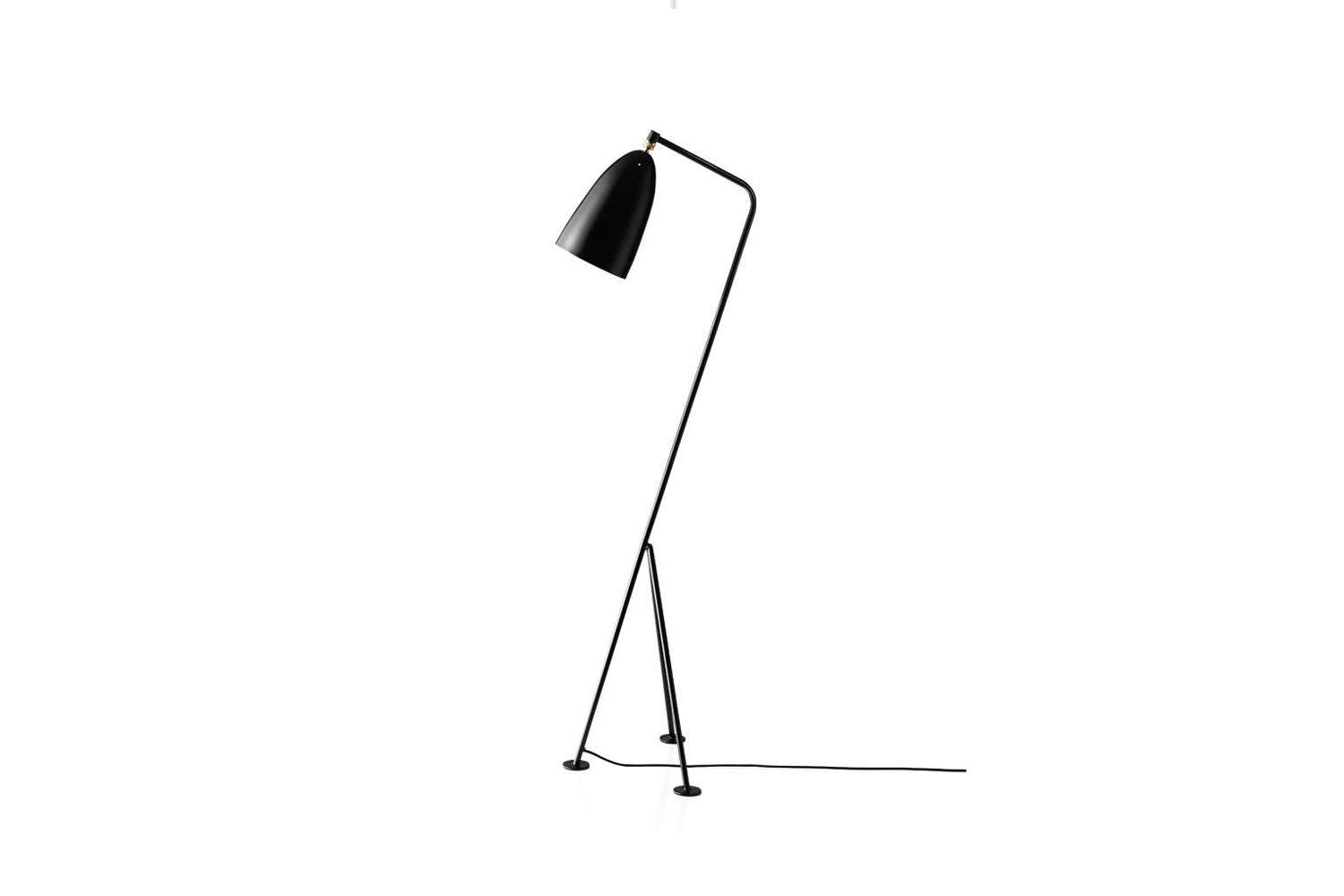
The Grossman Gräshoppa Floor Lamp is what happens when disciplined modernism grows three legs and develops a personality. Designed by Swedish-born architect and industrial designer Greta Magnusson Grossman in 1947, this slender lamp appears ready to spring across the room. Its real talent, however, is far more civilized: providing focused, adjustable light without making a compact space feel crowded.
Now produced as an authorized GUBI design, the Gräshoppa remains a defining example of mid-century modern lighting. Its backward-leaning tripod, elongated conical shade, powder-coated surfaces, and precise brass details create a silhouette that feels vintage yet remarkably current.
Why the Grossman Gräshoppa Floor Lamp Became an Icon
The Gräshoppa arrived when modern designers were reducing household objects to clear forms and useful functions. Grossman followed that principle but refused to make the result boring. Three thin legs support a stem that leans backward, while the shade projects forward like the head of an alert insect. “Gräshoppa” means “grasshopper” in Swedish, and the resemblance requires no zoology degree.
Grossman moved from Sweden to Los Angeles and became an important link between Scandinavian functionalism and California modernism. Her architecture, furniture, and lighting combined European restraint with the relaxed experimentation of the American West Coast. Design museums have since recognized her role in shaping twentieth-century modernism, especially California’s visual vocabulary.
The lamp’s longevity comes from that cultural mix. It has the clean geometry associated with Scandinavian lighting, but it is not anonymous. The stance is playful, the proportions are dramatic, and the shade works as a practical task light. Few objects look like small sculptures while remaining useful on an ordinary Tuesday evening.
Historical and design background:
Design Details That Make the Gräshoppa Distinctive
The Backward-Leaning Tripod
Most floor lamps use a heavy circular base or a straight vertical pole. The Grossman Gräshoppa Floor Lamp relies on a tubular tripod. Its three legs provide stability while leaving visible floor around the frame, so the lamp occupies physical space without appearing bulky. That openness is particularly valuable in apartments, reading corners, and rooms already filled with substantial furniture.
The tilted posture also gives the lamp direction. Beside a lounge chair, it seems to lean into the reader. Near artwork, it resembles a curious gallery attendant with impeccable taste and no scheduled lunch break.
The Rotating Conical Shade
The elongated shade is the functional center of the design. Its ball-jointed connection allows the shade to rotate and direct light where needed while helping minimize glare. Aim it downward for reading, toward a desk for task lighting, or at a wall for a softer reflected glow. Because the beam is controlled rather than broadly scattered, the lamp creates an intimate pool of light.
Metal, Brass, and Color
Current authorized editions typically combine powder-coated metal, brass hardware, and a fabric-covered cord. The painted finish makes the form feel continuous, while the brass joint adds a small point of warmth. Finish selections vary, but U.S. retailers commonly list black, warm gray, white, red, blue-gray, brown, and muted earth tones.
Dark versions appear graphic and architectural. Pale versions blend into neutral rooms. Vintage red or olive-brown finishes behave more like accent furniture, adding color without requiring anyone to repaint the ceiling during a burst of confidence.
Dimensions, Materials, and Bulb Requirements
The current Gräshoppa floor lamp is approximately 49.25 inches high, with a footprint close to 17 inches wide and 14.875 inches deep. The shade is about 6 inches in diameter and roughly 9 inches high. Many U.S. listings place the weight below 6 pounds, making the lamp easy to reposition, although its long legs still need a clear, protected location.
| Designer | Greta Magnusson Grossman |
|---|---|
| Original design year | 1947 |
| Approximate height | 49.25 inches |
| Approximate footprint | 17 inches wide by 14.875 inches deep |
| Materials | Powder-coated steel or metal, brass hardware, fabric-covered cord |
| Common U.S. bulb base | E12 candelabra base |
| Typical LED recommendation | Approximately 4–6 watts and 470 lumens |
| Location rating | Indoor, dry locations |
Specifications can differ slightly among regions, production runs, and retailers. Before ordering, confirm the voltage, bulb base, cord length, finish, safety listing, and return policy. A lamp with the wrong electrical configuration is ultimately just a very expensive metal houseplant.
Product dimensions, construction, shade movement, and bulb guidance:
What Kind of Light Does the Gräshoppa Produce?
The Gräshoppa is a directional task and accent lamp, not a substitute for bright whole-room lighting. Its narrow shade and modest recommended LED output create a concentrated beam suitable for reading, writing, crafting, or illuminating a small surface. In a full-size living room, it performs best as part of a layered lighting plan with ceiling fixtures, sconces, or other lamps.
A 2700K LED bulb gives residential spaces a warm atmosphere, while 3000K looks slightly cleaner in offices and contemporary rooms. A frosted bulb can soften hot spots. Buyers seeking app control can use a compatible E12 smart bulb or smart plug, provided the electrical specifications match. Dimming also requires a compatible control method; a dimmable bulb alone cannot perform magic.
Best Places to Use a Grossman Gräshoppa Floor Lamp
Beside a Reading Chair
This is the lamp’s natural habitat. Position the base slightly behind or beside the chair, then angle the shade over the shoulder and toward the page. The light should reach the book without exposing the bright bulb directly to the reader’s eyes.
Next to a Sofa
The slim tripod can replace a bulky end-table lamp when space is limited. It also creates a strong visual endpoint for a sofa and helps define a conversation area in an open-plan room.
In a Home Office
The adjustable shade provides useful document light without occupying desktop space. Aim it at papers or a nearby wall rather than directly at a monitor to avoid distracting reflections.
In a Bedroom or Quiet Corner
The lamp works well near a chaise, bench, or bedroom reading chair. It can sit beside a bed when space allows, but the tripod footprint requires more planning than a wall sconce. Avoid placing a leg where sleepy feet will discover it at 2:00 a.m.
Near Art, Ceramics, or Plants
Turning the shade toward a wall can highlight texture, framed work, or foliage. Use a cool-running LED and maintain sensible distance from delicate objects. The Gräshoppa is an accent light, not a replacement for museum-grade conservation equipment or actual sunshine.
How to Style This Mid-Century Modern Floor Lamp
Although closely associated with mid-century interiors, the Gräshoppa works in minimalist, Scandinavian, contemporary, industrial, eclectic, and even traditional rooms. Its geometry is distinctive, but simple enough to cooperate with furniture from other periods.
A black or anthracite lamp anchors pale upholstery and connects easily with dark picture frames or window trim. Warm gray and white versions feel softer beside oak, linen, boucle, and textured plaster. Red or blue-gray adds controlled contrast. For a cohesive result, repeat either the lamp’s finish or its brass detail once elsewhere in the room.
Examples of the lamp used across collected and contemporary interiors:
Authentic GUBI Edition Versus Look-Alike Lamps
The popularity of the Gräshoppa silhouette has produced many imitations. An authentic contemporary edition should be associated with GUBI and purchased from the brand or a reputable authorized dealer. Useful indicators include accurate proportions, documented finish names, manufacturer information, electrical certification, warranty terms, and clear product literature.
Authenticity affects more than status. The quality of the rotating joint, tripod balance, finish, wiring, and proportions all influence everyday use. A copy may reproduce the outline in a photograph while missing the engineering that makes the original look effortless.
The licensed lamp is a premium purchase, so buyers should decide whether they value design history, authorized production, precise detailing, and long-term relevance. Someone who only needs maximum brightness for a utility room can choose a less expensive fixture without surrendering citizenship in the design world.
Reissue and authenticity context:
Pros and Considerations Before Buying
Reasons to Love It
- Recognizable sculptural form with documented design history
- Adjustable shade for reading, work, and accent lighting
- Open tripod base that looks lighter than a pedestal lamp
- Compact proportions suited to apartments and smaller rooms
- Multiple finishes for neutral or colorful interiors
- A design language that outlasts short decorating trends
Points to Consider
- It will not flood a large room with bright ambient light
- The tripod should stay out of busy pathways
- The authorized edition carries a premium price
- The visible cord requires thoughtful routing
- Glossy finishes can show dust and fingerprints
Who Should Buy the Grossman Gräshoppa Floor Lamp?
The lamp suits readers, collectors of modern design, apartment dwellers avoiding bulky fixtures, and homeowners who want lighting to contribute to a room’s architecture. It is less practical for rooms with almost no safe floor area or households seeking bright general illumination from one fixture. Families with energetic children or large pets should test the tripod footprint carefully; Grossman could not have anticipated every golden retriever pursuing a tennis ball indoors.
Living With the Grossman Gräshoppa Floor Lamp: A Practical Experience
A useful way to understand the Gräshoppa is to imagine the first week after placing it beside a favorite chair. During daylight, the lamp reads mainly as sculpture. Its thin legs draw clean lines across the floor, and the backward tilt adds movement without introducing bulk. Unlike a large drum-shade floor lamp, it does not create a heavy vertical column. The room can feel more open even though a new object has been added.
At night, its personality changes. The shade creates a defined island of light, making the chair and nearby table feel like a destination. This is excellent for reading, journaling, knitting, or enjoying a drink without illuminating every corner. Wood looks warmer, textured upholstery gains depth, and a blank wall can suddenly appear intentional rather than unfinished.
Adjustment is simple but benefits from patience. Aim the shade too high and the bulb may become visible from across the room. Aim it too low and the beam can feel unnecessarily narrow. The comfortable position is usually slightly behind shoulder height, with light crossing the page or work surface. Once the angle is right, the lamp disappears functionally while remaining visually distinctivethe lighting equivalent of a very competent person wearing an excellent coat.
Its relatively low weight makes layout changes easy. The lamp can move from chair to sofa or desk as routines change. The long cord adds flexibility but demands tidy routing. Running it along a baseboard, securing extra length, and keeping it clear of the legs creates a cleaner and safer result. In an open room, a low-profile floor cord cover may be worthwhile.
Cleaning is uncomplicated. A dry microfiber cloth handles most dust on the frame and shade. The inside of the cone deserves occasional attention because dust becomes more visible when the light is on. Avoid abrasive pads and harsh cleaners around painted surfaces and brass details. Glossy black shows fingerprints more readily; matte finishes are generally forgiving.
The most noticeable limitation is light quantity. Approximately 470 lumens is comfortable for a focused task or atmospheric corner, not for cleaning an entire living room or locating a tiny earring on a patterned rug. Pairing the Gräshoppa with ambient ceiling light or another lamp creates a layered scheme. It performs best as a specialist, not an exhausted generalist.
Over time, the design’s strongest advantage is its resistance to visual fatigue. Trend-driven lamps can feel exciting for a season and oddly specific two years later. The Gräshoppa’s geometry, function, and history give it staying power. It can move from a first apartment to a larger home, work with changing wall colors, and bridge modern and eclectic furniture.
Before purchasing, tape the approximate footprint on the floor and mark the shade height on the wall. Sit in the intended chair, check sightlines, and plan the cord route. This five-minute rehearsal can prevent an expensive surprise. When the proportions fit, the Grossman Gräshoppa Floor Lamp feels purposeful, charming, and unusually alive. When they do not, even a design icon can become a stylish obstacle course.
Conclusion
The Grossman Gräshoppa Floor Lamp remains relevant because its beauty is inseparable from its function. Greta Magnusson Grossman transformed a tripod, a tilted stem, and a rotating cone into a design with movement, humor, and precision. It offers useful directional lighting, occupies relatively little visual space, and brings authentic mid-century character into contemporary interiors.
It cannot replace every light in a room, and its premium price deserves thought. For buyers who appreciate licensed design, compact proportions, and an unmistakable silhouette, however, the GUBI Gräshoppa is more than decorative nostalgia. It is a hardworking modern classic that looks ready to hop away but has wisely decided the reading corner is a good place to stay.
SEO Data
Editorial note: The practical experience section is an ownership-style evaluation based on verified product specifications, documented design features, and common residential lighting scenarios; it does not claim personal ownership of the lamp.
Research synthesis used 11 reputable design, museum, manufacturer, and U.S. retail domains, including GUBI, Design Within Reach, 2Modern, Hive Modern, Danish Design Store, Dwell, MoMA, Cooper Hewitt Smithsonian Design Museum, Metropolis, Architectural Digest, and Finnish Design Shop.