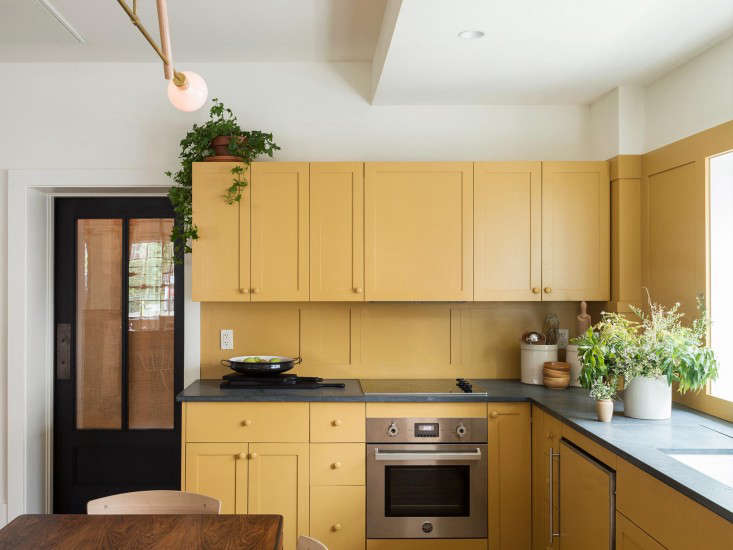
A modern country kitchen should feel as though it has been quietly improving for decades, not as though a delivery truck dropped off an entire “farmhouse collection” on Tuesday. The communal kitchen at Rivertown Lodge in Hudson, New York, gets that distinction exactly right. It combines deep mustard cabinetry, warm white walls, burnished dark stone, compact European appliances, honest wood furniture, and sculptural brass lighting. The result is practical, memorable, and just polished enough to keep the word “rustic” from wandering in wearing muddy boots.
Research basis:
This is not a room built around decorative chickens, distressed signs, or a sink large enough to bathe a small pony. Its country character comes from craftsmanship, tactile materials, unfussy furniture, and a layout designed for people to gather. Its modern side appears in the clean cabinetry, integrated refrigeration, streamlined cooking equipment, restrained palette, and confident use of color. That balance is what makes the Hudson kitchen worth stealingand surprisingly adaptable to homes far beyond the Hudson Valley.
Why the Hudson Kitchen Still Looks Fresh
Rivertown Lodge occupies a 27-room property on Warren Street that previously served several lives, including time as a movie theater and an inn. Owners Ray Pirkle and Kim Bucci worked with New York design studio Workstead and regional craftspeople to turn the property into a celebration of Hudson Valley design. Local woodworker Rowland Butler built the communal kitchen cabinetry, while Workstead shaped the larger interior language through utilitarian forms, rich materials, and custom lighting.
Research basis:
The kitchen’s staying power comes from specificity. It belongs to its place. The cabinetry was locally made. The stools and cutting boards came from nearby Hudson Valley makers. The room works as a hospitality kitchen rather than a sealed-off showpiece. Nothing appears to have been selected solely because an algorithm announced that farmhouse was trending.
Research basis:
That local, layered quality also explains why the room does not feel trapped in 2016, when the original project was widely featured. Current design guidance continues to favor natural wood, stone, mixed metals, classic cabinetry profiles, vintage accents, and layouts that feel intuitive rather than overdesigned. In other words, the kitchen aged well because it was never trying very hard to look new.
Research basis:
The Design Formula: Country Warmth, Modern Discipline
1. Make Mustard Yellow the Main Character
The room’s defining move is its strong yellow cabinetry, inspired by Farrow & Ball’s India Yellow. This is not lemon, daffodil, or school-bus yellow. It is a deep, earthy mustard with enough brown in it to feel grounded. Farrow & Ball describes the color as strong and moody and recommends moderation in small rooms because of its intensity. That is excellent advice: mustard should be the lead singer, not the entire marching band.
Research basis:
For a close recreation, paint the lower cabinets, a freestanding hutch, or a compact island. In a large, well-lit room, a full run of cabinetry can handle the color. In a smaller kitchen, limit it to one architectural feature and repeat the hue in a towel, framed artwork, or ceramic bowl. A durable eggshell or cabinet-rated finish is more practical than delicate wall paint because kitchens are where tomato sauce develops ambition.
Research basis:
2. Balance the Color With a Warm White
The lodge kitchen pairs its bold cabinets with white walls similar to Benjamin Moore White Dove, a classic white with gentle warmth. Warm white matters here. A blue-white can make mustard cabinetry look murky or overly green, while a cream that is too yellow may turn the room into a custard-themed escape room.
Research basis:
Before committing, paint large sample boards and move them around the kitchen for several days. Check the pairing in morning sun, gray afternoon light, and artificial evening light. Cabinet color and wall color should feel related without becoming identical. The white provides breathing room; it does not need to shout back.
3. Choose Stone With a Quiet, Matte Presence
The original counters are burnished schist, a dark natural stone with a subdued surface. That choice adds depth without the sparkle and visual noise of some polished granites. It also gives the yellow cabinets a serious counterweight. The effect is earthy rather than luxurious in a look-at-me way.
Research basis:
Schist is not the easiest material to source everywhere, so focus on the visual qualities instead of the exact geology. Honed soapstone, dark honed granite, leathered stone, or a low-sheen engineered surface can create a similar mood. Ask for samples, test them with oil, coffee, lemon, and red wine, and learn the maintenance requirements before purchase. A countertop should support your life, not become a nervous new family member.
4. Let Appliances Fit the Architecture
Rivertown Lodge used compact Bertazzoni cooking appliances and a panel-ready undercounter refrigerator painted to blend with the cabinetry. The strategy is more important than the specific models: appliances are sized for the room and visually integrated rather than allowed to dominate it. Modern panel-ready refrigeration continues this idea by aligning doors and toe-kicks with surrounding cabinetry.
Research basis:
At home, decide which appliances deserve attention. A handsome range may act as a focal point, while the refrigerator can disappear behind cabinetry. In a small kitchen, a 24-inch range or undercounter refrigerator can preserve valuable visual and physical space. In a family kitchen, however, do not shrink appliances merely for aesthetic purity. No one wins when the refrigerator is beautiful but can hold only mustard and six artisanal sodas.
5. Mix a Classic Sink With a Clean-Lined Faucet
The Hudson kitchen combines an undermount enameled cast-iron sink with a high-arc bridge faucet. A bridge faucet carries traditional associations, but a simplified silhouette and polished metal finish keep it crisp. Kohler continues to present bridge faucets and cast-iron sinks as a way to connect vintage inspiration with contemporary function.
Research basis:
For a similar effect, choose a generously sized single bowl, an undermount installation, and a faucet with visible architectural structure. Polished chrome brings clarity and reflects light; aged brass feels softer and more historic; polished nickel sits comfortably between the two. Match every metal and the kitchen may feel like a showroom. Repeat one finish twice, then allow another to appear as an accent.
6. Use Lighting as Sculpture
Workstead’s custom brass fixture over the table gives the room a modern outline and a warm glow. Its job is not to imitate a barn lantern. Instead, it introduces geometry, shine, and a little tension against the handmade wood and dark stone. This is a useful modern-country rule: when the materials are rustic, let the lighting be disciplined.
Research basis:
Install ambient ceiling lighting for general visibility, focused task lighting over prep areas, and a statement fixture above the table or island. Keep the fixture visually open so it does not block sightlines. Brass, bronze, or blackened metal works especially well, but scale is more important than finish. A tiny pendant over a large table looks like it has arrived at the wrong address.
7. Bring in Furniture That Looks Collected, Not Coordinated
The lodge layers a vintage teak dining table, natural oak chairs, and dark walnut stools. The woods do not match, yet the shapes are simple enough to live together. Design sources consistently point to freestanding tables, mixed chair styles, warm woods, and unfitted elements as effective ways to give a country kitchen a built-over-time character.
Research basis:
Start with one piece that has genuine presence: a vintage table, an old pine hutch, a turned-leg worktable, or stools made by a local craftsperson. Then keep the supporting furniture quieter. The goal is variation within a family of natural materials, not a lumberyard speed-dating event.
How to Recreate the Look at Three Budget Levels
Low-Cost Refresh
Paint an existing island or lower cabinet run in a deep mustard shade. Swap generic knobs for simple wood pulls and paint them to match the doors. Add a black cutting board, a stoneware crock, a warm white wall color, and one vintage wood chair. Replace a harsh cool-white bulb with a warmer temperature appropriate for the fixture. These changes establish the palette and texture without moving plumbing or sending your savings account into witness protection.
Midrange Remodel
Reface or repaint cabinets, install a honed dark countertop, upgrade to an undermount sink and bridge faucet, and introduce a substantial linear chandelier. Use a panel-ready dishwasher or undercounter refrigerator where it improves the layout. Source a secondhand table instead of buying a conventional island; a carpenter can adjust its height, reinforce it, and add a lower shelf for baskets or cookware.
Full Custom Interpretation
Commission inset or furniture-style cabinetry with integrated appliances, build dedicated zones for coffee and food preparation, and use locally fabricated woodwork wherever the budget has real visual impact. Select natural stone slabs in person. Add custom lighting, wide-plank wood flooring, and a table designed for both meals and work. The objective is not to duplicate a hotel kitchen bolt for bolt. It is to reproduce its hierarchy: color first, craftsmanship second, function always.
Layout Lessons From a Communal Kitchen
The most valuable idea at Rivertown Lodge may be social rather than decorative. The kitchen is part of a public gathering space, so the table, cooking zone, coffee equipment, and seating work together. A home version should also let people participate without forming a human traffic jam beside the oven.
Research basis:
Create a beverage station outside the main cooking area. Store mugs, coffee, tea, and glasses together. Place stools where guests can talk without blocking the refrigerator. Keep the central table or island largely free of permanent appliances so it can shift between breakfast, homework, baking, and entertaining. Beautiful rooms earn their keep by making ordinary behavior easier.
Research basis:
Counter styling should remain edited. Display items that are useful, sculptural, or both: a ceramic crock, a pepper mill, a stack of cutting boards, a coffee machine, and perhaps a plant that genuinely tolerates the available light. Corral smaller objects on a tray. Country warmth comes from visible life; clutter comes from twelve unrelated bottles arguing beside the sink.
Research basis:
Modern Country Kitchen Accessories Worth Adding
Accessories should strengthen the room’s material story rather than introduce a new theme. Rivertown Lodge used dark wood cutting boards, black-and-white enameled cookware, handmade mugs, stoneware crocks, simple wooden cabinet knobs, and greenery. These objects contribute shape and texture while remaining useful.
Research basis:
A practical starter collection might include one large cutting board, one smaller board for serving, a substantial utensil crock, two or three handmade mugs, a woven produce basket, and a Dutch oven that can remain on display. Choose objects slowly. A kitchen assembled in one shopping trip often looks like a display; a kitchen assembled over time looks like somebody lives there.
A serious espresso machine can become part of the architecture when the kitchen doubles as a social space. The original lodge featured a compact La Marzocco Linea Mini, a professional-style countertop machine that does not require the footprint of commercial café equipment. For most homes, a simpler espresso machine or quality drip brewer will do the job. The lesson is to give the daily coffee ritual a permanent, organized location rather than creating a morning appliance obstacle course.
Research basis:
Common Mistakes to Avoid
Turning “Country” Into a Theme
Skip novelty signs, fake distressing, and an army of matching accessories. One honest antique offers more character than ten new objects manufactured to look old.
Using Too Many Rustic Finishes
Reclaimed wood, rough stone, aged metal, brick, and vintage tile can all be beautiful. Using every one of them at once can make the kitchen feel like a themed restaurant. Pair texture with clean planes and simple silhouettes.
Research basis:
Choosing Color From a Phone Screen
Mustard changes dramatically with light, sheen, and surrounding materials. Sample it next to the actual floor, countertop, and white paint. A color that looks sophisticated online may resemble processed cheese beneath your kitchen LEDs.
Research basis:
Forgetting Maintenance
Natural stone may need sealing. Dark counters reveal flour. Painted knobs collect wear. Brass develops patina. These are not necessarily flaws, but they should be deliberate choices. A modern country kitchen looks best when age adds character rather than panic.
The Experience of Living With a Hudson-Style Country Kitchen
The appeal of this look becomes clearest during an ordinary morning. Warm white walls catch the first available daylight, while mustard cabinetry gives even a cloudy day some internal sunshine. Wood chairs feel comfortable rather than precious. The dark counter quiets visual clutter, and a compact coffee station turns the daily caffeine ritual into a small performance. The kitchen feels awake before anyone in it fully is.
That atmosphere changes through the day. At lunchtime, the yellow reads brighter and more energetic. In the evening, warm bulbs pull out its brown undertones, and the room becomes deeper and cozier. This is one reason saturated, earth-based colors can be rewarding: they have range. A flat gray may behave politely at every hour, but a moody mustard brings opinions. You may occasionally disagree with it. The relationship remains interesting.
Cooking in a room like this also encourages a certain kind of visibility. Cutting boards can lean against the backsplash. A well-used Dutch oven can stay on the range. Handmade mugs do not need to match. Everyday tools become part of the room’s visual story, provided they are edited and regularly used. The experience is less about perfect styling and more about allowing useful objects to develop a believable rhythm.
Hosting becomes easier when the table is treated as the center rather than an accessory. Guests naturally sit, chop, pour wine, or offer highly confident advice about onions. A freestanding table softens the boundary between kitchen and dining room, especially when it carries scratches, rings, and small signs of use. Those marks can feel alarming during the first month and charming by the third year. Patina is simply damage with good public relations.
There are practical realities. Dark honed stone can show crumbs and flour. Rich cabinet color makes chipped paint more visible than pale wood. Openly displayed pottery needs occasional washing, not just admiring. Brass changes color. A plant above the cabinets may discover that “low light” and “no light whatsoever” are different concepts. The room asks for maintenance, but not the anxious maintenance of a glossy, all-white show kitchen. It rewards touch-ups, oiling, polishing, and rearranging.
Seasonal decorating is pleasantly simple because the palette already carries warmth. In spring, green branches and pale ceramics lighten it. Summer brings linen towels and bowls of fruit. Autumn practically walks in without an invitation. During winter, candles, black cookware, and the deep yellow cabinets create a naturally festive setting without requiring plaid on every available surface.
Most importantly, this style can grow with its owners. A vintage chair can replace a broken new one. A local ceramic bowl can join the counter. Cabinet paint can be refreshed, deepened, or shifted toward ochre. The table can move to another room if the layout changes. Because the kitchen is built from distinct materials and collected pieces rather than a single matched package, it can evolve without losing its identity.
That is the real Hudson experience to steal: not a shopping list, but a way of making a kitchen feel rooted. Use color bravely, choose materials that improve with age, support regional craftsmanship when possible, and leave enough visual quiet for daily life to become the decoration.
Conclusion: Steal the Principles, Not the Price Tags
A convincing modern country kitchen is a study in controlled contrast. Rivertown Lodge pairs mustard cabinets with warm white walls, dark stone with pale wood, compact modern appliances with classic plumbing, and locally made pieces with midcentury furniture. Every element supports either function, atmosphere, or both.
Begin with the feature that gives the room its identitymost likely the cabinet colorthen build outward with matte stone, integrated appliances, honest wood, sculptural lighting, and a few hardworking accessories. Resist the urge to make everything match or to prove, aggressively, that you have heard of farms. The best version should feel personal, useful, and slightly imperfect: a room ready for coffee, dinner, conversation, and the occasional onion-related debate.
Note: Product names are included as design references. Availability, specifications, finishes, and pricing may change, so verify current details and test all paint and surface samples in your own lighting before purchasing.