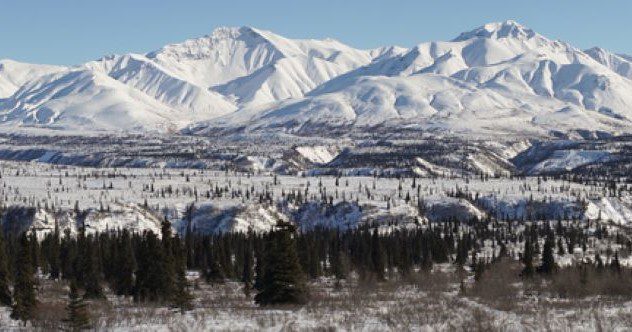
Alaska already has all the ingredients for a first-rate ghost story: abandoned mining camps, century-old hotels, isolated military ruins, violent Gold Rush history, long winter nights, and weather that can make a perfectly ordinary window sound as though someone is politely requesting entry. Add generations of local legends, and the Last Frontier begins to feel like the Afterlife Frontier.
The following haunted locations in Alaska combine documented history with stories of apparitions, unexplained footsteps, moving objects, cold spots, mysterious voices, and other paranormal activity reported by guests, employees, guides, and local residents. None of those claims has been scientifically proven, of course. A rattling door may be a ghostor simply an Alaskan wind with no respect for personal boundaries.
Whether you are planning a haunted Alaska road trip or simply enjoy eerie stories from the safety of your couch, these ten locations offer some of the state’s most atmospheric encounters with the past.
1. Historic Anchorage Hotel, Anchorage
The Historic Anchorage Hotel may be the best-known haunted hotel in Alaska, partly because it does something unusual: it keeps a guest ghost log. Visitors can record unexplained events instead of awkwardly telling the front desk, “Something invisible watched me unpack my socks.”
The original Anchorage Hotel opened in 1916, while the surviving annex was completed in the 1930s. Over the decades, guests have reported pictures falling from walls, shower curtains moving without a breeze, strange noises, children appearing in hallways, and shadowy figures vanishing around corners.
The legend of Anchorage’s first police chief
One frequently repeated story connects the property with John “Black Jack” Sturgus, Anchorage’s first police chief. Sturgus was found fatally shot near the hotel in 1921, and his killing was never conclusively solved. Some guests believe his spirit still patrols the building, perhaps continuing an investigation with an exceptionally long case file.
The hotel remains open, allowing travelers to stay in a genuinely historic property rather than trespass through a collapsing ruin. Ask politely about the ghost log, respect other guests, and remember that repeatedly knocking on strangers’ doors while whispering “Are you alive?” is frowned upon.
2. Hotel Captain Cook, Anchorage
The Hotel Captain Cook is one of Anchorage’s most recognizable hotels, but its most persistent ghost story does not involve a grand ballroom or luxury suite. Instead, the paranormal spotlight falls on a women’s restroom in one of the hotel towers.
According to local legend, a woman died by suicide in the restroom during the 1970s. Since then, visitors and employees have reportedly experienced doors opening on their own, lights flickering, unexplained cold air, and the feeling of being watched. Some versions of the story describe a pale woman in white appearing in a mirror or standing near a stall before disappearing.
A haunting in an unexpected place
The setting gives the story its unsettling power. Hotel corridors are supposed to be public, polished, and predictable. A quiet restroom feels even more ordinaryuntil a stall door shifts without anyone touching it.
The tale remains an urban legend rather than a verified historical case, and details vary considerably. Still, it has become an established part of Anchorage ghost lore. Anyone investigating should avoid disturbing hotel operations or treating the restroom like a paranormal theme park. The living guests deserve privacy, even when the alleged dead do not seem particularly concerned about it.
3. The Alaskan Hotel & Bar, Juneau
Opened in 1913, the Alaskan Hotel & Bar is Juneau’s oldest continuously operating hotel and one of the state’s most atmospheric Gold Rush-era accommodations. Its narrow halls, antique details, creaking floors, and old-fashioned rooms already look ready for a ghost story before anyone switches off the lights.
The hotel’s best-known spirit is commonly called Alice. Her legend has several versions, but most describe a woman whose husband left in search of gold. After enduring hardship and exploitation, she supposedly died violently or took her own life. Guests have since reported a woman in period clothing, unexplained voices, moving objects, and the sensation of someone sitting on a bed.
Room 315 and a frightening modern incident
Room 315 has become particularly associated with paranormal reports. One widely covered incident involved a visiting sailor who requested a haunted room and later suffered a terrifying episode requiring emergency assistance. The cause was never established as supernatural, but the event strengthened the hotel’s spooky reputation.
Travelers can still book a room here, have a drink downstairs, and experience a piece of Juneau history. Just avoid challenging Alice to prove she exists. Ghosts, like cats and hotel Wi-Fi, rarely perform on command.
4. Red Onion Saloon, Skagway
Built in 1897 during the Klondike Gold Rush, the Red Onion Saloon once operated as a bordello serving the enormous stream of prospectors passing through Skagway. Today, it functions as a restaurant, bar, museum, and starting point for historical walking toursincluding tours devoted to the town’s ghosts and former red-light district.
The upstairs rooms preserve furnishings and artifacts associated with the women who worked there. Guides and employees have reported cold spots, footsteps in empty rooms, unexplained perfume, doors moving, and the fleeting image of a woman in dark clothing.
Who is Lydia?
Tour lore often identifies the resident spirit as Lydia, a former worker whose story ended tragically. Exact historical evidence about her life is limited, so the tale is best understood as local folklore shaped by the difficult experiences of women in a rough frontier economy.
The Red Onion stands out because visitors can explore its history through an organized tour rather than sneaking into an unsafe building with a flashlight and several questionable decisions. The guides balance entertainment with historical context, showing how Skagway’s glittering Gold Rush promises often concealed violence, poverty, and exploitation.
5. Golden North Hotel, Skagway
The Golden North Hotel is another major landmark from Skagway’s boomtown period. Although it no longer operates as a conventional hotel, its distinctive golden dome and preserved exterior remain prominent in the historic district.
Its most famous ghost is “Scary Mary,” a young woman said to have stayed in Room 23 while waiting for her fiancé to return from a prospecting expedition. According to legend, Mary became illpossibly with pneumoniaand died before he came back. Her body was reportedly discovered in the room, still wearing a dress she had chosen for their reunion.
The woman at the window
Later occupants allegedly heard choking sounds, felt sudden pressure on their lungs, or saw a pale woman watching from an upper window. A second male presence has also been mentioned in some accounts, though Mary remains the star of the spectral show.
Researchers have questioned whether every detail of the story matches surviving records. That uncertainty is part of what makes the legend fascinating: it illustrates how an old building, a frontier tragedy, and decades of retelling can blend into a powerful piece of community folklore. Visitors should admire the property from publicly accessible areas unless participating in an authorized tour.
6. Hotel Halsingland and Fort William H. Seward, Haines
Fort William H. Seward was established near Haines in the early 1900s as a permanent U.S. Army post. Its officers’ houses, parade grounds, barracks, and command buildings formed an isolated military community surrounded by mountains and deep water.
Part of the former fort later became Hotel Halsingland. Guests and employees have described unexplained footsteps, voices in empty rooms, doors opening without assistance, and figures wearing clothing resembling old military uniforms. Some accounts mention a woman seen around the former officers’ quarters, while others describe the presence of soldiers who apparently missed the order to transfer out.
Where military history meets ghost lore
The fort’s remoteness intensifies its atmosphere. Low clouds can hide the mountains, rain taps against century-old windows, and the broad parade ground becomes remarkably quiet after dark. Even skeptical visitors may understand how ordinary sounds acquire supernatural possibilities in that setting.
The historic district includes private homes and operating businesses, so visitors should remain on public routes and follow posted guidance. Ghost hunting does not include permission to inspect someone’s porch at midnight while carrying an electromagnetic meter.
7. Kennecott Mines National Historic Landmark
Kennecott is a spectacular abandoned copper-mining community inside Wrangell–St. Elias National Park and Preserve. Mining began in the early twentieth century, and the operation eventually employed hundreds of workers. When profitable ore declined, the mines closed in 1938, leaving behind a striking collection of red industrial buildings beneath rugged mountains and glaciers.
Visitors and guides have occasionally described footsteps, distant voices, metallic banging, or the sense that someone is moving through an empty structure. Old mining sites naturally produce powerful stories: dangerous labor, isolation, accidents, illness, and abrupt abandonment give the imagination plenty of raw material.
A real ghost town, with or without ghosts
Kennecott is technically a ghost town because its original industrial population disappeared, not because the National Park Service has certified a supernatural workforce. Its preservation, however, allows visitors to walk through an unusually complete mining landscape.
Authorized guided tours provide the safest way to enter parts of the concentration mill. Some buildings remain closed, private, or structurally hazardous. The site is also remote, and reaching it requires serious travel planning. In Kennecott, running out of fuel is more likely than meeting a phantomand considerably less romantic.
8. Buckner Building, Whittier
The enormous Buckner Building was constructed when Whittier served as a strategic military port. Designed as a self-contained complex, it once included housing, offices, recreational facilities, a theater, stores, and other services. It was effectively a city under one roof.
The Army later withdrew, and the building was abandoned. Damage from the 1964 Alaska earthquake, decades of harsh weather, vandalism, water intrusion, and hazardous materials transformed it into one of Alaska’s most intimidating ruins.
Reported shadows in the concrete corridors
Local legends describe footsteps, voices, slamming doors, and shadowy military figures moving through the empty halls. Wind rushing through broken openings can create extraordinary sounds, while darkness and repeating corridors easily confuse depth and direction. Paranormal explanation or not, the building’s scale makes it deeply unsettling.
The Buckner Building is unsafe and should not be entered without explicit authorization. It contains structural hazards and asbestos, and trespassing restrictions may apply. Enjoy the exterior from a legal viewpoint. No ghost photograph is worth falling through a floor into a room that has not seen a building inspector since Eisenhower was president.
9. The Former Jesse Lee Home Site, Seward
The Jesse Lee Home for Children opened in Seward in 1926 and housed children from communities across Alaska. Its history is significant but complicated, reflecting both the provision of shelter and education and the broader disruption experienced by Alaska Native families during that era.
The property suffered major damage in the 1964 Good Friday earthquake and eventually closed. For decades, its abandoned buildings became associated with stories of children laughing, crying, skipping rope, bouncing balls, or appearing briefly in broken windows.
What remains today
Most of the deteriorated complex was demolished after preservation efforts failed to secure a sustainable future for the buildings. The location should therefore be understood as a historic and memorial site rather than an abandoned attraction waiting to be explored.
Stories about ghostly children can be emotionally powerful, but visitors should approach this place with particular sensitivity. Real children lived here, real families were affected, and the site’s human history matters more than a thrilling photograph. Learn about the institution, respect boundaries, and resist turning tragedy into paranormal entertainment.
10. Gold Rush Cemetery, Skagway
Skagway’s Gold Rush Cemetery contains the graves of numerous people connected with the town’s turbulent frontier period. Its best-known residents are confidence man Jefferson “Soapy” Smith and Frank Reid, who confronted Smith during the famous 1898 shootout on Juneau Wharf. Smith died immediately, while Reid succumbed to his injuries days later.
Visitors have reported cold areas, strange sounds, fleeting figures among the trees, and the uncomfortable feeling of being followed. Some legends suggest that the two gunfighters remain restless, continuing a disagreement that has now lasted well over a century. Holding a grudge that long requires admirable commitment, if nothing else.
Visiting the cemetery respectfully
The cemetery is a genuine burial ground, not a haunted-house attraction. Visit during permitted hours, remain on established paths, avoid touching markers, and keep voices low. Lower Reid Falls is nearby and makes a natural addition to the walk.
Its forested setting, weathered graves, and dramatic history create an eerie experience without theatrical effects. The atmosphere comes from knowing that Skagway’s famous stories involved real people whose ambitions, crimes, illnesses, and accidents ended far from home.
How to Plan a Haunted Alaska Trip Safely
Alaska’s paranormal locations are scattered across an enormous state. Several are accessible only by ferry, small aircraft, seasonal roads, or long drives through areas with limited services. Plan around geography rather than assuming you can visit Anchorage, Juneau, Skagway, Haines, Seward, Whittier, and Kennecott during one energetic Saturday.
- Confirm current access: Operating hours, tours, road conditions, and property rules can change.
- Never enter abandoned structures: Rotting floors, asbestos, exposed metal, unstable walls, and wildlife are more dangerous than alleged spirits.
- Prepare for weather: Carry warm waterproof layers, even in summer.
- Respect active hotels: Guests and employees are not supporting characters in a ghost-hunting video.
- Treat cemeteries and memorial sites carefully: Focus on history, dignity, and preservation.
- Keep an open but critical mind: Investigate unusual experiences without automatically labeling every pipe knock a message from beyond.
What It Feels Like to Explore Haunted Alaska: A 500-Word Experience Guide
A haunted journey through Alaska rarely resembles a movie ghost hunt. There may be no thunderstorm, no door slowly spelling out a warning, and no translucent miner asking whether you have seen his pickax. The experience is usually quieterand that is precisely why it can be so effective.
Imagine entering the Historic Anchorage Hotel after a long summer evening. Outside, the northern sky refuses to become completely dark. Inside, the hall is still, the carpet muffles your steps, and an old photograph hangs slightly crooked. You know hundreds of guests have described strange incidents here. Suddenly, a shower turns on in a nearby room. Plumbing is the logical explanation, but your brain has already hired a paranormal consultant.
In Juneau, rain may streak the windows of the Alaskan Hotel while conversation rises from the bar below. The building creaks whenever someone walks upstairs. Then it creaks when nobody appears to be walking upstairs. You pause, listen, and realize that haunted travel depends as much on attention as belief. Old buildings are full of noises that modern hotels have engineered out of existence.
Skagway offers a different experience. During the day, Broadway can be crowded with cruise passengers, tour buses, and souvenir shoppers. Walk toward the cemetery later, however, and the noise fades. Trees surround the old graves, and the humid air carries the sound of distant water. Reading the names and causes of death makes the Gold Rush feel less like a colorful adventure and more like a dangerous human migration. The strongest chill may come from history rather than a ghost.
At Kennecott, scale creates the unease. The giant red mill climbs the mountainside while glaciers stretch behind it. Machinery once roared here, trains moved ore, and hundreds of workers followed strict shifts. Now, silence occupies the industrial spaces. A loose board knocks somewhere above you, and the sound travels through the structure. For a moment, it is easy to imagine that the last shift never ended.
Whittier feels stranger still. Mountains press close to the town, clouds hang low, and the abandoned Buckner Building dominates the landscape like a concrete shipwreck. You do not need to enter itand absolutely should notto feel its presence. Standing at a legal distance, you can see broken openings, stained walls, and dark interior spaces. The building looks less like a place that was abandoned than a place that is waiting.
The most meaningful haunted Alaska experiences also require restraint. At the Jesse Lee Home site, curiosity should give way to reflection. At cemeteries, cameras should not turn real graves into props. In operating hotels, investigators should not disturb sleeping guests. A respectful traveler listens to stories, learns what can be documented, acknowledges what remains uncertain, and leaves each site exactly as it was found.
Ultimately, Alaska’s haunted places are memorable because the landscape magnifies every story. Isolation makes a whisper seem closer. Long darkness changes the rhythm of a night. Wind, ice, rain, and aging timber create sounds that challenge confident explanations. You may finish the trip believing in ghosts, doubting them more than ever, or occupying the entertaining middle ground where you remain skeptical but decline to sleep with the closet door open.
Conclusion: Alaska’s Past Is Never Far Away
The most haunted locations in Alaska are compelling not merely because someone reported a shadow or heard footsteps. They preserve stories of prospectors, soldiers, hotel workers, children, entrepreneurs, criminals, travelers, and families who lived in environments that demanded extraordinary resilience.
Some paranormal legends may have grown through repetition. Others began with experiences that witnesses could not explain. Either way, the locations remain valuable windows into Alaska history. Visit them legally, question dramatic claims, respect the people connected to each place, and pay attention to the atmosphere. Should an invisible guest whisper your name, however, responding is entirely your decision.