A scratch on your dog’s eye may sound tinylike the eye-care version of a paper cutbut it can become a big deal fast. Dogs explore the world face-first: into bushes, under beds, through tall grass, and occasionally into the business end of a cat’s opinion. The result can be a corneal abrasion, also called a scratch on the clear surface of the eye. When that scratch deepens or becomes infected, veterinarians may call it a corneal ulcer.
The tricky part? You often cannot see the scratch yourself. What you may notice instead is squinting, tearing, redness, pawing, cloudiness, or your dog holding one eye shut like a tiny dramatic pirate. Because eye injuries can threaten comfort and vision, the safest “treatment” begins with quick, calm action and a veterinary examnot a medicine-cabinet treasure hunt.
This guide explains how to treat scratches on your dog’s eye in 9 practical steps, including what to do at home, what not to do, what your veterinarian may prescribe, and how to help your dog heal without turning the cone of shame into a household soap opera.
What Is a Scratch on a Dog’s Eye?
A dog eye scratch usually means damage to the cornea, the clear outer window at the front of the eye. The cornea helps focus light and protects the inner eye, but it is also packed with sensitive nerve endings. That is why even a small scratch can make a dog squint, blink, rub, or act unusually quiet.
Common causes include rough play, grass awns, thorns, dust, shampoo, cat claws, abnormal eyelashes, dry eye, eyelid problems, or rubbing after irritation. Short-nosed breeds such as pugs, bulldogs, Shih Tzus, Boston terriers, and Pekingese may be especially vulnerable because their eyes are more exposed.
Signs Your Dog May Have an Eye Scratch
Do not wait until you can “see” a scratch. Many corneal abrasions are invisible without a veterinary dye test. Call your veterinarian if you notice any of these signs:
- Squinting, blinking, or holding one eye closed
- Watery eyes or thick yellow, green, or bloody discharge
- Redness in the white of the eye or around the eyelids
- Pawing at the eye or rubbing the face on furniture or carpet
- Cloudiness, a blue haze, or a visible dent on the eye surface
- Sensitivity to light
- Swelling around the eye
- Sudden behavior changes, hiding, or loss of appetite
If the eye looks cloudy, swollen, bulging, bleeding, punctured, or extremely painful, treat it as urgent. Your dog is not being “extra.” Eye pain is real, and dogs are not known for carefully reading aftercare instructions before rubbing their face on the couch.
How to Treat Scratches on Your Dog’s Eye: 9 Steps
Step 1: Stay Calm and Prevent Rubbing Immediately
The first thing to do is stop your dog from making the injury worse. Rubbing can turn a minor scratch into a deeper ulcer. If your dog is pawing at the eye, gently interrupt them and put on an Elizabethan collar, also called an E-collar or cone. A rigid cone usually protects the eye better than a soft donut collar because it creates a barrier between paws, furniture, bedding, and the face.
Keep your dog in a quiet, well-lit area so you can observe the eye without wrestling. Speak calmly. Treats are allowed. Bribery, in this case, is just good medicine with snacks.
Step 2: Look for Obvious Danger SignsBut Do Not Poke Around
You can gently observe the eye, but do not press on it, pull the eyelids aggressively, or try to remove an object embedded in the eye. Look for discharge, swelling, cloudiness, bleeding, a visible foreign object, or a change in pupil size.
If you see something sitting loosely around the eye, such as a bit of dust near the eyelid, you may be tempted to grab tweezers. Please do not. A moving dog plus a sharp tool near an injured eye is how a small problem earns a dramatic sequel. Leave removal to a veterinarian unless your vet specifically instructs you otherwise.
Step 3: Call Your Veterinarian the Same Day
A suspected dog eye scratch should be evaluated promptly. Even if symptoms look mild, corneal damage can worsen quickly, especially if infection develops. When you call, describe what happened, when symptoms started, whether your dog is squinting, what the discharge looks like, and whether the eye is cloudy or swollen.
Your veterinarian may recommend a same-day appointment, urgent care, or an emergency clinic depending on the signs. If your dog cannot open the eye, has thick discharge, shows severe pain, or has a cloudy cornea, do not wait for “tomorrow morning vibes.” Eye injuries are not great candidates for the wait-and-see method.
Step 4: Rinse Only if Your Vet Says It Is Appropriate
If the irritation may be from dust, pollen, shampoo, or another mild surface irritant, your veterinarian may advise flushing the eye with sterile saline eye wash. Use only plain sterile saline made for eyes, not contact lens disinfecting solution, hydrogen peroxide, tap water, herbal tea, or anything that sounds like it came from a medieval pet-care scroll.
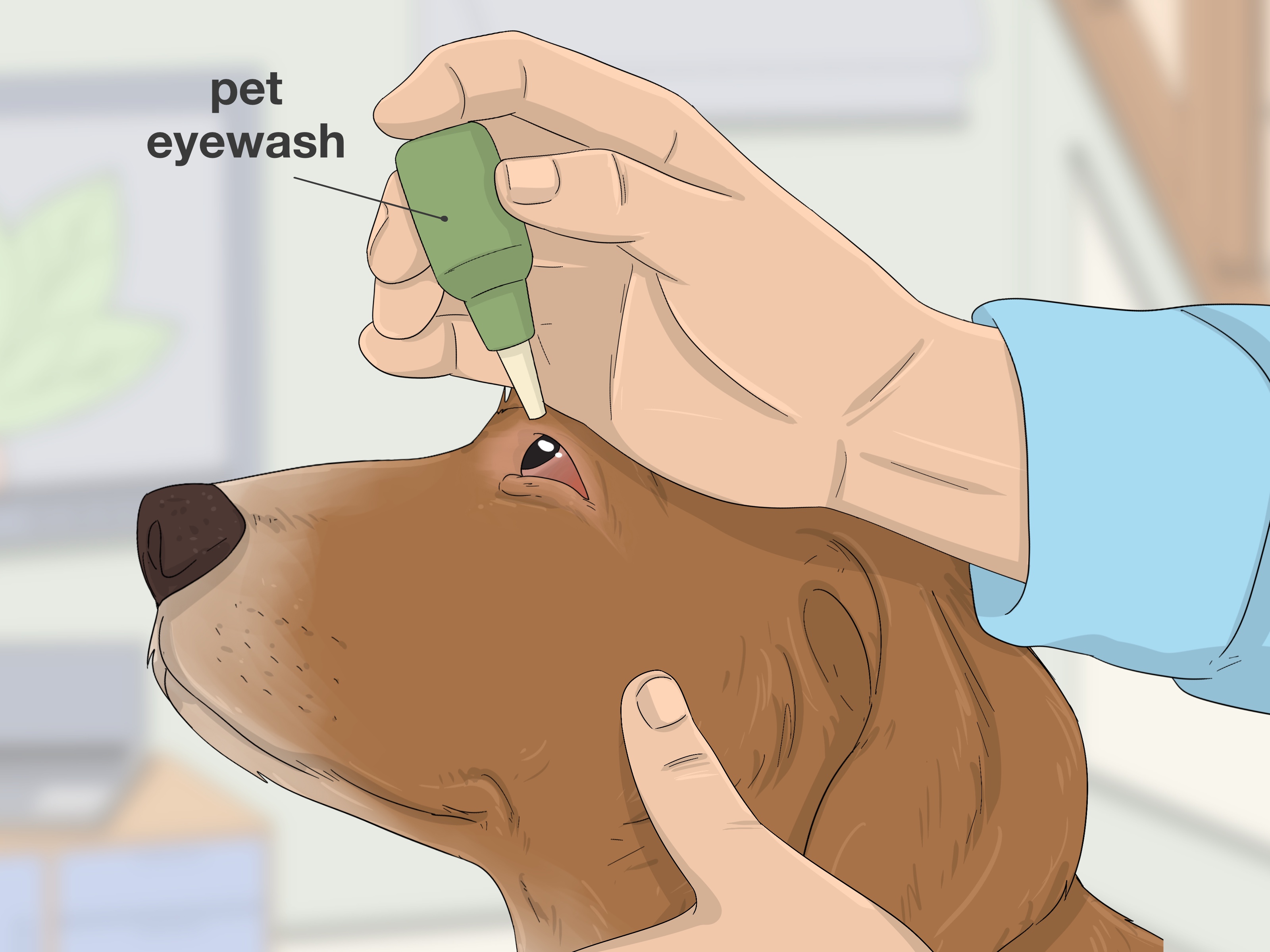
To rinse, hold the saline bottle nearbut not touchingthe eye and let the fluid flow gently across the surface. Do not force the eyelids open if your dog resists. If your dog is painful or panicking, stop and seek veterinary help. Safety beats stubbornness every time.
Step 5: Never Use Human Eye Drops or Old Pet Medication
This is one of the most important steps. Do not use human red-eye drops, leftover antibiotics, steroid eye drops, pain-relieving drops, essential oils, or over-the-counter ointments unless your veterinarian specifically prescribes or approves them. Some medications can delay healing, hide symptoms, or worsen a corneal ulcer.
Steroid-containing eye drops are especially risky when a corneal scratch or ulcer is present because they can slow healing and make infection more dangerous. The bottle may be small, but the consequences can be large. When in doubt, do not drip it out.
Step 6: Let the Vet Confirm the Scratch With an Eye Exam
At the clinic, your veterinarian may use a fluorescein stain test. This involves placing a special dye on the eye. If the cornea has a scratch or ulcer, the damaged area can glow bright green under blue light. Your vet may also check tear production, eye pressure, eyelids, eyelashes, and the third eyelid to look for underlying causes such as dry eye, glaucoma, foreign bodies, or abnormal lashes.
This exam matters because not every red or squinty eye is a simple scratch. Conditions such as glaucoma, uveitis, dry eye, infection, or a penetrating injury can look similar at home but require very different treatment. A correct diagnosis protects your dog’s comfort and vision.
Step 7: Use Prescribed Medication Exactly as Directed
For a superficial corneal abrasion or ulcer, your veterinarian may prescribe antibiotic eye drops or ointment to prevent infection, pain relief medication, lubricating drops, or atropine drops to reduce painful eye spasms. Some dogs need medication every few hours at first. Yes, this may temporarily turn your day into a tiny pharmacy internship.
Follow the schedule closely. Eye medications work best when used consistently. If you miss a dose, ask your veterinarian what to do rather than doubling up randomly. Also, finish the treatment plan even if the eye looks better. The surface may appear improved before it is fully healed.
Step 8: Keep the Cone On Until Your Vet Says Healing Is Complete
Your dog may look at you as if the cone is a personal betrayal. Stay strong. The cone prevents rubbing, scratching, and accidental trauma while the cornea heals. Many treatment failures happen not because the medicine did not work, but because the dog rubbed the eye and reopened the injury.
Make cone life easier by raising food and water bowls, guiding your dog through doorways, using a harness for walks, and keeping the environment calm. If your dog truly cannot manage the cone, ask your vet about alternatives. Do not switch to a soft collar without approval, because some soft collars do not protect the eye well enough.
Step 9: Return for Rechecks and Watch for Complications
Many simple scratches improve within a few days, but your veterinarian may want a recheck to confirm healing with another stain test. Do not skip this visit just because your dog has resumed barking at squirrels with full professional commitment. Corneal healing should be verified.
Call your vet immediately if symptoms worsen, the eye becomes cloudier, discharge increases, your dog seems more painful, the eye looks blue or white, or the scratch is not improving. Deep ulcers, infected ulcers, melting ulcers, and non-healing ulcers may require more advanced treatment, including referral to a veterinary ophthalmologist, protective contact lenses, specialized medications, or surgery.
What Your Veterinarian May Prescribe
Treatment depends on the severity and cause of the injury. Common options include:
- Antibiotic eye drops or ointments: Used to reduce the risk of bacterial infection.
- Pain control: Oral pain medication or anti-inflammatory medication may be prescribed.
- Atropine eye medication: Sometimes used to reduce painful spasms inside the eye.
- Lubricating drops: Helpful when dryness, exposure, or irritation contributes to the problem.
- E-collar: Essential for preventing self-trauma while healing.
- Surgery or specialist care: Needed for deep, infected, melting, or non-healing ulcers.
Your veterinarian may also treat the underlying cause. For example, dry eye may need long-term tear-stimulating medication. Abnormal eyelashes may need removal. Eyelid problems may require corrective procedures. Treating only the scratch without solving the cause can lead to repeat injuries, which is frustrating for everyone except maybe the cone manufacturer.
What Not to Do for a Dog Eye Scratch
Good intentions can accidentally make eye problems worse. Avoid these common mistakes:
- Do not use human eye drops unless your vet approves them.
- Do not use steroid drops on a suspected scratched eye.
- Do not let your dog rub the eye “just for a second.”
- Do not try to scrape, wipe, or remove embedded objects.
- Do not delay care if the eye is cloudy, painful, or discharging.
- Do not stop medication early without veterinary guidance.
- Do not assume a red eye is allergies when your dog is squinting.
How Long Does a Dog Eye Scratch Take to Heal?
Many uncomplicated superficial corneal scratches heal within several days with proper veterinary treatment and protection. Larger, deeper, infected, or non-healing ulcers take longer and may require more intensive care. Healing time also depends on your dog’s age, breed, tear production, eyelid shape, general health, and whether the cone stays on.
If the eye is not clearly improving within the timeline your veterinarian gives you, schedule a recheck. Corneas can look deceptively calm on the surface while deeper trouble is brewing. With eyes, “better safe than sorry” is not a clichéit is a vision-saving strategy.
When Is a Dog Eye Scratch an Emergency?
Seek urgent veterinary care if your dog has any of the following:
- The eye is held completely shut
- Severe squinting or obvious pain
- Thick yellow, green, or bloody discharge
- A cloudy, blue, white, or bulging eye
- A visible puncture, dent, or foreign object
- Sudden vision changes
- Trauma from a cat claw, thorn, bite, or accident
- Symptoms that worsen despite treatment
Emergency care is especially important for puppies, senior dogs, dogs with prominent eyes, and dogs with known eye disease. A small scratch may be manageable, but a deep ulcer can threaten the eye itself.
How to Give Your Dog Eye Drops Without Losing Your Dignity
Giving eye medication to a dog can feel like negotiating with a furry alligator. Try this method:
- Wash your hands.
- Have treats ready before the bottle appears.
- Position your dog facing away from you or sitting beside you.
- Gently support the head from under the chin.
- Hold the bottle above the eye without touching the eye surface.
- Apply the prescribed amount.
- Praise immediately and reward generously.
If you are using multiple eye medications, ask your vet how long to wait between them. Drops usually go in before ointments, but your veterinarian’s instructions should be the final word.
Prevention: How to Reduce Future Eye Scratches
You cannot bubble-wrap your dog, although some dogs seem determined to test the concept. You can reduce risk by keeping face hair trimmed, avoiding rough play with cats, checking the yard for thorny plants, using caution near tall grass, and protecting dogs from wind, dust, and debris during car rides. Never let your dog hang their head out of a moving car window; it may look cinematic, but airborne grit is not a great supporting actor.
Dogs with short faces or chronic eye issues may benefit from routine veterinary eye checks and daily lubricants if recommended. If your dog has repeated scratches, ask about underlying problems such as dry eye, abnormal eyelashes, eyelid rolling, or exposure-related irritation.
Real-Life Experience: What Caring for a Dog’s Scratched Eye Often Feels Like
If you have ever cared for a dog with an eye scratch, you know the experience comes in three emotional stages: panic, cone negotiations, and obsessive eye inspection. One minute your dog is happily sniffing a shrub; the next, they are squinting like they just read the fine print on a suspicious contract. The first instinct is to search online and hope the answer is “rinse it and relax.” The better instinct is to call the vet.
Many pet owners describe the same pattern. Their dog starts blinking or tearing after a walk, a wrestling match, a bath, or an enthusiastic meeting with a branch. At first, the eye may look only mildly red. Then the dog starts pawing at it, and suddenly the household enters emergency mode. The most helpful move is usually simple: stop the rubbing, put on a cone, and get professional guidance.
The cone is often the hardest part emotionally. Your dog may bump into walls, stare at you with Shakespearean sadness, or refuse to move for five minutes because life is apparently over. But most dogs adapt faster than owners expect. Raising bowls, clearing narrow pathways, and offering calm praise can make the adjustment smoother. The cone is not punishment; it is a temporary bodyguard for the eye.
Medication time can also become a mini routine. Some owners find success by pairing each dose with a high-value treat. Others ask a second person to help steady the dog. A calm voice matters. Dogs can sense when you approach with the energy of someone defusing a cartoon bomb. Move slowly, reward quickly, and avoid turning treatment into a chase scene. If your dog is too painful or fearful, call your vet for advice rather than forcing the issue.
One of the biggest lessons from real experience is that improvement can be subtle. The eye may open a bit more. Tearing may slow. Your dog may stop hiding. These are good signs, but they do not replace a recheck. A stain test can confirm whether the cornea has truly healed. Skipping that step is like declaring a cake done because the kitchen smells nice. Maybe it is ready; maybe the middle is still trouble.
Another common lesson: never underestimate how quickly dogs can undo progress. A single paw swipe, carpet rub, or enthusiastic face dive into bedding can irritate the healing cornea. That is why strict cone use matters, even when your dog gives you the “surely we are past this” look. Stay consistent until your veterinarian gives the all-clear.
The good news is that many simple dog eye scratches heal well when treated early. The best outcomes usually happen when owners act promptly, avoid unapproved drops, follow medication schedules, protect the eye, and return for rechecks. It is not glamorous, and yes, your dog may look like a satellite dish for a few days, but careful care can protect comfort, vision, and future squirrel-monitoring duties.
Conclusion
A scratch on your dog’s eye is not something to ignore, guess at, or treat with leftover drops from the back of the cabinet. The safest approach is to prevent rubbing, call your veterinarian promptly, avoid unapproved medications, follow the prescribed treatment plan, and keep the cone on until healing is confirmed. With fast care and a little patience, many superficial scratches heal welland your dog can return to their regularly scheduled program of sniffing, napping, and judging your snack choices.
Note: This article is for educational purposes only and does not replace veterinary diagnosis or treatment. If your dog has eye pain, cloudiness, discharge, trauma, or trouble opening the eye, contact a veterinarian or emergency veterinary clinic promptly.