Outdoor furniture has a glamorous job description: hold iced tea, host backyard dinners, support dramatic sunset lounging, and survive pollen, rain, barbecue sauce, sunscreen, bird “surprises,” and one mysterious sticky spot nobody will confess to making. By mid-summer, even the prettiest patio set can look like it spent spring break in a mud puddle.
The good news? Keeping outdoor furniture clean all summer is not about scrubbing for hours every Saturday while your neighbors enjoy lemonade. Cleaning pros rely on a simpler secret: clean lightly and often, use the right method for each material, and never let moisture and grime throw a tiny mildew party in your cushions. A few smart habits can keep your patio furniture looking guest-ready from Memorial Day through Labor Dayand beyond.
This guide breaks down the best way to clean outdoor furniture, patio cushions, outdoor tables, wicker chairs, metal frames, plastic resin pieces, wood furniture, and more. You will also find a practical summer maintenance routine, stain-specific tricks, common mistakes to avoid, and a real-life experience section for anyone who has ever looked at a patio cushion and whispered, “Were you always this color?”
The Real Secret: Maintenance Beats Rescue Cleaning
Ask a cleaning professional how to keep outdoor furniture clean, and the answer usually sounds suspiciously boring: do a little bit every week. But boring works. Dirt, pollen, food spills, body oils, sunscreen, and moisture become much harder to remove when they sit for days in the sun. Heat bakes grime onto hard surfaces. Humidity encourages mildew. Pollen clings to textured fabric like it signed a lease.
The best outdoor furniture cleaning routine is built around prevention. Brush off loose debris. Wipe surfaces before stains set. Dry cushions after rain. Cover furniture when it is not being used for several days. Store pillows before storms. These small moves take minutes and can save you from a full afternoon of scrubbing later.
The “Two-Minute Patio Reset”
Here is the easiest pro habit to steal: every time you finish using your outdoor seating area, do a quick reset. Shake crumbs from cushions, wipe tabletops, stand wet cushions upright, and move pillows into a deck box or covered area. It is not glamorous, but neither is discovering mildew on your favorite navy cushions right before guests arrive.
Start With the Universal Cleaning Kit
You do not need a garage full of specialty cleaners to keep patio furniture clean. For most summer messes, cleaning pros reach for gentle tools first. The goal is to remove dirt without damaging finishes, scratching plastic, stripping wood, or weakening outdoor fabric coatings.
Basic Supplies for Outdoor Furniture Cleaning
- Soft-bristle brush
- Microfiber cloths
- Bucket of warm water
- Mild dish soap or gentle detergent
- Garden hose with spray nozzle
- Handheld vacuum or shop vacuum
- White vinegar for certain plastic or mildew-prone surfaces
- Oxygen bleach for many washable fabrics, when care labels allow
- Protective gloves
- Furniture covers or breathable cushion storage
Always test any cleaning solution on a hidden area first. Outdoor furniture materials vary widely, and a cleaner that works beautifully on resin may be too harsh for natural wicker or unfinished wood. Also, follow the care label or manufacturer’s instructions whenever available. The tag may be tiny, faded, and emotionally unhelpfulbut it still matters.
How to Clean Outdoor Cushions Without Ruining Them
Outdoor cushions are usually the first pieces to look tired because they absorb everything summer throws at them: pollen, sweat, spilled drinks, sunscreen, dust, and rainwater. Cleaning pros recommend removing loose dirt before adding water. Otherwise, you may create what can only be described as patio mud soup.
Step-by-Step Cushion Cleaning
- Vacuum or brush first. Use an upholstery attachment or soft brush to remove dust, pollen, leaves, and crumbs from seams and crevices.
- Check the care label. If covers are removable and machine washable, wash them according to the label. Close zippers first and air dry.
- Mix a gentle solution. Combine warm water with a small amount of mild dish soap or laundry detergent.
- Scrub gently. Use a soft-bristle brush and clean the entire cushion surface, not just the stain, to avoid water rings.
- Rinse thoroughly. Soap residue attracts dirt, so rinse with a garden hose until the water runs clear.
- Dry completely. Stand cushions on their sides in a sunny, well-ventilated spot. Never store damp cushions unless you are trying to grow a science project.
For mildew on outdoor performance fabrics, some manufacturers allow a diluted bleach-and-soap solution, especially on solution-dyed acrylic fabrics. However, never assume bleach is safe for every cushion. Read the care instructions first, protect your hands and eyes, work in fresh air, and never mix bleach with ammonia, vinegar, or other cleaners.
How to Clean Plastic and Resin Patio Furniture
Plastic and resin furniture are summer heroes because they are lightweight, affordable, and generally easy to clean. They are also prone to dullness, chalky residue, and stains if neglected. The good news is that mild soap and warm water handle most grime.
Best Method for Plastic Chairs and Tables
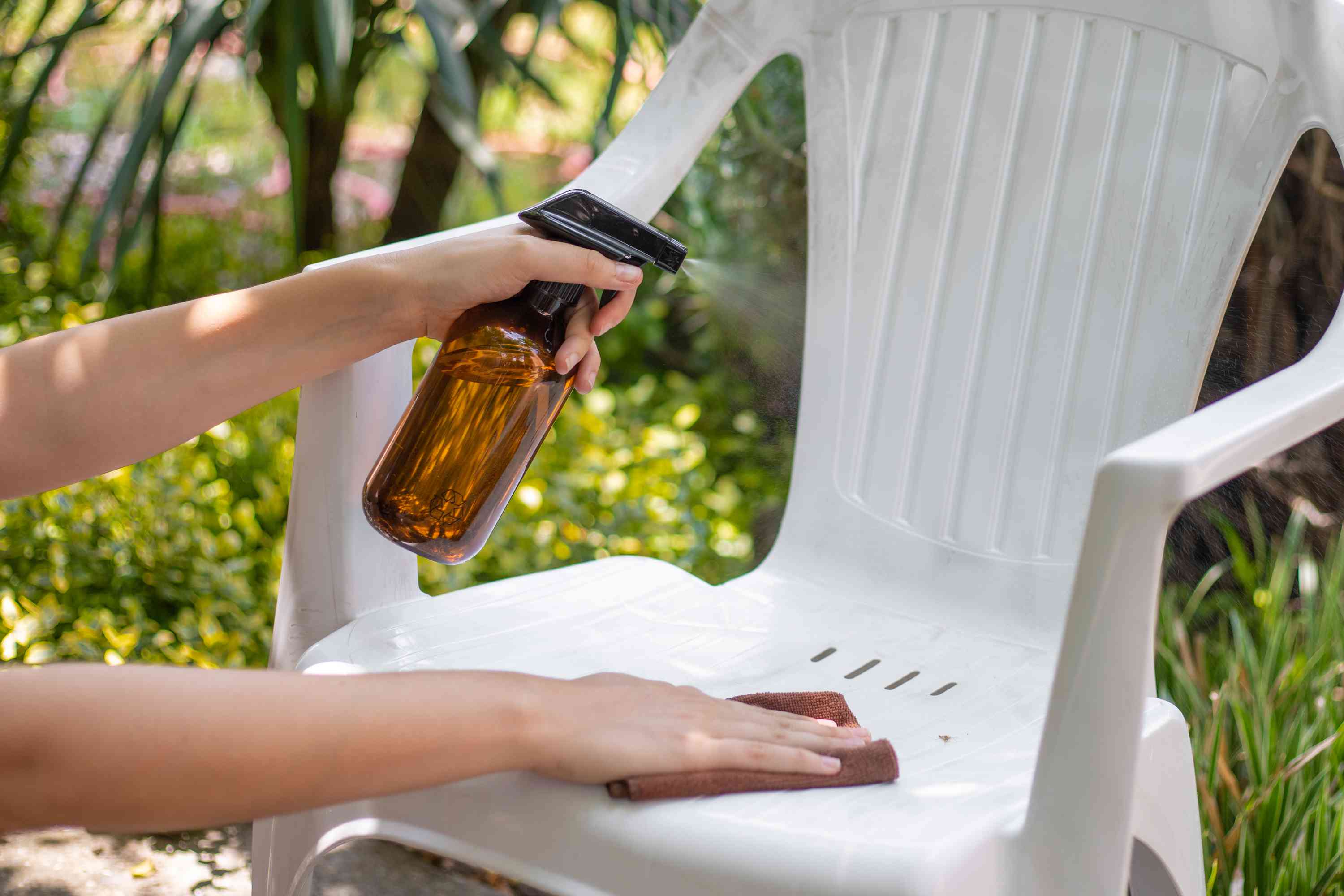
Brush or wipe away loose debris, then scrub the furniture with warm water and mild dish soap. Use a soft cloth or soft-bristle brush rather than an abrasive pad, which can scratch the surface. Rinse thoroughly and let everything air dry.
For dingy white plastic, a paste-like mixture of baking soda and water can help lift grime gently. For mildew-prone plastic, a vinegar-water solution may help freshen the surface. Avoid harsh scouring powders and stiff metal brushes, because scratches create tiny dirt traps that make future cleaning harder.
How to Clean Metal Outdoor Furniture
Aluminum, steel, and wrought iron furniture can last for years when cared for properly, but moisture and scratches can invite corrosion. The cleaning rule is simple: wash gently, rinse well, and dry thoroughly.
Metal Furniture Cleaning Tips
Use mild soap and warm water with a cloth or soft brush. Pay attention to joints, scrollwork, bolt areas, and undersides where dirt and moisture hide. Rinse clean and dry with a towel when possible. If you notice chipped paint or exposed metal, touch it up promptly with an outdoor-safe finish to help prevent rust.
For powder-coated aluminum, avoid abrasive pads and aggressive cleaners. The protective coating is part of the furniture’s defense system. Treat it kindly, and it will return the favor by not turning into a rusty patio fossil.
How to Clean Wood Patio Furniture
Wood outdoor furniture brings warmth and character to a patio, but it needs a gentler touch than plastic or metal. Teak, eucalyptus, cedar, acacia, and other outdoor woods can react differently to cleaners, oils, and sealants, so care instructions matter.
Wood Cleaning Method
Start by brushing off loose dirt. Mix warm water with a mild oil-based soap or gentle wood-safe cleaner. Scrub lightly with the grain using a soft brush. Rinse with clean water, but do not soak the wood unnecessarily. Let it dry completely before applying oil, sealant, or protective finish.
Avoid pressure washing soft or weathered wood furniture. High pressure can raise the grain, strip finishes, and create rough surfaces. If your wood furniture looks gray, that may be natural weathering rather than dirt. Cleaning can freshen it, but restoring color may require sanding and oiling.
How to Clean Wicker and Rattan Furniture
Wicker can be natural or synthetic, and the difference matters. Synthetic resin wicker is generally more forgiving. Natural wicker and rattan are more delicate and can be damaged by too much water or harsh pressure.
For Synthetic Wicker
Use a vacuum or soft brush to remove debris from woven crevices. Wash with mild soap and warm water, using a soft brush to reach between strands. Rinse gently and let it dry fully before replacing cushions.
For Natural Wicker or Rattan
Use less water. Wipe with a damp cloth and mild soap solution, then dry quickly. Avoid soaking, pressure washing, or leaving natural wicker exposed to long periods of rain. If your furniture creaks like it is telling ghost stories, it deserves a covered area.
What About Pressure Washing Outdoor Furniture?
Pressure washing can be useful for some sturdy outdoor furniture frames, hard patios, and certain synthetic materials, but it is not a universal cleaning shortcut. In fact, it can damage cushions, natural wicker, wood finishes, loose paint, and delicate joints.
If a manufacturer allows pressure washing, use the lowest effective setting, a wide-angle nozzle, and plenty of distance. Keep the spray moving. Do not blast seams, fabric edges, peeling paint, or soft materials. When in doubt, choose a garden hose, soap, and a brush. Your furniture does not need a water cannon duel.
How to Remove Common Summer Stains
Summer stains have personality. Some are greasy, some are colorful, and some arrive from birds with suspicious accuracy. The faster you treat stains, the better your odds of removing them completely.
Pollen
Do not immediately wet heavy pollen. First, brush or vacuum it away while dry. Water can smear pollen into fabric and make yellow stains worse. After removing the loose layer, clean with mild soap and water, rinse well, and air dry.
Bird Droppings
Let the mess dry if it is very wet, then scrape gently with a plastic edge. Clean the area with mild soap and warm water. Rinse thoroughly. For fabric, clean the entire cushion panel if needed to prevent spotting.
Sunscreen and Body Oil
Sunscreen stains are sneaky because they can leave greasy marks. Blot excess residue, apply a small amount of mild detergent, work it in gently with a soft brush, and rinse well. Avoid rubbing aggressively, which can spread the stain or damage fabric texture.
Food and Drink Spills
Blot first. Do not grind salsa, chocolate, wine, or soda deeper into the fabric. Use mild soap and water for general cleaning. For removable covers, pretreat stains before washing according to the care label.
Mold and Mildew
Mold and mildew thrive where moisture lingers. For hard, nonporous surfaces, scrub with detergent and water, then dry completely. For outdoor fabric, use the method recommended by the fabric manufacturer. Some performance fabrics tolerate diluted bleach solutions; others do not. Safety comes first: never mix cleaning chemicals, and rinse thoroughly after treatment.
The Weekly Summer Furniture Cleaning Routine
A weekly routine keeps your patio from sliding into chaos. It does not need to be complicated. Think of it as a spa day for your furniture, minus the cucumber water.
Once a Week
- Shake out cushions and pillows.
- Brush or vacuum fabric surfaces.
- Wipe tabletops, armrests, and chair backs.
- Check under cushions for trapped leaves or crumbs.
- Stand cushions upright after rain or heavy humidity.
- Spot clean spills immediately.
Every Two to Four Weeks
- Wash hard furniture frames with mild soap and water.
- Rinse furniture thoroughly with a garden hose.
- Deep clean cushions if they look dull or smell musty.
- Inspect metal furniture for rust or chipped coating.
- Clean furniture covers and let them dry fully.
After Heavy Rain or Storms
- Remove wet cushions from frames.
- Stand cushions on edge for airflow.
- Wipe standing water from tables and chairs.
- Check for mud splashes and leaf stains.
- Let everything dry before covering or storing.
Furniture Covers: Helpful, but Not Magic
Furniture covers are one of the smartest investments for keeping outdoor furniture clean all summer. They reduce sun exposure, pollen buildup, rain saturation, bird messes, and general dirt. However, covers must be used correctly.
Choose breathable, water-resistant covers that fit properly. A cover that traps moisture can encourage mildew. Before covering furniture, make sure cushions and frames are dry. After storms, lift covers to release trapped humidity. If you cover damp cushions and walk away for a week, do not be shocked when the cushions smell like a basement with ambition.
Common Outdoor Furniture Cleaning Mistakes
Even well-meaning homeowners can accidentally shorten the life of their patio furniture. The biggest mistakes usually come from using too much force, too much water, or the wrong cleaner.
Using Harsh Chemicals on Everything
Bleach, ammonia, acidic cleaners, and strong degreasers are not universal solutions. Some can discolor fabric, damage finishes, or create dangerous fumes when mixed. Use gentle cleaners first and always follow label directions.
Skipping the Rinse
Soap residue attracts dirt. If your furniture looks clean for one day and sticky the next, leftover cleaner may be the culprit. Rinse thoroughly after washing.
Storing Cushions While Damp
This is the fast lane to mildew. Cushions should be completely dry before being placed in a deck box, storage bag, garage, or covered stack.
Scrubbing Too Hard
Aggressive scrubbing can fuzz fabric, scratch plastic, strip paint, and damage wicker. Let the cleaning solution do some work, then scrub gently.
Ignoring the Undersides
Pros clean the places guests do not see. Undersides of chairs, table legs, cushion bottoms, and hidden crevices collect grime and moisture. Clean them occasionally to prevent bigger problems.
How to Keep Outdoor Furniture Cleaner Longer
The best cleaning strategy is to make dirt work harder. Place outdoor furniture away from sprinkler spray when possible. Trim overhanging branches that drop sap, pollen, or leaves. Use outdoor rugs that can be hosed clean. Keep a small brush or microfiber cloth near the patio so quick cleanups feel effortless.
If your furniture is near a pool or hot tub, rinse it more often. Chlorine and other pool chemicals can settle on frames and fabrics. If your patio sits under trees, expect more pollen, sap, and bird activity. If you grill nearby, prepare for grease film on tables and chair arms. Your environment determines your cleaning schedule.
Experience Section: What Actually Works in Real Summer Life
Here is the honest truth from real outdoor living: the furniture that stays clean is not always the most expensive set. It is the set that gets attention before it looks disastrous. A patio can go from “magazine-ready” to “abandoned campground” in one humid week if rainwater, pollen, and snack crumbs sit untouched.
One practical experience many homeowners share is that cushions dry faster when they are stood upright instead of left flat on the chair. It sounds too simple to matter, but it makes a huge difference. Flat cushions hold moisture against the seat frame, especially around seams and zippers. Upright cushions get airflow on both sides, which helps prevent that musty smell that announces itself the moment someone sits down.
Another lesson: dry brushing pollen before washing is a game changer. Many people see yellow dust and immediately reach for the hose. That often turns pollen into a streaky paste, especially on dark cushions and textured wicker. A soft brush, handheld vacuum, or even a clean microfiber cloth removes most of it before water ever gets involved. Then soap and water can handle the residue without creating a bigger mess.
Furniture covers also work best when they become part of a routine rather than an emergency response. Covering furniture before a week of storms is smart. Covering damp furniture after a storm is not. The better habit is to let pieces dry in the sun, then cover them before the next round of weather. If you live somewhere humid, lifting the cover every few days for airflow can help prevent trapped moisture.
For families with kids, pets, or frequent guests, a “spot-clean station” can save the season. Keep a small basket near the patio door with microfiber cloths, a soft brush, and a spray bottle of mild soapy water. When someone drops a popsicle, spills lemonade, or leaves a sunscreen handprint on the armrest, cleanup happens immediately. Without that basket, everyone says, “I’ll clean it later,” which is the official slogan of permanent stains.
People with white or light-colored furniture often learn that frequent gentle cleaning beats occasional aggressive cleaning. White resin chairs, pale cushions, and cream umbrellas show every speck of dust. Waiting too long may tempt you to use stronger cleaners or scrub harder, but that can dull surfaces and wear fabrics. A weekly wipe keeps light furniture looking intentional instead of regretful.
Wood furniture teaches patience. It may not look brand-new forever, and that is okay. Teak and other outdoor woods often develop a silvery patina. Some owners love it; others prefer a richer tone and use appropriate oils or sealants. The key is cleaning before protecting. Applying oil or sealant over dirt traps grime and leads to uneven results. A clean, dry surface is the foundation of good wood care.
Finally, the biggest real-world secret is accepting that outdoor furniture lives outdoors. It will collect dust. A bird will eventually target your favorite chair with suspicious precision. Rain will arrive right after you fluff the pillows. The goal is not perfection. The goal is a patio that is easy to refresh, comfortable to use, and clean enough that guests can sit without checking their shorts afterward. With a light weekly routine, smart drying habits, and the right cleaner for each material, your outdoor furniture can stay summer-ready with far less drama.
Conclusion: A Clean Patio Is a Summer Superpower
Keeping outdoor furniture clean all summer is less about heroic deep-cleaning and more about steady, simple care. Brush off debris before it settles. Wash frames with mild soap and water. Clean cushions before stains set. Dry everything completely. Use covers wisely. Match the cleaning method to the material. That is the pro-approved formula.
When you treat outdoor furniture like part of your living space, it rewards you with more comfortable mornings, better backyard dinners, and fewer moments of panic before guests arrive. Your patio does not need to be perfect. It just needs a rhythm. A few minutes here and there can keep your outdoor chairs, cushions, tables, and loungers looking fresh all seasonno industrial-strength scrubbing marathon required.