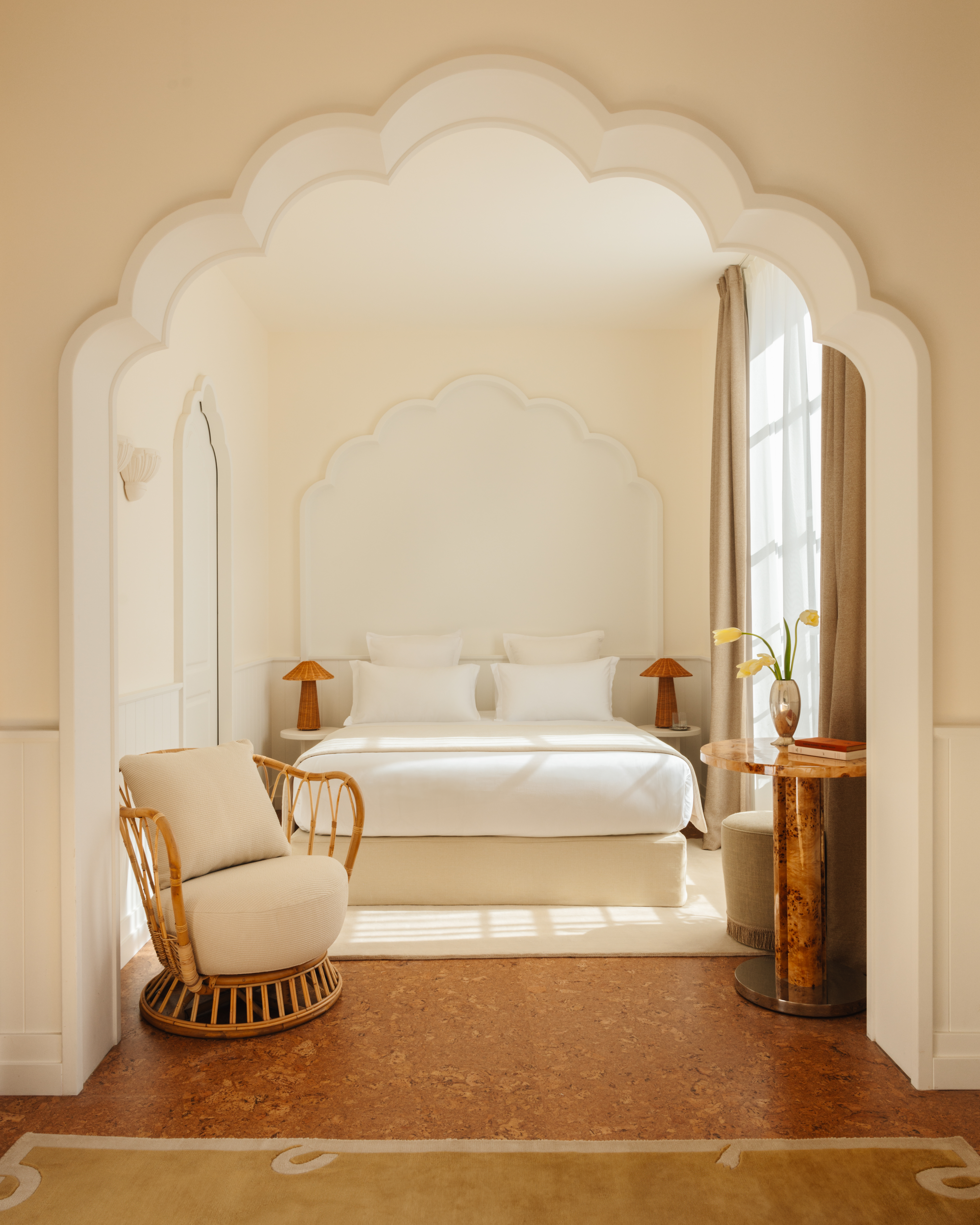
Some hotel rooms are designed to help you sleep. Others make you reconsider every questionable decorating decision you have made since acquiring a credit card. The bedrooms at Hotel Lilou in Hyères, France, manage to do both.
Set inside a restored late-19th-century hotel on the French Riviera, Lilou combines butter-soft color, crisp architectural details, woven furniture, polished cork, sculptural lighting, and just enough pattern to keep the room from becoming a beige waiting room. The 37-room property was redesigned by Paris-based Studio Haddou Dufourcq, which drew inspiration from Hyères’ glamorous resort history, Mediterranean architecture, and the building’s changing natural light.
The good news is that you do not need a plane ticket, a historic French building, or a view of palm trees to capture the mood. The Hotel Lilou bedroom look can be recreated through a handful of thoughtful choices: warm off-white paint, tonal trim, natural textures, curving silhouettes, small-scale furniture, and lighting that makes everyone look as though they have recently returned from a relaxing vacation.
Why the Hotel Lilou Bedroom Looks So Current
Hotel Lilou is difficult to label, which is part of its charm. It is not purely Art Deco, strictly Mediterranean, conventionally minimalist, or aggressively bohemian. Instead, its rooms mix references from several periods while keeping the palette controlled and the atmosphere calm.
That combination aligns neatly with the direction of contemporary bedroom design. Warm minimalism, earthy colors, soft curves, natural materials, layered lighting, and personal details are replacing the colder gray-and-white interiors that dominated the previous decade. Designers are also favoring rooms that feel collected rather than purchased as a perfectly matched furniture set.
It is neutral without being bland
The room’s foundation is composed of cream, ivory, pale yellow, sand, straw, and caramel. These colors sit close together, creating a tone-on-tone effect. Contrast comes from texture and shape instead of dramatic color changes.
This approach is especially effective in a bedroom because it reduces visual noise while preserving depth. The white bedding appears brighter against warm walls, woven lamps cast patterned shadows, and darker wood grain provides a small but important visual anchor. Neutral rooms work best when they combine matte and reflective surfaces, varied textiles, different wood tones, and subtle shifts between warm and cool shades.
It mixes eras without looking like a costume set
The oversized circular mirror feels glamorous and slightly theatrical. The white wall sconces recall seashells or stylized fans. Rattan furniture introduces a relaxed 1970s note, while geometric moldings and latticework reference Moorish and Art Deco design. The resulting room feels historic but not preserved in amber.
The secret is repetition. Curves appear in the mirror, chair, lamps, and decorative objects. Warm neutrals repeat across the walls, flooring, rug, and bedding. Because the forms and colors speak to one another, the mixture of periods feels intentional rather than accidental.
Start with the Warm, Sun-Washed Color Palette
The most recognizable Hotel Lilou bedrooms use a pale, creamy backdrop that changes character throughout the day. In morning light, the walls appear almost white. In warmer afternoon light, their yellow undertones become more noticeable. The effect is sunny, but never lemon-meringue loud.
Choose a subtle butter-white for the walls
A warm off-white is safer and more versatile than saturated yellow. Remodelista identified Benjamin Moore Milkyway as a close visual match for Lilou’s pale walls. Benjamin Moore describes the shade as a bright white with warmth and gives it a high light-reflectance value, making it useful for creating an airy room without resorting to chilly blue-white paint.
Always test the color on multiple walls before committing. A creamy paint can look pleasantly golden beside a sunny window and oddly green beneath a cool LED bulb. Paint at least two sample boards, move them around the room, and inspect them in the morning, afternoon, and evening. It is not indecision; it is responsible adult supervision for paint.
Use a cleaner white on trim and architectural details
The Hotel Lilou look depends on quiet contrast between the wall color and its moldings, paneling, or lattice. A slightly cleaner white makes those details visible without outlining the room like a coloring book.
Benjamin Moore Simply White is one possible companion. It retains a hint of warmth while appearing crisp enough to distinguish trim from creamy walls.
Add caramel and ocher in small doses
Use richer yellow-brown tones on a throw, rug border, pillow, bench, or small lampshade. These accents prevent the pale palette from floating away. A butterscotch blanket folded across the foot of the bed is often enough; there is no need to introduce nine mustard pillows and a sunflower mural.
Create Architectural Interest Behind the Bed
The walls at Lilou do more than hold paint. Depending on the room, they may feature exaggerated molding, Moorish-inspired arches, natural straw wallcovering, or painted latticework. These architectural elements supply pattern while remaining nearly monochromatic.
Option one: build a simple molding grid
For the easiest interpretation, install narrow decorative molding in rectangular panels behind the bed. Paint the molding and wall in related shades rather than using a sharply contrasting color. This gives a builder-grade room the elegance of custom millwork without forcing it to wear a tuxedo every day.
Keep the layout symmetrical around the bed. A large central panel can frame a circular mirror, while narrower panels on either side create natural positions for sconces or bedside tables.
Option two: use lattice as a tonal feature
Painted lattice or trellis panels are a stronger reference to Hotel Lilou. Use them across an entire headboard wall or inside framed sections. A cream-on-cream finish keeps the pattern sophisticated and prevents the room from wandering into garden-center territory.
Renters can approximate the effect using removable geometric wallpaper, peel-and-stick trim, or a lightweight decorative screen secured safely behind the bed.
Option three: add one generous round mirror
A large round mirror provides the room’s most memorable curve. Position it above the headboard, making sure it is securely anchored and scaled to the bed. For a queen-size bed, a mirror approximately 36 to 48 inches wide usually creates presence without overwhelming the wall.
The frame should be simple. White, ivory, pale wood, or plaster-like finishes work better than ornate metallic frames. The goal is Riviera confidence, not ballroom cosplay.
Layer Natural Materials for a Collected French Riviera Feel
Lilou’s rooms demonstrate why a limited palette needs varied materials. Cork, rattan, burl wood, woven fibers, wool, plaster, cotton, and natural wallcoverings each reflect light differently. Together, they make the room feel tactile and comfortably imperfect.
Consider cork flooring or a cork-look alternative
Polished cork appears in Hotel Lilou’s rooms, where it adds warmth underfoot without introducing a busy grain. Remodelista also highlights cork as a defining material in the bedroom.
Real cork has a soft, slightly springy character, but replacing a floor is not required. A cork-toned rug, warm oak flooring, or resilient flooring in a fine natural pattern can produce a similar visual effect. Avoid gray-washed planks; they fight the room’s sunny undertones.
Bring in one sculptural rattan chair
The Grace Lounge Chair used at Hotel Lilou has broad curves, flexible rattan loops, and a generously cushioned seat. It brings outdoor texture into the bedroom while remaining elegant enough for a design hotel.
For a less expensive interpretation, search for a low rattan lounge chair with an open frame and rounded arms. The Tulum Lounge Chair from West Elm is one example of the general silhouette, combining woven rattan with substantial cushions.
Do not crowd a small room merely because photographs contain a chair. A compact woven stool or rattan bench can deliver the same material story with fewer bruised shins.
Use burl wood as the polished accent
Burl wood has a swirling grain that looks decorative even when used on a simple shape. At Lilou, petite burl tables add richness beside woven and upholstered pieces. A narrow pedestal drink table, such as Crate & Barrel’s Fleur design, captures the spirit without requiring a full burl dresser.
Because burl has a visually active grain, one or two pieces are sufficient. Too much burl can make a bedroom look as though it has been invaded by very glamorous tree stumps.
Make the Bed Crisp, Low-Key, and Luxurious
The bed should look generous but not overdecorated. Begin with white or ivory sheets, a white duvet, and two or four substantial sleeping pillows. Add one lightweight coverlet or cotton throw in sand, honey, or butterscotch.
Skip the mountain of decorative pillows. Hotel Lilou’s calm depends on allowing the architecture and natural materials to remain visible. Two small accent pillows are plenty, and even those should be textural rather than covered in loud motifs.
Choose an upholstered bed with a quiet profile
A pale upholstered bed visually merges with the linens and walls, making the room feel larger. Remodelista suggests Article’s Bjorn upholstered bed as a look-alike because its ivory upholstery, pale wood, and integrated nightstands create a similarly restrained composition.
You can also adapt an existing bed by installing a simple wall-mounted upholstered headboard in cream linen. Keep the profile low enough that the mirror or wall treatment remains the star.
Anchor the arrangement with a warm rug
A rug in pale yellow, sand, or muted ocher adds softness and completes the tonal palette. The Loops rug identified in Remodelista’s sourcing guide combines yellow wool with an organic border motif, reinforcing the room’s preference for gentle geometry.
For a budget version, look for a low-contrast wool or wool-blend rug with a simple frame, border, or irregular line. Position it beneath the lower two-thirds of the bed so that the rug extends comfortably on both sides.
Use Small Lamps Instead of One Harsh Ceiling Light
Lighting is where the room moves from “nice beige bedroom” to “somebody bring me an espresso and a linen robe.” Hotel Lilou mixes decorative sconces with woven table lamps that cast a soft, localized glow.
Layered bedroom lighting is both functional and atmospheric. Designers increasingly combine sconces, bedside lamps, and dimmable overhead fixtures so a bedroom can shift from dressing and reading to winding down. Petite lamps are also being used as decorative objects that create warm pockets of light without dominating the room.
Add sculptural white sconces
Look for fan-shaped, shell-like, pleated, or plaster wall sconces. White fixtures provide enough relief to catch shadows while blending with the trim. Hardwired sconces create the cleanest result, but plug-in versions can offer the same look with less electrical drama.
Choose a woven bedside lamp
A petite rattan lamp introduces texture and filters light through its weave. The hand-braided Dou Table Lamp from Ferm Living, available through Lumens, is a close stylistic match because its geometric form and natural material produce a soft, patterned glow.
Use warm-white bulbs and place the lamp on a small circular table. Avoid oversized lamps with large opaque shades, which can make compact nightstands feel crowded.
A Practical Shopping Plan for Stealing the Look
You do not need to purchase every exact piece. In fact, hunting for comparable shapes and materials usually creates a more personal room. Divide the project into four layers.
Layer one: the background
- Warm off-white wall paint
- Cleaner white trim or molding
- Simple wall panels, lattice, or one oversized round mirror
- Warm wood, cork, or a natural-toned floor covering
Layer two: the large furniture
- Low upholstered bed in ivory, oatmeal, or cream
- One rattan lounge chair, woven bench, or compact stool
- Small circular nightstands instead of bulky matching chests
Layer three: the textiles
- Crisp white bedding
- Sand or honey-colored throw
- Warm yellow or beige rug with a restrained border
- Full-height curtains in unbleached linen or soft ivory
Layer four: the finishing details
- White sculptural sconces
- Woven table lamp
- One burl wood accent
- A pair of simple ceramic vessels
- A small artwork, book, or object connected to travel
Spend most of the budget on the element that affects daily comfort, usually the mattress, bedding, or chair. Paint, mirrors, lamps, and vintage side tables can be sourced inexpensively. A room feels luxurious when the proportions and materials are right, not when every receipt causes emotional damage.
Common Mistakes to Avoid
Using stark white everywhere
Pure white walls, blue-white bulbs, and gray flooring will erase the sun-washed warmth that defines the look. Choose whites with cream, yellow, or beige undertones and confirm them under the room’s actual lighting.
Turning “Mediterranean” into a theme
Avoid filling the room with seashell art, anchors, blue stripes, miniature boats, or signs announcing that you are at the beach when you are clearly three hours from it. Hotel Lilou suggests place through texture, architecture, and light rather than souvenir-shop symbols.
Buying too many woven objects
Rattan is effective because it contrasts with smooth plaster, crisp cotton, and polished wood. When the bed, chair, dresser, mirror, lamps, baskets, and wastebasket are all woven, the room begins resembling an extremely comfortable hamper.
Ignoring negative space
Lilou’s bedrooms leave surfaces comparatively clear. Give the mirror, chair, sconces, and lamp enough breathing room to be noticed. Edit bedside clutter to a book, a small vessel, and whatever prevents you from stepping on your phone charger at midnight.
Why This Bedroom Style Has Staying Power
The Hotel Lilou bedroom feels fashionable, but it is built from elements that age well: warm whites, natural fibers, well-proportioned furniture, traditional molding, rounded shapes, and lighting chosen for atmosphere rather than spectacle.
Its strongest lesson is not that every bedroom requires a specific designer chair or exact paint color. It is that a restful room can still have character. Instead of relying on bold wallpaper or a trendy color explosion, Lilou creates interest through gentle contrasts: smooth against woven, curved against rectangular, pale against golden, historic against modern.
Recreate that balance and your bedroom can feel connected to the French Riviera without becoming a copy. It will be warm, tactile, uncluttered, and quietly glamorousthe decorative equivalent of someone who looks effortlessly elegant and refuses to explain where the jacket came from.
The Hotel Lilou Bedroom Experience: What You Notice Over Three Days
The best way to understand this look is to consider how it would feel to live with it rather than merely photograph it. On the first day, the color palette makes the strongest impression. The walls do not immediately read as yellow. They appear creamy, soft, and unusually responsive to daylight. Morning sun brings out a faint buttery glow, while evening light deepens the room toward biscuit and sand. The space changes without anyone moving a cushion, which is the kind of decorating efficiency we should all aspire to.
The restrained bedding also feels different from the heavily styled beds commonly seen online. There are fewer decorative pillows to remove, stack, drop, and eventually resent. White linens make the bed look fresh, while a single warm throw introduces enough color to prevent sterility. Because the palette is quiet, the texture of cotton, wool, rattan, and cork becomes more noticeable. You begin paying attention to how materials feel, not merely whether they match.
By the second day, the smaller design decisions become more important. A woven bedside lamp produces a softer transition into evening than a bright ceiling fixture. Light passing through rattan creates tiny bands and flecks across the wall, turning an ordinary corner into something atmospheric. The round mirror reflects the window and expands the room visually, but its curved outline also softens the rectangular geometry of the bed and wall panels.
The furniture encourages slower behavior. A rattan lounge chair is not a place where you balance a laptop, answer twelve emails, and accidentally begin reorganizing a spreadsheet. It is a place for reading, drinking coffee, or staring thoughtfully into the middle distance. Hotel Lilou reinforces that slower rhythm by leaving televisions out of its guest rooms, a deliberate choice intended to encourage disconnection and conversation.
You do not have to remove your television permanently to borrow the idea. Try keeping it concealed, relocating it from the main sightline, or spending one weekend without turning it on. The room’s visual calm becomes easier to appreciate when the largest black rectangle in the space is not delivering breaking news, advertisements, and an urgent recommendation to watch another crime documentary.
On the third day, the design begins to feel less like a hotel theme and more like a practical system. Small tables keep the floor open. Limited colors make it easier to add or remove accessories. Natural materials disguise minor wear better than glossy, highly manufactured finishes. The absence of excessive decoration makes cleaning simpler, while the architectural wall treatment means the room still looks finished when surfaces are nearly empty.
This is the real experience worth stealing from Hotel Lilou: not a catalog of exact products, but a bedroom that rewards attention. It feels comfortable in daylight, flattering at night, and interesting without being restless. Recreating it at home may begin with paint and a woven lamp, yet the larger result is behavioral. The room invites you to put down the phone, dim the lights, open a book, and let your bedroom act like a bedroom again. Revolutionary, apparently.
Note: Product availability, dimensions, finishes, and pricing can change. Use the named pieces as visual references and verify samples, measurements, electrical requirements, and installation methods before purchasing.