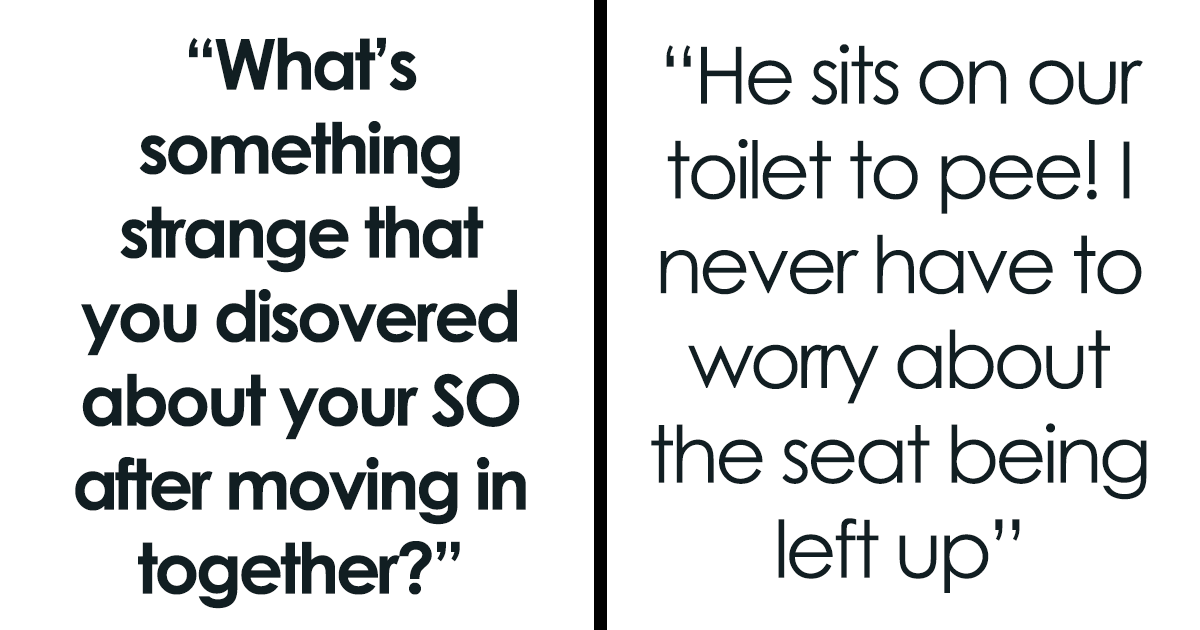
Moving in together is supposed to be romantic. You picture candlelit dinners, lazy Sunday cuddles, and the occasional adorable grocery run where one of you insists on buying “just a few snacks” and comes home with enough chips to survive a minor apocalypse. Then real life arrives, drops a wet towel on the bed, leaves cereal bowls in the sink, and reveals that your soulmate may actually be a tiny, lovable chaos goblin.
That is the wild magic of cohabitation. Dating lets people see each other in curated episodes. Living together gives you the full season, the bloopers, the director’s cut, and the deleted scenes nobody asked for. Suddenly, you learn how your partner handles mess, money, sleep, stress, bathroom privacy, food storage, and whether they treat a dishwasher like a machine or a philosophical suggestion.
This article explores the weird, funny, and genuinely shocking things people often discover only after moving in together. Some are harmless quirks. Some are yellow flags waving aggressively in the wind. And some are the kind of discoveries that make you stare into the middle distance while holding a sponge, wondering how one grown adult can create that much laundry in 48 hours.
Why Moving In Together Reveals the Real Person
Sharing a home turns abstract compatibility into practical reality. It is one thing to say, “We communicate well.” It is another to discuss why there are six empty water glasses on the nightstand and why someone believes “clean enough” is a valid sanitation standard. Cohabitation uncovers daily systems: who notices the mess, who replaces toilet paper, who budgets responsibly, who says they are “five minutes away” while still in a towel.
In other words, living together is less about grand romance and more about repeated habits. Tiny routines become big truths. The good news is that these discoveries can create deeper understanding. The bad news is that they can also reveal your partner eats shredded cheese straight from the bag at 2 a.m. like a suspicious raccoon in gym shorts.
35 Weird And Shocking Things People Discovered After Moving In Together
1. They whisper-talk to themselves all day long.
You thought they were calm and mysterious. Turns out they narrate every household task like a nature documentary. “Now we approach the pantry… searching for crackers… yes, excellent.”
2. They have one plate, one fork, and one mug they trust with their life.
The rest of the kitchenware may as well be decorative museum pieces. Their emotional support mug has seniority over the relationship.
3. Their definition of “clean” is deeply experimental.
Some people sanitize countertops. Others wipe one visible crumb and declare victory. This is how domestic legends are born.
4. They leave cabinet doors open like they are setting a trap.
You enter the kitchen and suddenly feel like you are in a low-budget obstacle course designed by confusion itself.
5. They sleep like a haunted Victorian child.
Some people curl up neatly. Your partner? Horizontal. One leg out. Blanket stolen. Occasional dramatic sigh. Maybe one eye open. Excellent.
6. They snore with the confidence of industrial machinery.
Not a gentle little rumble. We are talking freight train energy. You did not move in with a person. You moved in with weather.
7. They need total silence to sleep, while you need fan noise, a podcast, and emotional closure.
Nothing says romance like negotiating nighttime conditions as if you are two rival nations discussing a fragile border treaty.
8. They own far more throw pillows than any human lifestyle requires.
The bed looks incredible. It also now requires a five-minute excavation before either of you can lie down.
9. They do not believe in hampers.
Laundry exists in zones. Chair zone. Floor zone. Mysterious corner zone. “Worn once but not dirty” zone. It is less a system and more an archaeological site.
10. They use approximately 14 glasses a day.
No one knows why. They take one sip of water, abandon the glass, and immediately begin a fresh hydration journey.
11. They never fully close anything.
Peanut butter lid? Loose. Bread bag? Vaguely folded. Shampoo cap? Theoretically attached. Their life philosophy appears to be “good enough for gravity.”
12. They have bizarre food rules nobody mentioned before.
Ketchup can only go on one exact shelf. Cheese cannot touch fruit. Yogurt is apparently “breakfast only.” Living together turns the fridge into a constitution.
13. They panic-buy groceries like a mild economic collapse is scheduled for Thursday.
You wanted eggs. They returned with eggs, six cans of beans, frozen waffles, three sauces, and enough pasta to host a community resilience event.
14. They are either too hot or too cold, never once normal.
The thermostat becomes the third person in the relationship, and honestly, the most divisive one.
15. They clip nails in places that should require permits.
Bedside. Couch. Bathroom sink without cleanup. Romance survives many things, but surprise keratin confetti is a tough one.
16. They have one tiny, irrational household obsession.
Maybe the towels must be folded in thirds. Maybe the remote must face north. Maybe the bananas cannot be refrigerated because “it changes their vibe.”
17. They are shockingly bad at replacing essentials.
They will use the last of the toilet paper, paper towels, dish soap, and coffee, then look around like the universe has personally betrayed them.
18. They leave lights on in every room like they are trying to signal aircraft.
You begin silently following behind them, switching things off, gradually transforming into a disappointed energy manager.
19. They become a completely different species when hungry.
Sweet partner by day. Grim snack-seeking goblin by 6:12 p.m. if dinner is not underway.
20. They have no idea how much things cost.
Rent? Vaguely understood. Groceries? Mystical. Utilities? “Why is water a bill?” A budget conversation becomes a documentary on innocence.
21. They are either a receipt saver or a receipt destroyer.
One person keeps every proof of purchase since 2018. The other throws away the warranty for the air fryer while still in the parking lot.
22. They think “we should split everything equally” until chores appear.
Suddenly, equality becomes interpretive dance. The dishes are “soaking.” The trash is “not full enough.” The bathroom “still looks fine.”
23. They have a deeply weird shower schedule.
Maybe they shower at midnight. Maybe they shower twice a day. Maybe they stand under hot water for 40 minutes like they are processing a dramatic backstory.
24. They talk to pets more respectfully than they talk to adults.
“Would Sir Whiskers prefer salmon pâté this evening?” Meanwhile you get, “Move, I need the charger.”
25. They do not close drawers.
Not fully. Never fully. Every room looks like it was interrupted mid-ransack.
26. They save boxes for no logical reason.
Phone box. Blender box. Random cable box. They claim these are useful “just in case,” but nobody knows in case of what.
27. They cannot sit down without creating a mini habitat.
Blanket. Charger. Water. Snack. Remote. Socks removed. Pillow adjusted. Congratulations, the couch has been colonized.
28. They are weirdly territorial about one side of the sink.
You place your toothbrush two inches too far left and suddenly you have violated an unspoken bathroom treaty.
29. They have a suspicious relationship with leftovers.
Either they eat them before sunrise, or they let them age in the fridge until they become folklore.
30. They never truly unpack emotionally from work.
Some people come home and relax. Others continue their office tension while standing in the kitchen, opening and closing the fridge for no clear reason.
31. They think clutter is “organized chaos.”
And to be fair, they can usually find everything. The problem is that everyone else feels like they are living inside a suspiciously cozy evidence room.
32. They have one impossible morning routine.
They need exactly 43 minutes, one specific playlist, very bright light, and total silence before coffee. It is less a routine and more a sacred ritual.
33. They are alarm-clock extremists.
One alarm? Too easy. They set seven. None are pleasant. All begin before sunrise. Love is patient, but even love has limits at 5:48 a.m.
34. They are unexpectedly sentimental about random objects.
You suggest tossing an old cracked bowl and discover it belonged to a grandparent, survived three apartments, and once “held soup during a difficult time.”
35. They are wonderful, but much weirder than advertised.
This is the big reveal. Not evil. Not unlovable. Just gloriously, hilariously human in the full daylight of shared rent and mutual utility bills.
What These Discoveries Actually Mean
Most of these shocks are not relationship doom. They are compatibility data. Living together strips away performance and reveals patterns: responsibility, flexibility, self-awareness, conflict style, emotional maturity, and whether a person believes a trash bag magically changes itself. What matters most is not the existence of quirks but the response to them.
If your partner says, “Wow, I did not realize I was doing that,” and tries to adjust, that is promising. If they insist their habit of leaving half-eaten toast on the bathroom counter is “just who they are,” then Houston, we have a domestic leadership problem.
How Couples Can Survive the Weirdness Without Losing Their Minds
Talk about systems, not character flaws.
Saying “You are disgusting” is not nearly as productive as saying, “We need a better dish routine before the sink develops a personality.” Focus on fixes, not insults.
Divide chores in a way that feels fair, not identical.
One person may hate dishes but not mind vacuuming. The other may prefer laundry over bathroom duty. Fairness is often more sustainable than strict symmetry.
Have money talks early and often.
Rent, groceries, subscriptions, emergency savings, and surprise expenses should not live in the land of vague assumptions. Romance is nice. So is knowing who paid the internet bill.
Respect personal space.
Even happy couples need corners of the day that belong only to them. Moving in together does not mean merging into one stressed, under-rested organism.
Create house rules before resentment writes them for you.
Who cooks? Who cleans? How do guests work? Can one of you leave socks everywhere, or is that now a criminal offense? Small agreements prevent large, stupid fights.
The Funny Side of Domestic Reality
There is something strangely comforting about discovering your partner is weird in deeply specific ways. Real intimacy is not just passion. It is learning that the person you love cannot function without their special spoon, alphabetizes spices for fun, and says “good soup” to themselves after reheating leftovers. Domestic life is not a perfume commercial. It is a long-running sitcom with bills.
And honestly, that is part of the charm. The more real someone becomes, the more ordinary and extraordinary they are at the same time. Love grows not only in candlelight, but in the fluorescent glow of a kitchen where two people are trying to decide whether the milk is still okay.
Extra Real-Life Experiences and Lessons From Moving In Together
People often imagine that the biggest relationship tests involve dramatic betrayals or giant life decisions. In reality, some of the most revealing moments happen on painfully ordinary Tuesdays. You learn who notices the overflowing trash first. You learn who says, “I’ll do it later,” and who hears that phrase as the opening line of a future argument. You learn whether your partner treats shared space like a team project or like a hotel with emotional perks.
One common experience is discovering that attraction and compatibility are not exactly the same thing. You can be crazy about someone and still feel spiritually defeated by the way they squeeze toothpaste from the middle like a villain in a low-stakes domestic thriller. That does not mean the relationship is doomed. It means shared life requires translation. Every couple eventually creates a tiny private language around routines, responsibilities, and standards. The strongest couples are not always the ones with the fewest weird habits. They are often the ones who learn how to laugh, adapt, and negotiate without turning every annoyance into a courtroom case.
Another major lesson is that hidden stress shows up fast when two lives merge. A messy apartment is sometimes just a messy apartment. But sometimes it reveals burnout, avoidance, poor time management, or old habits from childhood homes. A strange money attitude may actually come from fear, scarcity, pride, or shame. A shocking hygiene routine may reflect laziness, but it can also reflect exhaustion, mental overload, or years of living alone with nobody around to notice. That is why curiosity matters. Not every weird discovery deserves a dramatic speech. Sometimes it deserves a calmer question: “Hey, what is going on here?”
People also discover that cohabitation can make small kindnesses feel enormous. Replacing the toilet paper roll. Starting coffee for the other person. Picking up their favorite snack without being asked. Closing cabinets like a civilized mammal. These are tiny acts, but they build trust in daily life. They say, “I see you. I live here too. I am not trying to make your day harder.” Domestic love is often less about grand gestures and more about reducing each other’s friction.
Perhaps the most surprising experience of all is this: moving in together can make love feel less glamorous but more real. You stop loving an idealized version of someone and start loving the actual person who stress-cleans at midnight, loses their keys twice a week, and somehow forgets leftovers exist unless reminded with the urgency of a public safety alert. That version of love is sturdier. It has seen the unflattering habits, the sleep schedules from another dimension, the passive-aggressive thermostat edits, and still chooses to stay, laugh, adjust, and keep building a home anyway.
Conclusion
Moving in with a partner is one of the fastest ways to learn whether your relationship works in real life, not just in romantic theory. It reveals habits, blind spots, secret quirks, and the odd domestic behavior that no dating phase fully uncovers. Some discoveries are hilarious. Some are maddening. A few are genuinely alarming. But many are simply proof that intimacy is built in ordinary moments, not perfect ones.
If there is one takeaway, it is this: the weirdness is not the problem. The willingness to talk, adjust, and share the load is what matters. Because in the end, a happy home is not one where nobody does strange things. It is one where both people can admit, “Yes, I am a little weird,” and still remember to buy more toilet paper.