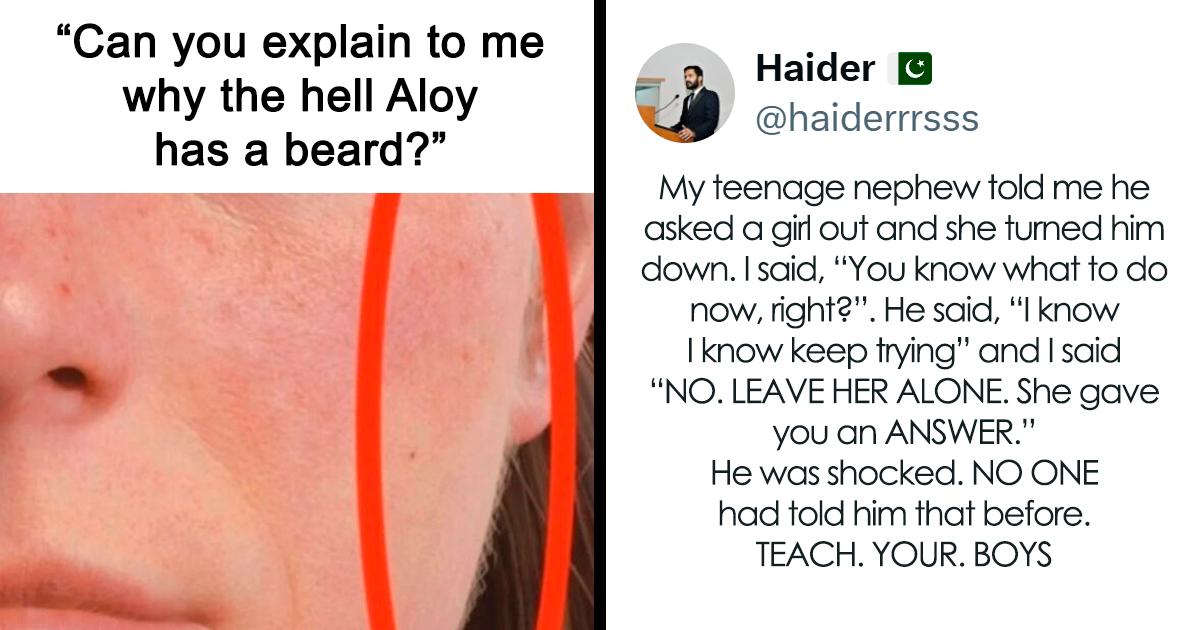
Every so often, the internet opens its curtains, clears its throat, and presents a take so spectacularly wrong that humanity collectively whispers, “Who gave this person Wi-Fi?” The phrase “Tell me you’ve never met a girl without telling me” has become the perfect caption for those bizarre opinions about women that sound less like real-life experience and more like someone built their entire worldview from bad podcasts, movie villains, and one rejected promposal.
This article is not about mocking awkwardness. Everyone has awkward phases. Some of us wore neon shoelaces. Some of us thought “mysterious” meant not replying to emails. Growth is allowed. The problem begins when awkward assumptions become loud, confident, and publicespecially when they reduce women to stereotypes, dating trophies, unpaid therapists, emotional weather systems, or mythical creatures who apparently survive only on salads, compliments, and mysterious group chats.
Cringe-worthy takes on women are not just funny internet debris. They reveal how gender stereotypes, online misogyny, and social media outrage culture can train people to see women as ideas instead of human beings. And once someone starts treating half the population like a confusing puzzle box, the takes get weird fast.
Why “Tell Me You’ve Never Met a Girl” Became Internet Shorthand
The phrase works because it is funny, flexible, and painfully accurate. It usually appears when someone says something about women that instantly exposes a lack of real friendships, conversations, empathy, or basic observation. It is the digital equivalent of watching someone confidently explain that cats are just “small dogs with software issues.” You do not even know where to begin.
Online spaces reward confidence, not wisdom. A person can be deeply wrong, post boldly, and still collect attention. That attention may come as criticism, but the algorithm does not always care whether people are clapping or throwing tomatoes. Engagement is engagement. So the wildest takes rise to the top like foam on a cursed latte.
Some bad takes are merely silly. Others are rooted in older problems: sexism, gender bias, entitlement, fear of rejection, and the belief that women should behave according to a script written by someone who has never successfully planned a group dinner. The modern internet did not invent these stereotypes, but it did give them ring lights, comment sections, and a suspicious amount of confidence.
58 Cringe-Worthy Takes On Women That Deserve a Long Walk Outside
Below are 58 common types of cringe-worthy takes about women. They are paraphrased, cleaned up, and presented as examples of attitudes worth retiring immediately. Please place them in the recycling bin labeled “No, absolutely not.”
- “Women are too emotional to lead.”
- “A confident woman is intimidating.”
- “Smart women are hard to date.”
- “Women only like bad boys.”
- “If she has standards, she is picky.”
- “Makeup means she is trying too hard.”
- “No makeup means she stopped caring.”
- “Women cannot be funny.”
- “A woman with male friends is suspicious.”
- “Women talk too much.”
- “Women are impossible to understand.”
- “Girls do not like nice guys.”
- “A successful woman must be lonely.”
- “Women in leadership are bossy.”
- “Women in gaming are just seeking attention.”
- “Girls only pretend to like sports.”
- “Women cannot drive.”
- “A woman’s anger is always drama.”
- “A man’s anger is just passion.”
- “Women should smile more.”
- “Women should not be too ambitious.”
- “A mother should handle everything naturally.”
- “A working mother is neglectful.”
- “A stay-at-home mother has it easy.”
- “Women choose lower pay.”
- “Women are bad at math.”
- “Women do not belong in tech.”
- “A woman with boundaries is rude.”
- “A woman saying no is playing hard to get.”
- “Women love being chased after rejection.”
- “Women are responsible for men’s behavior.”
- “A woman’s outfit explains everything.”
- “Women are naturally better at unpaid care.”
- “Women are too sensitive for criticism.”
- “Women do not really want equality.”
- “Feminism means hating men.”
- “A woman’s worth peaks with youth.”
- “Women who disagree are bitter.”
- “Women who agree are ‘one of the good ones.’”
- “Female friendships are always fake.”
- “Women dress only for male attention.”
- “Women should be grateful for compliments.”
- “Women cannot handle rejection either.”
- “A woman online is inviting comments.”
- “A woman gamer must prove herself.”
- “A woman scientist is an exception.”
- “A woman CEO must be cold.”
- “A woman who likes fashion is shallow.”
- “A woman who dislikes fashion is trying too hard.”
- “Women are all the same.”
- “Women are too complicated.”
- “Women only care about money.”
- “Women do not know what they want.”
- “Women should lower their expectations.”
- “Women’s success threatens men.”
- “Women are naturally manipulative.”
- “Women should accept jokes about them.”
- “Women asking for respect are asking for special treatment.”
The Anatomy of a Bad Take
Most cringe-worthy takes on women follow a familiar recipe. Start with one personal disappointment. Add three cups of overgeneralization. Stir in a podcast clip. Sprinkle with zero curiosity. Bake until the person begins sentences with “Females always…” and serve cold in a comment section nobody asked for.
The most common mistake is turning one experience into a universal law. One woman did not text back, therefore all women are mysterious. One coworker got promoted, therefore the entire corporate world is unfair to men. One date had preferences, therefore modern dating is ruined. This is not analysis. This is emotional algebra performed with a broken calculator.
Real people are varied. Women are not a single operating system. They do not share one brain, one playlist, one favorite coffee order, or one secret handbook called How to Confuse Men Before Brunch. The sooner someone understands that women are individuals, the fewer embarrassing posts they will contribute to the museum of internet regret.
Why These Takes Spread So Easily Online
1. Algorithms Reward Outrage
Social platforms are built to keep people scrolling. Nuance rarely performs as well as a dramatic hot take. “Some people have different expectations in relationships based on values, culture, maturity, and communication styles” is accurate, but it does not slap the table. “Women are impossible” is wrong, but it is short, emotional, and easy to fight about. That makes it algorithm candy.
2. Stereotypes Feel Simple
Gender stereotypes offer cheap explanations for complicated situations. Instead of asking, “Did I communicate clearly?” or “Was I respectful?” someone can shrug and say, “Women are confusing.” Convenient? Yes. Mature? No. Accurate? Also no. It is like blaming the oven because you put your pizza in with the cardboard still attached.
3. Some Communities Turn Insecurity Into Identity
There are online spaces where frustration becomes a full-time personality. In these spaces, people bond over resentment and teach each other to interpret women’s independence as rejection, confidence as arrogance, and boundaries as cruelty. That mindset does not help anyone build healthier relationships. It only makes loneliness louder.
4. Media Still Teaches Lazy Gender Scripts
Movies, shows, memes, and advertisements have spent decades feeding audiences narrow images of women: the jealous girlfriend, the flawless dream girl, the nagging wife, the icy career woman, the “cool girl” who never has needs, and the chaotic ex who exists only to make the male hero look reasonable. When people absorb those stories without questioning them, real women start getting judged against fictional cardboard cutouts.
What These Cringe Takes Reveal About Gender Bias
Bad takes about women often reveal more about the speaker than the subject. When someone says women are “too emotional,” listen for the hidden rule: emotions are only respected when men express them in approved ways. When someone says women in leadership are “bossy,” ask why the same behavior is called confidence in men. When someone says women should “smile more,” notice the assumption that women’s faces are public property.
Gender bias is not always loud. Sometimes it is polite. Sometimes it appears as “advice.” Sometimes it hides in compliments that sound sweet until you notice the cage: “You’re smart for a girl,” “You’re not like other women,” or “You’re pretty, so you don’t need to be ambitious.” Congratulations, the compliment came with a free red flag and a tiny instruction manual.
These ideas matter because they shape real decisions. They influence who gets hired, who gets interrupted, who gets believed, who feels safe online, who speaks up in class, who leads teams, and who is expected to absorb disrespect with a customer-service smile. A cringe take may begin as a post, but repeated stereotypes can become cultural background noise.
How to Respond Without Becoming the Mayor of Argument Town
Not every bad take deserves a 42-part debate thread. Your peace is not a public utility. But when a response is useful, keep it calm, specific, and difficult to twist.
Ask for Evidence
A simple “What makes you think that?” can reveal whether the person has evidence or just vibes wearing a fake mustache. If the answer is “everyone knows,” the conversation is already wearing clown shoes.
Separate Personal Pain From Universal Claims
Someone may genuinely feel hurt after rejection, betrayal, or embarrassment. That pain can be real without making their stereotype true. “I’m sorry that happened” and “that does not describe all women” can both exist in the same sentence.
Use Humor Carefully
Humor can deflate nonsense. “That sounds like your sample size is one and she blocked you” is funny because it points to the logic problem. But humor should punch up at the bad idea, not dehumanize the person. The goal is clarity, not becoming the very troll you were trying to defeat.
Know When to Exit
Some people are not confused; they are committed. If someone treats every correction as proof of conspiracy, save your energy. You are not required to tutor a brick wall with a profile picture.
What Healthy Views of Women Actually Sound Like
A healthy view of women is surprisingly uncomplicated: women are people. Revolutionary, apparently. They can be funny, boring, brilliant, awkward, ambitious, gentle, competitive, artistic, analytical, kind, impatient, brave, messy, organized, introverted, extroverted, and occasionally wrong about where they parked. In other words, human.
Healthy views do not require worshiping women or pretending every woman is perfect. Respect is not the same as idealization. In fact, putting women on a pedestal can be another way of refusing to see them clearly. Women do not need to be angels to deserve fairness. They do not need to be flawless to deserve safety. They do not need to be agreeable to deserve basic dignity.
The antidote to cringe is not memorizing the right slogans. It is building real relationships, listening without turning every conversation into a courtroom, reading widely, questioning stereotypes, and noticing how often women are expected to manage other people’s emotions while also being told they are the emotional ones. Yes, the irony is wearing tap shoes.
Why This Topic Still Matters
It can be tempting to treat cringe-worthy takes as harmless entertainment. Sometimes they are just ridiculous. A post claiming women cannot enjoy science fiction unless they are pretending is so silly it deserves to be filed next to “birds are government drones” and “soup is a beverage.” But the bigger pattern is serious.
Online misogyny, gender stereotypes, and sexist assumptions can affect confidence, safety, education, work, dating, and public participation. When women see constant jokes about their intelligence, ambition, appearance, or boundaries, the message is not just “some stranger is rude.” The message becomes, “There is a tax for being visible.” That tax might be extra caution, self-censorship, emotional exhaustion, or deciding not to share an opinion at all.
And that is bad for everyone. A society that discourages women from speaking, leading, inventing, joking, competing, or existing loudly is not protecting tradition. It is wasting talent. Imagine having half the orchestra and insisting the music sounds better that way. It does not. It sounds thin, and someone is probably blaming the violins.
How We Can Do Better
Doing better begins with refusing lazy categories. Instead of saying “women are like this,” say “this person behaved this way.” Instead of assuming every boundary is rejection, consider that boundaries are part of healthy communication. Instead of treating equality as a loss, recognize that respect is not a pizza with limited slices. Someone else getting dignity does not mean you get less.
Parents, teachers, friends, creators, and platform users all play a role. Call out harmful jokes when it is safe to do so. Share better examples of women in leadership, science, comedy, sports, business, art, and everyday life. Teach young people that disagreement is not disrespect, rejection is not humiliation, and confidence in women is not a threat. Also, please retire the phrase “women are mysterious.” They are not mysterious. They are often explaining themselves very clearly while someone nearby is busy forming a podcast.
Personal Experiences and Everyday Lessons From Cringe-Worthy Takes On Women
Anyone who has spent enough time online has probably seen the same pattern: a man posts a sweeping statement about women, women respond with lived experience, and then the original poster insists the women misunderstood women. It is a beautiful display of confidence, like watching someone fail a driving test and then lecture the instructor about roads.
In everyday life, the cringe usually arrives more quietly. A girl in a classroom gives a strong answer and gets called “intense.” A boy gives the same answer and gets called “a future leader.” A woman at work keeps notes, remembers deadlines, and organizes the team, then somehow becomes “naturally nurturing” instead of skilled. A female friend sets a boundary, and suddenly someone says she has an attitude. No, she has a calendar, a spine, and limited patience for nonsense.
One of the most common experiences related to this topic is watching women be treated as representatives of all women. If one woman dislikes a movie, “women hate action films.” If one woman enjoys makeup, “women are obsessed with appearance.” If one woman does not want to date someone, “women only want impossible standards.” Men are often allowed to be individuals. Women are too often assigned group project status without consent.
Another familiar experience is the double bind. Be friendly, but not too friendly. Be confident, but not intimidating. Be attractive, but not attention-seeking. Be smart, but not threatening. Be funny, but not louder than the funniest man in the room. Be independent, but not “too independent.” It is less like living by social rules and more like trying to assemble furniture with instructions written by a raccoon.
Then there is the online version: women posting a normal opinion and receiving comments that treat their existence as an invitation for debate. A woman can post about books, baking, coding, basketball, history, fashion, or home repairs, and someone will appear to question whether she “really” knows the topic. This is especially common in spaces that some people wrongly label as male territory, such as gaming, technology, sports commentary, and certain fan communities. The result is exhausting. Nobody wants to submit a notarized certificate of authenticity just to enjoy a hobby.
The best experiences, though, are the ones that break the stereotype in real time. People who actually listen to women tend to become less impressed by lazy takes. They notice that women are not a puzzle category. They are classmates, sisters, coworkers, leaders, athletes, artists, engineers, friends, mentors, rivals, comedians, neighbors, and strangers trying to buy coffee without receiving a lecture about “female nature.” Real-life contact does what comment sections often cannot: it makes people harder to flatten into stereotypes.
That is why the phrase “Tell me you’ve never met a girl without telling me” lands so well. It identifies the gap between fantasy and reality. The most cringe-worthy takes on women usually come from distance: distance from women’s actual experiences, distance from empathy, and distance from the humility required to admit, “Maybe I do not know everything.” The cure is not complicated. Listen more. Generalize less. Make friends without treating friendship as a waiting room for romance. Learn from women without demanding applause for basic respect.
Humanity may still produce terrible takes at industrial speed, but there is hope. Every bad opinion can become a teachable moment, every stereotype can be challenged, and every person can choose not to build their worldview out of resentment and recycled memes. That may not fix the entire internet, but it is a solid start. And honestly, the internet could use one.
Conclusion
Cringe-worthy takes on women are easy to laugh at, and sometimes laughter is the correct emergency response. But behind the jokes is a real issue: stereotypes make people smaller than they are. They turn individuals into assumptions and relationships into power games. The better path is simple, if not always easy: listen, question lazy narratives, respect boundaries, and remember that women are not a genre. They are people.
The next time someone drops a take so bad it makes the group chat go silent, you do not have to write a dissertation. Sometimes all you need is one sentence: “Tell me you’ve never met a girl without telling me.” Then maybe add, gently, “Now go meet people in real life.”