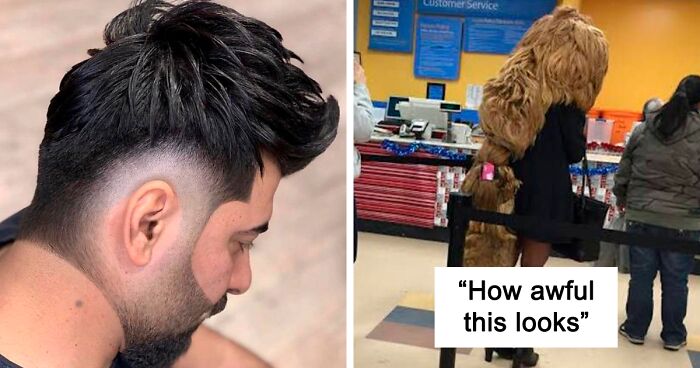
Some people collect stamps. Some collect vintage vinyl. And then there are online communities that collect tragic hair accidentsthe kind of haircuts, dye jobs, DIY bleach experiments, and “my cousin owns clippers” moments that make the internet collectively whisper, “Oh no, baby, what is you doing?”
The title “50 Tragic Hair Accidents, As Shared In This Online Community” sounds funny at first, and it is. Hair fails can be deeply entertaining when nobody is physically hurt and the worst outcome is looking like a confused mushroom for three weeks. But behind every lopsided fringe, fried highlight, patchy buzz cut, and accidental neon scalp is a useful lesson about hair care, salon communication, product safety, and the risky confidence that appears at 11:47 p.m. when someone finds kitchen scissors.
This article looks at the most common types of hair disasters people share online, why they happen, how to avoid them, and what to do when your hair has entered what can only be described as its villain era. We will keep things fun, but we will also keep them real: damaged hair, chemical burns, allergic reactions, traction alopecia, and over-processing are not just cosmetic problems. Hair may grow back, but your scalp deserves more respect than a last-minute TikTok experiment.
Why Hair Accidents Go Viral Online
Hair is personal. It frames the face, shapes first impressions, and can quietly carry pieces of identity, culture, confidence, rebellion, and self-expression. That is why a bad haircut feels bigger than “just hair.” When a fringe is cut too short, it is not merely a fringe. It is a six-week public relations crisis.
Online communities dedicated to bad haircuts and hair fails thrive because they combine comedy, empathy, and cautionary tales. People laugh, but most also understand the pain. Almost everyone has had at least one hair regret: the box dye that promised “chocolate brown” and delivered “wet raccoon,” the bangs cut during emotional turbulence, the barber who heard “a little off the top” and interpreted it as “prepare me for military inspection.”
These communities also work as unofficial beauty education. A stranger’s disaster becomes another person’s warning label. That bleached-to-elastic ponytail? A lesson in over-processing. The scalp rash after black dye? A reminder to patch test. The bald spot from tight extensions? A signal that style should never feel like a medieval torture device.
The 50 Most Common Tragic Hair Accidents People Share Online
Every hair fail has its own personality. Some are small mistakes. Some are full cinematic events. Below are 50 types of tragic hair accidents often seen in online communities, grouped by what usually went wrong.
1. The DIY Bangs Disaster
Bangs are the gateway drug of home haircuts. One minute, someone wants “soft curtain bangs.” Ten minutes later, they have a diagonal shelf above their eyebrows. The biggest mistake is cutting wet hair too short. Hair shrinks as it dries, especially wavy and curly hair, which means “cute fringe” can become “micro-bangs with emotional damage.”
2. The Bowl Cut Revival Nobody Requested
A bowl cut can be stylish when done intentionally. The problem is when it looks like the stylist used actual dinnerware as a guide. Online hair communities are full of accidental mushroom silhouettes, many created by uneven layering or poor blending.
3. The Patchy Buzz Cut
Clippers look easy until they meet the back of the head. Patchy buzz cuts usually happen when guards are switched mid-cut, the angle changes, or someone forgets that mirrors reverse reality and confidence does not equal skill.
4. The “Just a Trim” Betrayal
Few phrases strike fear like “I only took off what was dead.” For clients, “one inch” often means one inch. For some stylists, it apparently means “let us begin a new life.” Clear communication, photos, and physically showing the desired length can prevent this heartbreak.
5. The Bleach Meltdown
Bleach is powerful because it lightens hair by breaking down pigment. It can also weaken the hair shaft when used too aggressively. Overlapping bleach on already-lightened hair, using strong developer, or leaving product on too long can lead to breakage, gummy texture, and strands that snap like overcooked spaghetti.
6. The Orange Hair Surprise
Many people expect dark hair to become icy blonde in one session. Instead, it often passes through red, orange, and yellow stages first. Without proper toning and realistic expectations, the result can be less “Scandinavian blonde” and more “traffic cone with ambition.”
7. The Green Pool Hair Incident
Blonde or lightened hair can sometimes take on a greenish tint after swimming, often because of metals such as copper in pool water binding to the hair. It is not the hair trying to become a mermaid. It is chemistry, and chemistry is petty.
8. The Box Dye Black Hole
Black box dye can be extremely difficult to remove. Many people apply it casually, then later want blonde balayage and discover their hair has signed a long-term lease in the darkness. Color correction can take multiple sessions and should be handled carefully.
9. The Accidental Hot Roots
“Hot roots” happen when the roots turn warmer or brighter than the ends, often because heat from the scalp speeds up processing. The result is a glowing halo that says, “I followed most of the instructions.”
10. The Purple Shampoo Overdose
Purple shampoo can neutralize yellow tones in blonde or gray hair, but too much can leave a lavender or gray cast. Used correctly, it is helpful. Used like a daily spiritual ritual, it can make hair look like it joined a fantasy kingdom.
11. The Fried Flat-Iron Fringe
Heat tools can cause dryness, breakage, and split ends, especially when used at high temperatures without protection. Flat-ironing the same section repeatedly is basically roasting your hair with commitment.
12. The Curling Iron Forehead Stamp
Not all hair accidents involve the hair itself. Curling iron burns are common, painful, and instantly humbling. The forehead mark fades; the memory stays forever.
13. The Chemical Relaxer Burn
Relaxers alter the structure of the hair. If applied incorrectly or left on too long, they can irritate or burn the scalp and weaken hair. A relaxer should never feel like “beauty is pain” upgraded to “beauty is calling a doctor.”
14. The Keratin Treatment Panic
Some smoothing treatments may release formaldehyde or related chemicals when heated. Exposure can cause irritation of the eyes, throat, and respiratory system. A sleek blowout is not worth coughing through a chemical fog.
15. The Allergic Hair Dye Reaction
Permanent hair dyes may contain ingredients such as paraphenylenediamine, commonly known as PPD, which can trigger allergic reactions in some people. Redness, swelling, itching, burning, or rash after dye should be taken seriously. Patch testing matters, even when impatience is screaming.
16. The Scalp Stain Helmet
Hair dye can stain the scalp, hairline, ears, and neck. Usually it fades, but for a few days, a person may look like they are wearing a poorly fitted shadow. Petroleum jelly around the hairline and careful application help reduce staining.
17. The Uneven Fade
A good fade is architecture. A bad fade is a topographical map. Uneven fades happen when blending lines are not softened properly, leaving visible steps around the head.
18. The Neckline Disaster
A crooked neckline can ruin an otherwise decent haircut. It is one of those small details nobody thinks about until the back of the head looks like a badly drawn coastline.
19. The Sideburn Mismatch
Sideburns should usually look related, if not identical twins. When one ends near the ear and the other heads toward the jawline, the face enters optical illusion territory.
20. The Home Layering Catastrophe
Layering hair requires understanding shape, density, and movement. The popular “ponytail cut” can work for some people, but it can also create chunks, tails, and mystery ledges.
21. The Mullet by Accident
A mullet can be cool when chosen. It is less cool when it appears after a failed trim and the person realizes the front, sides, and back are no longer in communication.
22. The Extension Emergency
Extensions can add volume and length, but heavy or tight extensions may pull on the hair and scalp. Over time, constant tension can contribute to traction alopecia, especially around the hairline.
23. The Too-Tight Braids Problem
Braids should feel secure, not like they are trying to lift your eyebrows into another zip code. Pain, bumps, and scalp tenderness are warning signs that the style may be too tight.
24. The Ponytail Breakage Line
Wearing tight ponytails in the same spot daily can cause breakage. Hair ties with metal pieces, rough elastics, and aggressive pulling make things worse.
25. The Wet Hair Brushing Attack
Hair is more fragile when wet. Rough brushing can stretch and snap strands, especially if hair is chemically treated. Wide-tooth combs and gentle detangling are boring advice, but boring advice often saves hair.
26. The Gum-in-Hair Crisis
Gum in hair is a childhood classic and an adult nightmare. The tragedy usually escalates when panic scissors enter the room. Oils or peanut butter may help loosen gum before cutting becomes necessary.
27. The Candle Singe
Long hair plus candles equals a dramatic lesson in spatial awareness. Singed hair smells terrible and can leave crispy ends that need trimming.
28. The Kitchen-Scissor Chop
Kitchen scissors are designed for packaging, herbs, and poultrynot precision face-framing layers. Dull blades can crush hair ends and create uneven cuts.
29. The Beard-to-Hairline Confusion
Some haircut fails involve facial hair blending gone wrong. A beard fade should transition smoothly. When it does not, the jawline may look like it was edited with a low-budget eraser tool.
30. The Wedding-Week Hair Gamble
Changing color or cut right before a major event is a brave choice, and not always in a good way. Weddings, graduations, and job interviews are not ideal times to discover your hair “pulls orange.”
31. The “Inspired by a Celebrity” Trap
A celebrity haircut depends on face shape, hair density, texture, styling, lighting, and often an entire glam team. Bringing inspiration photos is smart, but expecting identical results without considering your own hair is how dreams become memes.
32. The At-Home Perm Spiral
Perms change hair structure and can cause damage when done incorrectly. Uneven saturation, wrong rod size, or poor timing can create frizz, breakage, or curls that look startled.
33. The Toner Gone Too Far
Toner can refine color beautifully, but the wrong formula or timing can make hair too ashy, muddy, blue, violet, or gray. “Cool blonde” and “storm cloud” are neighbors, not roommates.
34. The Shampoo That Stripped Everything
Harsh cleansing, frequent washing, and clarifying too often can leave hair dry and dull. Some people try to fix color with repeated washing and end up with hair that feels like hay wearing perfume.
35. The Razor Cut Regret
Razor cutting can add softness and texture, but on the wrong hair type or with poor technique, it may create frizz and thin-looking ends.
36. The Cowlick Battle
Cowlicks are not moral failures. They are growth patterns. Cutting against them without planning can make sections stick up with the confidence of a courtroom objection.
37. The Middle-Part Experiment
A new part can change the whole face. Sometimes it looks fresh. Sometimes it reveals that your hair has been secretly training in one direction since childhood and refuses democracy.
38. The Barber Translation Error
“Low fade,” “taper,” “textured crop,” and “clean up” can mean different things to different people. Screenshots help. So does saying what you do not want.
39. The Over-Thinned Ends
Thinning shears can remove bulk, but overuse can make ends look stringy and weak. Volume reduction should not make hair resemble a sad broom.
40. The Hairline Enhancement Fail
Temporary fibers, sprays, and color touch-ups can look natural when used lightly. Overapplied, they can create a painted-on hairline that looks ready for a stage performance.
41. The DIY Undercut Mistake
Undercuts require clean sectioning. Without it, a small edgy detail can become an accidental missing panel.
42. The “My Friend Is Basically a Stylist” Situation
Friendship is beautiful. Free haircuts are risky. Unless the friend has real training, the final result may test both your hairstyle and your relationship.
43. The Color Banding Problem
Banding happens when different sections of hair process differently, leaving stripes or uneven tones. It is common when previous dye, bleach, or root growth is not handled properly.
44. The At-Home Highlight Zebra Effect
Highlights require placement, spacing, saturation, and timing. DIY kits can create chunky stripes that look less “sun-kissed” and more “barcode.”
45. The Heatless Curl Fail
Heatless curls are usually safer than hot tools, but wrapping hair too tightly, sleeping uncomfortably, or starting with overly wet hair can lead to frizz, dents, and a hairstyle shaped like poor decisions.
46. The Product Cocktail Disaster
Layering gels, oils, sprays, mousses, creams, and dry shampoo can create buildup. Hair may feel sticky, flat, or dusty. Sometimes the problem is not the haircutit is the product lasagna.
47. The Self-Cut Back View
The front may look acceptable. Then comes the second mirror. The back of the head tells the truth with no mercy.
48. The Kids-with-Scissors Episode
Children cutting their own hair is practically a rite of passage. Unfortunately, their artistic vision often involves removing one random chunk near the crown.
49. The Pet Grooming Mix-Up
Some tragic hair accidents are technically fur accidents, but the emotional energy is the same. A dog with an unfortunate trim can look both betrayed and aerodynamic.
50. The Confidence Cut
This is the most dangerous category: the haircut performed by someone who has watched three tutorials and now believes they understand geometry, texture, and destiny. Confidence is important. Training is better.
What These Hair Fails Teach Us
The funniest hair accidents often begin with one of three things: impatience, miscommunication, or underestimating chemistry. Hair is made of fibers that can be weakened by heat, friction, chemical processing, tight styling, and rough handling. Once the hair shaft is damaged, products may improve appearance temporarily, but they cannot truly “heal” split or broken hair. The most reliable fix is prevention, gentle care, and sometimes a strategic trim.
One key lesson is to respect limits. Going from dark brown to platinum blonde in one afternoon may sound glamorous, but it can be harsh on the hair. A skilled colorist may recommend multiple sessions to protect the hair’s integrity. That is not upselling; it is your hair begging for a lunch break.
Another lesson is that the scalp matters as much as the style. Burning, swelling, rash, pain, or intense itching after a dye, bleach, relaxer, or smoothing treatment should never be ignored. Beauty routines should not require you to “push through” symptoms that feel medical.
How to Avoid Becoming the Next Viral Hair Accident
Bring Pictures, But Bring Realistic Pictures
Inspiration photos are helpful, especially when they show the front, sides, back, and color in natural lighting. But choose examples close to your natural texture, density, and starting color. A haircut on thick straight hair may not behave the same on fine curls.
Use Clear Haircut Language
Instead of saying “clean it up,” say how much length you want removed. Show the exact point with your fingers. Explain what you dislike: too short around the ears, heavy at the crown, blunt ends, triangle shape, or visible scalp.
Do a Patch Test Before Dye
Patch testing may feel inconvenient, but allergic reactions are far more inconvenient. If a product recommends testing before use, follow the instructions. This is especially important with permanent dyes and dark shades.
Do Not Stack Chemical Services Casually
Bleach, relaxers, perms, and straightening treatments all change the hair in significant ways. Combining them too closely can increase the risk of breakage and scalp irritation. When in doubt, ask a licensed professional before turning your bathroom into a laboratory.
Turn Down the Heat
Daily heat styling at high temperatures can make hair dry and brittle. Use heat protectant, lower settings when possible, and avoid passing the tool over the same section again and again. Your hair is not a grilled sandwich.
Loosen High-Tension Styles
If a style hurts, causes bumps, or pulls at the hairline, it is too tight. Tight braids, buns, ponytails, and extensions can contribute to breakage and traction-related hair loss when worn repeatedly.
What to Do After a Hair Disaster
First, do not panic-cut. Many hair disasters become worse because the person tries to fix them immediately while emotionally flammable. Step away from the scissors. Drink water. Text a trusted friend who will not say, “Honestly, just shave it.”
Second, identify the problem. Is it uneven length? Bad color? Breakage? Scalp irritation? Each issue needs a different solution. Uneven cuts may need professional reshaping. Bad color may require correction, but color correction should not happen on already-fragile hair without care. Breakage needs gentle handling and time. Scalp symptoms may need medical attention.
Third, be kind to your hair. Use gentle shampoo, condition regularly, reduce heat, avoid tight styles, and pause harsh chemical treatments. If the hair feels gummy, stretchy, or snaps easily, it needs a break from processing.
Finally, remember that a bad haircut is rarely permanent. It may feel dramatic now, but hair grows, hats exist, and humanity has survived worse than a fringe that looks like it lost a debate.
of Real-Life Experience: What Hair Accidents Feel Like and Why We Remember Them
Hair accidents are funny online because they are safely distant. We can laugh at a bizarre fade or a neon orange dye job because it happened to someone else. But when it happens to you, the emotional journey is surprisingly intense. First comes denial. You stare in the mirror and tilt your head, hoping the angle is the problem. Then comes negotiation. Maybe with styling cream, a side part, three bobby pins, and the confidence of a motivational speaker, it can work. Then comes the group chat photo, because suffering must be witnessed.
The most memorable hair disasters usually happen during periods of change. Someone gets bangs after a breakup. Someone dyes their hair red before a new semester. Someone cuts off twelve inches because they want to feel lighter, freer, reborn. Hair becomes a visible symbol of an invisible mood. That is why a bad result can feel so personal. You were not just asking for layers; you were asking for a fresh chapter. Instead, you got a mushroom with sideburns.
One common experience is the “salon smile.” This is when the stylist turns the chair around, asks what you think, and your soul briefly exits your body. You smile because you are polite. You say, “It’s cute!” because confrontation feels harder than living with accidental helmet hair. Then you get to the car, check the mirror in natural light, and realize the salon lighting was doing public relations.
Another classic experience is the DIY correction spiral. A person cuts one side shorter, then trims the other side to match, then trims the first side again, and suddenly the haircut has entered a mathematical paradox. This is how “just evening it out” becomes “I guess I have a pixie now.” The lesson is simple: stop early. Hair professionals exist because the back of the head is a lawless country.
Color accidents have their own flavor of panic. Bad cuts can sometimes be pinned back, but bad color announces itself loudly. Orange roots, green ends, muddy brown patches, or purple shampoo stains can make a person feel like they are wearing a mistake in high definition. The temptation is to throw another box dye over it, but that often deepens the problem. Many colorists spend their careers fixing the sentence, “So I tried one more thing.”
The best recovery strategy is a mix of humor and patience. Take photos if you can laugh about it later. Wear hats if you need emotional privacy. Learn the language of your hair: what it can handle, what it refuses to do, and which trends are better admired from afar. A tragic hair accident may feel like a personal disaster, but it can become a very useful teacher. Also, someday it may become your funniest storythe one you tell whenever a friend says, “Should I cut my own bangs tonight?”
Conclusion
The world of 50 tragic hair accidents, as shared in this online community, is equal parts comedy gallery and public service announcement. Bad bangs, fried bleach jobs, crooked fades, allergic dye reactions, and extension mishaps remind us that hair is resilient, but not invincible. The best hair decisions usually involve patience, communication, realistic expectations, and a healthy suspicion of late-night scissors.
Laugh at the fails. Learn from the fails. And when your hair whispers, “Maybe we should bleach over this box dye at midnight,” remember: the online community is waiting, and it has screenshots.
Note: This article is written for informational and entertainment purposes, based on widely accepted hair-care, dermatology, cosmetic safety, and salon-safety guidance from reputable U.S. health and consumer-safety sources.