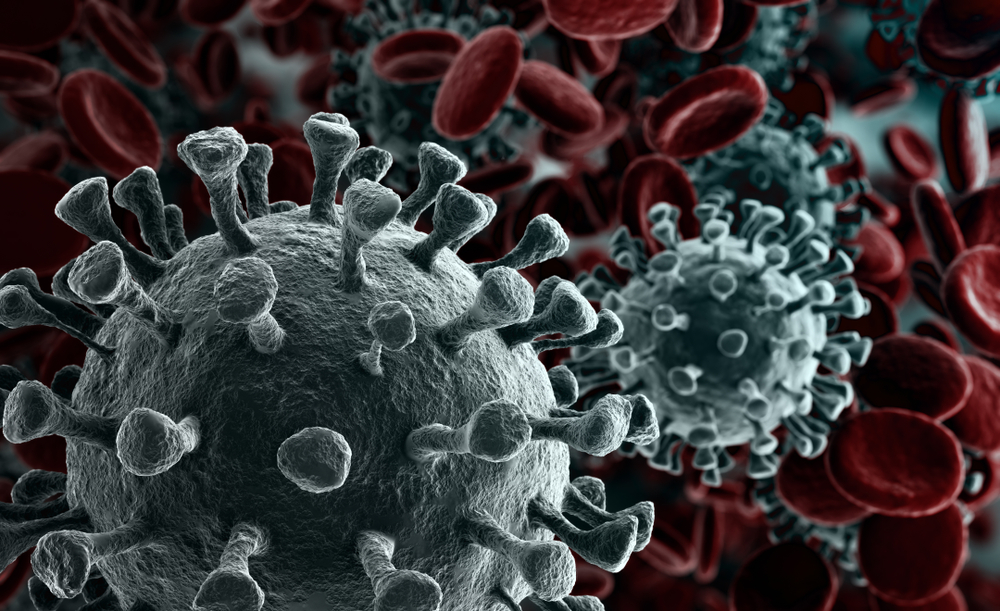
Before COVID-19, I thought autonomy meant something simple and stylish, like a clean desk, a full planner, and the magical belief that I was captain of my own ship. I picked my schedule, made my decisions, and mistook independence for total control. Then a virus came along and laughed in microscopic.
The pandemic stripped away the comforting illusion that autonomy means doing whatever you want whenever you want. Suddenly, my choices were tangled up with public health advice, family worries, workplace expectations, and the emotional weather of the entire planet. It was inconvenient, humbling, and about as relaxing as building IKEA furniture during a fire drill. But it was also clarifying.
What COVID-19 taught me about autonomy is that real autonomy is not rebellion for its own sake, and it is not rugged individualism in a superhero cape. It is the ability to make informed, intentional decisions while understanding how deeply connected my life is to other people. In other words, autonomy is not a solo act. It is a duet with reality.
Autonomy Is Not the Same as Isolation
One of the first lessons the pandemic taught me was that being left alone with my choices is not the same as being free. During lockdowns and waves of uncertainty, many of us learned that isolation can feel less like independence and more like being trapped in a house with our own overthinking. When routines disappeared, autonomy did not automatically bloom. Often, it panicked, ate snacks, and refreshed the news every six minutes.
I realized that autonomy needs structure. It needs information. It needs emotional steadiness. Without those things, “freedom” can turn into chaos wearing sweatpants. The pandemic showed me that when people lose predictable routines, trusted systems, and social support, decision-making becomes harder. Even simple choices like whether to visit family, go to work, or seek medical care suddenly carried emotional weight and moral complexity.
The myth of total self-sufficiency
Before COVID-19, self-sufficiency was often sold as an ideal. Handle it yourself. Push through. Be productive. Do not ask for help unless the building is literally on fire. The pandemic exposed how flimsy that script really was. Needing help with groceries, child care, mental health, or medical guidance did not make anyone weak. It made us human.
That shift mattered. I started to see autonomy less as “I never need anyone” and more as “I can recognize what I need, say it clearly, and make choices that support my well-being.” That is a sturdier kind of freedom. It is not glamorous, but it survives contact with real life.
COVID-19 Made Me Rethink Control
If autonomy had a villain during the pandemic, it was uncertainty. No one enjoys discovering that their plans are basically decorative. Travel plans vanished. Work arrangements changed overnight. School, health care, social rituals, and even ordinary errands became moving targets. The future stopped feeling like a roadmap and started feeling like a weather report.
That disruption taught me an important distinction: control and autonomy are not twins. Control is getting the outcome you want. Autonomy is choosing your response when outcomes refuse to cooperate. COVID-19 taught me that I could not control infection rates, policy changes, supply shortages, or other people’s behavior. I could, however, decide how I gathered information, set boundaries, protected my health, and cared for my mind.
That sounds obvious now, but it did not feel obvious in the middle of the storm. When everything is uncertain, the temptation is to grab for certainty anywhere you can find it. Sometimes that meant doomscrolling. Sometimes it meant false confidence. Sometimes it meant arguing online with strangers who were absolutely not going to change their minds because of my brilliant 11:47 p.m. comment.
Eventually, I learned that autonomy grows when I focus on what is actionable. Sleep. Food. Movement. Limiting information overload. Asking better questions. Admitting when I do not know something. Those choices may seem small, but they restored a sense of agency when the world felt wildly unstable.
Patient Autonomy Became Personal
Another major lesson came from health care itself. During COVID-19, conversations about masks, testing, vaccines, treatment options, isolation, and risk were everywhere. Suddenly, terms like informed consent, shared decision-making, and patient rights did not sound like abstract ideas from a medical ethics class. They sounded like Tuesday.
I started to understand patient autonomy in a more practical way. It was not simply the right to have an opinion. It was the responsibility to ask informed questions, weigh risks, understand trade-offs, and speak up clearly in medical settings. The pandemic pushed many people to engage with health decisions more actively, whether they wanted to or not.
Asking better questions
COVID-19 taught me that autonomy in health care often begins with better questions, not louder certainty. What are the benefits and risks? What evidence supports this recommendation? What symptoms should I watch for? When should I seek urgent care? What are my options if my situation changes?
That habit of questioning was empowering. It reminded me that informed autonomy is not about pretending to be my own doctor. It is about showing up as an active participant in my care. The best decisions often happen through partnership, not performance. I do not need to win a debate in the exam room. I need to understand what is happening and make choices aligned with my health, values, and circumstances.
Listening to my body without becoming my own conspiracy theorist
There is also a fine line between self-awareness and turning every sneeze into a dramatic monologue. COVID-19 taught me to pay closer attention to fatigue, stress, breathing, sleep, and recovery. It also taught me not to let anxiety run the whole operation. Real autonomy involves listening to the body with curiosity, not panic. Easier said than done, of course. The body whispers; the internet screams.
Telehealth, Access, and the New Shape of Choice
One of the more surprising lessons from the pandemic was that autonomy can expand when systems become more flexible. Telehealth, for example, moved from “interesting option” to “actual lifeline” for many people. Suddenly, medical and mental health appointments could happen from the couch, which is either progress or a very American plot twist.
For many patients, remote care created new forms of access. It reduced travel time, gave some people more privacy, and made follow-up care easier to manage. That matters because autonomy is not meaningful if choices exist only in theory. A person cannot freely choose care that is too far away, too expensive to reach, or impossible to fit into work and family demands.
At the same time, the pandemic also revealed the limits of this progress. Access to technology, internet service, private space, and digital literacy is uneven. So is the ability to miss work, quarantine safely, or recover without losing income. COVID-19 taught me that autonomy is shaped by circumstances, not just attitude. Telling people to “make the best choice” means very little if the menu is stacked against them.
That realization deepened my understanding of freedom. A truly autonomous decision requires more than permission. It requires practical access, understandable information, and a realistic path forward.
Work, Boundaries, and the Strange Democracy of Sweatpants
The pandemic changed how many of us think about work, and that shift taught me a lot about personal autonomy. When homes became offices, the boundary between labor and life got blurrier than a webcam at 8 a.m. Meetings colonized lunch. Email wandered into evenings. Productivity culture put on pajamas and somehow became even clingier.
That experience forced a question I should have asked much earlier: Who is actually in charge of my time? Before COVID-19, I often acted like autonomy meant saying yes to everything while secretly resenting it. During the pandemic, that approach stopped working. Burnout has a way of making philosophical points very quickly.
Boundaries are not selfish
I learned to treat boundaries as a form of self-governance. Saying, “I cannot take that on today,” or “I need uninterrupted time,” or “I am logging off now” was not laziness. It was the practical expression of autonomy. The same was true for protecting sleep, planning breaks, and refusing to let every news alert move into my nervous system rent-free.
COVID-19 taught me that autonomy is not just about major life decisions. It also lives in small, repeatable choices: whether I rest when exhausted, whether I respond immediately, whether I protect focus, whether I allow guilt to run my calendar. Those choices quietly shape a life.
Autonomy Also Means Responsibility
Here is the lesson I resisted the longest: autonomy is not only about rights. It is also about responsibility. My choices during a pandemic did not affect only me. They affected coworkers, neighbors, family members, medically vulnerable people, and exhausted health care workers carrying impossible burdens.
That reality complicated the simplistic idea that freedom means doing whatever feels right in the moment. COVID-19 reminded me that ethical decision-making often involves balancing personal preference with collective well-being. The mature version of autonomy is not “no one can tell me what to do.” It is “I understand that my choices ripple outward, and I am willing to act with that knowledge.”
This was not always comfortable. Sometimes the most autonomous choice was not the most convenient one. Sometimes it meant postponing a visit, masking up, canceling plans, or accepting temporary restrictions because the bigger picture mattered. That did not erase personal liberty. It placed liberty in context.
Oddly enough, this made autonomy feel more meaningful, not less. It turned freedom from a slogan into a practice grounded in empathy, information, and accountability.
Long COVID and the Lesson of Ongoing Self-Advocacy
If acute COVID-19 challenged our routines, long COVID challenged our timelines. The pandemic taught many people that recovery is not always linear, neat, or quick. Fatigue, brain fog, shortness of breath, and post-exertional crashes changed how people understood health, stamina, and normal life. Even for those who did not experience long COVID firsthand, the broader conversation made one thing painfully clear: the body does not care about our preferred schedule.
That truth sharpened my understanding of autonomy in another way. Sometimes autonomy means scaling back, pacing carefully, and refusing the pressure to “push through” when the body is clearly filing a formal complaint. That can feel frustrating in a culture that celebrates hustle and applauds overextension. But respecting physical limits is not surrender. It is intelligent self-governance.
COVID-19 taught me that autonomy is not proven by how much I can endure in silence. Sometimes it is proven by how honestly I can respond to what is real. Rest can be autonomous. Asking for accommodations can be autonomous. Changing plans can be autonomous. The body is not a machine, and the pandemic made that point with all the subtlety of a marching band.
What COVID-19 Taught Me About Autonomy, in Plain English
So what did COVID-19 teach me about autonomy? It taught me that autonomy is not domination over life. It is participation in life with awareness. It is informed choice, not impulsive reaction. It is self-advocacy without self-absorption. It is independence that makes room for interdependence.
It taught me to ask better questions, build better boundaries, and treat help as a resource instead of a moral failure. It taught me that health decisions are stronger when they are informed, that routines matter more than I admitted, and that freedom without responsibility is just chaos with better branding.
Most of all, it taught me that I do not become less autonomous by caring about other people. I become more fully human. Real autonomy is not a locked door. It is the ability to move through uncertainty with judgment, humility, and enough self-knowledge to choose wisely, even when the choices are imperfect.
That lesson did not arrive wrapped in elegance. It arrived through canceled plans, anxious mornings, awkward video calls, grief, adaptation, and the collective realization that none of us are as separate as we sometimes pretend. Not exactly the master class I would have signed up for, but undeniably educational.
Personal Reflections: 500 More Words on What COVID-19 Taught Me About Autonomy
On a personal level, the pandemic changed the way I talk to myself. Before COVID-19, my inner voice often sounded like a slightly rude life coach. Work harder. Be available. Do not disappoint anyone. Keep going. Power through. During the pandemic, that voice became unsustainable. There were too many unknowns, too much stress, and too many moments when “keep going” was not wisdom but denial in business casual.
I began noticing how often I outsourced my sense of direction. I let work urgency decide my schedule. I let social expectations decide my energy. I let fear decide what information I consumed. COVID-19 interrupted that autopilot. For the first time in a long time, I had to ask myself what I actually needed instead of what looked impressive or responsible from the outside.
Sometimes the answer was embarrassingly basic. I needed sleep. I needed less news and more quiet. I needed to stop pretending that constant availability was a personality trait worth keeping. I needed to admit that being “fine” and being functional are not always the same thing. That honesty felt uncomfortable at first, but it also felt like the beginning of a better kind of autonomy.
I also learned that my decisions improve when I slow down enough to understand what is driving them. Was I saying yes because I wanted to help, or because I was afraid of seeming difficult? Was I researching a health topic because I wanted useful knowledge, or because anxiety was demanding another snack? Was I pushing through exhaustion because it was necessary, or because rest made me feel guilty? COVID-19 taught me that autonomy is not just about making choices. It is about understanding the forces behind those choices.
Another deeply personal lesson was that autonomy can be quiet. It does not always look bold or dramatic. Sometimes it looks like declining one more obligation. Sometimes it looks like scheduling the appointment I kept postponing. Sometimes it looks like changing my mind after getting better information. During the pandemic, I stopped seeing consistency as the highest virtue. Adaptability became more valuable. I learned that revising a decision is not weakness when reality changes. It is maturity.
I think COVID-19 also made me kinder toward other people’s limits. Once you have lived through a period where everyone is carrying visible or invisible strain, it becomes harder to assume that people are lazy, flaky, or careless. Many are simply overwhelmed. That realization changed my own standards too. I no longer see self-respect and compassion as competing values. The more honestly I respect my own limits, the more grace I seem able to offer others.
In the end, what COVID-19 taught me about autonomy is this: I am responsible for my choices, but I do not make them in a vacuum. My freedom becomes wiser when it is informed, steadier when it is supported, and more humane when it recognizes interdependence. That is the version of autonomy I want to keep. Less performance. More clarity. Less ego. More intention. And, ideally, fewer video meetings where someone says, “You’re on mute,” while I reconsider every life decision that brought me there.
Conclusion
COVID-19 did not give me a tidy, motivational-poster version of autonomy. It gave me a tougher, truer one. I learned that autonomy depends on information, access, self-awareness, and the courage to set limits. I learned that freedom without connection is brittle, and that responsibility does not cancel autonomy but deepens it. If the pandemic taught me anything worth keeping, it is that wise choices are rarely made from ego alone. They are made from clarity, compassion, and a willingness to live in the real world rather than the imaginary one where I control everything. Frankly, that is a better education than the old fantasy ever offered.