Note: HTML body only, ready for publishing. SEO tags are placed at the end in JSON format as requested.
Spinach is one of the fastest vegetables in the kitchen. It goes from crisp and leafy to silky and tender in just a few minutes. That is the good news. The slightly annoying news is that spinach can also go from gorgeous to soggy faster than a group chat turns into a debate about pineapple on pizza. If you have ever ended up with a watery pan of sad green mush, do not blame yourself too hard. Spinach is delicate, packed with moisture, and dramatic in the heat.
The good part is that once you understand how spinach behaves, it becomes one of the easiest greens to cook well. Whether you want a quick sauté for dinner, a gentle steam for a lighter side dish, a blanch for salads and pasta, or a shortcut with frozen spinach, the rules are simple. Start with the right spinach, prep it properly, use the right cooking method, and stop cooking before it gives up on life.
This guide walks you through exactly how to cook spinach for delicious greens every time, with practical tips, cooking times, flavor ideas, and the common mistakes that turn a healthy side dish into swamp confetti.
Why Spinach Cooks So Fast
Spinach is a dark leafy green with a very high water content, which is why a huge pile of fresh leaves can collapse into a surprisingly small portion once it hits a hot pan. That shrinkage is normal. In fact, it is part of the magic. One minute your skillet looks wildly overcommitted, and the next minute you have a lovely little mound of cooked greens.
Because spinach is so tender, it does not need long cooking. In most cases, you want to cook it only until wilted, still bright green, and just tender enough to eat comfortably. Overcooking is the big enemy. That is what dulls the color, pushes out too much water, and leaves the texture limp instead of silky.
Choose the Right Type of Spinach
Baby Spinach
Baby spinach has smaller, more tender leaves and mild flavor. It is ideal for quick sautéing, steaming, tossing into pasta, or folding into eggs. It usually needs little or no chopping, which makes it the weeknight hero of the vegetable drawer.
Mature Bunched Spinach
Mature spinach has larger leaves and thicker stems. It has a deeper spinach flavor and works beautifully in braises, soups, gratins, and cooked dishes where you want more structure. You may need to trim or remove some stems, especially if they are thick or fibrous.
Frozen Spinach
Frozen spinach is incredibly useful, especially for casseroles, dips, soups, and fillings. It is already compact, which saves you from buying what looks like a shrub and ending up with one side dish. For recipes where texture matters, thaw it and squeeze out the extra moisture well. For soups and stews, you can often stir it in directly.
How to Prep Spinach Before Cooking
Wash It the Smart Way
If you are using bunches of spinach, rinse the leaves under cool running water and gently rub away grit. Spinach can carry a surprising amount of sand and soil, and nobody wants a salad or sauté that crunches like beach vacation leftovers. Dry the leaves well before sautéing. Wet spinach and hot oil create steam, extra liquid, and a mushier result.
If your packaged spinach is labeled pre-washed, triple-washed, or ready-to-eat, you generally do not need to wash it again. Rewashing can add moisture and increase the chance of cross-contamination in the kitchen.
Trim the Stems if Needed
Baby spinach usually needs almost no trimming. Mature spinach may have stems that are too thick for quick cooking. Fold the leaf and pull the tough stem down if you want a more delicate final texture.
Dry It Well
This step matters more than most people think. For sautéed spinach, dry leaves mean better flavor and less pan liquid. A salad spinner works beautifully. Paper towels or a clean kitchen towel work too. Think of it this way: if your spinach is still dripping, your skillet is about to become a tiny sauna.
The Best Ways to Cook Spinach
1. Sautéed Spinach
This is the best everyday method if you want flavorful, tender spinach with a little richness and almost no fuss. Sautéing works especially well with baby spinach.
How to do it:
- Heat a large skillet over medium to medium-high heat.
- Add a little olive oil, butter, or a mix of both.
- Add sliced garlic or shallot if you want extra flavor, and cook briefly until fragrant.
- Add spinach by handfuls, tossing as it wilts.
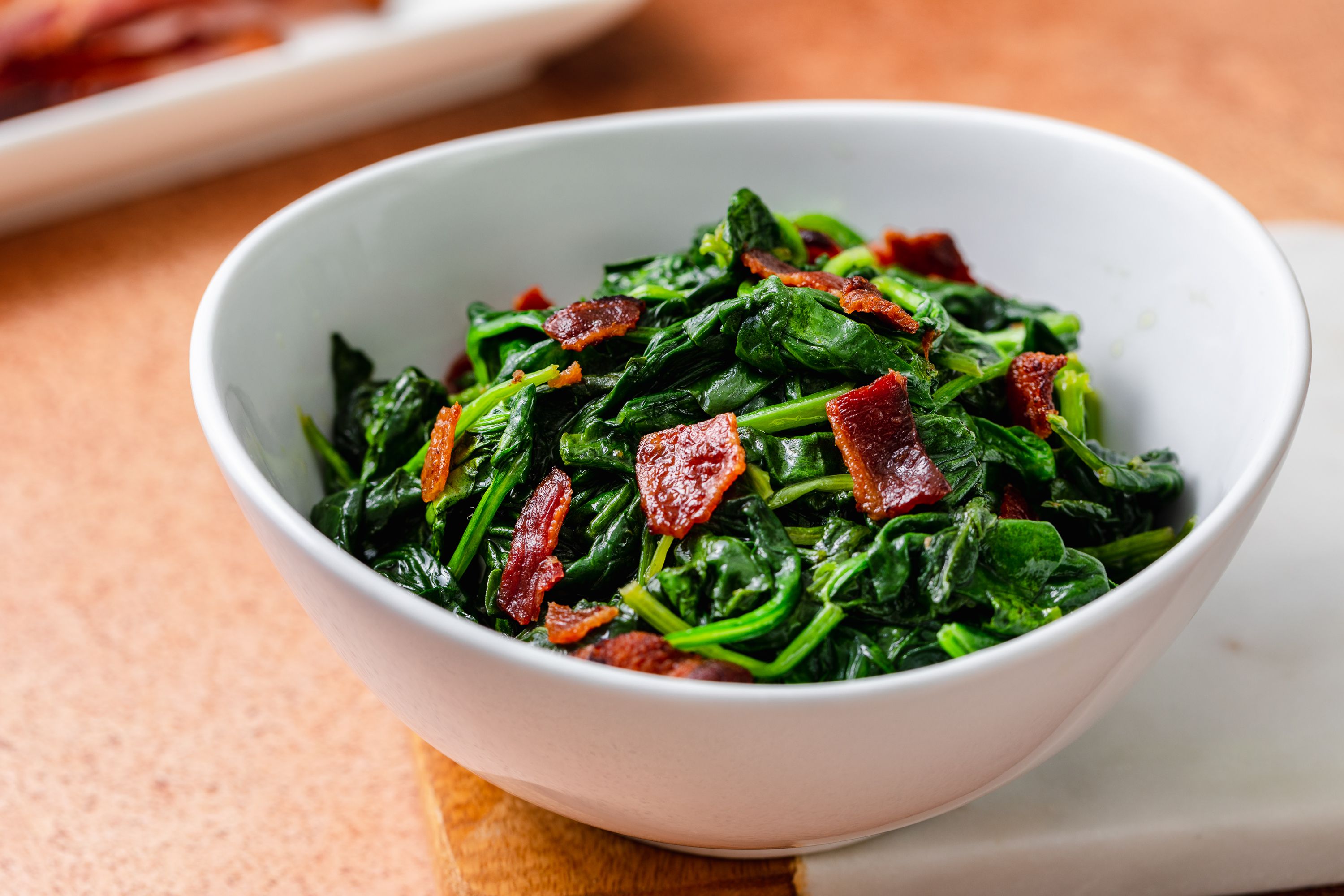
- Cook just until wilted, usually 2 to 4 minutes total.
- Season with salt, pepper, and a squeeze of lemon at the end.
Why it works: The hot pan quickly evaporates some surface moisture and concentrates the flavor. Garlic, shallot, red pepper flakes, lemon zest, Parmesan, toasted sesame oil, or a splash of vinegar can all make sautéed spinach taste like you planned dinner instead of panicked into it.
2. Steamed Spinach
Steaming is gentle, simple, and great when you want spinach that tastes clean and fresh without much added fat. It is a good method for people who want to season afterward or use spinach in another dish.
How to do it:
- Add a small amount of water to a pot and bring it to a simmer.
- Place spinach in a steamer basket above the water.
- Cover and steam for about 2 minutes, or until wilted.
- Drain well and season to taste.
Best for: light side dishes, meal prep, purees, simple vegetable plates, and recipes where you want a neutral spinach base.
3. Blanched Spinach
Blanching means cooking spinach very briefly in boiling water, then often cooling it quickly. This method is excellent when you want bright color, tender leaves, and a spinach texture that is easy to squeeze dry for fillings, pasta, dips, rice bowls, or cold seasoned salads.
How to do it:
- Bring a pot of water to a boil.
- Add spinach and cook for 30 seconds to 1 minute, just until wilted and bright green.
- Drain immediately.
- If using for a cold dish or for maximum bright color, transfer to ice water, then drain again.
- Squeeze out excess moisture when needed.
Best for: spinach dip, stuffed shells, lasagna, spanakopita, rice dishes, and cold sesame or soy-seasoned spinach salads.
4. Microwaved Spinach
Microwaving is the least glamorous method, but it works surprisingly well when time is short. No applause, no culinary fireworks, just dinner moving along efficiently.
How to do it:
- Place spinach in a large microwave-safe bowl.
- Add a tablespoon or two of water if needed.
- Cover loosely.
- Microwave in short bursts, about 1 minute at a time, until wilted.
- Drain and season.
Best for: quick lunches, meal prep, and adding spinach to eggs, grains, or baked potatoes without dirtying another pan.
5. Cooking Frozen Spinach
Frozen spinach is not second-best. It is just different. It is especially good in recipes where spinach is mixed into something else, such as soups, creamy sauces, casseroles, dips, and fillings.
How to do it:
- For dips, casseroles, lasagna, and fillings: thaw it first and squeeze out as much liquid as possible.
- For soup or stew: you can often stir it in directly and let it heat through.
- For a sauté-style side: thaw, squeeze dry, then reheat in oil or butter with seasonings.
If your recipe seems watery, frozen spinach is usually the suspect. It is not guilty every time, but it should definitely be questioned.
How Long to Cook Spinach
Spinach does not need much time at all:
- Sautéed spinach: 2 to 4 minutes
- Steamed spinach: about 2 minutes
- Blanched spinach: 30 seconds to 1 minute
- Microwaved spinach: 1 to 3 minutes, depending on amount and microwave strength
- Frozen spinach: until heated through, usually 3 to 5 minutes in a pan after thawing
The real cue is not the clock. It is the look. Spinach should be wilted, tender, and still vividly green. Once it turns dull and releases a pool of liquid, you have gone too far.
Flavor Ideas That Make Spinach Taste Great
Spinach is mild, which makes it easy to season. That mildness is a feature, not a flaw. It is basically the little black dress of vegetables. It goes with almost everything.
Classic American-Style Flavor Pairings
- Garlic and olive oil
- Butter and black pepper
- Lemon juice and lemon zest
- Parmesan and nutmeg
- Bacon and onion
- Cream and a pinch of nutmeg for creamed spinach
Globally Inspired Flavor Pairings
- Soy sauce, sesame oil, and toasted sesame seeds
- Ginger, garlic, and red pepper flakes
- Cumin, coriander, and yogurt
- Mustard seeds and garlic
- Vinegar and chili oil
Spinach also loves company. Add it to omelets, frittatas, pasta, white beans, chickpeas, soups, rice bowls, grilled cheese, baked eggs, and creamy casseroles.
Common Mistakes When Cooking Spinach
Using Leaves That Are Too Wet
Wet leaves make for watery sautéed spinach. Dry them well before they hit the pan.
Overcooking It
This is the main mistake. Cook only until wilted and tender. Spinach is not a stew. It does not need a long, reflective simmer.
Overcrowding a Small Pan
A large pan makes it easier for moisture to evaporate. If the pan is tiny, the spinach steams instead of sautés. Add leaves in batches if needed.
Under-Seasoning
Spinach benefits from salt, acid, aromatics, or richness. A plain pile of wilted spinach is technically food, but it is not exactly the dish people ask about later.
Skipping the Squeeze With Frozen Spinach
For dips and fillings, extra moisture can ruin texture fast. Thaw and squeeze thoroughly.
How to Serve Cooked Spinach
Once cooked, spinach is wonderfully flexible. Serve it:
- next to roasted chicken, salmon, steak, or tofu
- under a fried or poached egg
- stirred into pasta with garlic and olive oil
- mixed into rice, quinoa, or farro bowls
- folded into scrambled eggs or an omelet
- layered into lasagna or stuffed shells
- turned into creamed spinach for a richer holiday side
- added to soups right before serving
Final Thoughts on Cooking Spinach
If you remember only three things, make them these: dry the leaves, cook them briefly, and season them well. That is the whole game. Spinach does not ask for much. It just wants a hot pan, a little attention, and the courtesy of not being cooked into oblivion.
Once you get comfortable with the basics, spinach becomes one of the most useful ingredients in your kitchen. It can be a quick side dish, a healthy add-in, a meal stretcher, or a comfort-food classic. Best of all, it rewards simple cooking. No elaborate technique required. Just good timing and a willingness to stop while you are ahead.
Real-Life Kitchen Experiences With Cooking Spinach
One of the most relatable experiences with spinach is buying a giant container and thinking, “This will last all week,” only to discover that it either vanishes in one dinner or turns suspiciously limp in the refrigerator by Thursday. Spinach teaches you very quickly that volume is a lie. A mountain of raw leaves can become a modest side dish in minutes. This is not betrayal. This is spinach being spinach.
Many home cooks also notice that the first few times they sauté spinach, they are tempted to keep cooking because it still looks too leafy. Then, all at once, it crosses the line. The leaves go from soft and glossy to darker, wetter, and more collapsed than intended. That moment is actually useful because it teaches the biggest spinach lesson of all: pull it earlier than your instincts tell you. Carryover heat will do the rest.
Another common experience is discovering how much flavor a tiny finishing touch can add. A squeeze of lemon, a little flaky salt, some garlic cooked for just a few seconds, or a dusting of Parmesan can turn spinach from “healthy side dish I should probably eat” into “wait, why is this so good?” Spinach does not need a lot of help, but it definitely appreciates having a few interesting friends at the party.
People who cook with frozen spinach often have a different kind of kitchen revelation. At first, frozen spinach can seem less exciting than fresh. Then you make a dip, a lasagna, or a creamy pasta filling and realize it is incredibly practical. You do not have to wash anything. You do not have to watch a whole bag shrink down dramatically. You just thaw, squeeze, and use it. That is the kind of low-stress efficiency many busy cooks come to love.
There is also the experience of learning that spinach behaves differently depending on the dish. In eggs, it should be lightly wilted so it stays tender and green. In soup, it can go in at the end and soften gently. In creamy casseroles or dips, moisture control becomes everything. In a simple skillet side dish, heat and speed matter more than anything else. Once you notice those differences, spinach starts to feel less like one ingredient and more like a flexible kitchen tool.
Then there is the texture lesson. Some people grow up disliking spinach because they only had overcooked versions that were dull, soggy, and strangely tired-looking. Properly cooked spinach changes minds. When it is just wilted, it is silky rather than slimy, savory rather than bland, and bright rather than muddy. That shift can be surprisingly dramatic, especially for anyone who thinks they do not like cooked greens.
Experienced home cooks often say spinach is one of the ingredients that helped them build confidence because it is so quick to practice with. You can try a garlic sauté one night, a steamed version the next, then fold it into pasta or soup after that. Since it cooks in minutes, it offers fast feedback. You learn by doing, and dinner still gets on the table.
In real kitchens, spinach is also one of those ingredients that quietly saves meals. Pasta looking too beige? Add spinach. Scrambled eggs a little lonely? Add spinach. Soup not quite hearty enough? Add spinach. Leftover rice needing a purpose in life? Add spinach. It is not flashy, but it is dependable. And honestly, dependable ingredients deserve more applause.
That may be the best thing about learning how to cook spinach well. It is not just about one side dish. It is about gaining a simple skill that makes everyday meals taste fresher, look more colorful, and feel more put together. Once you know how to handle spinach, delicious greens really do become easier every time.
Conclusion
Cooking spinach well is less about fancy technique and more about timing, moisture control, and smart seasoning. Choose fresh or frozen spinach based on the dish, prep it properly, cook it briefly, and finish it with flavor. Do that, and spinach stops being a forgettable green and starts becoming one of the most useful, delicious ingredients in your kitchen. Whether you are aiming for a quick sauté, a silky steamed side, a bright blanched prep, or a freezer-friendly shortcut, the path to better spinach is wonderfully simple.