Halloween decorating is one of the few times of year when it feels perfectly normal to hang a ghost from a tree, cover the porch in bats, and proudly position a skeleton like it pays property taxes. But great spooky style is not just about buying the biggest inflatable monster you can find and hoping it does all the work. The real magic happens in the way you hang, layer, light, and place your decorations.
If your display looks effortless, that usually means somebody actually planned it. A well-hung Halloween setup feels dramatic, fun, and a little mysterious. A poorly hung one feels like a garage sale hosted by a haunted house. The difference comes down to a few smart decisions: using the right hooks, thinking about weight and weather, keeping cords under control, protecting walkways, and making sure your decorations still look good after the sun goes down.
Whether you are going for creepy, cute, gothic, or full “the neighbors think I have too much free time,” these tips will help you create Halloween porch decorations and outdoor Halloween decor that look polished, stay secure, and do not turn into a safety hazard. Here are ten smart, practical, and delightfully spooky tips for hanging Halloween decorations the right way.
1. Start With a Focal Point Before You Start Hanging Everything
The easiest way to make Halloween decorations look intentional is to begin with one focal point. That might be your front door, a porch column, a tree in the yard, a window, or the main walkway. Once you choose the visual star of the show, every hanging decoration around it can support the scene instead of competing with it.
For example, if your front door is the centerpiece, a dramatic wreath, hanging bats, lanterns, and a few floating ghosts can build a theme that draws the eye inward. If your tree is the focal point, hang ghosts, glowing orbs, or suspended lanterns at varied heights to create movement. This makes the yard feel designed rather than randomly attacked by plastic skeletons.
Why this works
A focal point creates structure. It helps you avoid spreading decorations too evenly, which often makes displays look flat and forgettable. Halloween is supposed to have drama. Let one area do the heavy lifting, then use supporting decor to guide the eye.
2. Match Your Hanging Method to the Surface
Not every surface wants a nail in it. Your vinyl siding definitely has opinions. Brick, stucco, wood trim, windows, porch railings, gutters, and tree branches all need different hanging methods. The best Halloween setup is the one that looks amazing and does not leave you with cracked siding, chipped paint, or a November repair bill.
Use removable outdoor clips or weather-resistant adhesive hooks for smooth surfaces like glass, painted trim, or certain doors. Use brick clips for brick. Use zip ties for railings or fences when you need a strong but temporary hold. Use existing hardware, porch beams, pergolas, and shepherd’s hooks whenever possible. If you are hanging decorations from tree branches, choose sturdy limbs and lightweight items that will not twist or damage the branch.
The biggest mistake here is forcing one solution onto every surface. That is how people end up stapling things where they should not, drilling into places they regret, or watching a ghost slide down a window at 2 a.m. like it gave up on the haunting.
3. Check Weight Before You Hang Anything
Some Halloween decorations look light but are secretly tiny gym memberships. Animatronic props, oversized lanterns, wooden signs, and hanging witches can be much heavier than they appear. Before you hang anything, confirm how much it weighs and make sure your hook, clip, wire, branch, or mounting point can support it.
This matters even more outdoors. Wind adds force, rain adds weight, and flimsy hardware adds regret. If your hanging decor sways, spins, or catches gusts like a sail, it puts extra stress on the attachment point. That means a decoration that felt secure in your hand can become a lawn ornament by midnight.
Smart rule of thumb
Use hardware rated higher than the decoration’s actual weight. If a ghost weighs two pounds, do not use the absolute minimum two-pound hook and call it bravery. Give yourself a safety margin, especially for outdoor Halloween decorations exposed to weather.
4. Use Outdoor-Safe Lights, Cords, and Power Sources
If your display includes string lights, glowing pumpkins, pathway markers, or light-up ghosts, treat the electrical side of decorating like it matters. Because it does. Halloween charm should not come with a side of fire risk.
Only use lights and extension cords rated for outdoor use when decorating outside. Keep connections off wet ground when possible, avoid damaged cords, and do not overload outlets. If your decorations need power in a spot far from an outlet, choose a safe route for the cord instead of dragging it straight across a walkway like an obstacle course for trick-or-treaters.
Battery-powered lights can be a great solution for places where plugging in would be awkward or messy. They also make it easier to add glow inside wreaths, lanterns, ghost figures, or pumpkins without turning your porch into a cord salad.
5. Layer Heights to Make the Display Look Better
One of the best Halloween decorating ideas is also one of the simplest: hang things at different heights. This creates depth, movement, and that slightly cinematic look that makes people stop and stare instead of doing a polite “nice pumpkins” and moving on.
If every ghost hangs at exactly the same level, the display looks stiff. If every bat is stuck in one flat line across the wall, it feels more office-party than haunted-house. Varying the height of your decorations makes the scene feel alive. Or undead. Same difference in October.
Try placing tall items near the entrance, mid-height items around the porch, and low accents near planters or steps. Hang floating ghosts higher in tree limbs, drape garland or lights at medium height along railings, and use lanterns or pumpkins lower to the ground. The result is richer, more dynamic, and more professional-looking.
6. Keep Walkways Clear and Visible
Spooky is fun. Tripping over a decorative cauldron in the dark is less fun. If your house gets visitors, especially trick-or-treaters, your Halloween porch decorations should guide people safely to the door rather than challenge them to a surprise agility test.
Keep hanging decorations away from main walking paths and head-level choke points. Make sure long fabrics, dangling cords, and low-hanging props do not brush faces or block visibility. Sweep leaves, move hoses, and avoid putting dramatic floor props where shoes are likely to meet them in a hurry.
Good pathway lighting helps a lot. You do not need stadium brightness. You just need enough light to define steps, edges, and turns. Pathway lights, lanterns, or low string lights can make the space feel magical while also keeping your front yard from becoming the setting for an accidental pratfall.
7. Secure Decorations for Wind, Rain, and Surprise Weather Drama
Outdoor Halloween decor has to survive more than admiration. It has to survive weather. Even lightweight decorations can become wild if the wind catches them, and tall props can tip if they are not anchored properly.
If you are hanging decorations from railings, fences, hooks, or tree limbs, test how they move when pushed. If they swing too much, twist constantly, or bang into the house, add a second attachment point or a discreet stabilizing tie. Use stakes, weights, or sandbags for ground items. For planters or post-based lighting, make sure the container is heavy and stable enough not to tip over.
This is especially important for inflatables, oversized signs, and anything mounted high. What looks whimsical in the afternoon can become an airborne goblin by evening if it is not anchored correctly.
8. Choose Safer Glow Effects for Pumpkins and Lanterns
Open flames look atmospheric, but Halloween already has enough built-in drama. You do not need to add “emergency hose visit” to the guest experience. If you are lighting jack-o’-lanterns, hanging lanterns, or setting up window displays, battery-operated candles, glow sticks, and LED lights are the smarter choice.
They are easier to manage, safer around fabric and dry leaves, and much more practical if you have kids, pets, or a steady stream of visitors. They also let you tuck light into places where a real candle would be awkward, like hanging pumpkin buckets, wreaths, suspended lanterns, and ghost centerpieces.
The same logic applies to dramatic visual effects. You can get a flickering glow, eerie purple wash, or moody orange ambiance without using anything that burns. Halloween should feel haunted, not hazardous.
9. Think About Wildlife, Neighbors, and the Bigger Picture
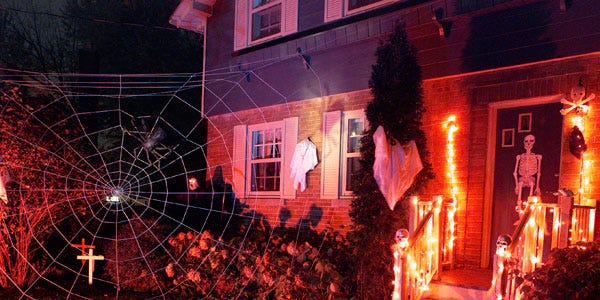
Not every Halloween tip is about style. Some are about not accidentally creating chaos for birds, pets, and the people next door. Decorative fake spider webs may look wonderfully creepy, but outdoors they can trap wildlife. If you love the web look, it is smarter to keep that effect indoors or behind windows where animals cannot get tangled.
Also think about sound, brightness, and placement. Motion-activated props are hilarious until they start screaming every time a leaf moves. Floodlights aimed straight into the street can be dramatic, but they can also be annoying. A great Halloween display surprises people without punishing everyone within a three-house radius.
The most memorable displays are immersive, not overwhelming. Cornstalks, branches, gourds, mums, lanterns, and layered lights can create a spooky atmosphere without relying on nonstop noise or harsh lighting. Sometimes a well-placed shadow is scarier than a twelve-foot clown with commitment issues.
10. Do a Night Test and Edit Ruthlessly
Here is the secret many people skip: Halloween decorations should be judged at night. That bat swarm looked amazing in daylight? Great. At night it might disappear completely. That ghost hanging by the porch? In the dark, it may look like a white grocery bag with ambition.
Once everything is up, step outside after sunset and look at your display from the sidewalk, driveway, and front door. Check what stands out, what gets lost, what blocks the path, and what needs more light. Then edit. Move one item. Remove two. Add glow to one feature. Lower a lantern. Raise a ghost. Tighten a cord. These small changes make a huge difference.
The best decorating instinct is not adding more stuff. It is knowing when the scene already works. Halloween is at its strongest when your display tells a visual story instead of shouting every idea at once.
Conclusion
Hanging Halloween decorations is part design project, part practical problem-solving, and part annual excuse to behave like a theatrical raccoon with a ladder. When you plan around a focal point, choose the right hanging tools, respect weight and weather, use safer lighting, protect walkways, and edit the display after dark, your decor looks more polished and feels more welcoming.
That is the sweet spot: spooky enough to impress, smart enough to stay standing, and safe enough that the only screams you hear are the fun kind. Whether your style leans elegant, eerie, playful, or full haunted mansion, these Halloween decorating tips can help you build a display that looks intentional instead of improvised. And that, my friend, is how you make your house the one everyone remembers.
Extra: Real Experiences and Lessons Learned While Hanging Halloween Decorations
One of the biggest lessons people learn with Halloween decorating is that enthusiasm usually arrives about thirty minutes before common sense. The first year I really tried to decorate a porch, I assumed I could hang everything in one burst of spooky genius. I brought out ghosts, string lights, a wreath, a few bats, two lanterns, and a skeleton that looked way too confident for something without muscles. I figured I would be done before sunset. Three hours later, one ghost had spun itself into a haunted burrito, the lights were uneven, and the skeleton had fallen face-first into a mum planter like he had lost a bar fight.
That experience taught me something important: decorating always goes faster when you slow down in the beginning. Once I started laying everything out first and deciding what belonged on the door, what belonged on the railing, and what needed to stay in storage, the whole setup looked better. I stopped trying to use every item I owned and started thinking like a stylist instead of an overexcited goblin in sweatpants.
Another lesson came from weather. A lot of people underestimate wind until a lightweight decoration starts flapping with the energy of a distressed pelican. I once hung fabric ghosts from a small tree branch using only one tie point each. They looked fantastic for about an hour. Then the breeze picked up, and suddenly the ghosts were spinning like tiny paranormal helicopters. After that, I started securing hanging props with a second invisible tie or using a slightly heavier base material. The difference was immediate. They still moved, but in a creepy floating way instead of a “yard sale in a tornado” way.
Lighting is another area where experience changes everything. In daylight, almost any display seems acceptable. At night, the truth comes out. I have had decorations disappear entirely after sunset because they were too dark, too low, or too far from the main light source. I have also had the opposite problem, where one spotlight was so bright it made the rest of the porch look like a stage production of Phantom of the Opera: Suburban Edition. The fix was simple: less brute-force brightness, more layered glow. A few warm lanterns, soft string lights, and one focused accent light created a much better effect than blasting everything with the decorative equivalent of an interrogation lamp.
There is also a practical side to decorating when guests are involved. Once you watch a child try to step around a low-hanging spider while also protecting a candy bucket, you quickly understand why clear walkways matter. Decorations should create atmosphere, not confusion. Over time, I learned to keep the drama up high, the path open, and the steps well defined. People still noticed the decor, but they were able to enjoy it without navigating a haunted obstacle course.
My favorite experience, though, is the moment when the display finally feels finished. It usually happens at night, when you step back to the curb and everything clicks. The ghosts are floating, the pumpkins are glowing, the bats look like they are mid-flight, and the front porch has just enough shadow to feel mysterious. That is when hanging Halloween decorations stops being a chore and starts feeling like storytelling. You are not just putting things on hooks. You are building a mood, creating anticipation, and giving the whole house a personality for the season. And honestly, that is what keeps people coming back to decorate every year, even after wrestling with cords, ladders, weather, and at least one judgmental skeleton.