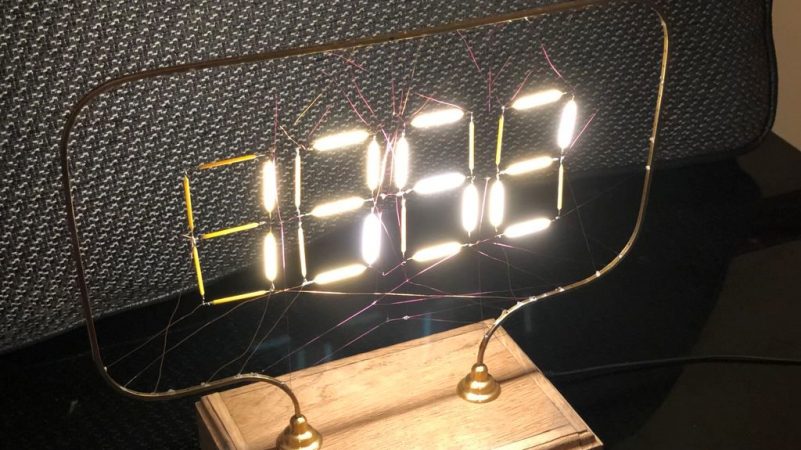
Every now and then, a DIY project comes along that makes you do a double take, grin a little, and think, “Well, now my desk clock suddenly feels emotionally underqualified.” That is exactly the charm of the spider web clock built from LED bulb filaments. It takes a familiar object most of us barely notice anymorean old LED light bulband turns its most eye-catching part into something wonderfully strange: a floating digital clock that looks like it was spun by a very technical spider with excellent taste.
At first glance, the build feels almost magical. The digits appear suspended in air, outlined by glowing “filaments” and tied together with a tangle of fine wires that resemble silk strands caught in morning light. But the real magic is not fantasy. It is design logic, electronics know-how, and a healthy amount of maker stubbornness. This clock is a great example of what happens when upcycling meets visual storytelling. It is also a reminder that old LED light bulbs are more than disposable hardware. In the right hands, they become raw material for functional art.
That combination is what makes the idea so sticky from an SEO and storytelling standpoint. “Old LED light bulbs,” “LED filament clock,” “spider web clock,” “DIY upcycling,” and “maker electronics” all naturally meet in one topic. Better still, the project does not rely on hype. It earns attention the old-fashioned way: by being clever, beautiful, and just a tiny bit dangerous-looking. Which, if we are being honest, is a classic recipe for internet fame.
The Clock That Looks Like It Was Spun by a Very Nerdy Spider
The original spider web clock idea is memorable because it rejects the chunky, boxed-in look of most digital clocks. Instead of hiding the segments behind tinted plastic, it puts everything on display. The LED filaments form the numerals, while delicate wiring stretches behind them in a lace-like pattern. The result is airy, sculptural, and surprisingly elegant.
That open-frame construction gives the clock its signature identity. It looks part timepiece, part installation art, and part steampunk fever dream. Unlike a traditional seven-segment display, which often feels blunt and purely functional, this version lets the supporting structure become part of the show. The wires are not merely there to do electrical chores. They create texture, rhythm, and visual tension. In other words, the guts of the project stop apologizing for being visible and start posing for the camera.
There is a reason that aesthetic lands so well. People love objects that reveal how they work. Transparent turntables, mechanical watches with exposed movements, tube amplifiers with glowing glass, and Edison-style bulbs all trade on the same pleasure: function made visible. The spider web clock joins that club with a wink. It does not just tell time. It performs time.
Why Old LED Light Bulbs Make Such Good Clock Parts
They borrow vintage charm without the vintage headaches
LED filament bulbs were designed to mimic the look of old-school incandescent bulbs. That is why they are so attractive in decorative lighting in the first place. They give off a familiar, nostalgic visual language while still using modern LED technology. For a clock project, that makes them ideal. You get the romance of visible “filaments” without relying on fragile, hot-running incandescent hardware that belongs in a museum gift shop or your grandparents’ attic.
That visual nostalgia matters. Standard LEDs can be bright and practical, but they rarely make people feel poetic. LED filaments, by contrast, suggest warmth, craft, and a little bit of theater. Even when they are off, they still look interesting. That is a big deal in a design object that sits in a room all day, not just when you check the time.
They are efficient, light on heat, and surprisingly dramatic
Modern LEDs became dominant for a reason: they use far less energy than traditional incandescent bulbs and last much longer. That bigger story matters here because the spider web clock is built from a technology that already represents a leap forward in efficiency. So the project is not just recycling old parts for novelty. It is repurposing components from a lighting technology known for low energy use and long service life.
What makes the idea especially fun is the contrast between the humble source material and the elegant result. A decorative bulb you might have tossed in a box of “maybe useful one day” leftovers suddenly becomes a precision-looking display element. That is peak maker energy right there: not waste, not junk, but a future project waiting for a dramatic entrance.
They turn structure into style
LED filaments are slender, linear, and visually legible from a distance. That makes them perfect for seven-segment-style numerals. They are not just bright enough to read; they are thin enough to create floating digits with lots of negative space around them. The emptiness between the segments becomes part of the appeal. In a spider web clock, that empty space is not empty at all. It is where the design breathes.
How the Spider Web Clock Actually Works
A suspended frame and a web of wiring
The original build uses LED bulb filaments as the segments of a large digital clock. Those segments are arranged inside a bent brass frame mounted on an oak base, while very fine wires route power through the structure. That web of connections is not hidden away; it becomes the visual signature of the whole piece. It is the rare case where wiring earns top billing rather than a stern lecture from a cable organizer.
The numerals are created using a seven-segment layout, but the display does not look like a normal seven-segment display. Because each glowing strip is suspended and supported in a delicate framework, the numbers feel lighter, almost handwritten in light. The geometry is precise, but the presentation feels organic.
Brains below, beauty above
Like many great objects, the clock cheats a little. The fancy part is up top; the practical part is tucked below. Driver chips and control electronics live in the base, where they can do the unglamorous work of handling the segments, powering the display, and keeping the whole thing readable. In the original concept, specialized driver chips reduced the number of control lines needed, which helped simplify the overall setup.
That balance is important. A project like this only works because someone decided the engineering should serve the visual idea, not overpower it. The electronics are absolutely essential, but they do not try to steal the spotlight. The light does that job just fine.
The catch: this is not a “hold my coffee” beginner build
Here is the part where the charming spider scuttles into real-world electrical caution. The original project involved exposed high voltage on the frame. That means the clock is visually delicate but electrically serious. Anyone inspired by the concept should treat it as a design case study first and a weekend replication challenge second.
That does not make the build less impressive. If anything, it makes it more honest. Great maker work often lives at the intersection of creativity and discipline. The point is not that everyone should crack open old bulbs and start wiring up glowing numerals after lunch. The point is that a skilled builder looked at a common component and saw a new use hiding in plain sight.
What Makes the Design So Brilliant
The spider web clock works because it understands contrast. It is old-looking but modern, delicate but engineered, digital but emotional. That mix is rare. Plenty of DIY electronics projects function perfectly well. Fewer of them have a point of view.
This one absolutely has a point of view. It says that exposed electronics can be beautiful. It says that upcycled parts do not have to look scrappy or apologetic. It says that an object can be useful and still have a little swagger. That last one, frankly, is how more clocks should behave.
There is also a strong lesson here for designers and content creators: familiar materials become fresh again when you change the framing. An LED bulb is boring in the socket because we expect it there. Pull its filament elements out of that familiar context, suspend them in a web-like structure, and suddenly the same technology feels new. The project proves that reinvention is often less about inventing new materials and more about giving old materials a better stage.
The Upcycling Angle Is More Than a Gimmick
Talking about old LED light bulbs in 2026 means talking about efficiency, longevity, and end-of-life decisions. LEDs are widely praised for using less electricity and lasting far longer than incandescent bulbs. They also typically contain no mercury, which gives them an advantage over CFLs in everyday household handling. But “better” does not mean “free pass.” All electronics still have a material footprint, and eventually even efficient products become waste.
That is what makes a project like this interesting from a sustainability point of view. It does not solve e-waste on its own, obviously. No single cool desk object is out here personally defeating global materials management. But it does reflect a smarter attitude: before you throw something away, ask whether part of it has another life. Sometimes the answer is no. Sometimes the answer is, “Apparently yes, and now it tells time like a haunted chandelier.”
Still, the most responsible takeaway is not “smash every dead bulb for parts.” It is “think in layers.” Reuse when practical. Repurpose when safe. Recycle properly when the project ends or the parts are not salvageable. Good upcycling is creative, but it is also realistic.
Why This Project Connects With Makers and Readers
It scratches the nostalgia itch
Filament-style lighting taps into a deep affection for the warm, visible glow of older bulbs. Even though the technology is modern, the emotional response feels vintage. That makes the spider web clock instantly approachable. It looks advanced, but it does not feel cold.
It rewards close inspection
From across the room, the clock is beautiful. Up close, it gets better. The fine wiring, suspended segments, and open construction invite the eye to linger. It is one of those objects that says, “Come closer, I have a trick to show you.” Those are the kinds of designs people remember, photograph, and share.
It tells a bigger story about maker culture
At its heart, this is a project about curiosity. Someone looked at LED bulb filaments and did not stop at, “Huh, neat.” They kept going until they found a use that was structural, visual, and practical. That is the maker mindset in one sentence: curiosity with follow-through.
For readers, that story is satisfying because it feels inventive without being abstract. You do not need to understand every line of the circuit to appreciate the leap of imagination. That makes the spider web clock a perfect subject for a high-quality blog article. It offers technology, design, sustainability, and personality in one package.
If You Wanted to Create a Similar Look Today
Anyone inspired by this idea would probably approach it with a slightly more modern toolkit now. Rather than harvesting old bulbs by force, many builders would look for LED filament components directly, use safer power strategies, and choose control hardware that simplifies timing and display management. The spirit of the project would stay the same, but the path could be cleaner and easier.
That is another reason the spider web clock still feels relevant. It is not trapped in one moment of hardware history. The concept can evolve. You could imagine a version with warmer color tuning, a Wi-Fi-synced controller, a more enclosed safe frame, or even a minimalist gallery-style mount that pushes the “floating digits” idea even further. The original build opened a door. Other makers can decide how fancy, practical, or gloriously unnecessary they want to get once they walk through it.
Conclusion
Old LED Light Bulbs Give Up Filaments For Spider Web Clock is the kind of title that sounds like clickbait until you see the concept and realize it undersells the result. This is not just a quirky clock hack. It is a lesson in how design, electronics, and reuse can intersect in a way that feels genuinely fresh.
The genius of the spider web clock lies in its restraint. It does not bury the viewer in unnecessary complexity. It takes one strong visual ideaglowing LED filaments suspended like silkand commits fully. The build honors the strengths of LED technology while giving a respectful nod to the emotional pull of vintage lighting. It is efficient without being sterile, artistic without becoming useless, and technical without losing its sense of wonder.
Most importantly, it reminds us that yesterday’s lighting hardware can become tomorrow’s conversation piece. Sometimes innovation is not about inventing a new component. Sometimes it is about looking at an ordinary one and asking a better question. In this case, that question was simple: what else can these LED filaments be? The answer, delightfully, was a spider web clock.
Experiences Related to “Old LED Light Bulbs Give Up Filaments For Spider Web Clock”
One of the most interesting things about projects like this is the experience they create long before the clock ever shows a correct minute. Makers who work with reclaimed LED parts often describe the early stage as a mix of curiosity, optimism, and the quiet suspicion that they may have chosen a hobby with far too many tiny wires. On paper, the idea sounds straightforward: salvage LED filaments, suspend them as digits, power them carefully, and enjoy the glow. In practice, it is a slow dance between aesthetics and patience.
The first memorable experience is usually surprise. LED bulb filaments look simple until you try to treat them as standalone design elements. They are slim, fragile, and far more expressive than expected. The moment one lights cleanly outside its original bulb housing, it stops feeling like scrap and starts feeling like treasure. That shift is a big part of the project’s appeal. It changes the way a builder sees ordinary objects. Suddenly, old bulbs are not trash. They are donors.
Then comes the second experience: frustration wearing a fancy hat. A spider web clock depends on alignment, spacing, and restraint. If one segment sits crooked, the whole digit can look sleepy. If the wires pull too hard in one direction, the airy effect turns messy fast. Builders often discover that this kind of project is not hard in a loud way. It is hard in a whispering way. It asks for careful hands, repeated adjustments, and the ability to redo something you already spent twenty minutes “finishing.”
But that is also where the satisfaction lives. Unlike a project hidden in a box, this one rewards finesse. Every improved wire route and every cleaner segment placement is visible immediately. The object becomes better not just electrically, but visually. That can be deeply satisfying because progress is easy to see. The clock slowly transforms from a pile of parts into something with presence.
Another common experience is the strange emotional pull of the finished glow. LED filaments have a warmth that photographs well and feels even better in person. When the room gets dim and the numerals begin to hover against the web of wires, the project no longer feels like an electronics experiment. It feels like a piece of atmosphere. That emotional payoff is hard to quantify, but it is probably the reason ideas like this stay with people. They are functional, yes, but they also change the mood of a space.
And finally, there is the experience every good maker build should leave behind: a sharpened eye. After spending time with a spider web clock, people tend to look differently at broken or outdated hardware. They start noticing shape, glow, texture, and potential. That may be the project’s biggest gift. Not the clock itself, but the habit of seeing materials for what they could become next.