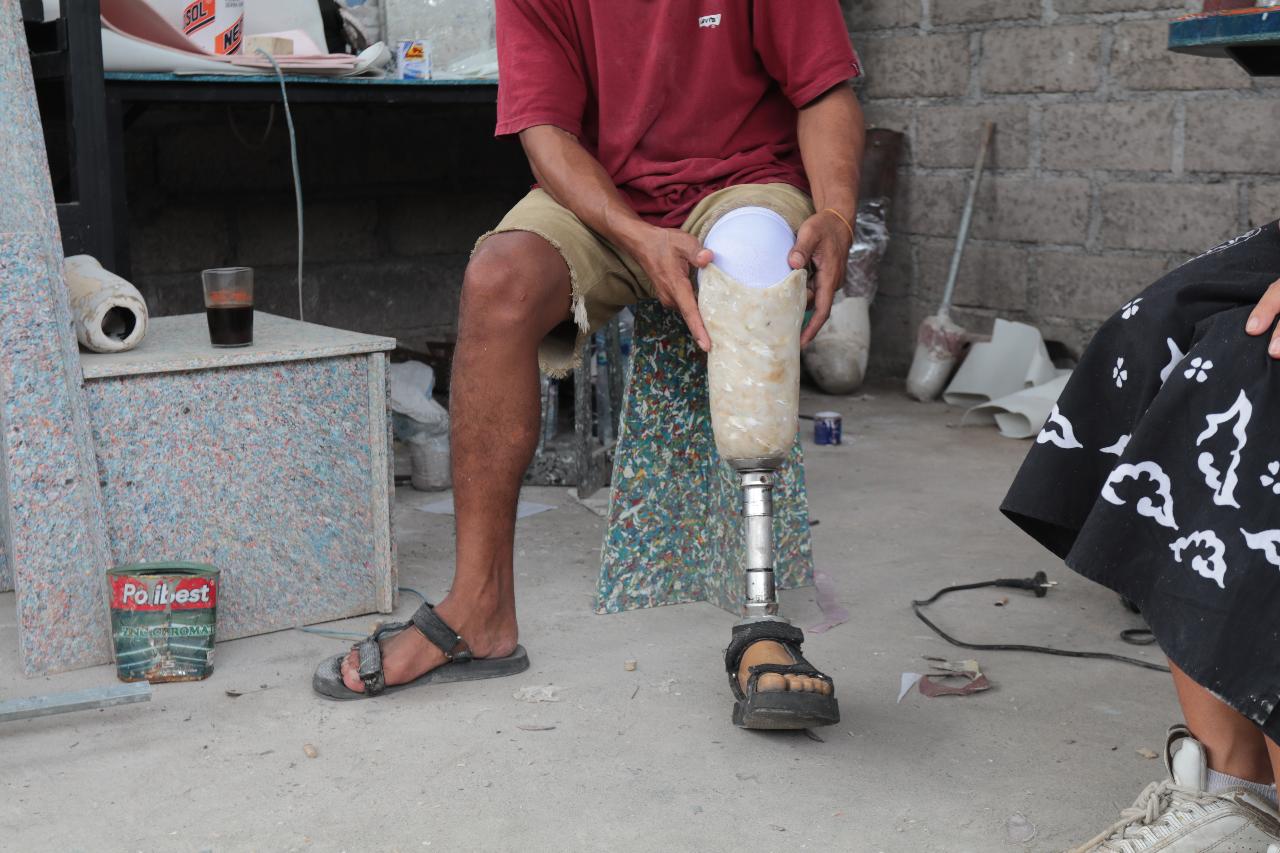
Imagine a bottle cap, a broken storage bin, or a rejected piece of polypropylene getting a second lifenot as a park bench, not as a novelty keychain, but as part of a prosthetic limb that helps someone walk, work, play, or simply move through the day with more confidence. That is the surprisingly practical promise behind Precious Plastic Prosthetics: the intersection of recycled plastic, prosthetic design, open-source engineering, and the very human need for affordable assistive technology.
The phrase sounds almost poetic, but the idea is refreshingly down-to-earth. Around the world, communities are experimenting with ways to collect, sort, shred, heat, mold, and 3D print plastic waste into useful products. At the same time, prosthetic care remains expensive, especially for children who outgrow devices quickly, people in low-income regions, and patients who need frequent adjustments. Put those two problems in the same workshop, add a dash of engineering optimism, and suddenly plastic waste stops looking like trash. It starts looking like raw material.
To be clear, a prosthetic limb is not a craft project. It must be comfortable, safe, durable, hygienic, fitted by trained professionals, and appropriate for the user’s body and activity level. But when recycled materials are carefully processed and tested, they can support a larger movement toward affordable prosthetic limbs, sustainable medical devices, and locally repairable assistive technology. In other words, this is not about making “cheap” prosthetics. It is about making smarter, more accessible ones.
What Are Precious Plastic Prosthetics?
Precious Plastic Prosthetics refers to prosthetic devices or prosthetic components made with recycled plastic, inspired by community recycling models such as Precious Plastic and by open-source prosthetic design communities. The concept usually focuses on parts like sockets, covers, hand shells, training devices, cosmetic panels, or 3D-printed assistive hands rather than every single component of a high-performance prosthetic system.
The most important part of many limb prostheses is the socket, which is the custom interface between the person’s residual limb and the rest of the device. A socket must distribute pressure, provide stability, avoid painful rubbing, and allow the user to move naturally. Traditional sockets may use thermoplastics, laminated composites, carbon fiber, silicone liners, or other specialized materials. Recycled plastic enters the conversation because certain thermoplasticsespecially polypropylene and PET-based materialscan be reshaped, molded, or printed when processed correctly.
In practical terms, recycled plastic prosthetics may involve cleaned polypropylene waste being shredded, heated into sheets, and molded into socket-like forms. Other projects explore recycled PET from bottles, 3D-printed plastic components, or plastic panels used as protective cosmetic covers. The big idea is circular design: instead of extracting new material for every device, communities can turn local waste streams into locally useful products.
Why This Idea Matters
Limb loss and limb difference affect millions of people worldwide. In the United States, diabetes and vascular disease are major drivers of lower-limb amputation, while trauma, cancer, infection, and congenital limb differences also play roles. Prosthetic technology can dramatically improve independence, but access is uneven. A device may require clinical evaluation, custom fitting, multiple appointments, replacement parts, and long-term maintenance. For children, the challenge is even more obvious: kids grow faster than a Wi-Fi bill increases after the promotional period ends.
That is why low-cost and adaptable prosthetic solutions matter. Open-source groups such as e-NABLE have shown that volunteer designers and makers can create 3D-printed upper-limb devices for children and adults who may not otherwise have access to a functional assistive hand. University teams, nonprofits, and makerspaces have also demonstrated how digital design can reduce production time and make customization easier.
Recycled plastic adds another layer to this accessibility story. It addresses material cost, waste management, local manufacturing, and environmental responsibility at the same time. A community that already collects plastic waste may be able to create sheet stock or filament-like material for non-critical components. A clinic in a resource-limited area may benefit from lower-cost materials if the final product still meets safety and performance requirements. A child may receive a colorful, lightweight assistive hand that can be reprinted or repaired without a family needing to sell the refrigerator, the couch, and possibly the family dog.
The Materials Behind Recycled Plastic Prosthetics
Polypropylene: The Workhorse Plastic
Polypropylene is already common in prosthetic and orthotic work because it is lightweight, moldable, relatively affordable, and tough enough for many clinical applications. In recycled-plastic prosthetic experiments, polypropylene is especially attractive because it can be collected from certain household and industrial waste streams, processed into sheets, and thermoformed into useful shapes.
For lower-limb prosthetic sockets, recycled polypropylene must be handled carefully. The material needs consistent thickness, controlled heating, reliable forming, and proper finishing. Contamination, uneven melting, trapped air, or weak spots can affect strength and comfort. This is where the “precious” part becomes more than a charming name. Plastic is only precious when it is sorted, cleaned, processed, and tested like it matters.
PET and Recycled Bottle Materials
PET, commonly associated with beverage bottles, has also attracted attention in sustainable prosthetic research. Some studies have explored PET-based materials and composites for lower-limb sockets because PET can be processed into strong, lightweight forms. Recycled plastic bottles can be ground, spun, heated, or transformed into sheets and composite materials, depending on the manufacturing method.
The appeal is obvious: plastic bottles are everywhere, and prosthetic access is not. However, recycled PET must still prove itself under real-world loads, heat, sweat, motion, and repeated stress. A prosthetic socket is not a decorative lampshade. It lives in a demanding environment where comfort and safety are non-negotiable.
PLA, ABS, PETG, and 3D-Printed Prosthetic Parts
In 3D-printed prosthetics, materials such as PLA, ABS, PETG, nylon, and flexible filaments are commonly discussed. PLA is easy to print but can soften under heat. ABS is stronger in some applications but requires more controlled printing conditions. PETG offers a balance of toughness and printability. Nylon can be durable but more difficult to print consistently.
Recycled versions of these materials are increasingly available, but they must be used thoughtfully. A recycled filament spool may be excellent for a prosthetic hand cover or prototype, but not automatically suitable for a load-bearing limb component. Designers must consider layer adhesion, print orientation, fatigue strength, moisture, skin contact, and cleaning requirements.
How Precious Plastic Thinking Changes Prosthetic Design
The Precious Plastic movement popularized a simple but powerful idea: give communities the tools to recycle plastic locally. Machines for shredding, extrusion, injection, compression, and sheet pressing can turn plastic waste into usable products. When this philosophy meets prosthetics, it encourages local problem-solving instead of waiting for expensive imported solutions.
That shift matters. Prosthetic care is not only about the device; it is about the ecosystem around the device. Who can repair it? Who can adjust it? Who understands the user’s daily environment? A prosthetic leg used on dusty rural roads may face different challenges than one used in an air-conditioned office. A child’s 3D-printed hand may need a replacement finger after a week of playground heroics. A locally repairable design can reduce downtime and make assistive technology feel less fragile.
Precious Plastic Prosthetics also invites designers to think in modules. Instead of one expensive, difficult-to-service object, a prosthesis can include replaceable parts: protective covers, adjustable straps, modular grips, cosmetic shells, socket test forms, training components, or low-cost trial devices. This modular mindset supports repair, personalization, and experimentation while keeping clinical safety at the center.
Open-Source Prosthetics and the Maker Movement
The rise of open-source prosthetics changed the conversation around assistive technology. Communities such as e-NABLE showed that a network of volunteers, engineers, clinicians, parents, students, and makers could share designs and improve them together. Many early open-source hands were body-powered, meaning wrist or elbow movement helped open and close the fingers using cables, elastic tension, or mechanical linkages.
These devices do not replace every commercial prosthetic. They are not magic robot hands from a superhero movie, and they should not be marketed as medical miracles. But they can be useful transitional devices, learning tools, confidence builders, and low-cost options for some users. For children with upper-limb differences, a brightly colored assistive hand can also be socially powerful. A child who once had to answer awkward questions may suddenly be asked, “Whoa, is that a dragon hand?” That is a very different kind of playground conversation.
Open-source design also makes recycled plastic more practical. Digital files can be modified for different users, printed in small batches, and improved based on feedback. If a component breaks, the design can be updated instead of discarded. If a local recycling workshop can produce consistent plastic sheet or filament, designers may be able to test whether that material works for non-critical parts.
Benefits of Recycled Plastic Prosthetics
Lower Material Costs
Material cost is not the only expense in prosthetic care, but it matters. Clinical time, scanning, casting, alignment, components, and follow-up visits all contribute to final cost. Recycled plastic may reduce the price of certain components, especially in settings where imported materials are expensive or difficult to obtain.
Local Manufacturing and Repair
When prosthetic parts can be produced locally, users may not have to wait weeks or months for every repair. A local workshop can fabricate test sockets, covers, training devices, or replacement pieces. This is especially valuable in regions where prosthetic clinics are far away or supply chains are unpredictable.
Environmental Impact
Plastic waste is a global problem, and medical manufacturing also has an environmental footprint. Recycled plastic prosthetics will not solve pollution by themselves, but they can be part of a broader circular economy. Turning waste into mobility support is a powerful example of design with purpose.
Customization and Identity
Prosthetics are personal. Some users prefer devices that look natural; others want bold colors, patterns, textures, or visible mechanics. Recycled and 3D-printed plastics make customization easier. A child may choose a superhero color scheme. An adult may prefer a minimalist matte-black cover. Someone else may want a socket cover that looks like it came from a science-fiction movie, minus the dramatic soundtrack.
Limitations and Safety Concerns
The excitement around recycled plastic prosthetics should not outrun the science. A prosthesis interacts directly with the human body. Poor fit can cause pain, skin irritation, wounds, falls, or long-term mobility problems. A weak component can fail at the worst possible moment. A material that looks strong on a workbench may behave differently after months of heat, sweat, impact, and repeated loading.
That is why recycled plastic prosthetic components should be developed with prosthetists, engineers, medical professionals, and users. Testing should include mechanical strength, fatigue performance, skin-contact safety, hygiene, heat resistance, and cleaning procedures. Medical-device rules also matter. In the United States, prosthetic and orthotic devices may fall under FDA-regulated categories, and 3D-printed medical devices require careful attention to design controls, manufacturing consistency, and intended use.
In simple terms: recycled plastic can be promising, but “I saw it online and printed it overnight” is not a healthcare plan. The best projects respect both innovation and clinical responsibility.
Real-World Examples and Emerging Ideas
Several projects have already pointed toward the future of sustainable prosthetics. Some groups have demonstrated lower-limb prosthetic sockets made from recycled polypropylene sheets. Others have experimented with prosthetic components made from recycled ocean plastic, plastic bottle materials, or 3D-printed polymers. University labs and makerspaces continue to develop low-cost hands, child-friendly devices, and open-source designs.
One especially interesting direction is the use of recycled plastic for prosthetic covers rather than high-risk structural parts. Covers protect components, improve appearance, and allow personal expression. They are also easier to replace and less medically sensitive than sockets or load-bearing pylons. Another promising area is diagnostic and training devices. Recycled plastic can be useful for prototypes, temporary forms, educational models, and fitting trials before a final medical-grade device is produced.
There is also room for hybrid design. A prosthesis might use certified commercial joints and feet, a clinically fitted socket, and recycled plastic cosmetic covers or modular accessories. This balanced approach avoids the false choice between high-tech medicine and community recycling. The future may be both: professional where it must be, local where it can be.
Design Principles for Better Precious Plastic Prosthetics
Start With the User, Not the Machine
The best prosthetic design begins with the person who will use it. What activities matter most? Walking to school? Cooking? Cycling? Working in a shop? Holding a pencil? Carrying groceries? A recycled-plastic solution should respond to real daily needs, not just the maker’s desire to say, “Look, we turned trash into a limb!”
Choose the Right Part for the Right Material
Not every component should be made from recycled plastic. Designers should match material properties to the job. A decorative cover has different requirements than a socket. A child’s lightweight assistive hand has different requirements than an adult’s high-impact running prosthesis. Good engineering means knowing when recycled plastic is appropriateand when it is not.
Test, Adjust, Repeat
Prosthetic development is iterative. Fit improves through feedback. Materials improve through testing. Designs improve through failure analysis. The maker movement sometimes celebrates speed, but healthcare rewards patience. A safe device is not just the one that works on day one. It is the one that keeps working after real life has had a chance to bully it.
Keep Repair in Mind
A sustainable prosthetic should be repairable. Modular parts, standard fasteners, accessible design files, and local fabrication can reduce waste and downtime. Repairability is not glamorous, but it is deeply practical. Nobody wants a device that becomes useless because one small custom piece cracked and the replacement is sitting in a warehouse on another continent.
The Future of Sustainable Prosthetic Care
The future of recycled plastic prosthetics is likely to be practical, hybrid, and community-driven. We may see more clinics using digital scanning, 3D printing, and recyclable thermoplastics. We may see local recycling workshops partner with prosthetists to produce safe non-critical components. We may see children receiving colorful, affordable assistive hands that can be resized as they grow. We may also see stronger standards for recycled materials used in medical contexts.
Artificial intelligence, digital modeling, and better material testing may speed up design, but the heart of the movement remains human. Prosthetics are about dignity, mobility, identity, and independence. Recycling is about responsibility. When those two missions meet, the result is more than clever engineering. It is a reminder that waste is often just value waiting for a better assignment.
Experience Notes: What Working Around Precious Plastic Prosthetics Teaches You
Spending time around the idea of Precious Plastic Prosthetics changes the way you look at both plastic and prosthetic care. At first, the concept feels almost too neat: collect plastic waste, process it, and turn it into something life-changing. But the deeper you go, the more you realize the real story is not a fairy tale about recycling. It is a lesson in patience, collaboration, and humility.
The first experience many people have is surprise. A clean sheet of recycled polypropylene does not look like “trash” anymore. It looks like material. It has weight, texture, flexibility, and possibility. When shaped into a curved form, it becomes easier to imagine how waste can move from the recycling bin into a workshop and then into a healthcare setting. That moment is powerful because it makes sustainability feel tangible. You are not just reading about circular design; you are holding it.
The second lesson is that prosthetics are far more personal than outsiders expect. A socket is not just a plastic cup for a limb. It is the place where engineering meets skin, nerves, muscles, balance, memory, and daily routine. A tiny pressure point can ruin an otherwise beautiful design. A device that looks perfect on a table may feel wrong after ten minutes of walking. This is why user feedback is not optional. It is the design process.
Another experience that stands out is watching children respond to customized assistive devices. Adults often talk first about function, cost, and durability. Children notice color, shape, personality, and whether the device makes them feel confident. A bright printed hand or a patterned cover can turn a medical object into something expressive. That does not make the device less serious. It makes it more human.
Working with recycled plastic also teaches respect for consistency. Two batches of recycled material can behave differently if the plastic types are mixed, poorly cleaned, overheated, or cooled unevenly. Makers quickly learn that good intentions do not automatically create good material. Sorting matters. Documentation matters. Testing matters. The workshop needs creativity, yes, but it also needs boring things like labels, measurements, checklists, and quality control. Boring, in this case, is beautiful.
The most encouraging experience is seeing how many different people can contribute. A prosthetist understands fit. An engineer understands load and geometry. A recycler understands material flow. A designer understands usability and appearance. A patient understands the truth. No single person owns the solution. Precious Plastic Prosthetics works best when it becomes a team sport.
The final takeaway is realistic optimism. Recycled plastic will not replace every advanced prosthetic material, and it should not be forced into roles where safety could suffer. But it can reduce waste, lower barriers, support local repair, expand design options, and inspire new partnerships. That is enough to be exciting. Sometimes innovation is not about inventing something from nothing. Sometimes it is about looking at a pile of discarded plastic and asking, “What if this still has work to do?”
Conclusion
Precious Plastic Prosthetics is more than a catchy phrase. It is a practical vision for combining recycled plastic, open-source design, clinical expertise, and human-centered innovation. The strongest future for this field will not come from reckless DIY medical devices or recycled materials used without testing. It will come from thoughtful partnerships between prosthetists, engineers, recycling communities, researchers, and the people who actually use prosthetic devices every day.
When done responsibly, recycled plastic can help create affordable prosthetic components, colorful assistive hands, repairable covers, training devices, and locally manufactured solutions. It can also challenge the medical-design world to think harder about sustainability. Plastic waste is a problem. Prosthetic access is a problem. Precious Plastic Prosthetics asks whether one problem can help solve part of the other. That is not just clever. That is the kind of design thinking the world could use more often.
Note: This article is written for web publication and general education. Prosthetic devices should always be designed, fitted, tested, and adjusted with qualified clinical and technical professionals.