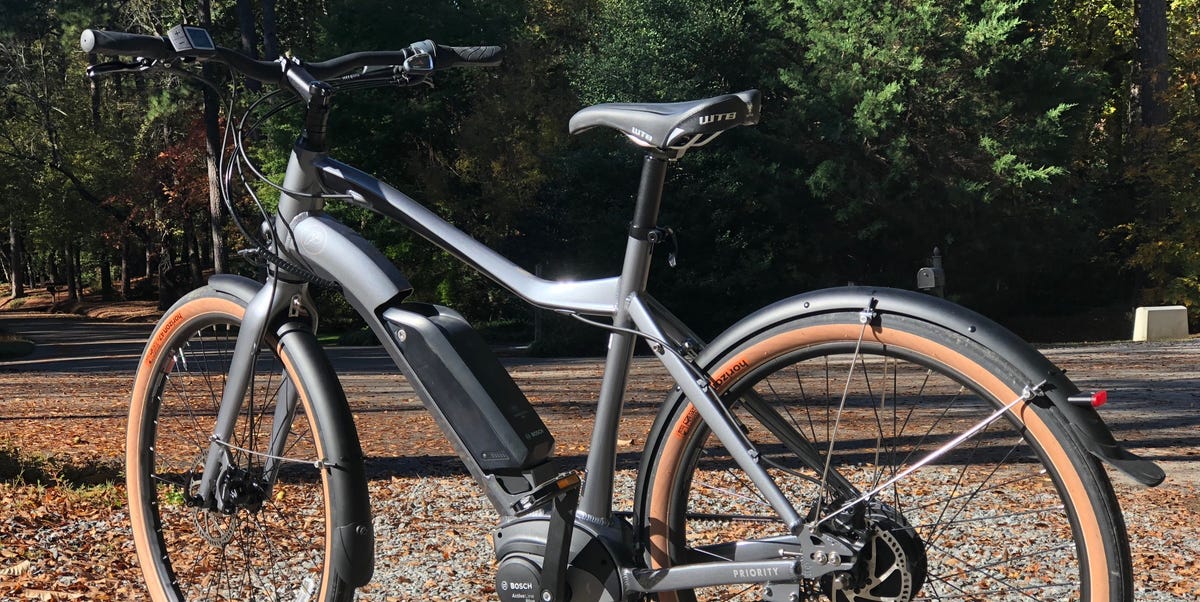
If your daily commute has ever felt like a boss level in a video game (traffic, potholes, surprise hills, and one very determined headwind), the
Priority Embark Commuter E-Bike was designed to make that level playable. This bike became well known for pairing premium commuter features
a Bosch mid-drive system, Enviolo CVT hub, Gates carbon belt, and hydraulic brakesinto one low-maintenance package built for real city life.
In plain English: fewer greasy hands, fewer drivetrain tantrums, and more “I actually enjoyed my commute.”
Even now, the Embark remains a compelling reference point for what a serious commuter e-bike should feel like. It’s especially relevant for riders shopping
the pre-owned market, comparing modern commuter models, or figuring out whether a belt-drive setup is worth the investment. In this guide, we’ll break down
specs, ride experience, strengths, trade-offs, safety essentials, and who should (or shouldn’t) chase this bike in 2026.
What Is the Priority Embark, Exactly?
The Embark launched as a premium Class 1 commuter electric bike aimed at riders who wanted dependable daily transportation without turning into
a part-time bike mechanic. It was priced around the high-end commuter segment and focused on practical quality rather than flashy gimmicks.
Core Profile at a Glance
- Motor: Bosch Active Line Plus mid-drive (250W nominal, up to 50 Nm torque)
- Battery: Bosch PowerPack 400Wh
- Top assisted speed: 20 mph
- Transmission: Enviolo Trekking CVT hub
- Drivetrain: Gates Carbon Drive belt
- Brakes: Tektro hydraulic disc brakes
- Frame/Fork: Aluminum commuter platform
- Weight: Commonly reported around mid-to-high 40 lb range depending on setup
- Original MSRP context: around $3,999 when sold new
In short, the Priority Embark Commuter E-Bike wasn’t trying to be the cheapest way into e-biking. It was trying to be the “buy once, ride often”
commuter tool that stays calm and quiet under everyday use.
Why the Embark Still Matters in 2026
Priority’s current electric lineup has evolved, and the Embark now appears more like a legacy model than a front-page launch product. But that doesn’t reduce its
relevance. If anything, it gives us a useful benchmark: when people say they want a commuter e-bike with “less fuss,” they usually mean the same formula the Embark
used years agomid-drive assist, internal gearing feel, and belt-drive cleanliness.
Many newer bikes advertise smart screens, tracking apps, or fancy anti-theft alerts (all useful, by the way), but the Embark reminds us that ride quality and
maintenance burden are still the two things you feel every single day. No one brags about notifications at mile 8 in the rain. They brag when the bike just works.
Ride Feel: Smooth, Natural, and Surprisingly Relaxing
1) Bosch Mid-Drive Behavior
The Bosch Active Line Plus personality is a big reason people remember this bike fondly. It provides assist that feels proportional to your pedaling rather than
on/off like a light switch. On city starts, it gives enough torque to clear intersections confidently, but it doesn’t yank you forward like an overeager rocket.
That matters if you commute in stop-and-go traffic and want control more than drama.
2) Enviolo CVT Convenience
The Enviolo continuously variable setup lets you “dial” resistance more smoothly than traditional click-shift steps. In commuting terms, it means fewer awkward
shift moments at stoplights and easier cadence tuning when your route constantly changes gradient. If your old bike made every bridge climb feel like a tiny betrayal,
this is a welcome upgrade.
3) Belt-Drive Quietness
The Gates carbon belt is the clean-shirt hero here. No chain oil on your pants. No rusty chain panic after wet rides. No grinding soundtrack when you’re trying to
enjoy the morning. Belt systems are praised for quiet operation and low upkeep, especially when paired with geared hub systems in commuter use.
The Low-Maintenance Promise: Marketing or Reality?
For the Embark, the low-maintenance claim is more than ad copy. The drivetrain choice eliminates several common commuter headaches:
- No chain lubrication routine
- Less grime accumulation around drivetrain parts
- Fewer traditional derailleur adjustment issues
- Cleaner operation in mixed weather commuting
Is it literally “maintenance-free forever”? Of course not. Tires wear, brake pads wear, and all bikes need periodic checks. But compared with many chain-based
commuter e-bikes, the Embark’s setup usually reduces how often owners deal with drivetrain chores.
Commuter Utility: Practical Features That Actually Matter
A commuter bike should make weekdays easier, not just weekend test rides fun. The Embark’s design aligns with the core commuter checklist:
Battery and Range Practicality
A 400Wh pack with efficient assist modes is generally enough for many urban round-trips, especially when riders use Eco/Tour intelligently. Reported “up to”
range numbers (such as ~50 miles in low assist conditions) should be treated as best-case scenarios. Real range always changes with rider weight, elevation,
wind, tire pressure, and assist level.
Braking Confidence
Hydraulic disc brakes are a major commuter advantage because e-bikes carry extra speed and mass. In stop-heavy traffic, this is one feature worth paying for.
Brakes are not where you “save money and hope for the best.”
Class 1 Simplicity
The Embark is pedal-assist-focused and does not rely on a throttle-first riding style. That often feels more “bike-like,” and it can simplify where and how
riders are permitted to use the bikethough local rules still vary by state and city.
Safety Reality Check for Any Commuter E-Bike
Let’s be blunt: the safest e-bike is the one used correctly, charged correctly, and maintained correctly.
Battery Safety Habits You Should Treat as Non-Negotiable
- Use the manufacturer-supplied charger and approved battery replacements.
- Charge while awake and presentnever while sleeping.
- Follow charging instructions and unplug when complete.
- Favor certified systems that verify electrical and fire safety standards.
E-bike battery incidents in the wider market have made safety certification and charger discipline much more important. If you buy used, inspect battery condition,
confirm charger compatibility, and avoid “mystery pack” swaps.
Street Safety Basics Still Win
Fit matters. Brake function matters. Helmet fit matters. Visibility matters. A commuter setup with front/rear lights, reflective details, and predictable lane
behavior beats fancy tech every time.
Used-Market Buying Guide: How to Judge an Embark in 2026
Since the Priority Embark Commuter E-Bike now appears most commonly in resale channels, inspection quality is everything.
Checklist Before You Pay
- Battery health: Ask for charging history, storage habits, and current range behavior.
- Original charger: Confirm included and working charger.
- Drive system feel: Belt should run quietly and smoothly; no grinding, skipping, or odd tension noise.
- Brake wear: Check rotor condition and pad bite under hard stops.
- Motor behavior: Assist should be smooth, not jerky or delayed.
- Display/errors: Cycle through assist modes and verify no persistent fault codes.
- Fit and comfort: The perfect spec sheet means nothing if geometry doesn’t suit your body and route.
Price Positioning Strategy
Don’t compare a used Embark to bargain hub-motor bikes only by sticker price. Compare by total ownership stress over 2–3 years: service visits, drivetrain upkeep,
braking confidence, and replacement part ecosystem. A well-kept premium commuter can be a better value than a cheaper bike that constantly asks for attention.
Priority Embark vs Modern Commuter E-Bikes: Where It Still Competes
Today’s commuter market is broader than ever, with strong mid-price options and feature-rich models. Modern bikes may offer app security, GPS tracking, and other
connected features; those are genuinely helpful for some riders. But the Embark still competes on fundamentals:
- Natural-feeling mid-drive assist
- Low-maintenance belt-drive commuting
- Hydraulic braking and practical commuter geometry
- A proven “ride first” design philosophy
If your priority is dependable daily transport with minimal drivetrain mess, the Embark remains highly relevant. If your priority is deep app integration and
the latest smart locking ecosystem, newer models may feel more complete.
Health, Lifestyle, and Environmental Upside
Commuter e-bikes are not just mobility tools; they are habit tools. Public-health guidance emphasizes regular moderate activity each week, and e-bikes often help
people ride more consistently by lowering the physical barrier of hills, heat, distance, and fatigue anxiety.
From an emissions perspective, replacing even part of your car commuting can be meaningful over time. Typical passenger vehicles produce significant annual CO2,
so every short urban trip shifted to bike mode can add upespecially if your alternative is single-occupancy car travel.
Who Should Buy the Priority Embark Commuter E-Bike?
Great fit for:
- Daily commuters who hate chain maintenance
- Riders who prefer smooth, pedal-natural assist over throttle behavior
- Urban users needing reliable brakes and predictable handling
- Buyers comfortable investing in durable components, even used
Maybe not ideal for:
- Riders who want Class 3 speed profiles
- Shoppers focused purely on lowest upfront cost
- Users who specifically want throttle-dominant riding
- People needing ultra-light carry-upstairs convenience
Conclusion: A Commuter E-Bike Built Like a Daily Tool, Not a Toy
The Priority Embark Commuter E-Bike still stands out for one big reason: it respects your weekday reality. It was engineered around cleanliness,
consistency, and controlthree things that matter more than flashy specs once you’ve done your 200th rainy Tuesday commute.
If you find a well-maintained unit on the used market, inspect the battery system carefully, verify serviceability, and test ride with your real route in mind.
Done right, an Embark can still feel modern where it counts: smooth assist, quiet drivetrain, confident braking, and less maintenance drama than most chain-driven
alternatives.
Synthesis Methodology (US-Based Reputable Sources Used)
This article was synthesized from product information, technical reviews, commuter buying guidance, and safety/public-health resources from the following organizations
and publications: Priority Bicycles, Electric Bike Report, Electrek, Elevation Outdoors, Bicycling, REI, NHTSA, CPSC, UL Solutions, PeopleForBikes, CDC, EPA,
League of American Bicyclists, and Gates (U.S. pages).
Extended Experiences (): Living With the Priority Embark Commuter E-Bike
Week one with the Embark felt like the moment you switch from a noisy apartment fan to central airyou don’t realize how much background friction you were tolerating
until it disappears. My previous commuter had a chain that sounded like a maraca collection whenever weather turned ugly. The Embark, by comparison, was weirdly calm.
Not silent-silent, but “library voice” quiet for a machine doing real work. On Monday’s ride, I intentionally took the route with two stop-and-go sections and one
short climb that usually triggers my inner bargaining phase (“maybe I’ll just walk this”). The Bosch assist in Tour mode made it all feel predictable. No sudden surge.
No “whoa, easy there” moments. Just steady help where I needed it.
Tuesday was rain day, and this is where belt drive starts to feel like cheating in the best possible way. Normally, wet roads mean I’m already planning the post-ride
chain cleanup in my head. With the Embark, I parked, went inside, and forgot about it. That sounds small until you repeat the pattern for months. Commuting success is
often about removing tiny frictions, not adding heroic discipline. You don’t need to become “Bike Maintenance Person of the Year” to keep this platform rolling.
Wednesday I tested commute timing versus my usual car route at peak congestion. Door-to-door, the difference was smaller than most people expect, and bike travel time
was far more consistent. Car ETA bounced around; bike ETA stayed boringly stable. On a workday, boring is beautiful. I also arrived mentally better. Not “post-spin-class
euphoric,” just alert and less annoyed. That may be the hidden value of commuter e-bikes: they shrink the emotional tax of transportation.
Thursday was cargo-lite day: laptop, shoes, lunch, and a small grocery stop on the way home. This is where stable handling and brake confidence matter. Hydraulic discs
made city stops feel controlled even with extra load. The CVT-style shifting rhythm also reduced the awkward “oops wrong gear” moments at red lights. If you’ve ever
started from a dead stop in too hard a gear while a bus driver quietly judges your life choices, you know why this matters.
Friday I rode with lower assist to stretch range and force a bit more leg work. The bike still felt friendly, just less eager. By the weekend, one thing was clear:
the Embark doesn’t try to impress you with one spectacular trick. It wins by being consistently competent. It’s the coworker who always replies, always shows up, and
never creates extra drama in the group chat.
Over longer use, the practical lessons stack up. Keep tire pressure honest and range improves. Clean brake rotors occasionally and stopping stays crisp. Charge safely,
store the battery sensibly, and avoid off-brand charger experiments. Build a relationship with a shop that understands commuter e-bikes, and ownership gets easier.
Also, pick clothing for visibility and weather, not vanity. Fenders and layers beat “fashion bravery” every time.
If your goal is a commuter e-bike that feels like dependable transportation rather than a weekend gadget, the Priority Embark still makes a strong case. It won’t do
every possible thing. It does the important things repeatedly, calmly, and with very little fusswhich, for daily commuting, is exactly the point.