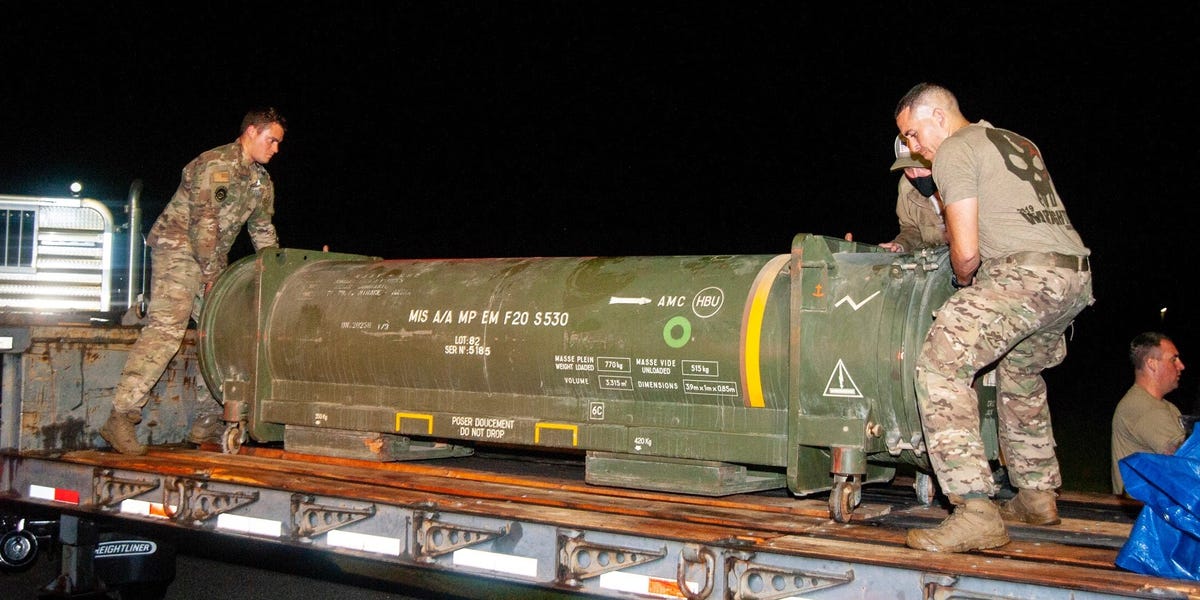
A Florida airport is not where most people expect to find a French air-to-air missile. Lost luggage? Sure. A delayed cargo pallet? Absolutely. A live Matra 530 missile sitting in a shipment near a defense contractor’s facility? That is the kind of plot twist that makes aviation people put down their coffee very slowly.
In August 2020, Lakeland Linder International Airport in Lakeland, Florida, became the unlikely center of a military safety response after a live but unarmed French S-530 air-to-air missile was discovered in a shipment connected to Draken International, a private adversary-air contractor based at the airport. The missile was ultimately secured by Explosive Ordnance Disposal specialists from MacDill Air Force Base in Tampa and moved to a munition storage facility while officials planned proper disposal.
The headline sounds almost unbelievable, but the incident is realand it offers a fascinating look at military logistics, airport safety, aging Cold War weapons, private fighter-jet operators, and the quiet professionalism of the people who deal with explosive hazards when everyone else wisely steps backward.
What Happened at Lakeland Linder International Airport?
The missile was discovered on Friday, August 14, 2020, at Lakeland Linder International Airport, a public airport in Polk County, Florida. According to multiple reports, the object was found during the evaluation of a shipment arriving at Draken International’s Lakeland facility. Draken employees noticed markings that suggested the item could be explosive, which is exactly the kind of label that changes an ordinary workday into a “please call the professionals” situation.
Authorities responded by partially evacuating the southeast side of the airport. The evacuation was precautionary, but it was not casual. When a potentially explosive military munition is involved, the safest plan is simple: limit exposure, create distance, notify surrounding tenants, and let trained explosive ordnance experts take over. Draken said it followed safety procedures designed to expose the minimum number of people for the minimum amount of time to a possible explosive hazard.
The U.S. Air Force’s 6th Explosive Ordnance Disposal team from MacDill Air Force Base responded, with support from the 6th Logistics Readiness Squadron and local authorities. The missile was transported by flatbed trailer to MacDill, where it was placed in a munition storage facility. Officials described the missile as live but unarmedmeaning it presented a serious hazard but was not in a ready-to-fire state.
What Is the Matra 530 Missile?
The term “Matra 530 missile” is often used broadly in media reports, but the Florida case involved the French S-530, commonly associated with the Matra Super 530 family. Matra was a French aerospace and weapons manufacturer that later became part of the European missile company MBDA. The Super 530 was designed as a short- to medium-range air-to-air missile for fighter aircraft, especially French-built Mirage fighters.
The earlier Matra R.530 entered service in the 1960s and was used on aircraft such as the Dassault Mirage III, Mirage F1, and French Navy F-8 Crusader. The improved Super 530 family followed later, offering better speed, radar-guided tracking, and interception performance. The Super 530F was closely associated with the Mirage F1, while the later Super 530D was tied to the Mirage 2000.
In plain English: this was not a toy, a movie prop, or a souvenir with delusions of grandeur. It was a real military missile from a generation of Cold War-era air combat systems. Depending on the variant, the Super 530 could travel at speeds above Mach 4 and use semi-active radar homing, which means the launching aircraft’s radar would help guide the missile toward an airborne target.
Why the Missile Was Described as “Live but Unarmed”
The phrase “live but unarmed” sounds contradictory until you understand military safety language. “Live” indicates that the missile may contain energetic components, such as a rocket motor or explosive warhead. “Unarmed” means it was not configured to detonate or launch in the way it would during combat use.
An Air Force public affairs officer compared the situation to a gun with a round in the chamber but with the safety on. That does not mean the object is harmless. It means it is not actively being fired, but it still demands professional handling. Red and yellow markings on missile containers can indicate an explosive warhead and live rocket motor, which made the discovery especially serious.
Why Was a French Missile in Florida?
The exact chain of events remains the mystery at the center of the story. The missile was reportedly found in a shipment connected to Draken International, a company that operates former military aircraft for adversary-air training. Draken’s role is to provide realistic “red air” opposition for U.S. and allied pilots. Instead of using expensive front-line fighters to pretend to be enemy aircraft, militaries can contract companies like Draken to fly older but capable aircraft in training scenarios.
Draken has operated aircraft such as the Mirage F1, A-4 Skyhawk, L-159, MiG-21, and other retired tactical jets. In 2018, Draken acquired former Spanish Air Force Mirage F1M and F1B fighters to strengthen its adversary-air services for U.S. Department of Defense and allied customers. Since the Mirage F1 historically carried Matra missiles, investigators and aviation writers speculated that the missile may have been mixed into a shipment of aircraft parts or related military equipment.
That explanation is plausible, but it does not make the incident routine. Former military aircraft and components can move through complex international supply chains. Every crate, pallet, container, and spare part needs documentation and inspection. A live missile appearing where a contractor expected aircraft-related equipment is exactly the kind of logistics failure that safety systems are built to catch.
Why the Air Force Had to Get Involved
Commercial airports and private aviation companies are not equipped to casually deal with live military munitions. That is why MacDill Air Force Base sent EOD specialists. Air Force Explosive Ordnance Disposal technicians are trained to identify, recover, disarm, and dispose of hazardous ordnance, including conventional military weapons, unexploded ordnance, improvised explosive devices, and other dangerous materials.
The Florida response followed the basic logic of explosive safety: identify the hazard, isolate the area, reduce exposure, bring in experts, move the item only when safe, and plan disposal using the proper range or facility. The missile was reportedly too large to dispose of at MacDill’s normal range, so officials had to plan a separate disposal process.
That detail matters. Disposal is not simply “take it somewhere and blow it up.” EOD teams consider the munition’s size, energetic content, condition, transportation risk, environmental rules, blast radius, and available facilities. When the object is foreign-made and decades old, the technical questions become even more interestingand more delicate.
How Dangerous Was the Matra 530 Missile?
The missile was secured and officials said the public was safe after the response. Still, “safe” in this context means “under professional control,” not “nothing to worry about.” A live missile can contain a rocket motor, explosive warhead, fuzing components, batteries, or pressure-sensitive elements. Age can make the problem worse because old energetic materials may degrade unpredictably.
The missile was not armed, and there was no indication that anyone intended to use it. But an unarmed missile can still present hazards if dropped, mishandled, exposed to heat, tampered with, or transported improperly. That is why the airport evacuation was sensible, not dramatic. When a 500-pound class missile shows up unexpectedly, caution is not overreaction; it is adult supervision wearing steel-toed boots.
Airport Safety and Hazardous Materials Rules
The FAA defines dangerous goods, also known as hazardous materials, as substances or materials capable of posing unreasonable risk to health, safety, and property when transported in commerce. Explosives are among the most tightly controlled hazardous materials. They require proper classification, packaging, documentation, labeling, handling, and stowage.
Although the Florida missile was not found at a passenger checkpoint, the same safety principle applies across aviation: dangerous items must be identified before they create risk. Cargo operations can involve massive volumes of goods, and paperwork matters as much as physical inspection. The Matra 530 case shows why markings, trained eyes, and fast reporting are critical. Someone noticed something was wrong, and that likely prevented a much worse situation.
What the Incident Reveals About Private Adversary-Air Training
Private adversary-air companies occupy a unique corner of modern defense. They buy, restore, maintain, and fly former military aircraft to help train active-duty pilots. Their aircraft act as realistic opponents in exercises, allowing military pilots to practice air combat tactics, intercept procedures, radar work, and threat responses without always using expensive operational squadrons as the “bad guys.”
Draken describes its adversary-air service as a way to deliver realistic enemy tactics and reduce the need for air forces to use their own high-cost aircraft as training opponents. This model makes financial and operational sense. Fifth-generation aircraft are expensive to fly, maintain, and schedule. A fleet of contracted legacy fighters can provide scale and complexity at lower cost.
But there is a catch: restoring and operating retired military aircraft means dealing with old parts, international inventories, export controls, demilitarization requirements, and documentation that can stretch back decades. The Florida missile incident is a reminder that the glamorous side of private fighter aviationthe jets, the afterburners, the Top Gun energydepends on less glamorous but absolutely essential paperwork, inspection, compliance, and safety culture.
The Matra Super 530 in Military History
The Super 530 was part of a broader period in which air forces moved beyond guns and early heat-seeking missiles toward radar-guided engagements at greater distance. It was not the newest missile even in 2020, but it represented a serious combat capability in its day. Its design emphasized high-speed interception of enemy aircraft, especially when launched from aircraft such as the Mirage F1 or Mirage 2000.
The missile family used a high-explosive fragmentation warhead and radar-guided seeker technology. Later variants improved low-altitude performance, resistance to electronic countermeasures, and engagement range. As newer missiles such as the MBDA MICA entered service, the Super 530 became increasingly obsolete in many air forces. Obsolete, however, does not mean harmless. A retired missile with a live motor or warhead is still a hazardous munition, not a museum paperweight.
A Similar Missile Case in Europe
The Florida incident drew comparisons to a 2019 case in Italy, where police seized a Matra Super 530F missile during an investigation involving extremist sympathizers and illegal weapons. That missile reportedly lacked a warhead, but the discovery still shocked observers because an air-to-air missile is not the kind of object expected in a civilian weapons cache.
The two cases were not the same. The Florida missile was connected to a defense contractor’s shipment and was handled through official safety channels once discovered. The Italian case involved a police raid and criminal investigation. Still, both incidents highlight the same uncomfortable reality: old military equipment can surface in strange places long after its original service life.
Why This Story Still Matters
It is tempting to treat the Florida Matra 530 missile story as a bizarre aviation anecdote, the kind of thing people share with the caption, “Well, that happened.” But the incident matters because it shows how safety systems work when something unusual slips through. A worker spotted suspicious markings. The company evacuated nearby areas. Local authorities and federal specialists responded. The Air Force secured the munition. The public was protected.
That chain of action is the real story. Complex systems fail sometimes. The goal is not to pretend mistakes never happen; the goal is to make sure mistakes are caught early, contained quickly, and corrected professionally. In this case, the missile was not allowed to become a tragedy, a political circus, or an airport disaster. It became a controlled EOD operation.
Lessons from the Florida Missile Recovery
1. Labels and Markings Matter
Markings on military containers are not decorative. Color bands, serial numbers, lot numbers, and hazard labels communicate critical information. A trained employee recognizing questionable markings can make the difference between a routine cargo inspection and an emergency response.
2. Old Weapons Are Still Weapons
The Matra Super 530 may be a legacy missile, but legacy does not mean safe. A vintage guitar gets more charming with age. A vintage missile gets more complicated.
3. Contractors Need Strong Safety Culture
Companies working with former military aircraft must maintain rigorous inspection and documentation systems. Aircraft restoration is not just mechanical work; it is also compliance work, customs work, export-control work, and explosive-safety awareness.
4. EOD Teams Are Quietly Essential
Most people never meet an EOD technician, and that is usually a good thing. Their work often happens behind barriers, at ranges, in storage areas, or after evacuations. The Florida incident shows how important their expertise is to both military and civilian communities.
Experience-Based Takeaways from the Matra 530 Missile Incident
Anyone who has spent time around airports, maintenance hangars, cargo areas, or military surplus operations knows that the most important safety moments are often boring at first. A box arrives. A label looks odd. A crate does not match the manifest. A technician pauses instead of shrugging. That pause is where safety begins.
The Florida Matra 530 missile recovery is a perfect example of why aviation and defense workplaces repeat procedures until they become second nature. People sometimes joke about checklists, labels, and safety briefings as if they are bureaucratic wallpaper. But when an unexpected missile shows up in a shipment, nobody complains that the safety manual is too detailed. Suddenly, every line matters.
The first experience-related lesson is simple: do not normalize the unusual. In busy operations, workers can become comfortable with strange equipment. A defense contractor handling ex-military aircraft may see odd-shaped parts, foreign markings, old containers, and unfamiliar components all the time. That environment can create a dangerous temptation to assume everything is just another spare part. The correct instinct is the opposite. If something looks explosive, mislabeled, undocumented, or out of place, stop and escalate.
The second lesson is that evacuation is not embarrassment; it is discipline. Closing part of an airport for several hours may feel disruptive, but disruption is cheaper than injury. Good emergency response is not about looking calm for the cameras. It is about controlling access, reducing exposure, and giving specialists room to work. In this case, the partial evacuation protected nearby tenants and gave responders the space they needed.
The third lesson is that transportation paperwork is a safety tool. Cargo manifests, hazard classifications, import records, and demilitarization certificates are not just documents for filing cabinets. They are the map that tells handlers what they are touching. When the map is wrong, incomplete, or ignored, risk increases fast. The Matra missile case shows how one unexpected object can raise questions about an entire supply chain.
The fourth lesson is that expertise is layered. A warehouse employee may identify a suspicious object. Airport management may coordinate evacuation. Firefighters may establish perimeter safety. Federal agents may assist with legal and investigative questions. EOD technicians may determine how to secure and move the munition. Logistics personnel may provide transport. None of these roles replaces the others. The successful response comes from the handoff between them.
The fifth lesson is humility. Modern aviation is full of advanced systems, but human attention still matters. A live missile was not neutralized by an app, a slogan, or a lucky guess. It was neutralized by people who noticed, communicated, and followed procedure. That may not sound cinematic, but it is exactly how serious hazards should be handled.
For readers, the practical takeaway is broader than missiles. Whether the setting is an airport, a warehouse, a workshop, or a logistics office, safety depends on respecting objects you do not fully understand. Do not move suspicious items. Do not open mysterious containers. Do not assume old military equipment is inert. Do not let curiosity outrank caution. The best response to a potential explosive is not bravery; it is distance, reporting, and patience.
In that sense, the Air Force recovery of the live Matra 530 missile in Florida is not only a strange news story. It is a case study in doing the right boring things before something exciting happens. And in explosive safety, boring is beautiful.
Conclusion
The recovery of a live Matra 530 missile in Florida remains one of the more unusual aviation safety stories of recent years. A French air-to-air missile, discovered at Lakeland Linder International Airport, triggered a professional response involving Draken International, local authorities, and the U.S. Air Force’s EOD specialists from MacDill Air Force Base. The missile was live but unarmed, secured safely, and moved for proper disposal.
Beyond the headline, the incident offers a deeper lesson about military logistics, contractor oversight, hazardous-material handling, and the importance of trained professionals. The Matra Super 530 belonged to another era of air combat, but its sudden appearance in Florida proved that old weapons can still create modern problems. Fortunately, this one was handled exactly the way it should have been: cautiously, quickly, and by people who knew what they were doing.