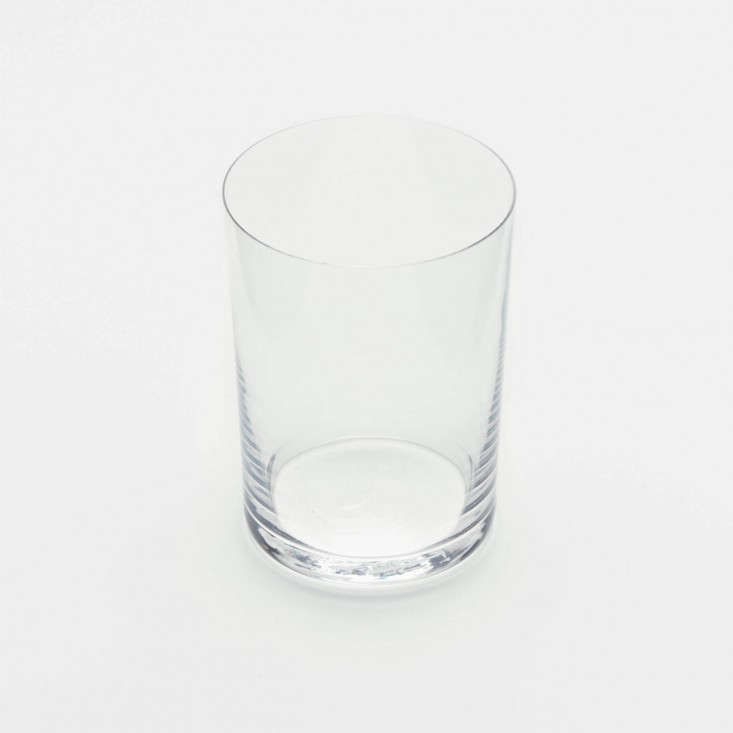
There are two kinds of water glasses in this world: the ones you grab without thinking, and the ones that quietly
make you pause mid-sip like, “Wait… why does water taste… better?” The Deborah Ehrlich Water Glass
sits firmly in the second campminimalist, almost disarmingly simple, and engineered (yes, engineered) to feel
just right in your hand.
If you’ve ever wondered why certain restaurants make even plain old tap water feel like a luxury experience, the
answer is often hiding in plain sight: proportions, lip thickness, balance, and material. Deborah Ehrlich’s water
glass is a modern classic in the design world for exactly those reasons. It’s not “fancy crystal for fancy people.”
It’s a daily-use object designed with the seriousness of sculptureand the friendliness of an everyday tumbler.
What Is the Deborah Ehrlich Water Glass?
The Deborah Ehrlich Water Glass is a lead-free crystal tumbler known for clean lines, a feather-light feel, and a
remarkably thin, polished rim. Many listings describe it as hand-blown Swedish crystal, hand-cut and polishedan
intentionally quiet form that lets the material and the proportions do the talking.
Depending on the retailer and edition, you’ll see small variations in listed specs (a good clue that these aren’t
stamped out by a machine). A commonly cited size is about 4 inches tall and roughly
3 inches in diameter, with an approximate capacity around 11–12 ounces.
In other words: it’s sized for water, iced tea, spritzes, and “I poured wine but I’m calling it water” moments.
The signature details people obsess over
- Lead-free Swedish crystal for clarity and strength
- Hand-blown craftsmanship (so slight variation is normal, not a defect)
- Hand-cut and polished lip that feels smooth and “disappears” while drinking
- Signed on the base (often described as a diamond-tipped signature/etching)
- Understated silhouette that works with casual plates or formal linens
Who Is Deborah Ehrlichand Why Does Her Glassware Feel So “Right”?
Deborah Ehrlich is a Hudson Valley–based designer with training as a sculptor. That background matters because
her glassware doesn’t feel “decorated”it feels formed. Many profiles describe her process as extremely
deliberate: sketches and proportion studies first, then specialized glass production in Sweden, where the craft
skills needed for thin crystal and hand-finishing are deeply established.
Her glassware is often traced back to the late 1990s and the idea that everyday drinking vessels shouldn’t have
to look like wedding registry goblets. The origin story that shows up in multiple writeups goes something like this:
she wanted simple, stemless formslight, modern, and comfortablethen she found the right makers to execute them
at a very high level.
Design philosophy: “quiet,” not boring
A key part of the Ehrlich appeal is that the design aims for a kind of “silence”a calm, refined presence. This
is not the kind of glassware that shouts, “I’m crystal!” It whispers, “I’m balanced.” It’s the design equivalent
of showing up to dinner in a perfectly tailored white shirt: uncomplicated, but not accidental.
Why the Drinking Experience Feels Different
Let’s get nerdy for a second, because this is where the Deborah Ehrlich Water Glass earns its reputation.
People don’t fall for it because it’s crystal; they fall for it because it changes the act of drinking in subtle ways.
1) The lip is thin (and that’s a bigger deal than it sounds)
The rim on many mass-market glasses is thick enough to feel like you’re sipping through a tiny aquarium wall.
A thinner, hand-polished lip has less interferenceyour mouth meets the liquid more directly, so everything feels
cleaner and more precise. Water tastes purer. Wine feels sharper. Even juice somehow acts like it got a promotion.
2) The weight is balanced, not heavy
Some “luxury” glasses confuse luxury with heaviness. Ehrlich’s water glass is often described as light but strong.
That’s the sweet spot: it feels refined in your hand without demanding a two-handed grip like a medieval chalice.
The balance encourages everyday useexactly what design lovers want from objects that live on a kitchen counter.
3) Proportion does most of the work
The silhouette is simple enough to look obviousuntil you try to copy it. The diameter, height, and curve feel
tuned to the human hand. It’s the kind of object you don’t notice at first, and then you notice that you keep
reaching for it without thinking. That’s not magic. That’s proportion.
How It’s Made: Swedish Crystal Craft Meets Hudson Valley Sketchbook
A recurring theme across retailer descriptions is the “two places” nature of the glass: designed in New York’s
Hudson Valley and produced by skilled makers in Sweden. That combination matters. Sweden has a long history of
crystal craftsmanship, and the specific techniques referencedhand blowing, hand cutting, polishingare exactly
what enable thinness, clarity, and that smooth rim.
If you’ve ever compared a machine-pressed tumbler to a hand-finished crystal glass, you’ll recognize the difference
immediately: the finished edge feels more like a continuous curve than a line, and the glass tends to hold visual
clarity even in minimalist forms.
Signed bases and small variations: what to expect
Many sellers note that each piece is signed on the bottom. You may also notice tiny variations from glass to glass
a millimeter here, a whisper of difference there. That’s not “inconsistent quality.” That’s a hallmark of hand-blown
work, and it’s part of why sets feel alive rather than cloned.
Where the Water Glass Shows Up in the Real World
The Deborah Ehrlich Water Glass has a strong following among design retailers, museum stores, and high-end home
shops that specialize in modern craft. Over the years it has appeared through channels like specialty design stores,
curated online shops, and even hospitality-adjacent retail (for people who want their home table to feel like their
favorite restaurant).
Availability changes, and sets come and go, but a consistent theme is that you’ll find it through stores that also
carry other “use it every day, but it’s still art” objectshandmade ceramics, linen, sculptural lighting, and
small-batch home goods.
How to Style a Deborah Ehrlich Water Glass (Without Turning Your Table Into a Catalog)
The best thing about this glass is that it behaves like a design chameleon. It doesn’t demand a matching set of
everything. It doesn’t fight your plates. It doesn’t care if your napkins are linen or “whatever was closest to the
paper towel roll.”
Easy table pairings
- Everyday ceramics: stoneware plates, matte glazes, slightly imperfect bowls
- Clean modern: white porcelain, brushed flatware, simple carafes
- Natural textures: linen runners, wood boards, seasonal fruit
- Formal-but-not-stuffy: crisp tablecloth, candles, and mismatched vintage serving pieces
Because the form is quiet, you can go bold elsewherepatterned napkins, colorful salads, dramatic centerpiecesand
the glass will still look intentional.
Care and Longevity: Keeping Crystal Clear (Without Babying It)
Most listings recommend hand washing. That’s not a conspiracy to make you do more chores; it’s
practical. Dishwashers can create micro-abrasions over time, and high heat + detergent can dull clarity. If you want
the glass to stay crisp and bright, treat it like a good chef’s knife: clean it properly and it will reward you.
Simple care routine
- Wash by hand with mild soap and warm water
- Avoid sudden temperature shocks (no ice water in a just-heated glass)
- Use a soft sponge; skip abrasive scrubbers
- Dry promptly with a lint-free towel to prevent spots
- Store with breathing room so rims don’t knock together
If you’re polishing for guests, hold the glass by the bowl (not the rim) and use a soft cloth. The goal is “sparkle,”
not “arm day.”
Is It Worth It? A Practical Take on the Price
The Deborah Ehrlich Water Glass typically costs more than a standard tumbler, and for good reason: hand-blown,
hand-finished lead-free crystal is labor-intensive. You’re paying for skilled making and a design that has been
refined over decadesnot just a logo.
That said, “worth it” depends on how you live. If you routinely break glasses, have a dog that treats tabletops
like parkour training, or mostly drink from reusable bottles, it may be a “later” purchase. But if you love cooking,
host friends, or simply want one daily object that makes the mundane feel elevated, this is a surprisingly satisfying
upgrade.
A smart way to buy (if you’re cautious)
Start with a smaller numbertwo glasses instead of a full set. Use them for a week. If you find yourself choosing
them every time (spoiler: many people do), then expand. Good design has a way of revealing itself through daily habit.
Experience Notes: Living With the Deborah Ehrlich Water Glass (About )
People who bring the Deborah Ehrlich Water Glass into their routine often describe the same funny phenomenon:
the glass becomes “the default,” even if they own plenty of other options. Not because it’s flashyit isn’tbut
because it makes everyday drinking feel slightly more intentional. You pour water, take a sip, and your brain goes,
“Oh. That’s nicer.” Then you forget about it again, which is arguably the highest compliment a functional object can earn.
One of the most common experiences is noticing the rim. Many drinkers don’t realize how much a thick lip affects
taste and texture until they switch. With a thin, polished edge, the liquid seems to arrive more cleanlyless
“glass barrier,” more “direct sip.” It can make sparkling water feel snappier and iced tea feel brighter. Even plain
filtered water can seem more refreshing, which feels ridiculous to say out loud… until you experience it and start
quietly converting friends at dinner like you’ve joined a very polite crystal cult.
In a hosting context, the glass tends to disappear into the table in the best way. It doesn’t compete with food,
flowers, or candlelight. Instead, it adds a subtle refinement: the clarity catches light, the proportions look calm,
and suddenly the whole setting seems more “pulled together,” even if the main course is takeout and your centerpiece
is “a lemon I forgot to put away.” Guests may not ask, “What glass is this?” but they may treat it differentlyhold it
more carefully, sip a little slower, or comment that the table feels special.
Another frequent real-life observation is how versatile the glass becomes. Despite being called a water glass, it
often gets promoted to all-purpose duty: morning juice, afternoon iced coffee, evening cocktails, weekend wine.
The size is generous without being oversized, and the shape is neutral enough to work across drinks. If you’re someone
who dislikes stemware (or has a talent for knocking it over), a stemless crystal form can feel like a practical luxury:
it gives you that “occasion” feeling without the fragility theater.
On durability: people are often surprised that the glass can feel delicate yet hold up to normal daily useprovided
you treat it like… well, crystal. Hand washing becomes less annoying once you realize it takes about as long as
scrolling one social feed you didn’t even enjoy. Drying it right away helps keep the clarity crisp, and the routine can
start to feel like a tiny, calming ritual instead of a chore.
Perhaps the most telling experience is this: after you use the Ehrlich glass for a while, thicker, clunkier glasses can
start to feel strangely loud. Not visually loudphysically loud. Heavier. Blunter. Less precise. And that’s when you
realize the Deborah Ehrlich Water Glass isn’t really about showing off. It’s about making the small daily moments
feel quietly excellentone sip at a time.
Conclusion
The Deborah Ehrlich Water Glass is a masterclass in minimalist design that still feels warm, human,
and deeply usable. It’s lead-free Swedish crystal shaped by craft and refined by a sculptor’s obsession with proportion.
If you’re looking for a piece of everyday glassware that makes water taste a little better and dinner feel a little more
intentionalwithout turning your table into a showroomthis is the kind of “simple” that’s actually rare.