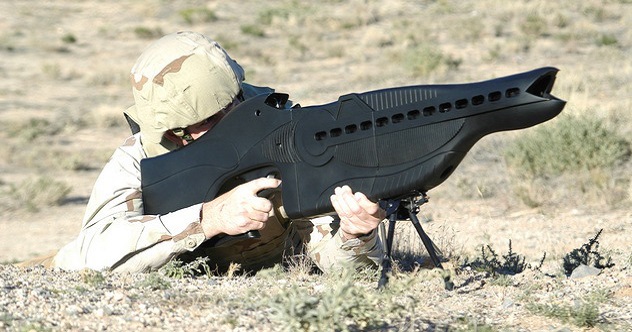
Non-lethal weapons sound like something pulled from a spy movie prop room: heat rays, sound cannons, dazzling lasers, sticky foam, electric nets, pepper balls, and devices that stop cars without a Hollywood explosion. The truth is both stranger and more serious. These tools are usually called non-lethal weapons, less-lethal weapons, or intermediate force capabilities because they are designed to reduce the chance of death compared with firearmsnot magically eliminate danger.
That distinction matters. A rubber bullet can injure. A Taser can be misused. Pepper spray is not “spicy air freshener.” Still, when designed, governed, and deployed responsibly, non-lethal weapons can give police, military personnel, corrections officers, and security teams more options between shouting “Stop!” and reaching for deadly force. In other words, they occupy the awkward middle child position of public safety technology: useful, controversial, and always being told to behave.
Below are ten of the craziest real-world non-lethal weapons, from battlefield research projects to crowd-control tools and vehicle stoppers. Some are widely used. Some remain experimental. All prove that the world of less-lethal technology is far weirder than a flashlight and a firm voice.
What Are Non-Lethal Weapons?
Non-lethal weapons are weapons, devices, or munitions designed to incapacitate people or equipment while minimizing fatalities, permanent injury, and unnecessary property damage. In law enforcement, the term “less-lethal” is often preferred because no tool is harmless in every situation. The intended effect may be temporary pain, disorientation, restraint, sensory overload, or disabling a vehicle rather than injuring the person inside it.
The best non-lethal tools are not “nice weapons.” They are force options with limits. Their value depends on training, medical oversight, clear rules, accountability, and the judgment of the person using them. A device that looks safe in a brochure can become dangerous when fired too close, aimed at the head, used too long, or deployed against vulnerable people.
10 Crazy Non-Lethal Weapons That Actually Exist
1. The Active Denial System: The Infamous Heat Ray
The Active Denial System, often nicknamed the “heat ray,” may be the most science-fiction-sounding non-lethal weapon ever publicly demonstrated by the U.S. military. It uses millimeter-wave energy to create an intense heating sensation on the skin. The idea is simple: make a person feel an urgent need to move away without relying on bullets, shrapnel, or chemical agents.
In official descriptions, the system is intended for area denial, checkpoint security, and situations where forces need to deter or disperse people at a distance. What makes it so unusual is that the effect is sensory rather than blunt-force. You are not being pushed by water or struck by foam. Your skin receives an invisible “nope beam,” and your nervous system files a complaint immediately.
The promise is obvious: fast, scalable, and reversible effects. The controversy is just as obvious: pain compliance, environmental variables, clothing, oversight, and the ethical question of whether a weapon that leaves few visible marks could be abused. Crazy? Absolutely. A magic wand? Not even close.
2. Long Range Acoustic Devices: The Sound Cannon
A Long Range Acoustic Device, or LRAD, is essentially a highly directional sound system with two personalities. In its polite mode, it can broadcast warnings over long distances. In its angry mode, it can emit painfully loud deterrent tones that cause ear pain, ringing, and disorientation.
Acoustic hailing devices are used in military, maritime, and law enforcement contexts because sound can communicate before force escalates. A ship can warn an approaching boat. Police can issue instructions to a crowd. Security teams can project messages across noisy environments where ordinary speakers would sound like a mosquito giving a TED Talk.
The concern is hearing damage. Sound is invisible, but its effects are not imaginary. Exposure level, duration, distance, and whether people can leave the area all matter. Used responsibly, LRADs can be communication tools. Used carelessly, they become painful crowd-control devices with medical and legal risks.
3. Laser Dazzlers: Bright Light With a Badge
Laser dazzlers, also called optical distractors or ocular interrupters, are designed to temporarily obscure vision, warn, distract, or deter. Many systems use green light because the human eye is highly sensitive to that color. The goal is not to blind someone permanently, but to create a visual signal strong enough to stop, slow, or redirect behavior.
Military forces have used dazzlers in escalation-of-force scenarios, especially at checkpoints where a vehicle is approaching and personnel need to communicate “do not come closer” without immediately firing. Compared with bullets, a bright visual warning can buy precious seconds. Compared with a polite hand wave, it is much harder to ignore.
The danger is obvious: eyes are delicate. Any optical device must be carefully engineered and tightly controlled to avoid permanent injury. That is why safety modules, distance limits, training, and approved use policies are central to these systems.
4. Conducted Energy Devices: The Taser Family
Conducted energy devices, commonly known by the brand name Taser, use electrical energy to cause pain and temporary muscle contraction. In many law enforcement agencies, they are among the most familiar less-lethal weapons. Their appeal is that they may stop a dangerous person without requiring officers to close the distance for hands-on control.
The technology is dramatic: probes, wires, electrical pulses, and sudden loss of voluntary control. It is also heavily debated. Research and court rulings have pushed many departments toward stricter policies, especially against using CEDs merely to force compliance from someone who does not pose an immediate safety threat.
A Taser is not a remote-control button for humans. Falls can cause injuries. Repeated or prolonged exposure can increase risk. Use on vulnerable people may be especially dangerous. The tool can reduce injuries in some encounters, but only when it is used with restraint, training, and medical awareness.
5. Pepper Spray and Pepper Balls: Portable Regret Clouds
Pepper spray uses oleoresin capsicum, derived from hot peppers, to irritate the eyes, skin, nose, throat, and lungs. The result is burning pain, coughing, watery eyes, and an immediate reassessment of life choices. It is widely used because it is compact, relatively inexpensive, and effective in many close-range encounters.
Pepper balls take the idea and add a projectile. These small rounds burst on impact and release irritant powder, allowing chemical effects at a distance. Some systems resemble paintball platforms, except the “paint” is less birthday party and more angry jalapeño dust.
Although pepper-based tools are often described as temporary, they can be risky for people with asthma, respiratory conditions, chemical sensitivity, or limited ability to leave the area. Indoors, in crowds, or near children and older adults, chemical irritants become even more complicated. The lesson: “non-lethal” does not mean “sprinkle freely.”
6. Bean Bag Rounds and Rubber Bullets: Softer Than Bullets, Not Soft
Kinetic impact projectiles include rubber bullets, plastic rounds, sponge rounds, bean bag rounds, and foam-tipped projectiles. They are designed to cause blunt-force pain and temporary incapacitation rather than penetrate like conventional bullets.
The name “rubber bullet” sounds almost cuddly, like something fired by a cartoon duck. Reality is harsher. These projectiles can break bones, damage eyes, cause head injuries, and, in some documented cases, kill. Risk increases when fired at close range, aimed at the head, neck, chest, or groin, or used against dense crowds where precision is poor.
Still, kinetic rounds remain part of many less-lethal arsenals because they can create distance in high-risk situations. The most responsible use treats them as serious force, not crowd-control confetti. They are “less-lethal” only when training, targeting rules, and accountability are taken seriously.
7. Flash-Bang Devices: Light, Noise, and Instant Confusion
Flash-bang devices, also called diversionary devices or stun grenades, create a sudden burst of light and sound. They are commonly associated with tactical entries, hostage situations, and barricaded suspects. Their job is to overwhelm the senses for a few critical seconds.
In theory, those seconds can reduce the need for more dangerous force. In practice, flash-bangs are not harmless party poppers. They can cause burns, hearing damage, fires, panic, and serious injuries when deployed improperly or near vulnerable people. Their blast and heat make them among the most visually dramatic less-lethal tools.
The “crazy” part is how old-fashioned the concept feels compared with lasers and heat rays: create a blinding flash, a thunderous bang, and a moment of confusion. It is ancient theater upgraded with modern pyrotechnicsand a long list of safety concerns.
8. Vehicle Entanglement Nets: The Car Chase Spiderweb
Some non-lethal weapons are designed not to affect people directly, but to stop machines. Vehicle entanglement systems use nets, straps, spikes, or webbing to disable a vehicle by wrapping around tires or disrupting movement. Military versions may be used at checkpoints. Law enforcement versions can be mounted to patrol vehicles or deployed as barriers.
The appeal is simple: high-speed pursuits are dangerous for officers, suspects, passengers, and bystanders. If a tool can stop or slow a vehicle without ramming it or firing into it, everyone may be safer.
Of course, stopping a moving vehicle is never risk-free. Speed, road conditions, traffic, vehicle size, and driver behavior can change the outcome. But as non-lethal weapons go, vehicle nets are fascinating because they target mobility rather than the body. It is less “attack the person” and more “your tire has joined a hammock.”
9. Sticky Foam: The Human Glue Trap Idea
Sticky foam is one of the strangest less-lethal concepts ever explored. The basic idea was to project a rapidly expanding adhesive foam that could immobilize a person by sticking them to the ground, a wall, or themselves. It sounds like a prank invented by a committee of bored scientists and overcaffeinated cartoonists.
Research interest in sticky foam appeared in law enforcement and national laboratory discussions during the development of less-than-lethal technologies. The concept had obvious appeal: stop someone without striking, shocking, or chemically irritating them. But practical problems were enormous. Cleanup, suffocation risk, skin and airway concerns, liability, cost, and unpredictable environments made it hard to field responsibly.
Sticky foam remains a perfect example of why “crazy non-lethal weapon” does not always mean “successful non-lethal weapon.” Sometimes the wild idea is less useful than a boring tool with clear rules.
10. Malodorants: The Stink Weapon
Yes, smell can be a weapon. Malodorants are foul-smelling substances designed to make an area unbearable without relying on lethal force. The theory is that people will leave a location not because they are injured, but because their nose has resigned from public service.
Militaries and researchers have explored odor-based deterrents for area denial and crowd movement. The concept has a certain grim elegance: no bullets, no electricity, no impactjust an overwhelming smell that says, “This place is closed.”
The challenge is control. Odors spread unpredictably, linger, affect bystanders, and may trigger nausea or distress. Wind is a terrible project manager. Still, as a non-lethal weapons concept, malodorants deserve a spot on this list because they weaponize one of humanity’s oldest survival instincts: avoiding whatever smells like it died under a couch.
Why Non-Lethal Weapons Are So Controversial
The biggest misunderstanding about non-lethal weapons is the name. “Non-lethal” describes design intent, not a guaranteed result. A sponge round to the thigh may be survivable; the same round to the eye may be catastrophic. Pepper spray in open air may clear quickly; in an enclosed space, it can become a respiratory hazard. A Taser used once in a dangerous confrontation is different from repeated shocks on a restrained person.
Supporters argue that these tools reduce the need for firearms, protect officers and civilians, and offer flexible responses in unstable situations. Critics argue that less-lethal weapons may lower the threshold for force, enable abuse, and cause serious injuries that are undercounted or poorly documented.
Both views contain truth. A responsible non-lethal weapons program requires more than buying shiny gadgets. It needs policy, training, reporting, medical review, public transparency, and consequences for misuse. Technology alone cannot solve judgment problems.
Real-World Experience: What These Weapons Teach Us
Experience with non-lethal weapons shows that the tool is only one part of the story. The surrounding system matters more. In real incidents, outcomes are shaped by officer training, crowd behavior, weather, distance, communication, medical response, and whether commanders treat less-lethal force as a last-resort bridge or a convenient shortcut.
One practical lesson is that communication often matters before force. Acoustic hailing devices, dazzlers, warning munitions, and visible barriers all aim to create time and clarity. At a checkpoint, for example, a driver may be confused, frightened, distracted, or genuinely hostile. A clear warning system can help separate the person who made a mistake from the person who intends harm. In that narrow window, non-lethal tools can be valuable because they create an intermediate step.
Another lesson is that pain compliance is unpredictable. People react differently to pain, fear, drugs, mental health crises, protective clothing, adrenaline, and panic. A pepper spray burst may stop one person immediately and barely slow another. A kinetic round may deter someone at one distance and cause severe injury at another. A less-lethal weapon is not a universal remote; humans are annoyingly complicated devices with no factory reset button.
Medical follow-up is also essential. After exposure to a conducted energy device, chemical irritant, impact round, or acoustic device, the visible injury may not tell the full story. Breathing problems, eye injuries, burns, falls, cardiac concerns, hearing damage, or psychological trauma can develop or worsen. Agencies that treat medical monitoring as optional are asking for troublewith a capital lawsuit.
Public perception is another major factor. Water cannons may be technically less-lethal, but in the United States they carry historical associations with violent suppression of civil rights demonstrators. Rubber bullets may sound safer than live ammunition, but images of eye injuries can destroy public trust. Even the best-designed technology can fail if the community sees it as intimidation rather than protection.
From a policy perspective, the smartest approach is narrow authorization. Different weapons belong in different situations. Flash-bangs may be suited for high-risk tactical entries, not casual crowd management. Vehicle nets may be appropriate for certain pursuits, not routine traffic stops. Pepper balls may be useful in a violent standoff, not as a response to people merely being loud. The phrase “available tool” should never automatically become “appropriate tool.”
Training must also include decision-making under stress. It is not enough to know how a device works. Users must understand when not to use it. They must recognize vulnerable populations, dangerous environments, bad angles, unsafe distances, and situations where patience or communication may work better. In the world of non-lethal weapons, restraint is not weakness; it is competence.
The future will likely bring more advanced intermediate force capabilities: smaller directed-energy systems, better vehicle stoppers, safer optical warning tools, improved projectiles, and drones equipped with less-lethal payloads. That future needs careful guardrails. The crazier the technology becomes, the more ordinary the questions should be: Is it necessary? Is it proportionate? Can people escape the effect? Who is accountable? What data proves it is safer than the alternative?
Non-lethal weapons are fascinating because they reveal a difficult truth about safety: reducing harm is not the same as eliminating harm. The best use of these tools is not to make force easier. It is to make deadly force less likely, give people more chances to comply, and create space for better decisions. That goal is seriouseven when the technology sounds like it escaped from a comic book.
Conclusion
The world of crazy non-lethal weapons is filled with heat rays, sound cannons, laser dazzlers, pepper clouds, sticky foam, vehicle nets, and stink-based deterrents. Some are common. Some are experimental. Some are brilliant in theory and awkward in reality. What unites them is the promise of a middle option: a way to control, warn, deter, or stop without immediately resorting to deadly force.
But “less-lethal” is not a permission slip. These weapons can still injure, traumatize, or kill when misused. The technology is only as good as the rules, training, supervision, and accountability surrounding it. Used with care, non-lethal weapons may save lives. Used carelessly, they become another source of harm with a friendlier label.
Note: This article is for informational and safety-awareness purposes only. It does not provide instructions for building, modifying, purchasing, or deploying weapons.