San Francisco is not the first place most people picture when they hear the phrase surf shack. People usually imagine sun-bleached bungalows, lazy palm trees, and a guy named Kai who has never once worn real shoes. San Francisco, on the other hand, tends to offer fog, crosswinds, and a very real chance that your coffee will get cold before you finish admiring the view. And yet, that contrast is exactly why the idea works so well.
An urban surf shack in San Francisco is not about pretending the city is Malibu. It is about building a home that respects the Pacific, understands the neighborhood, and makes peace with sand, salt, damp air, and the wonderful chaos of real city life. In the Outer Sunset, where rows of modest homes meet Ocean Beach and the western edge of the city starts to feel like the edge of the continent, the surf shack becomes less of a fantasy and more of a practical design philosophy. It is casual, hardworking, weather-aware, and quietly cool without begging for attention.
This is what makes the concept so compelling. A San Francisco surf shack is not polished within an inch of its life. It has texture. It has windburned charm. It knows that reclaimed wood looks better when it is allowed to act like wood, not a museum piece. It values a place to hang a wetsuit almost as much as a beautiful kitchen light. Most of all, it understands that a home by the beach in a city like San Francisco should feel both grounded and free.
Why a Surf Shack Belongs in San Francisco
Ocean Beach gives San Francisco one of the most unusual coastal identities in the United States. It is a broad stretch of Pacific shoreline on the city’s western edge, right beside Golden Gate Park, and it feels raw in a way that surprises people who expect San Francisco to be all cable cars and postcard hills. This is not a tame little urban beach. The water is cold, the currents can be dangerous, and the surf has long attracted experienced riders who treat the place with equal parts respect and obsession.
That setting shapes everything around it. The Outer Sunset neighborhood, especially near the Great Highway and the beach, has developed a culture that is part residential, part creative, part fiercely local. The homes are typically modest in scale, many built in the mid-20th century, with garages below and living spaces above. From the street, they can look compact and even plain. But inside, they often open up into surprisingly personal worlds. This is fertile ground for the urban surf shack: not a giant statement house, but a clever one.
The local version of surf culture also helps. San Francisco surf life is less glossy than Southern California’s stereotype. It is layered with art, food, practicality, neighborhood loyalty, and a little weather-related stubbornness. In the Outer Sunset, surf shops sit near cafés, restaurants, and small businesses that treat the beach not as a backdrop but as part of daily life. That creates a design mood that is casual but not careless, stylish but not overly rehearsed. Think less “luxury resort,” more “beautiful place where the board can come inside without anyone panicking.”
The Original Inspiration: Small Yard, Big Character
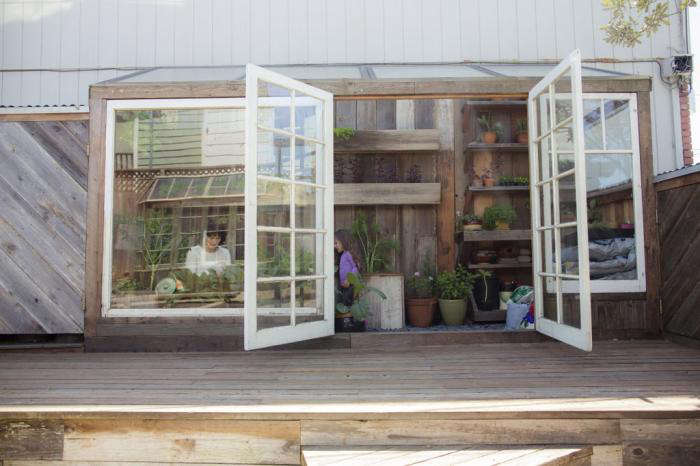
The phrase “An Urban Surf Shack in San Francisco” gained real design traction through a well-known feature on the home of Dave Muller and Lana Porcello, the couple behind Outerlands in the Outer Sunset. Their home offered a version of the surf shack that felt deeply rooted in San Francisco rather than copied from somewhere sunnier and more obvious. Before their restaurant became a neighborhood institution, they described friends and neighbors gathering in their tiny backyard while food was served out through the kitchen window. That detail says a lot. This was never about show-home perfection. It was about hospitality, resourcefulness, and making a compact city space feel open-hearted.
The standout elements of that home were smart and refreshingly unpretentious: a driftwood deck, a greenhouse made from reclaimed fence wood, and a kitchen-garden relationship that blurred the line between domestic life and creative work. The greenhouse sheltered greens and herbs before they ended up in dishes and cocktails. In other words, the design was not decorative theater. It was useful. That is the soul of a surf shack done right. Every beautiful thing also has a job.
This model still feels relevant because it captures the San Francisco version of beach living. Space is limited. Weather is unpredictable. Materials need to hold up. A yard may be tiny, but it can still carry the emotional weight of an entire lifestyle. A deck can be both weathered and elegant. A greenhouse can be part garden, part workshop, part proof that sustainability does not need to wear a halo and announce itself at dinner parties.
What Makes an Urban Surf Shack Look the Part
1. Honest Materials
The most convincing surf-inspired homes in San Francisco lean on materials that age well and feel tactile. Reclaimed wood, cedar, redwood, oak, stone pavers, plaster, linen, and metal all show up for good reason. Near the ocean, glossy perfection tends to lose the fight quickly. Salt air is not impressed by your expensive finish. Materials with grain, patina, and a little toughness feel right because they can handle wear without looking sad about it.
Natural wood is especially important. It warms up foggy light, softens the harder edges of urban architecture, and connects the house to the landscape outside. When paired with white walls, muted earth tones, and a restrained palette, wood gives the space a relaxed mood that reads coastal without becoming cliché. No one needs a bathroom full of tiny anchor motifs. The Pacific has suffered enough.
2. A Layout That Serves Real Life
A San Francisco surf shack should feel edited, not crowded. That means built-in storage, simple circulation, and flexible rooms. Boards, wetsuits, towels, boots, and sandy jackets take up space, so the home has to anticipate them. Mudroom-style entries, garage storage, outdoor showers, hooks, benches, and cabinets that can swallow gear are not luxury extras. They are survival tools.
Open living areas also matter, but in a San Francisco way. The goal is not endless empty square footage. It is flow. You want a kitchen that speaks to the dining area, a living room that catches light, and enough visual breathing room that the house feels larger than it is. In the best versions, the design helps you move from cold beach morning to warm indoor recovery with very little drama.
3. Indoor-Outdoor Connection
The phrase indoor-outdoor living can sound like real-estate confetti, but along Ocean Beach it means something practical. A deck, courtyard, backyard greenhouse, wide-opening doors, or even just sightlines toward sky and dunes can make a compact house feel freer. In a neighborhood where lots are narrow and weather changes fast, even a small outdoor zone can become essential.
The trick is to make it durable and usable. Wind is real. Sand is real. Moisture is definitely real. Outdoor areas need strong planting, resilient furniture, and surfaces that welcome abuse. Native and coastal-friendly landscaping works better than anything fussy. When a home embraces that reality, it feels more authentic and more San Francisco.
Why the Outer Sunset Is the Perfect Backdrop
The Outer Sunset has a visual identity all its own. Many blocks are lined with compact stucco houses in soft or faded colors, and the neighborhood often feels both uniform and deeply personal at the same time. That balance is important. A surf shack here does not need to scream to stand out. It works best when it joins the rhythm of the block while quietly improving the experience of living there.
There is also a cultural richness to the area that makes the design story more interesting. The Sunset is not just “beachy.” It is residential, multiethnic, food-driven, and full of neighborhood institutions. The mix of surf shops, cafés, community spaces, and long-term local businesses gives the area a kind of off-duty charisma. It is the sort of place where someone can go from checking the waves to picking up pastries to arguing about paint colors for a front door, all before noon.
That atmosphere supports homes that feel lived-in rather than staged. A surf shack in this part of San Francisco should reflect the neighborhood’s balance of humility and taste. It should be charming without being precious, design-conscious without becoming sterile, and comfortable enough that friends can walk in carrying wind, gossip, and half the beach.
The Sustainable Side of the Aesthetic
One reason the urban surf shack has staying power is that it overlaps naturally with sustainability. Reclaimed wood, reused materials, kitchen gardens, durable surfaces, and modest square footage are not just stylistic choices. They often reduce waste and encourage a more thoughtful relationship with the home. In coastal San Francisco, where the landscape is dynamic and environmental pressure is very real, that approach feels especially appropriate.
Ocean Beach is part of a living dune system, and local organizations have spent years working on restoration, native planting, and access improvements. That bigger environmental story adds weight to the home-design version of coastal living. A good surf shack does not just borrow the romance of the beach; it acknowledges that the coastline is fragile, changing, and worth caring for.
That is why the best homes near Ocean Beach tend to avoid overbuilding and overdecorating. They work with light, air, texture, and routine instead of trying to dominate the setting. A smaller home with a greenhouse, practical storage, and materials that age gracefully can feel richer than a huge place that looks terrified of a wet towel.
Design Lessons Worth Stealing
If you want to borrow the spirit of an urban surf shack for your own place, the smartest lessons are not expensive. Start with function. Make the entry useful. Create storage that respects gear, shoes, and outdoor life. Choose materials that can survive moisture and movement. Then bring in warmth through wood, soft textiles, vintage pieces, ceramics, plants, and lighting that makes foggy afternoons feel intentional instead of gloomy.
Restraint helps. The surf shack look is strongest when it is suggestive, not theatrical. One surfboard leaning casually in a corner feels real. Six boards arranged like museum artifacts start to feel like a retail display with commitment issues. Let the home hint at the lifestyle rather than cosplay it.
Most importantly, give the space a social center. In the San Francisco examples that feel most memorable, there is always some version of a gathering place: a kitchen window, a weathered table, a backyard bench, a fire pit, or a living room that seems ready for soup, stories, and jackets draped over every chair. The home becomes compelling because it supports community as much as style.
A Home That Feels Like the City and the Sea
An urban surf shack in San Francisco succeeds because it understands both halves of its identity. It is urban, so it must deal with compact lots, real neighborhoods, practical storage, and architecture that often starts from ordinary bones. It is a surf shack, so it wants openness, ease, weathered materials, outdoor connection, and a mood that is a little freer than the average city house. When those two instincts meet, the result can be far more interesting than either a generic beach house or a generic urban remodel.
San Francisco, especially near Ocean Beach, gives the style its edge. The fog, the wind, the dune grass, the layered local culture, the old row houses, the beach history, and the creative community all push the design toward something more honest. This is not coastal living with a filter slapped on top. It is coastal living with grit, intelligence, and enough personality to survive the weather forecast.
In the end, the best urban surf shack is not trying to imitate paradise. It is building a beautiful life in a place that is both demanding and unforgettable. That may be the most San Francisco idea of all.
Experience the Mood: Living the Urban Surf Shack Life in San Francisco
Imagine waking before the rest of the block, when the neighborhood is still quiet except for the low rumble of wind and the distant percussion of waves. The first thing you notice is not sunlight splashing dramatically across a perfect floor. This is San Francisco, after all. The first thing you notice is the light doing something subtler: filtering through fog, bouncing off pale walls, catching the grain of a wooden shelf, making a ceramic mug look oddly heroic. In a real urban surf shack, mornings are less about spectacle and more about texture.
You pad into the kitchen, maybe in socks, maybe in a sweatshirt that has seen better days but refuses to retire. The coffee starts. A window cracks open. The air is cool enough to remind you that Ocean Beach is nearby, and nearby in San Francisco terms means the weather gets a vote in your personality. There is a board in the corner, not as décor but as a possibility. There are herbs outside, maybe rosemary, maybe mint, maybe some stubborn greens proving that coastal gardens reward optimism and selective denial.
By midmorning, the house begins to reveal why this style works so well. Everything has a looseness to it, but not a lack of intention. Hooks hold jackets and wetsuits. A bench near the door catches sandy shoes. Towels dry where they should. The kitchen is compact but capable. The table might double as a desk, lunch spot, and evening gathering place. Nothing is too precious to be used, which is exactly why the place feels good. It invites life instead of flinching from it.
Then comes the neighborhood itself, which is half the experience. Step outside and the city is right there, but softened by coastal habits. A surf shop sits near a café. A restaurant glows warmly against gray weather. Someone bikes by in a beanie. Someone else is carrying flowers, or bread, or a board taller than common sense. The Outer Sunset has that rare quality of feeling local in a deep way, as though it expects you to participate rather than merely observe.
Back at the house, afternoon might mean wind tapping at the windows and a brief argument with yourself about whether the backyard is warm enough for lunch. It probably is not, but you try anyway because that is part of the charm. A good urban surf shack makes even imperfect weather feel atmospheric instead of inconvenient. The fog becomes mood lighting. The chill becomes an excuse for soup. The patter of damp shoes on the floor becomes evidence that the home is being lived in correctly.
Evenings are where the whole idea really earns its keep. The city edge starts to glow, the air smells faintly of salt, and the house shifts from practical to intimate without changing a thing. Lamps come on. Wood tones deepen. The kitchen becomes the center of gravity. Friends arrive layered in jackets, cheeks cold from the beach, ready to eat, talk, and stay longer than intended. No one seems too worried about whether the chairs match perfectly. That is not the point. The point is that the room holds people well.
And maybe that is the real experience of an urban surf shack in San Francisco: not a fantasy of endless summer, but a smarter and more soulful version of coastal living. It is where weather, work, design, food, and friendship all keep bumping into one another in satisfying ways. It is a home that knows how to host both a city life and a beach life at once. It can handle fog, salt, clutter, conversation, and the occasional rash decision to go check the waves. In a city full of dramatic views and expensive square footage, that kind of grounded beauty feels quietly radical.
Conclusion
The enduring appeal of an urban surf shack in San Francisco comes down to this: it turns constraints into character. Small lots become intimate retreats. Tough weather becomes atmosphere. Reclaimed materials become design language. And a neighborhood on the city’s salty fringe becomes the perfect place to blend comfort, utility, and creativity. Whether you are drawn to the original Outer Sunset inspiration or simply love the idea of a home that can handle boards, dinners, fog, and friends with equal grace, the style has real staying power. It is coastal design with a backbone, and San Francisco wears it exceptionally well.