Note: This guide is for mild, uncomplicated back pain and everyday muscle tension. It is not a substitute for medical care. If your pain follows a fall, comes with fever, numbness, weakness, trouble walking, or loss of bladder or bowel control, skip the DIY heroics and call a clinician promptly.
Back pain has a way of ruining the vibe. One minute you are reaching for a coffee mug, and the next minute your lower back is acting like you tried to deadlift a refrigerator for fun. The good news is that acupressure can be a simple, low-tech way to ease tension, encourage relaxation, and help some people feel a little more human again.
This technique uses steady pressure on specific points of the body instead of needles. Think of it as a focused, strategic finger press rather than a dramatic wellness montage. While acupressure is not a miracle cure and will not fix every cause of back pain, it can be a helpful part of a bigger self-care routine that includes gentle movement, posture awareness, sleep, and knowing when to get medical advice.
Before You Start: What Acupressure Can and Cannot Do
Acupressure is best used for muscle tightness, mild mechanical back pain, stiffness after too much sitting, and those days when your back feels like it filed a formal complaint against your chair. It may help reduce discomfort, improve body awareness, and give you a structured way to relax tense areas.
What it cannot do is diagnose the reason your back hurts. If your pain is caused by a fracture, infection, serious nerve compression, kidney issues, or another medical problem, pressing on a few points will not solve it. That is why the first step is not “press harder.” The first step is making sure you are in the right lane.

How to Use Acupressure for Back Pain in 12 Steps
Step 1: Rule out red-flag symptoms first
Do not start with acupressure if you have severe pain after an accident, unexplained fever, pain that wakes you from sleep, worsening leg weakness, numbness in the groin area, or loss of bladder or bowel control. Those symptoms need medical evaluation. For ordinary soreness or stiffness, though, acupressure may be a reasonable at-home add-on.
Step 2: Get into a relaxed, supported position
Sit in a sturdy chair with your feet flat on the floor, or lie on your back with a pillow under your knees. You want your muscles to stop auditioning for a stress documentary. Take a minute to settle your shoulders, unclench your jaw, and let your breathing slow down. Acupressure works better when you are not bracing like a frightened statue.
Step 3: Warm up the area for one to two minutes
Before pressing on specific points, rub your hands together and gently massage your lower back, hips, and buttocks. You can also apply a warm pack for a few minutes if that usually feels good. Warm muscles are more cooperative than cold, cranky ones. This short warm-up helps you tell the difference between healthy tenderness and “nope, not there.”
Step 4: Start with the hand point between the thumb and index finger
One of the best-known acupressure points is in the fleshy web between your thumb and index finger. Use the thumb and index finger of the opposite hand to find the tender spot in that muscle. Press firmly, but not aggressively, for 30 to 60 seconds while breathing slowly. Then switch hands.
This point is popular because it is easy to reach, easy to remember, and wonderfully convenient when your back hurts but your schedule refuses to care.

Step 5: Press the area behind the knee crease
Next, move to the back of the knee. Bend your knee slightly and use your thumbs to press gently into the soft area at the center of the crease, one leg at a time. Hold steady pressure for 30 seconds, then release. You can repeat this two or three times. This area is commonly used in acupressure routines for lower-back discomfort.
Use care here. You are aiming for firm pressure on soft tissue, not trying to crush the entire concept of circulation.
Step 6: Try the outer lower-leg point below the knee
Place your fingers just below the outside of your knee and move a few inches down toward the upper calf. Press into a tender, muscular spot on the outer leg. Hold for 30 to 60 seconds and breathe slowly. Repeat on the other side. Many people like this point because it feels productive without being too intense.
Step 7: Work the top-of-foot point between the big toe and second toe
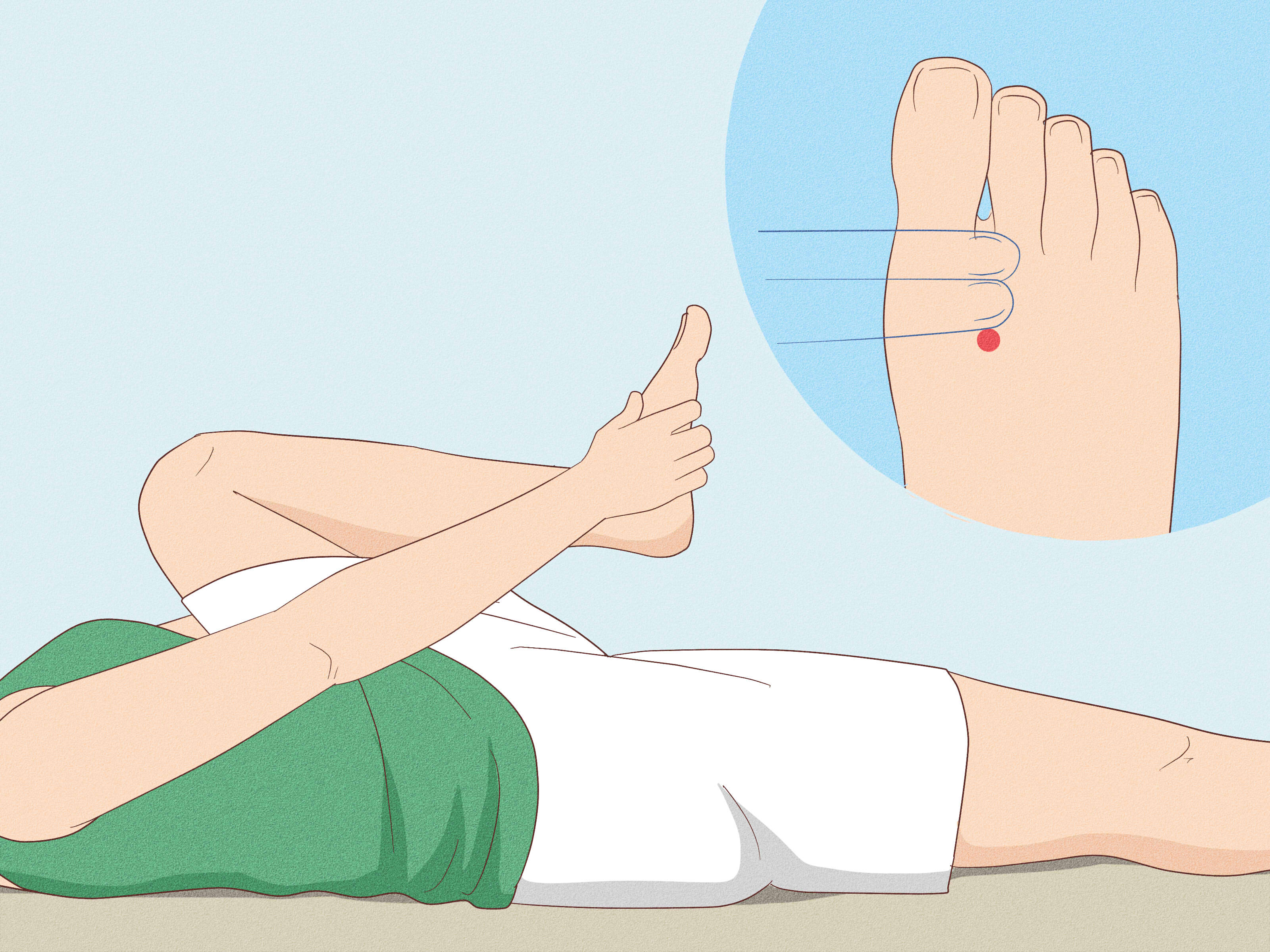
On the top of your foot, find the space between the big toe and second toe. Slide your finger up that groove until you reach a tender spot about an inch or two above the webbing. Apply firm, comfortable pressure for 30 to 45 seconds, then switch feet. If your back pain tends to come with general tension or stress, this point may feel especially soothing.

Step 8: Use your thumbs on the muscles beside your lower spine
Now move closer to the area that actually hurts, but do not press directly on the spine itself. Instead, place your thumbs about one to two inches to either side of the lower spine, over the thick bands of muscle. Press gently and evenly while breathing out. Hold for five to ten seconds, release, then move slightly up or down and repeat.
This is not the moment to go full action-movie chiropractor on yourself. Slow, moderate pressure works better than dramatic poking.
Step 9: Target the hip and glute tension zone
Much of “back pain” is really a grumpy neighborhood involving the hips, glutes, and lower back all arguing at once. Find a tender spot in the upper outer buttock or around the side of the hip. Use your thumb, knuckles, or a tennis ball against a wall for controlled pressure. Hold for 20 to 30 seconds, then release. Repeat on both sides.
This step is especially helpful if your pain gets worse after long periods of sitting, driving, or pretending your office chair is ergonomic because the website said so.
Step 10: Combine pressure with slow breathing
Every time you apply pressure, inhale through your nose and exhale slowly through your mouth. Count to four on the inhale and six on the exhale if that feels natural. Breathing helps reduce muscle guarding, which is your body’s way of saying, “I do not trust this situation.” When your breathing slows, your muscles often stop overreacting.

Step 11: Recheck your pain after one full round
After you have worked through several points, stand up slowly and notice what changed. Is the pain less sharp? Are you moving more easily? Do you feel looser, warmer, or simply less irritated by existence? Improvement does not have to be dramatic. Even a small drop in pain or stiffness is useful information.
If a point makes your pain noticeably worse, skip it next time. Acupressure should create pressure, tenderness, or an ache, but not sharp pain, numbness, or panic.
Step 12: Repeat once or twice a day and pair it with movement
Acupressure tends to work best when used consistently, not when you try it once and expect your spine to send an apology letter. Repeat your routine once or twice a day for a few days. Pair it with short walks, gentle stretches, and normal daily movement. Staying in bed too long often makes back pain worse, while gentle activity usually helps the body settle down.
Extra Tips to Make Acupressure More Effective
- Keep pressure firm but reasonable: Aim for “that’s tender” rather than “why did I do that?”
- Stay off irritated skin: Do not press areas with cuts, redness, swelling, rashes, or obvious inflammation.
- Use both sides of the body: Even if only one side hurts, treating both sides often feels more balanced.
- Set a timer: Most points respond well to 30 to 60 seconds of steady pressure.
- Hydrate and walk afterward: A short walk after acupressure can help you keep the muscles relaxed.
Common Mistakes People Make
Pressing too hard. More force is not always more effective. Sometimes it is just more rude.
Ignoring the hips and glutes. Back pain often shares the stage with tight hips, hamstrings, and glute muscles.
Doing acupressure once and declaring it useless. Like stretching, walking, and flossing, consistency matters more than theatrics.
Using acupressure instead of medical care. It is a self-care tool, not a replacement for diagnosis when symptoms are serious or persistent.
When to Stop and Call a Professional
Contact a healthcare professional if your back pain is severe, keeps returning, lasts longer than expected, or starts traveling down the leg with numbness or weakness. Get urgent help if you cannot control your bladder or bowels, you have saddle numbness, or your legs feel weaker by the hour. Those are not “sleep on it” symptoms.
If your pain is mild but stubborn, a clinician or physical therapist can help you figure out whether posture, muscle strain, disc irritation, arthritis, stress, poor sleep, or another factor is keeping the problem going. Acupressure can still be part of the plan, but it should not have to do all the heavy lifting.
Final Thoughts
Acupressure for back pain is appealing for one simple reason: it is accessible. No batteries. No needles. No expensive machine that promises to “activate your fascia intelligence.” Just your hands, a few well-chosen pressure points, and a little patience.
Done correctly, it may help reduce tension, improve comfort, and give you a calmer, more organized response to back pain. Done incorrectly, it mostly annoys you. So go gently, be consistent, pair it with movement, and pay attention to what your body is telling you. Your back may never send flowers, but it might stop complaining quite so loudly.
Real-World Experiences With Acupressure for Back Pain
Note: The experiences below are reality-based examples drawn from common patterns people describe when managing mild back pain. They are not individual medical records, miracle stories, or promises of results.
One common experience is that people do not feel dramatic relief right away. Instead, they notice a small change first. The back feels less “stuck” when standing up from a chair. Reaching for shoes is less theatrical. Walking from the couch to the kitchen no longer looks like a slow-motion documentary about human suffering. That modest early improvement matters because it often encourages people to keep moving, which is usually more helpful than freezing in place and treating the body like fragile glassware.
Another pattern is that the back is not always the star of the problem. People often begin by pressing the sore area in the lower back, then realize the hips, glutes, and back of the legs are just as tight. After working on those surrounding areas, the lower back sometimes feels easier. This surprises a lot of beginners. They expect the painful spot to be the only problem, but the body loves teamwork, especially the inconvenient kind. Tension in one region can make another area work harder than it should.
Stress is another huge theme. Many people notice that their back pain flares during busy weeks, bad sleep, long drives, deadlines, or marathon sitting sessions. In those situations, acupressure may help less because of a mystical transformation and more because it creates a short pause. You sit down, breathe slowly, stop clenching every muscle you own, and give your nervous system a chance to power down a notch. That shift alone can make pain feel more manageable.
People also report that consistency beats intensity. Five to ten minutes once or twice a day often works better than one heroic session where someone attacks every tender spot like they are trying to win a trophy for finger strength. Gentle repetition gives the body time to respond. It also helps people learn which points feel useful and which ones are just irritating. Over time, many become much better at noticing the difference between muscle tenderness, nerve symptoms, and plain old overdoing it.
Then there is the posture-and-habit piece. A lot of people discover that acupressure helps most when paired with smarter daily routines. They move more often, stop sitting like a wilted question mark, use better support while working, or add short walks between long stretches of desk time. In that sense, acupressure becomes less of a stand-alone fix and more of a reset button. It reminds the body what “less tense” feels like, which makes it easier to return to that state later.
Of course, not every experience is glowing. Some people try acupressure and feel very little. Others realize their pain is too sharp, too radiating, or too persistent for self-care alone. That is useful information too. If back pain keeps coming back, worsens over time, or brings numbness, weakness, or bladder and bowel changes, the most valuable next step is medical evaluation, not stubborn optimism.
The most practical takeaway from real-life use is this: acupressure is often most helpful when expectations are realistic. It may ease tension, soften pain, improve movement, and make bad days more manageable. It probably will not transform you into a glowing wellness guru by Tuesday. But if it helps you sit, stand, walk, and breathe a little easier, that is a win worth keeping.