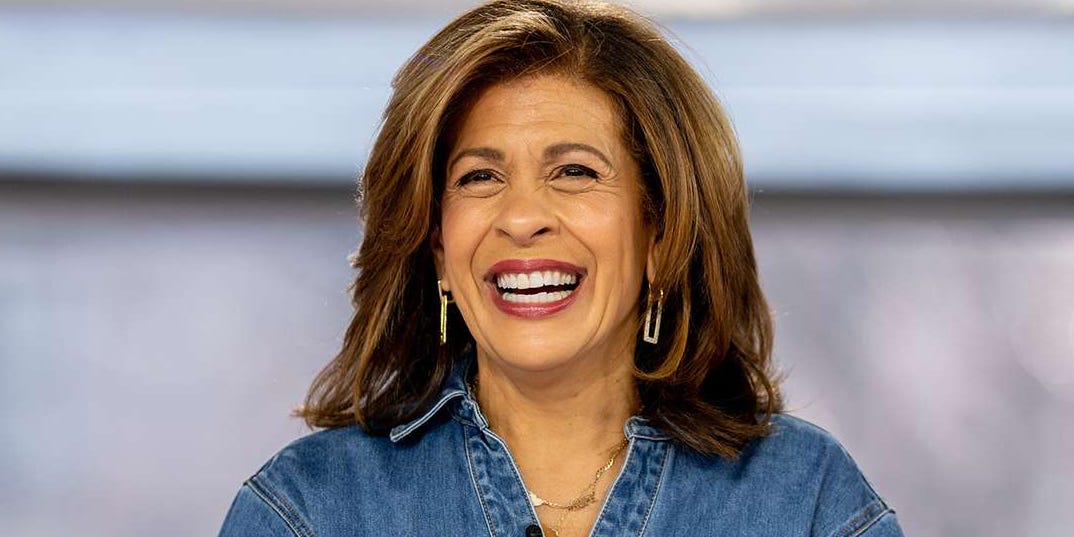
Some television announcements land like a polite memo. Others land like someone just unplugged the office espresso machine five minutes before a live broadcast. Hoda Kotb’s announcement that she would step away from her Today anchor duties was very much the second kind. It was emotional, surprising, deeply human, and instantly turned Studio 1A into a place where tears and admiration were sharing the same couch.
When Kotb revealed that she planned to leave her anchor role in early 2025, the reaction was not cold industry speak or vague “best wishes in future endeavors” fluff. Her co-hosts responded like people who had built real trust, real rhythm, and real affection over years of brutally early mornings. The result was one of those rare TV moments that felt less like programming and more like real life sneaking onto live television.
That is a big reason the story resonated so strongly. Yes, Hoda Kotb is a major television figure. Yes, Today is one of the biggest morning franchises in America. But what made this moment stick was the emotional specificity of the reactions around her. Savannah Guthrie looked heartbroken and proud at the same time. Jenna Bush Hager responded like a best friend who had just been told the group chat was about to change forever. Craig Melvin, Al Roker, Carson Daly, and Sheinelle Jones each struck their own note, and together they formed a chorus that said the same thing in different ways: Hoda is not easily replaced, because Hoda is not really “a role.” She is a presence.
Why Hoda Kotb Said It Was Time to Leave
Kotb’s explanation for leaving was both practical and emotional. She spoke about turning 60 and seeing the next chapter of her life more clearly. She also emphasized something viewers had long understood about her: family is not a side plot in her life. It is the main story. She wanted her daughters, Haley and Hope, and her mother to have a bigger share of her time, energy, and attention. For a host who spent years helping audiences start their day, the move sounded less like a dramatic exit and more like a deliberate recalibration.
That framing mattered. This was not a scandal story. It was not a contract-war spectacle. It was not a “shocking departure” in the tabloid sense, even if it genuinely surprised people. It was a woman at the top of her game deciding that success no longer needed to look exactly the way it had looked before. Morning TV loves a transformation story, but this one hit differently because it was not about reinvention through collapse. It was about reinvention through choice.
And that decision made her co-hosts even more emotional. It is one thing when someone leaves because they have to. It is another when they leave because they are brave enough to choose a new version of a good life. That kind of decision tends to earn both tears and respect, which is exactly what happened.
The Atmosphere on Today: Not a Farewell Yet, But the Feelings Were Already Real
The immediate response inside the Today family was full of visible emotion. Co-hosts cried, laughed through the tears, and tried to honor Kotb without making the moment feel like a funeral for a show she had not even left yet. It had the emotional texture of a graduation speech, a retirement party, and a family brunch all rolled into one. In other words: classic Today, but with extra tissues.
The reactions also showed why Hoda has remained such a durable force in morning television. Her co-workers did not talk about ratings tricks, polished TV instincts, or celebrity access. They talked about her heart. Her steadiness. Her warmth when the cameras were off. That distinction matters. In television, the red light tells viewers when the performance begins. The people around Kotb were essentially saying that with Hoda, there was no switch to flip. What viewers saw was who she really was.
Savannah Guthrie’s Response: Love, Pride, and a Lump in the Throat
If there was one reaction that instantly set the emotional tone, it was Savannah Guthrie’s. Her response captured the contradiction everyone else seemed to be feeling: sadness about losing Hoda from the anchor desk, and pride in watching a friend make a bold decision. Guthrie’s message, in essence, was that the tears in the room were not about disappointment in Hoda. They were about love for her.
That nuance is what made Guthrie’s reaction so memorable. She did not pretend to be cheerfully unbothered. She also did not turn the moment into a guilt trip. Instead, she acknowledged that loving someone often means wanting them close while also wanting what is best for them. That emotional balancing act gave viewers a window into the real friendship between the two women, who made history as the first all-female pair to co-anchor the show’s flagship hours.
Guthrie also reportedly praised Kotb’s courage for leaving something successful, stable, and beloved in order to step into an unknown future. That is not the kind of compliment people hand out casually. It was a recognition that Hoda was not walking away from a sinking ship. She was stepping away from a winning seat. That made Guthrie’s admiration land even harder.
Jenna Bush Hager’s Response: Best-Friend Energy, Live on Television
Jenna Bush Hager’s reaction felt like the emotional equivalent of grabbing someone’s sleeve and saying, “Okay, but you’re not actually getting rid of me.” She responded not just as a co-host but as someone whose daily life had become intertwined with Kotb’s. Their chemistry on the fourth hour had become one of the softest, funniest, most deceptively natural partnerships in morning TV. So when Kotb announced she was stepping away, Bush Hager responded with tears, affection, and the kind of humor that only shows up when someone is trying very hard not to fully sob on camera.
Her words made it clear that the relationship was bigger than a show format. She essentially promised that friendship would continue well beyond the studio walls. That mattered because Today with Hoda & Jenna was built on more than segment timing and celebrity interviews. It worked because the two women seemed genuinely delighted by each other. Their conversations often felt like viewers had wandered into a funny, occasionally chaotic, but always affectionate catch-up between friends.
Later coverage added another layer to Bush Hager’s reaction: she was shocked by the decision and had learned about it shortly before the public announcement. That detail made her original on-air emotion make even more sense. It was not performative surprise. It was actual surprise. And audiences can tell the difference.
Craig Melvin’s Response: A Reminder That Hoda’s Off-Camera Reputation Is Part of the Story
Craig Melvin responded with the kind of praise coworkers usually save for retirement roasts, except there was no roast and no irony. He emphasized that in a business full of people who change once the cameras turn off, Hoda did not. According to the spirit of his comments, the person viewers saw on television was the exact same person the team knew behind the scenes: generous, warm, and full-hearted.
That is a huge compliment in broadcasting. Morning television is part journalism, part performance, part endurance sport. It requires charm under pressure and composure under absurdly early alarms. Melvin’s reaction suggested that Kotb’s greatest professional asset was not just her polish. It was her consistency as a person.
He also described her as the heart of the show, which is not a phrase anyone uses lightly. Shows can replace roles. They can reshuffle chairs, change graphics packages, build new lineups, and keep rolling. But “heart” is harder to replace because it is not about a job title. It is about emotional center of gravity. Melvin’s response made clear that, to him, Kotb had been that center for a long time.
Al Roker’s Response: Simple, Direct, and Deeply Personal
Al Roker’s reaction was classic Al: warm, straightforward, and grounded in loyalty. He spoke about loving Kotb and, in later comments, made it clear that while he would miss her day to day, he felt overwhelmingly happy for her. That combination of affection and perspective made his reaction especially compelling.
Roker has been part of the fabric of Today for decades, so when he speaks about the value of family time, it carries weight. He understands how demanding the schedule is and how quickly children grow up while parents are busy making a career look seamless on air. His support seemed rooted in real-life wisdom rather than TV sentimentality. He was not minimizing the loss. He was reframing it as the kind of choice a person makes when they know what matters most.
That is why his response felt bigger than a soundbite. It was not just “good for her.” It was “I get it.” And sometimes that second sentiment is the one people need most.
Carson Daly’s Response: The Family Dynamic Was the Point
Carson Daly’s comments reflected something that often gets overlooked in coverage of morning shows: these people spend a lot of time together at hours most of America considers spiritually offensive. Daly admitted that selfishly, he did not want Kotb to leave because he would miss seeing her every day. That honesty made his reaction feel refreshingly unvarnished.
He also described the Today team as a real family, which could sound cliché in another context. Here, it did not. The visible chemistry among the hosts, combined with the emotional responses to Kotb’s announcement, gave that phrase actual credibility. Daly’s comments helped explain why the moment hit viewers so hard. People were not just reacting to a personnel move. They were reacting to a shift in a relationship ecosystem they had come to know intimately.
Sheinelle Jones’ Response: Hoda’s Impact Was Personal to Everyone
Sheinelle Jones offered one of the most insightful reactions because she focused on how differently Hoda connects with each person around her. That observation explained why the room felt so emotional. Kotb was not merely well-liked in a generic team-player way. She had built distinct, meaningful relationships across the couch.
Jones also highlighted Hoda’s power as a mother and her growing interest in wellness, suggesting that Kotb’s next chapter would not be a retreat but an expansion. That framing was important. It shifted the narrative from loss to evolution. In other words, Hoda was not disappearing. She was redirecting.
That perspective fit the broader tone of the cast reactions. No one spoke as though Kotb were fading into the background. They talked about her as someone stepping into an even more personal and purposeful phase of her life.
Why the Reactions Felt So Powerful to Viewers
The public response to the story was intense because morning television occupies a strange and powerful place in people’s lives. Viewers watch these hosts while getting kids ready for school, commuting, scrolling headlines, eating cereal, or pretending they are not late for work. The hosts become part of routine, and routine is intimate. When one of those faces announces a major life change, it can feel weirdly personal.
That is why the co-host reactions mattered so much. They functioned as emotional cues for the audience. If Savannah was crying, if Jenna was trying to joke through heartbreak, if Craig was talking about Hoda’s heart, then viewers had permission to feel something too. It was not just celebrity news. It was a disruption in a familiar emotional landscape.
There is also something deeply compelling about watching people honor someone while she is still sitting right there. Too often, praise is saved for retrospectives. Here, Kotb got to hear exactly how much she meant to the people around her, in real time, on live television. That gave the moment an unusual generosity.
What Hoda Kotb’s Exit Meant for Today
From a TV-industry perspective, Kotb’s departure was a major transition for NBC. She had been a stabilizing force across multiple hours of the franchise and helped define the show’s emotional tone. Her partnership with Guthrie brought steadiness to the main desk, while her chemistry with Bush Hager made the fourth hour feel loose, funny, and welcoming.
That meant her exit was never going to be just a lineup update. It raised real questions about succession, chemistry, and brand identity. Who could slide into the seat? Could the warmth survive the change? Would the audience follow the next version of the show? Those were natural questions, and the emotional reactions from her co-hosts only reinforced how large the shift would be.
At the same time, the tone of the responses suggested something hopeful: Kotb had helped build a culture sturdy enough to survive transition. The sadness was real, but so was the admiration. And that combination tends to produce smoother handoffs than bitterness ever could.
Experiences Around a TV Goodbye: Why a Host Exit Can Feel Strangely Personal
One of the most interesting experiences tied to a story like this is how many different groups go through a version of the same feeling at once. The host feels it as a life decision. The coworkers feel it as a workplace shift. The viewers feel it as a routine disruption. And yet all three groups often describe the moment in very similar terms: surprising, emotional, bittersweet, and oddly intimate.
For viewers, the experience is often about familiarity. People do not simply “watch” morning shows; they build habits around them. The hosts become part of the furniture of everyday life, except warmer and better dressed. When someone like Hoda Kotb announces an exit, people are not just processing a headline. They are processing the idea that tomorrow morning will feel a little different. That may sound minor, but routine is one of the main ways human beings create emotional stability. Change the routine, and the feeling gets bigger fast.
For coworkers, the experience is more layered. A television team is both a workplace and a performance unit. They have to be emotionally authentic enough to connect with viewers, but professional enough to keep the show moving even when the news lands like a brick. That means when a beloved anchor announces an exit, the co-hosts are dealing with real sadness while also translating that sadness into a live broadcast. It is a tricky balance. They cannot dissolve into total chaos, but they also cannot act like nothing happened. The best live-TV teams do what the Today team seemed to do here: they let the emotion show, but they shape it into support.
There is also the experience of public friendship, which is a funny modern phenomenon. When two or three hosts have strong chemistry, viewers begin to feel invested in that bond. Not in a creepy way, ideally, but in a deeply observant one. They notice who makes whom laugh harder, who knows how to calm the room, who reaches for a joke when things get heavy, and who always seems to know the exact right sentence when emotions spike. So when one person leaves, audiences feel they are losing not just an individual, but a dynamic. It is the on-air equivalent of your favorite band announcing that one member is stepping aside for a while. Sure, the songs may continue. But the sound changes.
Hoda Kotb’s exit announcement tapped into all of that. It reminded viewers that the most effective television personalities are not just information-delivery systems. They are emotional anchors in the broader sense of the word. They help set mood, pace, and texture. They make big news feel manageable and light news feel worthwhile. And when they leave, people notice the absence before they even know how to describe it.
That is why the reactions from her co-hosts mattered so much. They gave voice to the shared experience behind the story. They acknowledged the sadness without denying the joy. They made room for humor without flattening the emotion. And they showed that sometimes the strongest response to a big goodbye is not resistance, but love loud enough to be heard over the closing music.
Conclusion
Hoda Kotb’s Today exit announcement landed with force because it came wrapped in sincerity. She was not leaving out of burnout theater or career scandal. She was leaving because she wanted more life outside the studio, and her co-hosts understood the weight of that decision immediately. Savannah Guthrie answered with pride and heartbreak. Jenna Bush Hager answered with loyalty and tears. Craig Melvin answered with reverence for Hoda’s character. Al Roker answered with perspective. Carson Daly answered with honesty. Sheinelle Jones answered with warmth and faith in Hoda’s next chapter.
Taken together, their reactions told the real story. Hoda Kotb was never just another anchor in the lineup. She was the emotional glue, the calm center, the person whose kindness seemed to survive both the pressure of live TV and the exhaustion of pre-dawn call times. That is why her exit became such a big moment. It was not just about who would sit in the chair next. It was about what happens when a show’s heartbeat decides to follow her own.