Great dancing is not just about high kicks, clean turns, or looking like gravity forgot to clock in. Technique matters, of course. Nobody wants “emotional expression” to become code for “I fell over but meant it artistically.” Still, the dancers who stay in our memories are usually the ones who make us feel something. They do not simply perform steps; they reveal a heartbeat through movement.
Learning how to show emotion in dance is the difference between doing choreography and communicating through it. Whether you dance ballet, hip-hop, contemporary, jazz, ballroom, tap, musical theater, or freestyle in your kitchen while the pasta boils, the goal is the same: let the body tell the truth. Emotional expression in dance comes from musicality, breath, intention, facial expression, focus, dynamics, storytelling, and brave personal connection.
The good news? Soul is not a mysterious glitter cloud that only lands on “naturally expressive” dancers. It can be trained. Like turnout, timing, or not making a panic face during a forgotten eight-count, emotional performance improves with practice. Below are 10 practical steps to help you dance with more feeling, honesty, and stage presence.
Why Emotion Matters in Dance
Dance is often described as a movement language because dancers use the body to communicate ideas, feelings, relationships, memories, and atmosphere. A simple reach can look desperate, hopeful, romantic, angry, or bored depending on timing, energy, direction, breath, and focus. That is the magicand the terrifying homeworkof expressive movement.
Emotion gives technique a reason to exist. A perfectly pointed foot is beautiful, but when that foot slices through space because the dancer is escaping, celebrating, resisting, or longing, the audience leans forward. The body becomes more than architecture; it becomes a message.
10 Steps to Show Emotion and Soul in Dance
1. Understand the Story Before You Dance the Steps
Before you worry about your face, arms, or whether your left leg has chosen chaos today, ask: What is this dance about? The story does not have to be literal. It may be about grief, confidence, freedom, jealousy, joy, pressure, nostalgia, or simply the feeling of being unstoppable on a Thursday.
Read the lyrics, research the music, listen to the choreographer, or create your own emotional plot. Give yourself a reason for every phrase. For example, a slow reach upward might mean “I want something I cannot reach,” while a sharp turn away might mean “I refuse to listen.” When each movement has motivation, the dance stops looking pasted on and starts looking alive.
2. Connect the Emotion to a Personal Memory
Audiences can sense when a dancer is pretending too hard. Real emotion does not require you to relive your most dramatic life moment every time you performthat would be exhausting, and frankly, your nervous system deserves snacks. Instead, connect the mood of the piece to a manageable personal memory.
If the choreography is joyful, remember a time you felt light, proud, or ridiculously free. If the piece is about loss, you might connect to a moment of saying goodbye, missing someone, or watching your favorite coffee shop close. Keep the memory safe enough to perform with control, but meaningful enough to add depth. The goal is emotional fuel, not emotional fire alarm.
3. Use Your Breath as Part of the Choreography
Breath is one of the most underrated tools for showing soul in dance. When dancers hold their breath, movement often looks stiff, rushed, or disconnected. When breath moves with the body, emotion becomes visible.
Try inhaling before a large reach, exhaling into a contraction, or letting a sigh soften a transition. Breath can show surprise, release, fear, relief, sensuality, exhaustion, or courage. In contemporary dance, breath often shapes the rise and fall of movement. In hip-hop, breath can support groove and attack. In ballet, breath can make port de bras look less like “decorative arms” and more like thought traveling through space.
Practice one phrase three times: once holding your breath, once breathing randomly, and once choosing specific breath points. The third version will usually feel more humanand less like a beautiful robot with excellent hamstrings.
4. Let Your Face Support the Body, Not Fight It
Facial expression in dance matters, but it should not look like your eyebrows are auditioning for their own Broadway show. The face works best when it grows naturally from the body’s intention.
A common mistake is pasting on a smile because “performance energy” sounds like “show teeth.” But not every dance needs a grin. A competitive jazz number may call for sparkle and confidence, while a lyrical solo may need vulnerability, focus, or softness. A hip-hop piece may ask for coolness, humor, attitude, or direct eye contact. A classical variation may require elegance and emotional restraint rather than soap-opera-level suffering.
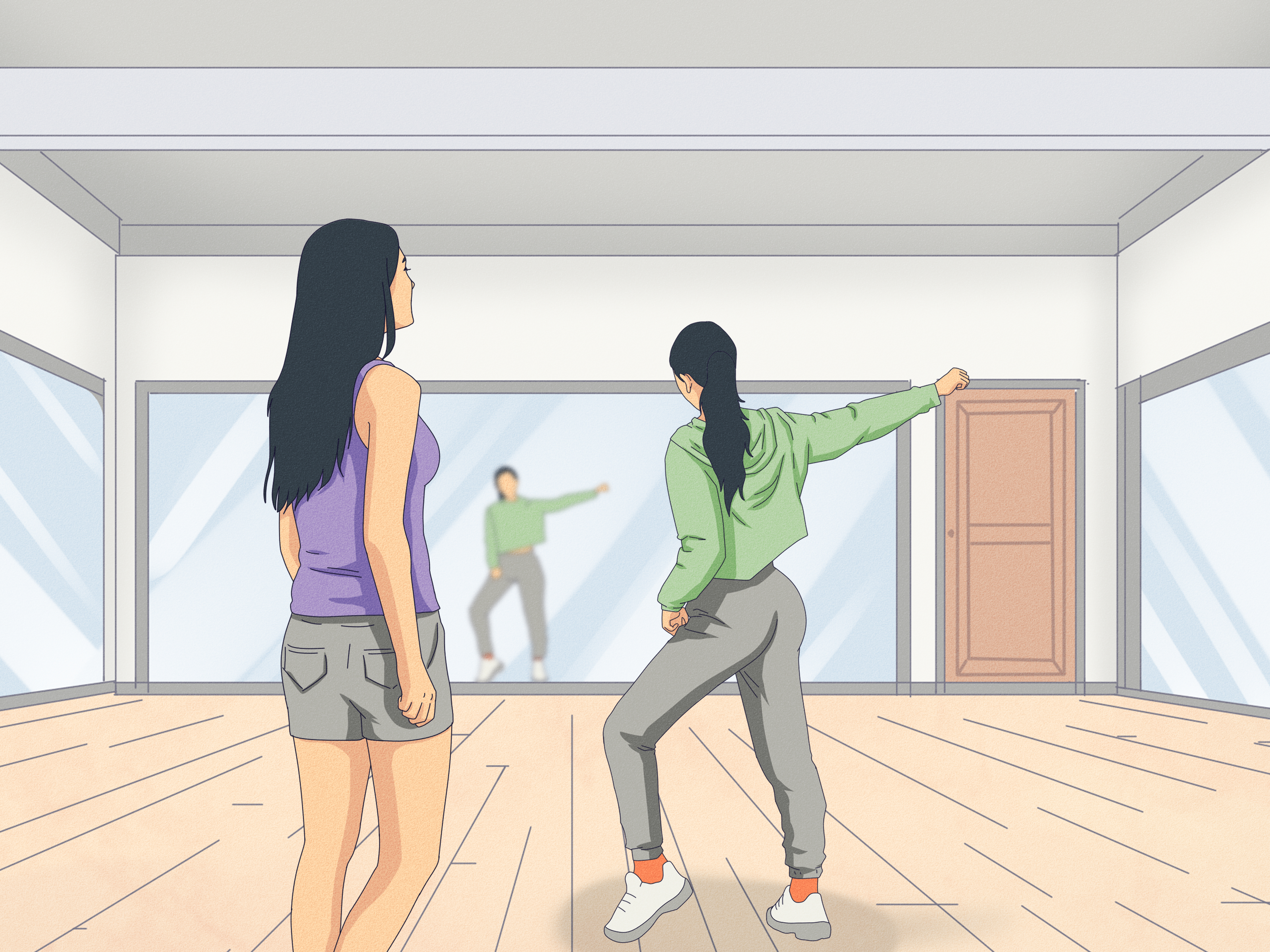
Practice in a mirror, but do not live there. Mirrors can help you check whether your expression is blank, exaggerated, or mismatched. Then turn away from the mirror and feel the expression from the inside. Your face should be connected to your breath, spine, focus, and musical timing.
5. Use Your Eyes and Focus With Intention
The eyes are tiny, but onstage they have serious main-character energy. Where you look tells the audience what matters. Looking down may suggest shame, memory, or introspection. Looking out can create connection or confrontation. Looking beyond the audience may suggest hope, distance, or longing. Looking at another dancer can reveal trust, conflict, attraction, rivalry, or support.
Do not let your eyes wander like they are checking for the nearest exit. Choose focus points. In rehearsal, mark them clearly: “I look at my hand,” “I look over my shoulder,” “I find the audience,” “I look away before the drop.” This gives emotional expression structure. Even a simple head turn becomes more powerful when the eyes arrive first or resist the movement.
6. Play With Dynamics: Soft, Sharp, Heavy, Light
Emotion lives in dynamics. If every move has the same speed, weight, and texture, the dance becomes visually flat, like reading a love letter in a tax-audit voice. Dynamics create contrast and meaning.
Try dancing one phrase as if the air is thick like honey. Then dance it as if every movement sparks like electricity. Try making a gesture heavy with grief, then light with curiosity. A sharp arm can express anger, urgency, or decision. A melting spine can show surrender or sadness. A suspended jump can feel hopeful. A sudden stop can create shock, fear, or power.
Do not just ask, “What are the steps?” Ask, “What is the texture?” The same choreography can become romantic, dangerous, playful, or haunted depending on dynamic choices.
7. Listen to the Music Like a Scene Partner
Musicality is more than staying on beat. It is a conversation with sound. The rhythm, lyrics, silence, instruments, tempo, and accents all offer emotional clues.
Listen for the singer’s breath, the bass line, the swell of strings, the crack in a vocal phrase, or the sudden silence before a chorus. Maybe the choreography hits the drum, but your emotion follows the melody. Maybe your body moves on the count, but your focus changes on a lyric. This layered listening makes dance performance richer.
One useful exercise is to play the music without dancing. Write down five emotional shifts you hear. Does the song begin guarded and become explosive? Does it move from loneliness to acceptance? Does it pretend to be happy while the lyrics are heartbreaking? Congratulations, you have found emotional homeworkand possibly a song that needs therapy.
8. Build a Character or Performance Persona
You do not need to become a full method actor who refuses to answer unless called “Moonlight Warrior of the Second Verse.” Still, creating a character can help you commit. Ask who you are in the piece. Are you the dreamer, the rebel, the clown, the survivor, the villain, the friend, the memory, the storm?
Give your character three details: what they want, what they fear, and what changes by the end. For a solo, this creates emotional direction. For a group piece, it helps you avoid becoming background furniture with jazz shoes. Even in abstract choreography, a persona gives you tone. You may not be playing a named person, but you can embody a state of being: brave, restless, tender, electric, broken, peaceful, fierce.
9. Rehearse Transitions, Not Just Big Moments
Many dancers save emotion for the obvious highlights: the leap, the floor roll, the dramatic reach, the final pose. But soul often appears in the transitions. How you walk, breathe, turn your head, recover from a fall, or prepare for the next phrase tells the audience whether you are truly inside the dance.
Do not “drop character” between tricks. A transition is not dead space; it is the sentence between exclamation points. If you finish a powerful turn and then mentally check your grocery list before the next count, the audience feels the break. Stay emotionally connected through the boring-looking parts. That is where mature performance quality grows.
10. Practice Vulnerability Without Losing Technique
Showing emotion in dance requires courage, but it also requires craft. If you throw yourself into feeling without physical control, the piece can become messy. If you cling only to control, it can become cold. The sweet spot is disciplined vulnerability.
Start by rehearsing technique clearly. Know the counts, pathways, spacing, and corrections. Once the body understands the structure, add emotional intention. This prevents the classic problem of “I felt everything, including forgetting the choreography.” Technique is the container; emotion is the water. You need both, unless you enjoy puddles.
Record yourself and review with kindness. Ask: Do I believe the emotion? Is my face connected to my body? Are my dynamics varied? Do I stay present in transitions? Does the ending feel earned? Use feedback from teachers, choreographers, and trusted peers. Expressive dancers are not necessarily the loudest performers; they are the most honest and specific.
Common Mistakes That Make Dance Look Less Emotional
Overacting Instead of Embodying
Big emotion does not always require big facial expression. Sometimes the smallest shift of the eyes or breath says more than a giant gasp that can be seen from the parking lot. Let the emotion travel through the whole body rather than sitting only on the face.
Copying Another Dancer’s Feeling
Studying great performers is helpful, but copying their exact expression can feel artificial. Use inspiration, then translate it through your own body, background, and personality. Your version of sadness, joy, or confidence may not look like anyone else’sand that is the point.
Ignoring the Style
Every dance style has its own emotional language. Musical theater may call for clarity and projection. Ballet may value refinement and line. Hip-hop may rely on groove, confidence, cultural awareness, and musical attack. Contemporary may explore breath, weight, and vulnerability. Ballroom may emphasize partnership, elegance, and chemistry. Respect the style while bringing yourself into it.
Exercises to Improve Emotional Expression in Dance
The One-Phrase Emotion Switch
Choose eight counts of choreography. Dance it four times with four different emotions: joy, anger, fear, and peace. Keep the steps the same, but change breath, focus, timing, texture, and facial expression. This teaches you how movement choices create emotional meaning.
The Silent Story Exercise
Create a short dance phrase without music. Give it a beginning, middle, and end. Perform it for a friend and ask what story or feeling they saw. If their answer is close to your intention, your body is communicating clearly. If not, adjust your focus, dynamics, and timing.
The Mirror-to-No-Mirror Drill
Practice your expression in the mirror, then immediately repeat the phrase facing away. This helps you move from “How do I look?” to “What am I saying?” The audience does not want a dancer trapped in self-check mode. They want a person brave enough to be present.
Experience Notes: What It Feels Like to Dance With Soul
The first time many dancers try to show real emotion, they feel deeply awkward. That is normal. The studio suddenly becomes suspiciously bright, the mirror becomes an enemy, and every facial expression feels like it was ordered from a discount theater catalog. You may think, “I am being vulnerable,” while your teacher gently says, “I can see you counting.” This is not failure. It is the beginning of awareness.
A helpful experience is to take one familiar combination and remove the pressure to impress. Do not aim for the highest jump or the cleanest turn. Instead, ask what the phrase would feel like if it were a sentence. Maybe the first four counts say, “I am fine,” and the next four admit, “Actually, no, I am absolutely not fine.” Suddenly the movement has subtext. Your arm is not just going up; it is reaching for help, pushing away, or trying to hold on. Your walk is not just traveling; it is arriving, escaping, remembering, or daring someone to stop you.
Another useful experience is dancing the same piece for different imagined audiences. Perform once as if dancing for a best friend who understands you completely. Then perform as if dancing for someone who underestimated you. Then perform as if no one is watching at all. Each version reveals a different layer. The “best friend” version may soften your face. The “underestimated” version may sharpen your focus. The “no one watching” version may unlock freedom because your inner critic finally wandered off to bother someone else.
Partner and group work also teach emotional honesty. In a duet, connection is not created by staring intensely until everyone becomes uncomfortable. It comes from listening through the body. You feel the timing of another person’s weight, the hesitation before contact, the trust in a lift, the resistance in a pull. In group choreography, soul appears when dancers breathe together, commit to the same world, and understand how their individual energy supports the whole piece.
Performance experience adds another lesson: emotion must be clear enough to travel. What feels huge inside may look tiny under stage lights. What feels subtle in rehearsal may disappear in a large theater. This does not mean you should become dramatic wallpaper. It means you learn to project intention through the chest, eyes, spine, arms, and timing. You make choices bold enough for the audience to read while keeping them truthful.
Finally, dancing with soul gets easier when you stop judging every second of yourself. Emotional expression requires presence. If your brain is shouting, “Was that weird? Did my face look strange? Is my bun escaping?” you cannot fully inhabit the dance. Trust the preparation. Let the body speak. Some performances will feel magical; others will feel like you and the floor are in a complicated relationship. Keep practicing anyway. Soul is built through repetition, curiosity, courage, and the willingness to look slightly ridiculous on the way to becoming unforgettable.
Conclusion
Learning how to show emotion and soul in dance is not about forcing tears, smiling harder, or turning every routine into a dramatic weather event. It is about dancing with intention. When you understand the story, connect to personal meaning, breathe with purpose, use your eyes, shape dynamics, listen deeply to the music, build character, honor transitions, and balance vulnerability with technique, your performance becomes more than movement.
The most expressive dancers are not always the flashiest. They are the ones who make every gesture feel necessary. They invite the audience into a world and make us believe something is at stake. That kind of dancing cannot be faked for long, but it can be practiced. Start small. Choose one phrase, one breath, one focus point, one honest feeling. Then let the body do what dance has always done best: say what words cannot.