Choosing a home is not only about square footage, closet space, or whether the kitchen island is large enough to host a small diplomatic summit. The architectural style of a house shapes how it looks, how it lives, how it ages, and even how people feel when they walk through the front door. From humble Cape Cod cottages to dramatic Victorians and breezy Mediterranean villas, architectural house styles tell the story of American taste, climate, history, technology, and the eternal human desire for better curb appeal.
This guide explores the 25 most popular architectural house styles in the United States, with defining features, design history, practical pros and cons, and examples of where each style shines. Whether you are house hunting, remodeling, writing a listing description, or simply trying to identify why one roofline makes your heart flutter, this breakdown will help you speak fluent “house.”
Why Architectural House Styles Matter
Architectural style is more than decoration. It influences layout, maintenance, resale appeal, energy efficiency, renovation options, and neighborhood character. A Ranch home may offer accessible one-level living, while a Tudor may charm buyers with steep gables and storybook details. A Modern home may provide open spaces and glassy drama, while a Craftsman wraps comfort in woodwork, porches, and practical proportions.
Understanding popular house styles also helps homeowners make smarter design decisions. Installing sleek black-framed windows on a Mid-Century Modern home may look natural; doing the same to a delicate Queen Anne Victorian can feel like giving your great-grandmother a motorcycle jacket. Stylish? Maybe. Historically respectful? Not exactly.
25 Most Popular Architectural House Styles in America
1. Ranch Style
The Ranch house is one of the most common and beloved home styles in the United States. Known for its single-story layout, low-pitched roof, attached garage, and easy indoor-outdoor connection, the Ranch became a suburban superstar after World War II. It is practical, affordable to build, and friendly to all ages because stairs are optional rather than mandatory leg day.
Best for: families, retirees, open-plan renovations, and large lots.
2. Colonial
Colonial homes are classic, symmetrical, and dignified. They usually feature a centered front door, evenly spaced windows, side-gabled roofs, and two stories. Inspired by early European settlements in America, Colonial architecture remains popular because it feels orderly and timeless. It is the architectural equivalent of a crisp white shirt: simple, dependable, and hard to mess up.
Common features: shutters, brick or clapboard siding, formal rooms, chimneys, and balanced facades.
3. Cape Cod
Cape Cod homes originated in New England and were designed for cold coastal weather. They are compact, charming, and efficient, often with steep roofs, dormer windows, central chimneys, and shingle siding. A traditional Cape Cod feels cozy without trying too hard, like a house that knows how to make soup.
Best for: smaller lots, cottage-style neighborhoods, and homeowners who love classic simplicity.
4. Craftsman
Craftsman homes celebrate hand-built character. Popular in the early 20th century, they often include low-pitched roofs, wide front porches, exposed rafters, tapered columns, built-in cabinetry, and natural wood details. The style grew from the Arts and Crafts movement, which pushed back against mass-produced design.
Why people love it: warmth, craftsmanship, strong curb appeal, and interiors that feel human-scaled.
5. Bungalow
Bungalows are typically small or medium-sized homes with one or one-and-a-half stories, broad porches, low roofs, and efficient floor plans. Many Craftsman homes are bungalows, but not all bungalows are Craftsman. Think of “bungalow” as the relaxed cousin who shows up in comfortable shoes and still looks stylish.
Best for: first-time buyers, historic neighborhoods, and people who value cozy, manageable spaces.
6. Tudor
Tudor Revival homes look as if they wandered out of an English village and settled in an American suburb. They are famous for steeply pitched roofs, front-facing gables, half-timbering, brick or stucco exteriors, tall chimneys, and arched doorways. Their romantic personality is hard to miss.
Design note: Tudor homes often require careful maintenance because decorative trim, masonry, and rooflines can be complex.
7. Victorian
Victorian architecture is not shy. Popular during Queen Victoria’s era, these homes may include towers, turrets, ornate trim, bay windows, patterned shingles, wraparound porches, and colorful exteriors. If Minimalism whispers, Victorian design arrives with a brass band and three kinds of gingerbread trim.
Best for: historic-home lovers, detail enthusiasts, and anyone who believes “more character” is a valid life goal.
8. Queen Anne
Queen Anne is a highly recognizable type of Victorian architecture. These homes are asymmetrical, decorative, and often dramatic, with towers, spindlework, textured surfaces, stained glass, and complex rooflines. They are among the most photogenic historic house styles in America.
Watch out for: restoration costs. Beauty may be priceless, but ornate millwork definitely sends invoices.
9. Farmhouse
Traditional farmhouse architecture grew from rural practicality. These homes often feature simple rectangular forms, pitched roofs, large porches, wood siding, and functional layouts. The style is honest and hardworking, built around comfort rather than showing off.
Best for: rural properties, family living, and casual interiors with natural materials.
10. Modern Farmhouse
Modern Farmhouse blends traditional farmhouse warmth with contemporary simplicity. Common features include white or neutral exteriors, black-framed windows, metal roofs, board-and-batten siding, large porches, open interiors, and clean lines. It became extremely popular because it feels both nostalgic and current.
Design tip: use texture, wood, stone, and thoughtful lighting to avoid a flat “white box with a barn hat” effect.
11. Mediterranean
Mediterranean homes are inspired by coastal regions of Spain, Italy, and Greece. They often include stucco walls, red tile roofs, arched windows, wrought iron details, courtyards, and warm earth tones. This style thrives in sunny climates because it was practically born wearing sunglasses.
Best for: warm regions, outdoor entertaining, and homes with gardens, patios, or pools.
12. Spanish Colonial Revival
Spanish Colonial Revival homes are especially common in California, Florida, Arizona, New Mexico, and Texas. They typically feature stucco exteriors, low-pitched clay tile roofs, arched openings, decorative ironwork, carved doors, and shaded courtyards. The style draws from Spanish missions and colonial-era architecture while adapting beautifully to hot, dry climates.
Why it works: thick walls, shaded openings, and tile roofs help create a cool, relaxed atmosphere.
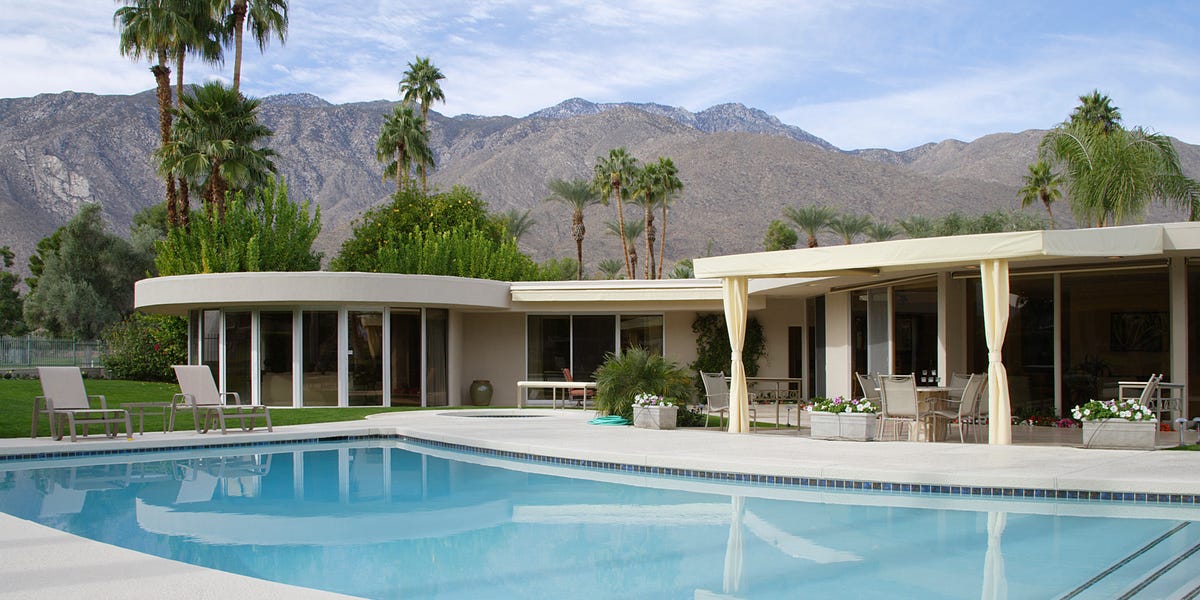
13. Mid-Century Modern
Mid-Century Modern homes emphasize clean lines, open floor plans, flat or low-sloped roofs, large windows, and a close relationship with nature. Popular from the 1940s through the 1960s, this style still feels fresh because it values function, light, and simplicity.
Best for: design lovers, desert landscapes, wooded lots, and anyone who owns at least one very confident lounge chair.
14. Modern
Modern architecture focuses on simplicity, function, minimal ornament, and honest use of materials such as glass, steel, concrete, and wood. Modern homes often have open interiors, geometric forms, large windows, and flat roofs. They are not the same as contemporary homes, although people often use the terms interchangeably.
Key idea: modern design is rooted in a historical movement; contemporary design reflects what is current now.
15. Contemporary
Contemporary homes represent the architecture of the present moment. They may borrow from Modern, Minimalist, Industrial, Sustainable, or Organic design. Common features include asymmetrical forms, mixed materials, energy-efficient systems, oversized windows, and flexible interior spaces.
Best for: homeowners who want current design, smart technology, and a flexible layout.
16. Prairie
Prairie-style homes are closely associated with Frank Lloyd Wright and the American Midwest. They emphasize horizontal lines, low-pitched roofs, broad eaves, grouped windows, and integration with the landscape. Prairie homes feel grounded, calm, and quietly confident.
Design signature: strong horizontal proportions that echo flat prairie landscapes.
17. Cottage
Cottage-style homes are usually smaller, charming, and cozy. They can borrow features from Cape Cod, Tudor, Craftsman, English country, or coastal architecture. Expect pitched roofs, dormers, flower-friendly entries, textured materials, and interiors that seem legally required to include a reading nook.
Best for: vacation homes, small lots, downsizing, and romantic curb appeal.
18. Cabin and Log Home
Cabins and log homes are rustic, natural, and often connected to mountain, forest, or lake settings. Traditional log homes use stacked logs as structure and exterior finish, while modern cabins may combine wood, stone, metal, and large windows.
Best for: rural retreats, vacation rentals, and homeowners who prefer nature over neighbors with leaf blowers.
19. Split-Level
Split-level homes became popular in mid-20th-century suburbs. They divide living spaces across staggered levels, often with short flights of stairs between zones. A typical split-level may place bedrooms above, family rooms below, and main living areas in the middle.
Pros: efficient use of space, separation between activities, and good fit for sloped lots.
20. Georgian
Georgian homes are formal, symmetrical, and classically inspired. They often feature brick exteriors, centered entries, multi-pane windows, decorative crowns, and orderly proportions. The style influenced many Colonial and Colonial Revival homes in America.
Best for: traditional neighborhoods, formal interiors, and buyers who appreciate architectural discipline.
21. Federal
Federal-style homes developed after the American Revolution and refined earlier Georgian ideas. They are typically elegant and restrained, with fanlights, sidelights, delicate moldings, symmetrical facades, and classical details. Federal homes are especially associated with historic East Coast cities.
Style personality: graceful, patriotic, and polished without being flashy.
22. Greek Revival
Greek Revival homes became popular in the 19th century, inspired by ancient Greek temples and democratic ideals. They often feature columns, pediments, wide trim, symmetrical shapes, and bold white exteriors. Many historic homes, churches, and public buildings embraced this style.
Best for: grand entries, historic districts, and architecture fans who believe columns solve many problems.
23. Italianate
Italianate homes are romantic and vertical, often with tall narrow windows, decorative brackets, low-pitched roofs, cupolas, and ornate porches. Popular in the mid-to-late 1800s, the style was inspired by Italian villas and adapted widely across American towns.
Common appeal: elegant proportions, historic charm, and distinctive roof brackets.
24. Shingle Style
Shingle-style homes are strongly associated with coastal New England and late 19th-century American design. They often feature wood shingle cladding, asymmetrical forms, broad roofs, porches, and a relaxed relationship with the landscape. Unlike fussy Victorian styles, Shingle homes feel more unified and organic.
Best for: coastal properties, large lots, and homeowners who love understated historic character.
25. Art Deco
Art Deco homes are less common than Ranch or Colonial houses, but they remain highly recognizable. The style features geometric shapes, smooth surfaces, stepped forms, curved corners, decorative motifs, and a sense of glamour. It became popular in the 1920s and 1930s and is strongly associated with cities like Miami and New York.
Design mood: bold, sleek, urban, and ready for a jazz soundtrack.
How to Identify a House Style Quickly
To identify a home’s architectural style, start with the roof. A steep roof may suggest Tudor, Cape Cod, or Gothic influence. A low, horizontal roof may point to Ranch, Prairie, or Mid-Century Modern. Next, look at symmetry. Colonial, Georgian, and Federal homes tend to be balanced, while Victorian, Queen Anne, and Contemporary homes are often asymmetrical.
Materials also provide clues. Stucco and clay tile often indicate Spanish Colonial Revival or Mediterranean influence. Exposed rafters and natural wood details suggest Craftsman. Brick symmetry may point toward Colonial or Georgian. Large glass walls and open plans usually hint at Modern or Mid-Century Modern design.
Finally, consider the region. Cape Cod homes are common in New England, Spanish styles flourish in the Southwest and California, Mediterranean homes suit Florida and coastal climates, and Prairie homes feel especially at home in the Midwest. Architecture follows climate, culture, and available materialsplus the occasional trend that refuses to leave Pinterest.
Which Architectural House Style Is Best?
The “best” architectural house style depends on lifestyle, location, budget, and personal taste. A Ranch may be ideal for accessibility and easy maintenance. A Craftsman may suit someone who values detail and warmth. A Contemporary home may appeal to buyers who want open space, sustainability, and modern technology. A Colonial may be perfect for traditional curb appeal and broad resale interest.
For renovation, some styles are more flexible than others. Ranch homes often adapt well to open-concept updates. Farmhouses can handle additions if proportions are respected. Historic Victorians, Tudors, and Italianates require more sensitivity because removing original details can damage both character and value. In other words, do not rip out 120-year-old woodwork just because a trend report told you beige was “having a moment.”
Real-World Experience: Living With Different House Styles
One of the most useful lessons about architectural house styles is that beauty and daily life must get along. A home can look perfect in a listing photo and still make you question your choices when you carry groceries up three tiny staircases. Style matters, but function gets a vote every single day.
Ranch homes, for example, often feel wonderfully convenient. Everything is on one level, which makes cleaning, moving furniture, and aging in place easier. The downside is that long, low layouts can require more roof and foundation area, which may affect maintenance costs. Still, for families with young children or homeowners who prefer step-free living, a Ranch can be a quiet hero.
Craftsman and bungalow homes often create an immediate emotional connection. The porch says, “Stay awhile.” The built-ins say, “Look, storage with personality.” The woodwork says, “Please do not paint me gray without thinking deeply first.” These homes tend to feel warm and grounded, but older examples may have smaller closets, compact kitchens, and less insulation than newer construction.
Victorian and Queen Anne homes deliver drama and charm, especially for people who love history. Living in one can feel like owning a piece of art. However, art occasionally needs a new roof, custom trim repair, knob-and-tube wiring replacement, and a calm conversation with a contractor. These homes reward patient owners who appreciate preservation and have realistic renovation budgets.
Modern and Contemporary homes offer light, openness, and flexibility. They can feel peaceful and uncluttered, especially when designed with natural materials. The challenge is that minimal design is not always low-maintenance. Flat roofs, large glass walls, and custom details must be designed and built carefully. A modern home with poor execution can become a very expensive greenhouse with opinions.
Spanish Colonial Revival and Mediterranean homes are wonderful in warm climates because their shaded courtyards, tile roofs, and stucco walls feel connected to the environment. They encourage outdoor living and relaxed entertaining. In colder or wetter regions, however, homeowners must pay closer attention to moisture, roof detailing, and material performance.
The smartest approach is to match style with lifestyle. If you entertain outdoors, consider Mediterranean, Spanish, Ranch, or Contemporary designs. If you love historic detail, explore Colonial, Federal, Tudor, Victorian, or Craftsman homes. If you want simplicity and flexibility, look at Ranch, Modern Farmhouse, Modern, or Mid-Century Modern houses. A house style should not just photograph well; it should support the way you cook, rest, work, host, garden, park, decorate, and occasionally hide from laundry.
Conclusion
The most popular architectural house styles in America reflect centuries of history, regional adaptation, changing technology, and evolving lifestyles. Colonial homes offer symmetry and tradition. Ranch homes deliver everyday practicality. Craftsman houses celebrate warmth and detail. Modern homes embrace openness and innovation. Victorian, Tudor, Mediterranean, and Spanish Revival styles bring romance, drama, and regional flavor.
Whether you are buying, building, renovating, or simply admiring homes on an evening walk, understanding architectural house styles helps you see more than walls and windows. You begin to notice proportion, climate response, craftsmanship, history, and personality. And once you can identify a Tudor from a Craftsman or a Cape Cod from a Colonial, neighborhood strolls become much more interesting. Warning: you may become the person who points at rooflines during car rides. Honestly, there are worse hobbies.
Note: This article was created for web publication and synthesizes widely accepted U.S. architectural, preservation, real estate, and home design knowledge without inserting source links into the article body.