Some videos go viral because someone falls into a pool, a dog steals a sandwich, or a toddler announces a life philosophy with the confidence of a tiny professor. Then there are the rare ones that stop the internet in its tracks for a completely different reason: they remind people that home is not always a place we leave behind willingly. Sometimes, home waits quietly, gathering dust, holding memories, and keeping the light on in its own stubborn way.
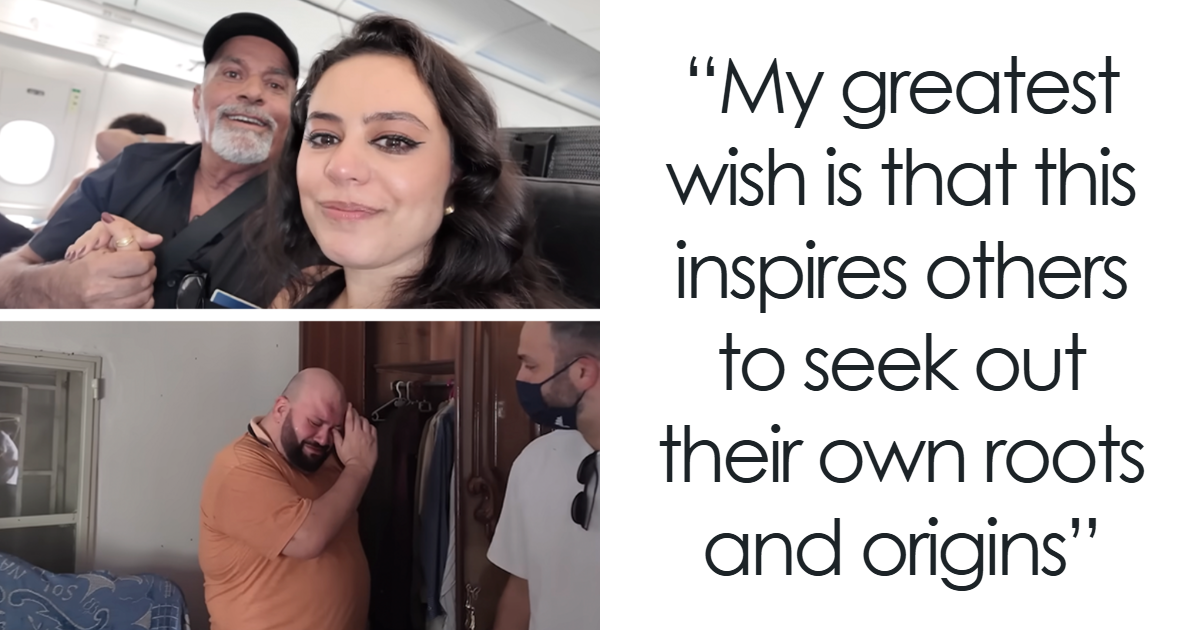
That is why the emotional story of Brazilian content creator Yasmin Yassine and her father, Ahmad Yassine, has touched so many viewers. Yasmin traveled with her family to Lebanon, the country her father left as a teenager more than four decades earlier. What began as a trip to reconnect with family roots became something much deeper when they stepped inside the old family home and found personal belongings still there, almost as if time had paused and decided to take a very long coffee break.
The story, widely shared under headlines such as "Made Me Cry" and "Woman Visits Family Home 46 Years After Dad Left," is not just about nostalgia. It is about displacement, memory, family identity, and the powerful shock of discovering that the past has been quietly preserved in objects: folded bedding, old dishes, clothes still hanging in a wardrobe, and fruit trees planted by a young man before life carried him across an ocean.
The Viral Family Home Visit That Left Viewers Emotional
The heart of the story is simple, which is exactly why it works. Yasmin took her father, Ahmad, back to Lebanon after decades away. He had left the country as a 19-year-old during a period of conflict and uncertainty, eventually rebuilding his life in São Paulo, Brazil. Like many immigrant families, his story was shaped by survival first and sentiment later. You do not always get the luxury of closure when you are busy starting over.
For years, Yasmin had heard about her Lebanese roots but had never fully experienced them in person. The trip became a bridge between generations: a daughter seeing the place that formed her father, and a father returning not as the boy who left, but as a man carrying a family of his own. That alone would be emotional enough. But then came the house.
The family traveled to Ghazze, a town in Lebanon’s Beqaa region, where Ahmad’s childhood home still stood. The house had reportedly last been opened years earlier, and yet inside, many objects remained in place. The family found handmade bedding, dishes, personal items, and the kind of everyday details that turn an old room into a time capsule. These were not museum pieces behind glass. They were ordinary belongings made extraordinary by absence.
Why the Discovery Inside the Home Hit So Hard
One of the most moving parts of the visit was not a dramatic treasure chest or a secret letter hidden in the wall. It was clothing. Ahmad’s father’s clothes were still hanging, neatly kept, as though their owner might come back at any moment. That detail is what made many people online say the story made them cry. A shirt on a hanger can become a whole biography when the person who wore it never made it back.
There was also a Quran resting on a bed, handmade duvets in a cabinet, china that belonged to the family, and personal care items connected to Yasmin’s grandmother. These are the small things families usually overlook while life is happening. Then decades pass, and suddenly a cabinet is not a cabinet anymore. It is a witness.
What stunned people was not just that the items survived. It was that they seemed to preserve intention. The home looked less abandoned than waiting. In a world where everything moves fast, where phones update overnight and people throw away perfectly good chargers because the new one has a different tiny hole, the idea of a family home holding onto memory for 46 years feels almost impossible.
The Historical Context: Leaving Lebanon Was Not a Simple Choice
To understand why Ahmad’s return carries such emotional weight, it helps to remember the history behind his departure. Lebanon’s civil war, which began in 1975 and lasted until 1990, deeply affected families across the country. The conflict involved complex political, religious, regional, and international forces, and it forced many people to flee their homes or build new lives elsewhere.
For families who left during that era, migration was rarely a tidy farewell with a packed suitcase, a group photo, and someone saying, "See you in a few decades." People left because circumstances pushed them out. Some believed they would return soon. Others hoped to return but could not. Many raised children in new countries while carrying the language, food, faith, stories, and habits of the place they had lost.
That is why the image of clothes still hanging in the wardrobe is so powerful. It suggests a future that never happened. The person who left may have imagined coming back, reopening the door, touching familiar walls, and resuming a life interrupted. Instead, the family story continued in Brazil, while the house in Lebanon kept its quiet archive.
Lebanon, Brazil, and the Long Story of Diaspora
Yasmin’s family story also fits into a much larger history of Lebanese migration to Brazil. Brazil is home to one of the world’s most significant communities of Lebanese descent. Over generations, Lebanese families have shaped Brazilian food, business, politics, culture, and daily life. Many descendants grow up with a blended identity: Brazilian in language and everyday experience, Lebanese through family history, food, names, faith, values, and stories told at dinner tables.
That mixed identity can be beautiful, but it can also create a strange feeling of distance. A person may know the taste of a dish before knowing the village it came from. They may recognize a family name before seeing it on a road sign. They may feel connected to a country they have never visited, which sounds confusing until you remember that family identity is not always logical. Sometimes it is inherited through recipes, accents, old photographs, and relatives who begin every story with, "Back home…"
For Yasmin, the trip was not just tourism. It was a return to origins. For Ahmad, it was a reunion with the physical landscape of childhood. For viewers, it became a reminder that ancestry is not just a chart with names and dates. It is also a house, a tree, a drawer, a smell, a song, a road, a kitchen, and the emotional ambush of seeing something your family thought it had lost.
Why Viewers Reacted So Strongly Online
People online are not exactly known for unanimous tenderness. Usually, if someone posts a video of a sunset, the internet can still find a way to argue about camera settings, cloud politics, or whether sunsets used to be better in 2009. But Yasmin’s video drew a wave of emotional responses because it touched something nearly universal: the ache of home.
Even people who have never crossed borders can understand the feeling. Many people have a grandparent’s house they miss, a childhood room that no longer exists, a neighborhood that changed, or a family object that somehow carries more emotional power than its market value could ever explain. A cracked bowl can be priceless if it belonged to the person who fed you soup when you were sick. A key can matter even when the door is gone.
The video also offers the rare internet experience of sincerity without embarrassment. Ahmad’s emotional reaction, including his visible gratitude and affection for the land and home, gave viewers permission to feel deeply. In an online culture that often rewards sarcasm, that kind of open emotion can feel almost radical.
The Psychology of Nostalgia: Why Old Places Feel Alive
Nostalgia is often described as bittersweet, and this story shows exactly why. The family home is a source of joy because it survived. It is also a source of sadness because the people who once filled it are no longer there in the same way. That mix of happiness and grief is what makes nostalgia so powerful. It does not simply say, "Wasn’t the past nice?" It says, "Look how much love existed, and look how much time has passed."
Researchers have increasingly viewed nostalgia not as weakness or unhealthy longing, but as a meaningful emotional process. Remembering important people and places can strengthen identity, increase a sense of connection, and help people understand their life as one continuous story. In plain English: nostalgia is your brain’s way of saying, "Hey, you are not just a random person floating through Tuesday. You came from somewhere."
That is why returning to a family home can be so overwhelming. It gives memory a physical address. Stories that once sounded distant suddenly become visible. A father can point to a tree and say he planted it. A daughter can look at a room and understand her family not as a collection of anecdotes, but as real people who slept there, worked there, worried there, cooked there, and dreamed there.
Objects as Memory Keepers: Why a Wardrobe Can Break the Internet
One lesson from this story is that family objects are not just clutter. Of course, not every old spoon needs a velvet pedestal and dramatic lighting. Some things are just things. But certain objects become emotional containers because they hold evidence of daily life. The clothes in the wardrobe mattered because they were intimate. They suggested habit, personality, and expectation. Someone wore them, cared for them, and perhaps believed they would be used again.
Family archives often begin accidentally. A drawer of letters. A box of photos. A passport. A recipe card. A piece of fabric. A prayer book. A watch that stopped working long ago but somehow still keeps emotional time. These items help later generations ask better questions. Who owned this? Where did they live? Why did they leave? What did they hope for? What did they never get to finish?
In Yasmin’s family story, the home itself became an archive. It preserved more than possessions; it preserved atmosphere. The untouched rooms allowed the family to experience the past not as an abstract idea but as a physical encounter. That is why the discovery stunned people. It made history personal, and personal history is often the kind that hits hardest.
Why the Family Chose Not to Take Everything Away
Another meaningful detail is that the family reportedly did not simply collect the belongings and leave. Instead, they wanted to preserve the house and return again. That decision matters. Taking an object can be comforting, but leaving a place intact can also be an act of respect. It says the story belongs not only to one suitcase, one shelf, or one person, but to a family line.
There is also something beautiful about restoring a family home rather than treating it like a closed chapter. Restoration does not erase loss. It does not bring back the years. But it can transform absence into continuity. A repaired roof, a cleaned room, or a reopened door can become a promise: the family story did not end when someone had to leave.
For immigrant families, this can be especially powerful. Many first-generation migrants are focused on building stability. Their children and grandchildren often become the ones who have time, resources, or curiosity to revisit the origin story. In that sense, Yasmin’s trip was a gift in both directions. She gave her father a return, and he gave her a living connection to her roots.
What This Story Teaches About Family, Memory, and Home
The reason this story travels so well is that it is specific and universal at the same time. It is specifically about a Lebanese-Brazilian family, a father named Ahmad, a daughter named Yasmin, a home in Lebanon, and objects preserved after decades of separation. But it is also about every family that has been changed by migration, war, financial hardship, distance, silence, or time.
Not every family has an old stone house waiting in another country. Some have a rented apartment that is long gone. Some have a farm sold years ago. Some have only photos, documents, or stories that survived because one aunt had the good sense to keep everything in a biscuit tin. Families are not always preserved in grand monuments. More often, they survive in ordinary things that someone refused to throw away.
The story also reminds us to ask questions while we can. Many people wait until a funeral, a move, or a crisis to wonder about family history. By then, the person who knew the answer may no longer be there. The best time to ask about old photos, family recipes, immigration stories, and childhood homes is before those stories become mysteries. Preferably today. Preferably with snacks. People remember better when snacks are involved; this is not an official scientific law, but every grandmother knows it is true.
Experiences Related to Visiting a Family Home After Many Years
For anyone inspired by Yasmin and Ahmad’s journey, visiting an ancestral home can be one of the most meaningful experiences a family can have. It can also be emotionally unpredictable. You may arrive expecting a simple photo opportunity and suddenly find yourself crying over a doorknob. That is normal. Old places have a way of making feelings jump out from behind the curtains.
The first experience many people describe is recognition without memory. You may have never been to a place before, yet it feels familiar because you have heard about it so many times. A street corner may match a family story. A tree may look like one from an old photograph. A kitchen may explain why your family cooks a certain way. These moments create a strange but comforting feeling: you are meeting a place that has already been living inside you.
Another common experience is the discovery that family stories become more human when attached to physical spaces. A relative who sounded legendary suddenly becomes real when you see the small room where they slept or the field where they worked. You may understand their sacrifices differently. You may also notice details that never made it into family storytelling: how far the house was from the market, how steep the road was, how small the rooms were, or how much effort daily life required.
Before visiting a family home, it helps to prepare gently. Ask older relatives what they remember. Bring printed photos if you have them. Record conversations with permission. Write down names, dates, nicknames, and locations. If you find old objects, photograph them before moving anything. A simple image of a shelf, drawer, or room can later help relatives identify what belonged to whom. Future-you will be grateful, because future-you will absolutely forget which cousin explained what after lunch.
It is also important to respect the place as it is. An old family home may not match the polished version built in your imagination. It may be dusty, damaged, changed, occupied by others, or difficult to access. The goal is not to force the past to perform. The goal is to listen to what remains. Sometimes the most meaningful discovery is not an object but a feeling: gratitude, grief, pride, or a new understanding of what your family endured.
After the visit, preserve the story. Label photos. Save videos in more than one place. Share copies with relatives. Create a family folder with documents, maps, audio recordings, and notes. If there are heirlooms, write down their stories. The object matters, but the story attached to it matters even more. Without context, a treasured family item can become just another mysterious thing in a box. With context, it becomes a message across generations.
Most of all, remember that returning to family roots is not about getting stuck in the past. It is about understanding the road that brought you here. Yasmin and Ahmad’s story moved people because it showed that love can outlast distance, that homes can hold memory, and that sometimes the past is not gone. Sometimes it is standing quietly behind an old door, waiting for someone to come back with the key.
Conclusion
The story behind "Made Me Cry" is powerful because it turns a family visit into a meditation on home, exile, memory, and belonging. Yasmin Yassine’s journey with her father Ahmad shows how deeply a place can shape a person, even after decades away. The untouched belongings inside the Lebanese family home stunned viewers because they revealed something words often cannot: families leave traces, and those traces can carry love across time.
In a fast-moving online world, this story became viral not because it was loud, shocking, or manufactured, but because it was sincere. A father returned. A daughter witnessed. A house remembered. And millions of people recognized a piece of their own longing in the moment.
Note: This article is an original rewrite and synthesis based on publicly available reporting about the Yassine family visit, historical context about Lebanese migration and the Lebanese Civil War, and general research on nostalgia, family history, and preservation. Source links are intentionally not included per publishing requirements.