Note: This article is written as adult-beverage editorial content for readers of legal drinking age. It discusses cocktail culture, flavor trends, and bar vocabulary without providing step-by-step alcohol preparation instructions.
When a Martini Stops Whispering and Starts Yelling
The classic martini has always had a bit of attitude. It walks into the room chilled, polished, and wearing imaginary cufflinks. But the “dirtiest, filthiest” martini? That one kicks open the door, brings a jar of olives, and asks why subtlety was invited in the first place.
The dirty martini is the savory sibling of the traditional martini: briny, salty, olive-forward, and unapologetically bold. Instead of leaning only on the crisp elegance of gin or vodka with dry vermouth, it brings olive brine into the conversation. A regular dirty martini gives you a wink of salt. An extra-dirty martini gives you a handshake. The “dirtiest, filthiest” martini gives you a bear hug while wearing a green velvet blazer.
In recent years, this brine-heavy style has moved from old-school steakhouse menus to modern cocktail bars, TikTok feeds, restaurant trend reports, and home entertaining chatter. Bartenders are creating versions with olive-forward garnishes, house brines, pepperoncini accents, blue cheese-stuffed olives, savory aromatics, and even culinary twists inspired by pickles, pasta water, seaweed, and olive oil. The result is less “quiet cocktail hour” and more “snack in a glass.”
For SEO purposes, the phrase dirty martini is already a strong keyword. But the phrase dirtiest, filthiest martini taps into something more specific: a craving for maximal flavor. It appeals to readers who do not merely like olives. They identify with olives. They hear the pop of a jar lid and emotionally clock in.
What Makes a Martini “Dirty”?
A martini becomes “dirty” when olive brine enters the flavor profile. That simple addition changes everything. A classic martini is usually described as clean, dry, botanical, crisp, and spirit-forward. A dirty martini is saltier, rounder, and more savory. It softens the sharp edges of the drink and gives the palate something familiar: the snackable tang of green olives.
The term “dirty” does not mean messy in a careless way. It refers to the cloudy, saline character that olive brine brings to the drink. The more brine-forward the style becomes, the more the drink moves from elegant restraint toward full savory theater.
Dirty vs. Extra Dirty vs. Filthy
Here is where bar language gets slippery. One person’s “extra dirty” is another person’s “barely dirty.” Some bartenders interpret “dirty” as a light savory accent. Others hear “filthy” and understand that the guest wants the olive flavor to sit in the front row, wave both hands, and maybe interrupt the show.
Modern cocktail bars have started treating dirtiness almost like a spice level. A guest might ask for “a little dirty,” “extra dirty,” “filthy,” or “as dirty as you can make it.” In practical terms, this is about intensity, not purity. The question is not whether the martini contains olive character. The question is how loud that olive character should be.
The “dirtiest, filthiest” martini belongs at the loud end of the scale. It is for people who want the briny snap to dominate, the garnish to matter, and the entire drink to feel like it was designed by someone who has never once apologized for ordering extra pickles.
A Brief History of the Dirty Martini
The martini itself has a long and heavily debated history. Cocktail historians have traced its evolution through the late 19th and early 20th centuries, with gin, vermouth, bitters, garnishes, and ratios shifting over time. The dirty martini appears to have emerged as a savory variation in the early 1900s, often linked in cocktail lore to New York bartending and the practice of muddling olives or adding olive brine.
By the mid-20th century, the martini had become a symbol of American sophistication: business lunches, hotel bars, supper clubs, tuxedos, smoky rooms, and the kind of glassware that makes everyone stand slightly straighter. The dirty martini added a more approachable personality to that polished image. It took a drink that could feel icy and formal and gave it a salty grin.
Today, the dirty martini has become one of the most recognizable martini variations in American bar culture. It appears in classic restaurants, luxury hotel lounges, neighborhood cocktail bars, recipe sites, food magazines, and social media trend cycles. Its appeal is obvious: it is bold, customizable, photogenic, and easy to describe in a way that makes people immediately take sides.
Why the “Dirtiest, Filthiest” Martini Is Trending
Food trends often swing like a pendulum. After years of minimalist drinks, delicate garnishes, and barely-there flavors, many drinkers have started craving cocktails with more personality. The “dirtiest, filthiest” martini fits perfectly into the larger rise of savory cocktails.
Think about the popularity of pickle-flavored snacks, spicy margaritas, chile-lime seasoning, tinned fish boards, olive oil desserts, and restaurant menus that celebrate anchovies, capers, fermented ingredients, and briny sauces. The modern palate is increasingly comfortable with salt, umami, acidity, and funk. The filthy martini is not an accident. It is part of the same flavor universe.
It Feels Customizable
One reason people love dirty martinis is that they can be personalized. Some prefer gin for its herbal complexity. Others prefer vodka for a cleaner, smoother canvas. Some want a refined olive note. Others want a drink that tastes like it was raised inside a deli pickle barrel and educated abroad.
This flexibility makes the drink ideal for conversation. Ordering one is not just ordering a martini; it is making a small declaration. “Extra dirty” says something. “Filthy” says even more. “The dirtiest, filthiest martini you can legally serve me” practically comes with a character backstory.
It Looks Great Online
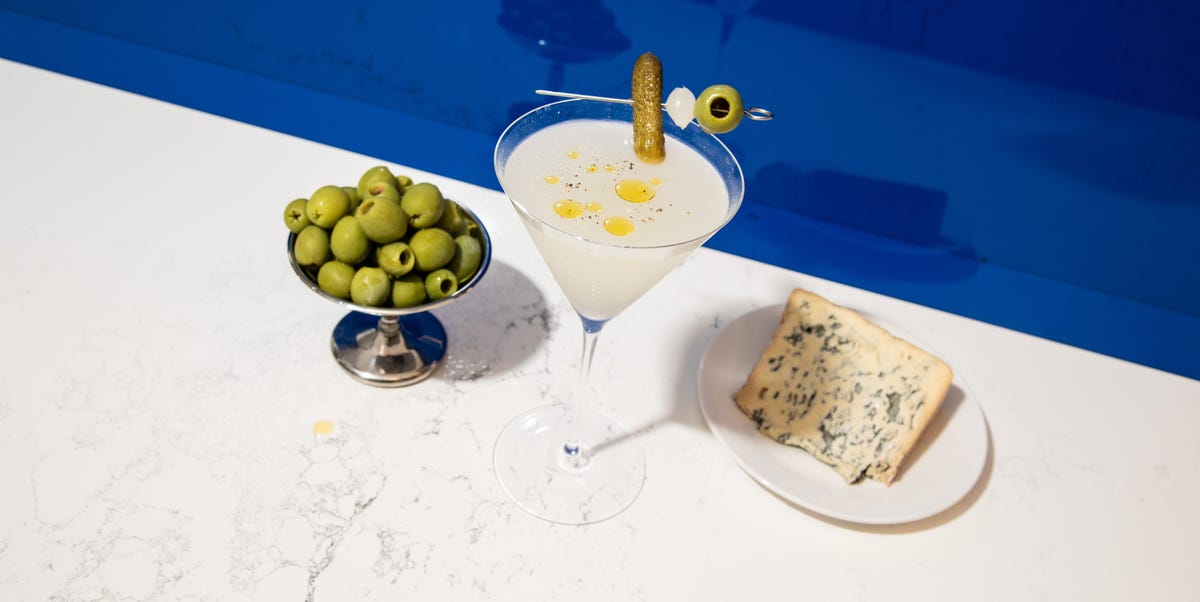
Let us be honest: a filthy martini is built for the camera. A pale, icy drink with olives, skewers, briny sheen, dramatic glassware, and maybe a stuffed garnish has instant visual appeal. It looks luxurious but slightly chaotic, like a black-tie event held inside a pantry.
Social platforms reward drinks that are easy to understand at a glance. The dirty martini passes that test. Viewers see olives, brine, and a chilled glass, and they immediately know the personality of the drink. It is not shy. It is not mysterious. It is salty and proud.
The Flavor Anatomy of a Filthy Martini
The dirtiest, filthiest martini is all about balance, even when it pretends not to be. Too little brine and the drink feels timid. Too much harsh salt and the drink becomes a dare instead of a pleasure. The best versions are intense but not sloppy. They are savory, cold, aromatic, and structured.
Olive Brine
Olive brine is the heart of the dirty martini. It brings salt, acidity, olive flavor, and a cloudy texture. Better brine usually creates a better drink. Bland brine can taste flat. Overly sharp brine can dominate. A well-made brine gives the martini depth, not just saltiness.
Olives and Garnishes
The garnish is not decoration here. It is part of the experience. Pimento-stuffed olives are classic. Blue cheese-stuffed olives add richness. Castelvetrano olives bring a buttery, mild profile. Garlic-stuffed olives lean bold. Pepperoncini, cocktail onions, capers, and pickled vegetables can push the drink into even more savory territory.
In a filthy martini, the garnish can become almost snack-like. That is part of the charm. The drink says, “Yes, I am elegant,” and then immediately adds, “Also, would you like three olives and a tiny spear of chaos?”
Temperature
A martini needs to be cold. A dirty martini needs to be very cold. A filthy martini needs to feel like it was personally approved by a penguin with high standards. The chill sharpens the texture, controls the salinity, and keeps the savory elements from feeling heavy.
How to Order the Dirtiest, Filthiest Martini at a Bar
Ordering well matters, especially with a drink this subjective. Instead of assuming every bartender defines “filthy” the same way, use clear language. Ask for a brine-forward dirty martini. Mention whether you prefer gin or vodka. Say whether you like the olive flavor bold, medium, or extreme. If the bar has a house dirty martini, ask how savory it is before customizing.
A good bartender will understand the direction. Some bars may have a standard dirty martini build, while others may offer a range of brine levels or house-made savory additions. The key is to communicate the flavor goal rather than treating “dirty” as a universal measurement.
Good Ordering Language
Try wording like: “I’d like a very briny dirty martini, heavy on the olive flavor, served very cold.” That gives the bartender useful information without turning the order into a courtroom deposition.
Avoid vague drama unless the bar is playful. “Make it filthy” can work beautifully in the right setting, but in a busy room, clarity wins. Save the poetry for after the first sip.
Common Mistakes That Ruin a Dirty Martini
The dirtiest martini should taste bold, not broken. Even maximalist drinks need structure. Here are the most common problems that make a dirty martini less enjoyable.
Using Weak Brine
Not all olive brine has enough flavor to carry a martini. Some jar brines taste thin, metallic, or one-dimensional. A great filthy martini depends on brine with character: salty, tangy, olive-rich, and clean.
Forgetting the Vermouth
Some drinkers treat vermouth as optional, but it can add aroma, body, and balance. In a dirty martini, dry vermouth can help keep the drink from becoming a simple blast of spirit and salt. The best versions do not just shout “olive.” They have layers.
Serving It Too Warm
A warm dirty martini is a tiny tragedy in a fancy glass. The texture gets loose, the salt feels more aggressive, and the drink loses its snap. Temperature is not a detail. It is the difference between sleek and swampy.
Confusing Filthy With Random
More ingredients do not automatically mean more flavor. A filthy martini can include bold garnishes and savory accents, but everything still needs a reason to be there. Otherwise, the drink becomes less like a cocktail and more like someone dropped a salad bar into formalwear.
Food Pairings for a Filthy Martini
A dirty martini is a natural partner for salty, fatty, and savory foods. Think oysters, fries, potato chips, deviled eggs, smoked fish, cheese boards, roasted nuts, Caesar salad, charcuterie, and crisp vegetables with creamy dips. The brine cuts through richness, while the cold temperature refreshes the palate.
At restaurants, a filthy martini pairs especially well with steakhouse appetizers, seafood towers, blue cheese, anchovy toast, and anything involving garlic butter. It also works with simple snacks. A bowl of good potato chips beside a dirty martini can feel more luxurious than it has any right to feel.
The Non-Alcoholic Dirty Martini Moment
One of the most interesting parts of the dirty martini trend is that the savory flavor profile does not belong only to alcohol. Non-alcoholic bars and food publications have explored briny, olive-forward drinks that borrow the mood of a dirty martini without using spirits. This matters because many readers want the flavor, ritual, glassware, and garnish without the alcohol.
A non-alcoholic dirty martini-inspired drink can focus on olive brine, chilled botanicals, citrus aroma, sparkling texture, and elegant garnishes. The result is still salty, sophisticated, and snackable, but more inclusive for guests who are not drinking alcohol. For hosts, this is smart hospitality. Nobody wants to be handed a sad glass of room-temperature soda while everyone else gets a glamorous garnish.
Why People Love Briny Drinks
Briny cocktails work because salt is a flavor amplifier. It can make savory notes feel deeper, herbal notes feel brighter, and acidic notes feel cleaner. Olive brine also brings umami, which gives the drink a more food-like satisfaction.
There is also a psychological element. Dirty martinis feel specific. They are not neutral. They attract people who enjoy strong preferences and do not mind being known for them. The same person who orders a filthy martini probably has opinions about pickles, fries, hotel lobby lighting, and whether blue cheese belongs near everything. It does, by the way, according to the filthy martini fan club.
Experience Notes: Living With the “Dirtiest, Filthiest” Martini Trend
The first thing you notice about the “dirtiest, filthiest” martini trend is that people do not discuss it calmly. Nobody says, “I have a mild appreciation for olive brine.” They say things like, “I want it dirty enough to require a mop,” or “I want the olives to file a complaint.” This is not just a drink style; it is a personality test with garnish.
From a dining perspective, the filthy martini works best when the setting understands it. In a polished hotel bar, it can feel like a rebellious wink: classic glass, icy surface, elegant stem, and then a savory punch that refuses to behave. In a lively neighborhood restaurant, it becomes social fuel. Someone orders one, someone else asks for a sip, and within minutes the table is debating olive brands like a panel of extremely salty sommeliers.
The best experience is not necessarily the most extreme one. That is the secret. A filthy martini should be bold enough to make olive lovers grin, but not so aggressive that it becomes a punishment. The magic happens when the brine is clean, the drink is properly chilled, and the garnish feels intentional. A great one tastes like a cocktail and a snack shook hands under very cold circumstances.
There is also something wonderfully democratic about the dirty martini. The classic martini can intimidate people. It carries decades of rules: gin or vodka, shaken or stirred, dry or wet, twist or olive. The dirty martini relaxes the room. It says, “Do you like salty things? Excellent. Come sit here.” The filthy version goes even further. It welcomes the pickle people, the olive people, the caper people, the blue cheese people, and everyone who thinks the best part of a salad is whatever was marinating at the bottom of the bowl.
For restaurants and publishers, this trend is useful because it connects food and drink in a very searchable way. Readers looking for the dirtiest martini are not only searching for a beverage. They are searching for a mood: briny, dramatic, indulgent, funny, and slightly over-the-top. That makes the topic ideal for lifestyle content, bar guides, hosting articles, restaurant roundups, and non-alcoholic savory drink ideas.
One memorable experience with filthy martini culture is watching how differently people define “too much.” For one person, a strong olive note is plenty. For another, the glass should practically arrive with a tiny lifeguard. This subjectivity is exactly why the trend keeps growing. It gives people permission to customize, exaggerate, and laugh about their own preferences.
The garnish experience matters too. A single olive feels classic. Three olives feel generous. A stuffed olive feels indulgent. A skewer with olives, pepperoncini, and a cocktail onion feels like the drink packed a weekend bag. The garnish turns the martini from a simple order into a tiny edible event.
In the end, the “dirtiest, filthiest” martini is not about abandoning elegance. It is about redefining it. Elegance does not always have to be quiet. Sometimes elegance is a freezing-cold glass, a bold savory profile, and a garnish that looks like it has strong opinions. The filthy martini is polished, ridiculous, deliciously divisive, and completely aware of itself. That is why people keep talking about it.
Conclusion
The “dirtiest, filthiest” martini is more than a brine-heavy twist on a classic cocktail. It is a symbol of the modern appetite for bold, savory, customizable flavor. It takes the refined structure of the martini and gives it a salty personality big enough to fill the room.
For readers of legal drinking age, the trend offers a fascinating look at how cocktail culture keeps evolving. For food lovers, it shows how olives, brine, garnishes, and umami have moved from the side plate to the center of the glass. For publishers, it is a highly clickable topic with strong SEO potential because it blends humor, lifestyle, bar culture, and practical flavor analysis.
The best filthy martini is not merely the saltiest. It is the one that understands balance, chill, aroma, garnish, and drama. It should taste intentional, not accidental. It should be bold without becoming chaotic. And above all, it should make olive lovers feel seen.