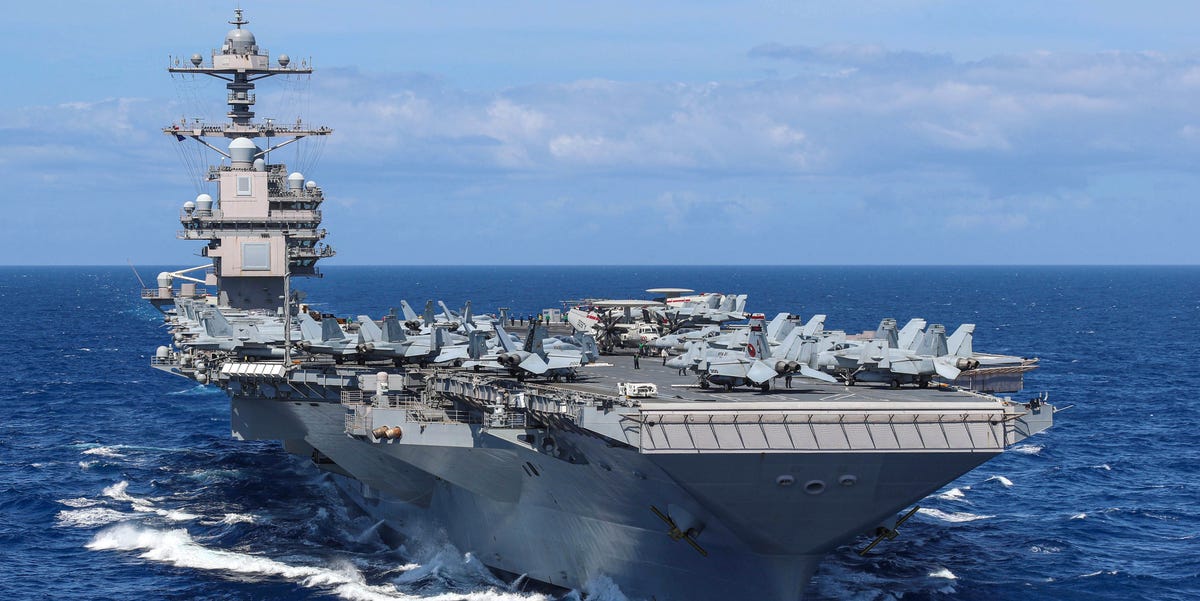
The USS Gerald R. Ford did not slip quietly into the history books. It arrived with a price tag big enough to make accountants breathe into paper bags, a stack of new technologies that sounded like they had been borrowed from a science-fiction storyboard, and a long wait that made Navy watchers ask the same question year after year: when will America’s newest aircraft carrier finally deploy?
Then, at last, the answer came. The first-in-class aircraft carrier USS Gerald R. Ford, also known by its hull number CVN 78, departed Naval Station Norfolk and began operations with allied and partner forces in the Atlantic. For the U.S. Navy, it was more than another ship leaving port. It was a public test of a new generation of carrier power, a long-delayed milestone, and a moment that said: the Ford era is no longer theoretical.
Aircraft carriers are often described as floating cities, but the Ford is closer to a floating city with a high-voltage engineering degree. It was built to replace older Nimitz-class assumptions with more electrical power, fewer crew demands over time, faster flight operations, and a flight deck designed around the future of naval aviation. In plain English: the Navy wanted a carrier that could launch, recover, refuel, rearm, and sustain aircraft more efficiently than its predecessors. Easy to say. Very hard to build.
Why the USS Gerald R. Ford Deployment Matters
The Ford’s deployment mattered because the ship had become a symbol of both American naval ambition and the headaches that come with being first. The lead ship of any new class carries the burden of invention. The Ford did not simply add a new coat of paint to the Nimitz-class design. It introduced a new launching system, a new arresting system, redesigned weapons movement, a smaller and repositioned island, a more powerful electrical plant, and an updated approach to maintenance and crew workload.
That sounds impressive, and it is. But it also means the ship had to prove that these changes could work together under real operating conditions. A carrier is not a showroom product. It is a 100,000-ton national-security platform expected to function in saltwater, bad weather, long deployments, crowded sea lanes, and crisis zones. Nobody gives extra credit because the technology is “innovative” if the ship cannot do the job.
For years, the Ford faced scrutiny over cost growth, schedule delays, and reliability issues. Critics focused on its roughly $13 billion-plus price, its delayed first deployment, and the difficulty of integrating so many new systems at once. Supporters argued that the first ship was always going to be expensive because it carried the research, design, testing, and learning curve for an entire class of future carriers.
Both sides had a point. The Ford was costly and late. It was also a platform designed to serve for decades. A carrier is not bought for a news cycle; it is bought for a half-century of operations. That is why its first deployment was watched so closely. It was the difference between “promising concept” and “operational warship.”
From Commissioning to Deployment: A Long Road Out of Norfolk
The USS Gerald R. Ford was delivered to the Navy in 2017 and commissioned that same year. In a perfect world, a new carrier would join the fleet, complete testing, and deploy on a clean schedule. The Ford’s real-world journey was more complicated. Testing revealed problems that had to be fixed, adjusted, retested, and certified.
Among the most closely watched systems were the Electromagnetic Aircraft Launch System, commonly known as EMALS, the Advanced Arresting Gear, known as AAG, and the Advanced Weapons Elevators. These are not cosmetic upgrades. They affect the core rhythm of carrier operations: launching aircraft, recovering aircraft, and moving ordnance safely and efficiently through the ship.
Older carriers use steam catapults to launch aircraft. The Ford uses EMALS, an electromagnetic system designed to provide smoother and more flexible launches. The idea is to better support a range of aircraft, from current carrier-based planes to future systems that may be lighter, heavier, or more electronically demanding. The Advanced Arresting Gear is designed to recover aircraft with improved control and flexibility. Together, EMALS and AAG are central to the Ford-class promise.
The Advanced Weapons Elevators became another major storyline. These elevators use advanced electromagnetic technology rather than older hydraulic approaches. Their mission is simple to describe and extremely demanding to execute: move munitions safely, quickly, and reliably from magazines to areas where aircraft can be prepared for flight operations. The final elevator was turned over to the crew in late 2021, clearing a major barrier before deployment.
By the time the Ford finally deployed, the Navy had logged thousands of launches and recoveries during testing and workups. The ship had gone through years of post-delivery trials, maintenance periods, certifications, and crew training. In other words, the Ford did not “suddenly” become ready. It crawled, sweated, sparked, tested, and retested its way into readiness.
What Makes the Ford Different From Older Aircraft Carriers?
The Ford is often called the most advanced aircraft carrier in the world, and that label is not just marketing confetti. Its design includes several major changes intended to improve performance over the Nimitz class.
More Electrical Power
The Ford class was designed with a more powerful electrical plant, giving the ship room to support advanced systems now and future technologies later. That matters because modern naval warfare is becoming more electrically hungry. Sensors, command systems, aircraft support equipment, and future defensive technologies all demand power. A ship built for yesterday’s electrical needs can become cramped by tomorrow’s requirements.
EMALS Instead of Steam Catapults
The Electromagnetic Aircraft Launch System replaces the traditional steam catapult. The goal is smoother acceleration, better control, and more flexibility for different aircraft types. For pilots and aircraft maintainers, smoother launches can mean less stress on airframes over time. For the Navy, the broader promise is a carrier that can support a more diverse future air wing.
Advanced Arresting Gear
Landing on an aircraft carrier is already one of the most dramatic things humans routinely do without calling it a circus act. The Advanced Arresting Gear is meant to improve the recovery side of flight operations and support current and future aircraft. Like EMALS, it had to mature through years of testing before the ship could be considered ready for serious deployment.
Advanced Weapons Elevators
The Ford’s weapons elevators were designed to move ordnance more efficiently using electromagnetic technology. The goal is faster, safer, and less labor-intensive movement inside the ship. That does not sound flashy until you remember that carrier aviation depends on rhythm. Aircraft must be fueled, armed, launched, recovered, maintained, and relaunched. Every improvement in that cycle matters.
A Redesigned Flight Deck
The Ford’s island is smaller and positioned farther aft than on older carriers. This helps open up the flight deck and improve aircraft movement. A carrier flight deck is organized chaos with strict choreography. A few layout improvements can make the difference between smooth tempo and a traffic jam with wings.
The 2022 Deployment: A First Step, Not the Finish Line
The Ford’s first deployment in 2022 was important, but it should be understood correctly. It was not simply a victory lap. The Navy described it as a deployment involving operations and training with allies and partners in the Atlantic. It helped the ship, crew, air wing, and strike group operate together in a real-world environment while still building toward full operational maturity.
This distinction matters because the Ford’s story was never going to be solved in one dramatic departure from Norfolk. A first deployment is not a magic wand. It does not erase years of delays or instantly prove every system under every condition. What it does is move the ship from extended preparation into operational use. That is a big step, especially for a platform carrying so much new technology.
The deployment also sent a message to NATO allies and potential adversaries. To allies, the Ford showed that the United States was bringing its newest carrier into shared operations. To rivals, it signaled that the U.S. Navy was not merely preserving the carrier fleet it inherited from the Cold War era; it was pushing the carrier concept into a new generation.
The 2023–2024 Deployment Proved the Ford Was More Than a Prototype
The Ford’s later 2023 deployment gave the ship a broader operational test. It departed Norfolk in May 2023 for a scheduled deployment in the U.S. Naval Forces Europe-Africa and Sixth Fleet area of operations. The carrier visited Norway, marking the first visit by a U.S. aircraft carrier to that country in more than six decades, and later made port visits in places such as Croatia and Greece.
Then world events changed the tone of the mission. After the October 2023 Hamas attack on Israel, the United States directed the Ford Carrier Strike Group toward the Eastern Mediterranean as part of a broader effort to deter escalation in the region. The deployment was extended multiple times, turning what began as a scheduled mission into a longer and more visible test of endurance.
When the Ford returned to Norfolk in January 2024 after roughly eight months away, the deployment had become a major benchmark. The Navy reported a long list of operational accomplishments, from flight operations and replenishments to cargo movement and sustained daily life aboard ship. The headline was not just that the Ford had deployed. It had stayed deployed, adapted to changing events, supported allies, and returned with a mountain of operational data for the Navy to study.
Why Aircraft Carriers Still Matter in Modern Strategy
Every few years, someone announces that aircraft carriers are obsolete. Then a crisis happens, and governments suddenly remember that a carrier strike group can move without asking permission to use a foreign runway. That is the heart of carrier power: mobility, visibility, endurance, and flexibility.
An aircraft carrier is not just a ship. It is a sovereign airfield that can reposition across oceans. It can support deterrence, crisis response, allied exercises, humanitarian operations, and combat missions. It can appear near a tense region without requiring a permanent base. That flexibility is why carriers remain central to U.S. naval strategy even as missiles, drones, submarines, and cyber threats complicate the battlefield.
The Ford class is the Navy’s attempt to keep that carrier advantage relevant. More efficient flight operations, improved power generation, and reduced long-term maintenance demands are all part of the same strategic bet: that large-deck nuclear-powered carriers will remain useful if they can evolve.
Still, the debate is not going away. Carriers are expensive. They require escorts, aircraft, logistics ships, trained crews, and major shipyard maintenance. Their value depends on whether they can survive, adapt, and deliver effects in contested environments. The Ford’s deployment did not end that debate. It made the debate more concrete.
The Human Side: Sailors, Families, and the Floating City
Technology gets the headlines, but sailors make the carrier work. A ship like the Ford depends on thousands of people doing thousands of jobs: aviation maintenance, navigation, engineering, medical care, food service, communications, safety, logistics, and more. The flight deck may look like the star of the show, but the ship runs because entire departments below deck keep the machine alive.
Carrier life is demanding. Space is limited. Sleep can be interrupted. Workdays can stretch. The ocean does not care that a sailor has already had a long week. The ship must operate, aircraft must be maintained, meals must be served, and watches must be stood. A carrier deployment is not a cruise unless your idea of a cruise includes steel passageways, jet noise, and a schedule that laughs at weekends.
Families also carry part of the deployment burden. Every carrier departure means missed birthdays, school events, holidays, and ordinary evenings at home. When deployments are extended, the strain grows. That is why homecomings at Norfolk are emotional. They are not just military ceremonies; they are family reunions with tugboats, uniforms, and a lot of people trying not to cry on camera.
Lessons From the Ford’s Long-Awaited Deployment
The Ford’s story offers several lessons. First, revolutionary military technology rarely arrives neatly. The more systems a program changes at once, the more integration risk it creates. EMALS, AAG, advanced elevators, new power systems, and a redesigned flight deck all promised improvements, but they also created a long testing and troubleshooting period.
Second, first-in-class ships are expensive teachers. The Ford absorbed many of the costs and challenges that future ships in the class are supposed to benefit from. The Navy’s hope is that later Ford-class carriers, such as USS John F. Kennedy and future ships, will incorporate lessons learned from CVN 78 and enter service more smoothly.
Third, deployment is the real exam. Pier-side readiness and test-event success matter, but sustained operations at sea reveal how systems, crews, and maintenance routines perform together. The Ford’s deployments gave the Navy something it could not fully get in a shipyard: experience under operational pressure.
Finally, the Ford reminds us that naval power is both hardware and patience. A carrier takes years to build, years to test, and decades to justify. The public may notice only the dramatic departure, but the real story is made of welding, wiring, training, fixing, learning, and doing it again until the ship is ready.
Experience Section: What Following the USS Ford Deployment Feels Like
For anyone who follows naval news, the USS Gerald R. Ford deployment felt like watching a very large, very expensive character finally enter the movie after being discussed for the entire first act. For years, the Ford existed in headlines as a promise, a controversy, a budget line, and a punchline depending on who was talking. One month it was the future of naval aviation. The next month it was a cautionary tale about trying to modernize too many systems at once. By the time it finally deployed, the ship had already lived a full media life without having completed the kind of deployment people expected from an operational supercarrier.
That is what made the departure from Norfolk so compelling. It was not merely a ship leaving a pier. It was a reputation leaving the pier. Every launch, recovery, port visit, allied exercise, and extension mattered because observers wanted to know whether the Ford could move from “troubled program” to “working carrier.” The answer, after its deployments, became more balanced and more interesting than either the cheerleaders or critics might have preferred.
The experience of tracking the Ford also teaches a useful lesson about modern defense technology: new does not always mean instantly better. Sometimes new means awkward, expensive, delayed, and full of lessons written in maintenance logs. But new can also become better after enough testing, training, and honest correction. The Ford’s advanced systems were not magic. They were machinery, software, procedures, and people learning to trust one another.
Imagine being a young sailor assigned to the Navy’s newest carrier. On one hand, that is a bragging right. You are serving aboard the lead ship of a new class, the biggest and most advanced carrier the Navy has built. On the other hand, first-in-class means you are also living inside the learning curve. Procedures evolve. Systems get refined. Inspectors, engineers, senior leaders, and journalists all pay attention. The spotlight is bright, and the ship is too big to hide behind a potted plant.
For families watching from shore, the deployment experience is different. The Ford may represent national power to analysts, but to a parent, spouse, sibling, or child, it represents someone they love being far away. The glamour of a supercarrier fades quickly when holidays pass, calls are missed, and the schedule changes. Extended deployments are not abstract. They are lived one dinner table at a time.
For readers, the Ford story is fascinating because it blends engineering, strategy, politics, and human endurance. It is about whether America can still build enormous, complex machines. It is about whether carriers remain relevant in an age of missiles and drones. It is about whether the Navy can turn expensive innovation into dependable capability. And yes, it is also about a ship so large that calling it a “boat” should probably trigger a gentle correction from every sailor within earshot.
The best way to understand the Ford’s deployment is not as a flawless triumph or a total failure. It is a hard-earned transition. The ship moved from promise to practice. It showed that the Navy’s newest carrier could operate with allies, sustain missions, and generate lessons for the rest of the class. That may not fit neatly on a bumper sticker, but it is how real military progress usually looks: slower than advertised, messier than planned, and more meaningful once it finally works at sea.
Conclusion: The Ford Finally Becomes a Fleet Asset
The USS Gerald R. Ford finally deploying was a major moment for the U.S. Navy because it marked the operational arrival of a new carrier generation. The ship’s long road from delivery to deployment included delays, criticism, testing, fixes, and hard lessons. But that road also produced a carrier that has now operated with allies, supported U.S. presence overseas, and helped shape the future of Ford-class operations.
The Ford is not just a ship; it is an argument about the future of American sea power. Its supporters see a more capable, more flexible, and more sustainable carrier design. Its critics see cost, complexity, and risk. The truth is that the Ford contains all of those things. It is ambitious, imperfect, powerful, expensive, and important.
After years of waiting, the USS Gerald R. Ford is no longer simply America’s newest aircraft carrier on paper. It has deployed, operated, returned, and given the Navy real experience to build on. For a ship designed to serve for decades, that is not the end of the story. It is the beginning of the part that matters.