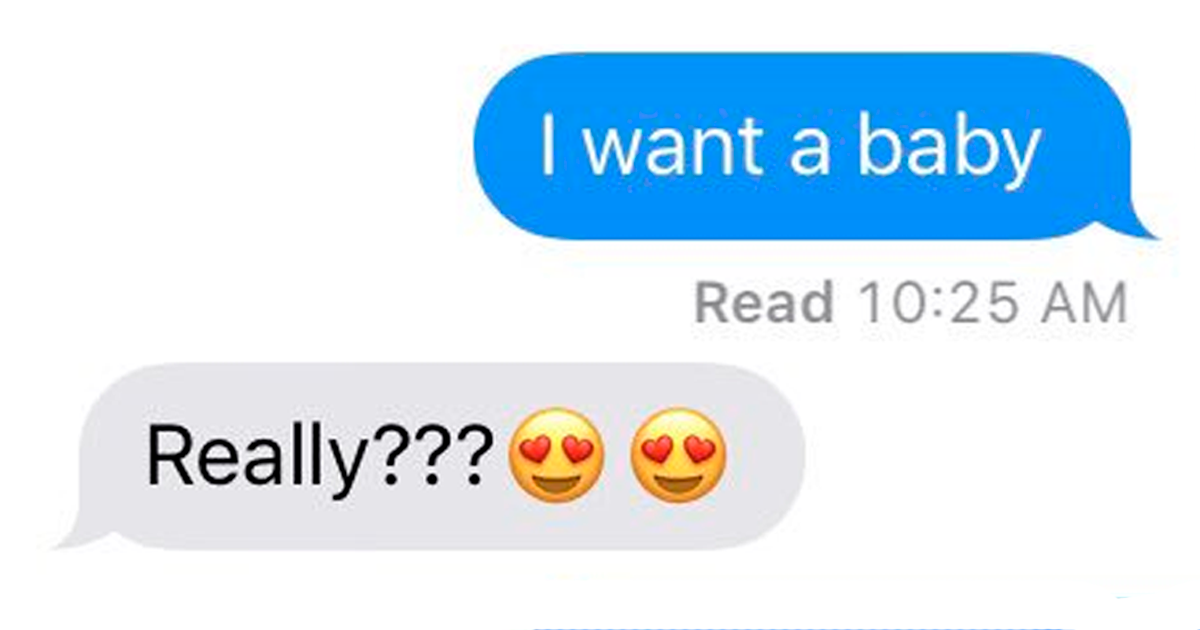
Some viral challenges are complicated. Some require choreography, lighting, a ring light, three emotionally available friends, and the confidence of a person who has never accidentally opened the front camera. Then there is the “I Want A Baby” challenge, a deceptively simple social media prank built around one tiny message with the emotional weight of a grand piano: “I want a baby.”
The idea became popular after people began texting their partners the phrase, screenshotting the replies, and sharing the results online. The comedy comes from the suddenness. No setup. No soft launch. No “Hey, can we discuss our five-year plan?” Just four words dropped into a normal day like a glitter bomb in a tax office.
But beneath the jokes, the “I Want A Baby” challenge reveals something surprisingly real about modern relationships: people’s reactions to big life questions can be funny, sweet, nervous, practical, or wildly chaotic. A response might show emotional maturity. It might show panic. It might show that someone thinks “baby” means a puppy, a burrito, or a Tamagotchi. Either way, the replies tell a story.
This article explores the funniest, smartest, and most respectful ways people respond to the challenge, why it went viral, what makes a response memorable, and how to keep the joke from crossing into awkward territory. Because yes, a baby text can be hilariousbut communication, consent, and screenshots still matter. The internet never forgets, and neither does a boyfriend who briefly thought he needed to price out diapers before lunch.
What Is The “I Want A Baby” Challenge?
The “I Want A Baby” challenge is a social media trend where someone texts a partner, spouse, or sometimes a close friend with the sudden statement, “I want a baby,” then waits for the reaction. The best replies are usually screenshotted and shared because they capture a perfect little lightning strike of surprise.
Some partners respond with enthusiasm. Some ask for clarification. Some immediately start discussing finances, timing, parenting readiness, or whether the sender has eaten lunch and is simply experiencing emotional snack confusion. Others dodge the topic so hard they should be drafted by a professional sports team.
At its core, the challenge works because it combines three irresistible ingredients: surprise, emotional stakes, and text-message ambiguity. A message that would be serious in a long conversation becomes absurd when sent with zero context. The person receiving it has to decide, in real time, whether this is a joke, a crisis, a romantic moment, or a trap with Wi-Fi.
Why This Challenge Went Viral
The internet loves quick emotional tests. Viral challenges spread when they are easy to repeat, easy to understand, and likely to produce unpredictable results. The “I Want A Baby” challenge checks every box. Anyone in a relationship can try it, the message is short, and the replies can range from heart-melting to sitcom-level ridiculous.
It also taps into a universal relationship question: “Are we on the same page about the future?” Even when framed as a prank, the message pokes at real topicscommitment, money, timing, maturity, and long-term compatibility. That is why the challenge feels funny and a little dangerous. It is not asking, “Do you want pizza?” It is asking, “Are you prepared for eighteen years of responsibility, mysterious stains, and stepping on toys in the dark?”
The best viral responses are not just funny because someone panicked. They are funny because they reveal personality. A practical partner calculates the cost. A romantic partner says, “Someday.” A goofy partner offers a puppy. A suspicious partner replies, “Who took your phone?” Comedy is character under pressure, and this challenge applies pressure with the elegance of a toddler holding a juice box.
Awesome Response Categories That Make The Challenge Fun
1. The Calm And Sweet Response
This is the response that makes the internet collectively say, “Aww.” Instead of panicking, the partner answers with warmth. Something like:
“I want one with you someday, but when we’re ready.”
This kind of reply works because it balances affection with maturity. It does not dismiss the idea, but it also does not pretend that having a child is as casual as ordering fries. It says, “I love the future with you, but I also understand that the future needs health insurance, sleep, and a working washing machine.”
2. The Budget Department Response
Some people hear “baby” and immediately open a mental spreadsheet. Their response might be:
“Okay, but first we need savings, a bigger place, and maybe a car that doesn’t make that haunted blender noise.”
This answer is funny because it is painfully responsible. It may not sound like poetry, but practical love is still love. Babies are wonderful, but they also come with expenses, planning, medical care, childcare decisions, and more laundry than seems scientifically possible.
The budget response shows that the person is not necessarily against the idea. They are just aware that adorable tiny socks do not pay for themselves.
3. The Panic Button Response
Then there is the classic panic reply:
“Right now? Like today? Are you okay? Should I call someone?”
This is the sitcom version of the challenge. The receiver reads the message and mentally ages seven years in three seconds. Panic replies are often hilarious because they are honest. Big life decisions can make even confident people glitch like a frozen laptop.
Still, panic does not always mean someone is immature. Sometimes it means the message landed with the subtlety of a marching band in a library. Context matters.
4. The “I Am The Baby” Response
One of the funniest styles is the partner who refuses to accept competition:
“But I’m already the baby.”
This response has strong youngest-sibling energy. It is playful, dramatic, and completely unserious in the best way. It dodges the question while still keeping the mood light. It also admits something many partners already know: some adults require snacks, attention, and emotional praise at suspiciously baby-like levels.
5. The Pet Parent Response
Another popular reply is the animal loophole:
“Great. I’ll start looking at puppies.”
This is an expert-level diversion. It acknowledges the word “baby” while steering the conversation toward something fluffier, cheaper, and less likely to need a college fund. The pet response works especially well for couples who already joke about “fur babies.”
It is also a gentle way to say, “I love nurturing things with you, but maybe let’s begin with a creature that can be bribed with treats.”
6. The Detective Response
Some partners know when something smells like a prank. Their answer might be:
“You saw this on TikTok, didn’t you?”
This response is wonderful because it means the person has pattern recognition. They have survived enough internet trends to know when a random text is not truly random. The detective response protects the relationship from unnecessary drama and also proves that the receiver has been paying attention.
7. The Unexpectedly Serious Response
Occasionally, the challenge backfires in the sweetest way. The sender expects chaos, but the partner replies:
“I’ve actually thought about that too. Can we talk about it tonight?”
This kind of response can turn a prank into a meaningful conversation. That does not mean anyone needs to make a life decision immediately. It simply shows that the topic deserves care. Sometimes a joke opens a door to a real discussion, and sometimes that discussion is more valuable than the viral post.
What A Great Response Should Do
An awesome response to the “I Want A Baby” challenge is not necessarily the loudest or most savage. The best replies usually do three things: they react honestly, keep the tone respectful, and leave room for a real conversation.
A funny answer can still be kind. A serious answer can still be warm. A nervous answer can still show love. What matters is that the reply does not shame the other person, mock parenting, or treat pregnancy as a punchline in a hurtful way.
For example, “I love you, but let’s talk when we’re both ready” is simple and emotionally intelligent. “Can we start with a plant and see if it survives?” is funny without being cruel. “Someday, maybebut I want us stable first” is honest without shutting the door.
The worst responses are the ones that turn the joke into embarrassment, insult, or manipulation. Humor should not make someone feel small. A good prank ends with both people laughing, not one person feeling exposed.
The Screenshot Rule: Ask Before You Post
The challenge depends on screenshots, but that is also where things can get messy. Private messages are private for a reason. Even when a reply is hilarious, posting it publicly without permission can break trust.
Before sharing a conversation online, remove names, photos, phone numbers, and identifying details. Better yet, ask the person if they are comfortable with it. A joke that gets likes is not worth damaging a relationship. Digital privacy is not boring; it is the seatbelt of internet comedy.
There is also the problem of context. A screenshot can make someone look careless, cold, or silly when the full conversation would show something very different. If the response belongs to someone you care about, protect them. The internet audience can laugh without needing access to your entire emotional kitchen drawer.
When The Challenge Should Not Be Used
This challenge is not for every relationship. If a couple has recently argued about pregnancy, parenting, fertility, marriage, finances, or breakups, the prank can feel less like a joke and more like emotional dodgeball.
It is also not a good idea if the other person has experienced pregnancy loss, fertility struggles, family trauma, or major stress around parenting. Topics involving babies can be deeply personal. What looks like a harmless joke to one person may hit a painful spot for another.
In serious relationships, the question of having children deserves a real conversation, not only a surprise text. Important topics need time, context, and respect. A challenge can be entertaining, but it should never replace honest communication.
How To Turn The Joke Into A Real Conversation
If the response surprises youin a good or bad wayuse it as a starting point. You might say:
“I was joking because I saw a trend, but your answer made me curious. How do you actually feel about having kids someday?”
That sentence does a lot of work. It admits the prank, lowers the pressure, and invites honesty. It also gives the other person a chance to explain instead of defending a rushed reply.
For adults in committed relationships, conversations about children should include timing, finances, health, work, childcare, family support, values, and lifestyle expectations. Cute baby names are fun, but so are sleep schedules, shared responsibilities, and knowing who is willing to clean mysterious applesauce from the ceiling.
If the answer is “not now,” that does not always mean “never.” If the answer is “yes,” that does not mean “immediately.” The healthiest couples make room for nuance. Real life is not a comment section.
Original Funny Responses You Can Use As Inspiration
Here are some original, lighthearted response ideas that capture the spirit of the trend without copying viral screenshots:
“I support your dream. I also support starting with a houseplant named Kevin.”
“A baby? I still lose one sock every laundry day. Society is not ready.”
“Someday, yes. Today, I have $14 and a coupon for tacos.”
“Can we first prove we can assemble furniture without blaming the instructions?”
“I want one too, but future us deserves a plan, not a panic purchase.”
“Does a puppy count? Because I found one with eyebrows.”
“I love you. I also love sleep. Let’s schedule a meeting between both parties.”
“That is adorable and terrifying, which is also how I describe toddlers.”
“Let’s revisit after we stop eating cereal out of mugs.”
“I knew this was a challenge, but my answer is still: someday, carefully, with snacks.”
Why The Best Responses Feel So Human
The charm of the “I Want A Baby” challenge is not just the joke. It is the emotional honesty squeezed into tiny text bubbles. People reveal themselves when surprised. Some lead with fear. Some lead with love. Some lead with comedy because comedy is their emotional airbag.
That is why the best responses are not always perfect. A nervous “Wait, what?” can be just as human as a polished romantic speech. A practical “Let’s save money first” can be more loving than a careless “Sure.” A silly reply can be a way of saying, “I am overwhelmed, but I am still here.”
Relationships are built in these small moments. The challenge is funny because it compresses a huge future question into one casual text. The response tells us how people handle surprise, pressure, and vulnerability. That is comedy with a heartbeat.
Experiences Related To The “I Want A Baby” Challenge
Many people who try the “I Want A Baby” challenge discover that the funniest part is not the reply itself, but what happens afterward. One person might send the message expecting a dramatic meltdown and instead receive a calm, thoughtful answer. Suddenly the joke becomes a mirror. They realize their partner has considered the future more seriously than expected. That can feel sweet, surprising, and slightly embarrassinglike showing up to a costume party and finding out everyone else brought spreadsheets.
In other cases, the challenge exposes different communication styles. One partner may respond emotionally: “I’d love that someday.” The other may respond practically: “We need better savings first.” At first, those answers may seem mismatched, but they can actually complement each other. A healthy future needs both warmth and planning. Someone has to dream about baby names, and someone has to remember that strollers cost real money and do not run on vibes.
Some experiences are pure comedy. The receiver may answer with, “We already have a babyit’s me,” or “Can it be a dog?” These replies work because they keep the mood playful while quietly buying time. A good joke can soften a big topic. It gives both people permission to laugh before deciding whether a deeper conversation is needed.
Other experiences are more awkward. A partner might react too harshly, assume the sender is serious, or feel uncomfortable being tested. That is where the challenge teaches an important lesson: pranks are only fun when both people can laugh afterward. If one person feels tricked or publicly embarrassed, the joke has missed the landing. The internet might reward chaos, but relationships usually prefer kindness, privacy, and not being turned into a group project for strangers.
The most meaningful experiences happen when the sender follows up honestly. Saying, “I was joking, but I do want to know how you feel about kids someday,” can turn a viral trend into a real conversation. That follow-up matters. It separates a harmless prank from emotional confusion. It also gives the other person space to answer with more than a rushed text typed while standing in line for coffee.
People who have shared stories about the challenge often point out that timing changes everything. A couple that has been together for years may find the message funny and revealing. A new couple may find it intense. A couple dealing with stress, money problems, health concerns, or family pressure may not find it funny at all. The same four words can land differently depending on the relationship.
The best experience, then, is not necessarily getting the funniest screenshot. It is learning something without hurting anyone. Maybe you learn that your partner is hilarious under pressure. Maybe you learn they are more serious about the future than you thought. Maybe you learn that your relationship is not ready for baby talk but absolutely ready for a shared cactus. All of that is useful.
In the end, the “I Want A Baby” challenge is a tiny internet joke wrapped around a huge human question. It works because love, fear, humor, timing, and responsibility all collide in one message. The smartest people treat it as entertainment first and communication secondbut they do not ignore the communication part. After the laughing stops, the real question remains: not just “Do you want a baby?” but “Can we talk honestly about the future?” That answer matters more than any viral screenshot ever could.
Conclusion
The “I Want A Baby” challenge is funny because it turns one of life’s biggest conversations into a sudden text-message jump scare. The best responses are memorable because they combine humor with honesty. Whether someone replies with a spreadsheet, a joke, a sweet promise, or a request to start with a puppy, the reaction reveals how people handle surprise and future planning.
Still, the challenge works best when it stays respectful. Ask before posting screenshots. Avoid using the prank during sensitive moments. Remember that pregnancy, parenting, fertility, and family plans can be emotional topics. A great response should make people laugh, not feel trapped.
Used carefully, the trend can be more than a quick viral gag. It can open the door to better communication, clearer expectations, and maybe even a serious conversation about the future. And if the future is not ready for a baby yet, there is always a plant. Just remember to water it. That is how society measures readiness now.
Note: This article is written for entertainment and communication guidance. Decisions about pregnancy, parenting, and family planning should be handled thoughtfully, privately, and with appropriate professional support when needed.